Boyhood vs Moonlight
Two Coming-of-Age Films, Compared, scored on TV Intelligentsia's published methodology rubric.
Boyhood scores 144/200 (Stimulating tier); Moonlight scores 166/200 (Masterclass tier). Moonlight outscores Boyhood by 22 points on TV Intelligentsia's published methodology rubric.
Neither score on this page has yet been re-verified under the current standard; both are legacy scores, published before August 2026 under our earlier workflow and queued for re-verification. Each title page states its class. About score classes → · Verification status →

Dimensional Breakdown
The thesis
Boyhood and Moonlight are the two most-cited coming-of-age films of the 2010s. Both render Black or working-class American childhood through structural innovations (12-year filming; three-act time jumps). They argue for different things the form can do. Linklater's Boyhood is observational longitudinal; Jenkins's Moonlight is poetic compressed. The methodology can hold both.
The case for Boyhood
Boyhood (144, Stimulating) earns its score through the 12-year filming commitment. Richard Linklater's structural premise (filming the same actor from age 6 to 18) is the form-defining choice; the film is structurally about time itself. C=36, E=30, Q=44.
The case for Moonlight
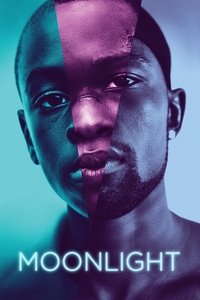
Moonlight (166, Masterclass) earns its score through three-act compression commitment. Barry Jenkins's adaptation of Tarell Alvin McCraney's play renders Black queer Miami childhood across three time periods with three actors playing the same protagonist. C=44, E=39, Q=41. Higher Cognitive Stimulation (44 vs 36) and Educational Value (39 vs 30); the three-act compression and the McCraney source give it substance Boyhood's observational structure reaches for differently.
The verdict
Moonlight outscores Boyhood by 22 points (144 vs 166). Moonlight is Masterclass; Boyhood is Stimulating. Moonlight is the more-formally-compressed work; Boyhood is the more-structurally-experimental one. The gap reflects Moonlight's higher Cognitive Stimulation (44 vs 36) and Educational Value (39 vs 30); Boyhood keeps a slight Craft edge (44 vs 41).
Frequently asked
Which won Best Picture?
Moonlight won the 2017 Best Picture Oscar in a famous mid-ceremony correction. Boyhood was nominated in 2015 but lost to Birdman. The TVI score reflects the work, not the Academy outcome.
Which is more emotionally affecting?
Different. Boyhood's emotional weight is cumulative (the 12-year structure makes the viewer feel time passing). Moonlight's emotional weight is compressed (the three actors playing Chiron makes the viewer feel time as rupture). Both work; the registers differ.
Should I watch Linklater's other work first?
Optional. Boyhood stands alone; viewers without prior Linklater exposure get the complete structural argument. The Before trilogy is a separate Linklater commitment; Slacker and Dazed and Confused are stylistic predecessors.
Which is harder to watch?
Moonlight, by viewer-consensus. The Miami-poverty and Black-queer subjects render more sustained discomfort. Boyhood's Texas-suburban subject is more universally legible.
See what your watchlist asks of you.
Enter 3 to 5 titles. Get your TVI Score, your profile breakdown, and personalized recommendations. Free, 60 seconds.
Run the 60-second watch audit →