ExploreCompareKidsFind Your IQMy IQTonightWrappedPlaylistsBlogAboutNewsletterHow We ScoreJoin Founding Circle
Methodology

How the IQ Score works.

One number. Three dimensions. Twelve sub-metrics. Scored using a multi-dimensional framework and computational analysis, grounded in published cognitive science.

TV IQ is a proprietary 0–200 scale designed for media comparison — it is not a psychometric intelligence test. The score measures the intellectual demand a title places on its audience, not the viewer's personal IQ. A Masterclass score of 160+ means peak cognitive engagement across all three dimensions, not that you need a 160 IQ to appreciate it.

Download the full methodology (PDF) Version 1.1 · April 28, 2026 · 35 pages · 334 KB · v1.0 archive

Five categories. One clear signal.

RangeCategoryWhat it means
160+MasterclassMeasurably increases domain knowledge or cognitive capacity
130–159StimulatingSignificantly challenges the viewer intellectually
100–129CompetentMeaningful engagement above passive consumption
70–99PassiveMinimal cognitive demand; entertainment-driven
<70NumbingNegligible intellectual engagement
40% weight
Cognitive Stimulation
How hard does the content make your brain work?
Narrative complexity
Non-linear structure, parallel plotlines, unreliable narration, temporal shifts
Dialogue density
Information-per-minute, vocabulary level, rhetorical sophistication
Cognitive load
Working memory demands, prediction difficulty, attention requirements
Conceptual novelty
Unfamiliar ideas, paradigm challenges, perspective shifts
35% weight
Educational Value
Did the viewer learn something they can use?
Factual density
Verifiable facts per episode; information transfer rate
Domain knowledge
Depth and accuracy of subject matter coverage
Practical applicability
Real-world usefulness of knowledge conveyed
Accuracy
Fidelity to established facts in dramatized or documentary content
25% weight
Entertainment Quality
Smart content shouldn't be boring. Boring content fails our standard too.
Emotional range
Variety and depth of emotional engagement
Narrative craft
Story structure satisfaction, payoff of setups
Production value
Cinematography, sound design, editing craft
Rewatchability
Sustained engagement, rewatch value across episodes

Three layers. Every title.

1
Expert panel review
Each title is independently evaluated by a minimum of 10 credentialed reviewers — media scholars, educators, cognitive scientists, domain specialists — using structured rubrics with defined criteria.
2
Computational analysis
NLP models analyze scripts and dialogue for lexical diversity, information density, narrative complexity, and conceptual novelty. Transparent and reproducible.
3
Composite algorithm
Automated and expert scores are combined via a weighted algorithm. Published with confidence intervals and dimensional breakdowns. The rubrics are public.

What a score breakdown looks like.

Take two shows in the same genre — crime drama — with very different cognitive profiles:

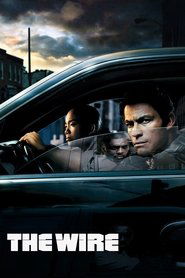
The Wire
145
Stimulating
C
E
Q

Extreme cognitive demand from multi-institutional analysis. High educational value on politics, economics, policing.

The Office
87
Passive
C
E
Q

Brilliant entertainment with minimal cognitive demand. High craft, low intellectual challenge.

Common questions.

Who decides the scores?
Titles are scored using a multi-dimensional framework with structured rubrics and defined criteria across twelve sub-metrics. This is augmented by computational analysis that evaluates linguistic complexity, information density, and narrative structure. As the platform scales, we're building toward credentialed expert panels and published inter-rater reliability.
How is this different from Rotten Tomatoes?
Rotten Tomatoes aggregates binary critic opinion (fresh/rotten) on a single dimension. The IQ Score evaluates three dimensions with twelve sub-metrics using structured rubrics grounded in cognitive science literature. RT measures whether critics liked something. We measure what it does to the viewer.
Isn't this just opinion?
No. Narrative complexity, dialogue density, factual accuracy, and information transfer rate are measurable properties. Our NLP pipeline quantifies them computationally. Scoring uses structured rubrics with defined criteria, not personal taste. The methodology is transparent and the framework is published.
Does a low score mean the show is bad?
No. A low IQ Score means low intellectual demand — not low quality. The Office scores 87 (Passive) and is one of the best comedies ever made. The IQ Score measures cognitive value, not entertainment value in isolation. Entertainment quality is one dimension, not the whole score.
Will you pursue scientific validation?
Yes. Our Phase 3 roadmap includes university neuroscience partnerships for EEG and fMRI correlation studies. But the platform launches with a methodology that already exceeds the rigor of every existing content rating system. Validation deepens the moat — it's not a prerequisite.
How many titles are scored?
1,892 titles and growing, spanning TV series, films, documentaries, anime, K-drama, reality TV, game shows, and more across all major streaming platforms.

See it in action.

Find your personal TV IQ or get your full viewing personality report.

Find Your TV IQ Get Your Wrapped

No other platform measures what TV does to your mind.

Rotten Tomatoes tells you if critics liked it. IMDb tells you if audiences liked it. TVI tells you what it does to you.

What it measures TV Intelligentsia Rotten Tomatoes IMDb Common Sense Media
Cognitive complexity scored
Educational value scored partial
Measures the show — not audience mood
Kids developmental review by credentialed expert editors, not specialists
SEL (social-emotional learning) scores
Weighted multi-dimensional formula
Head-to-head show comparison tool
Scores films AND TV series TV/films only

Think your ratings platform measures this?

Or see how each score is calculated: view the full scoring rubric →

TVI IQ Score is not affiliated with, endorsed by, or derived from Rotten Tomatoes, IMDb, or Common Sense Media.