TV Intelligentsia is the credibility layer for what to watch. The IQ Score is one number built from three weighted dimensions: Cognitive Stimulation (40%), Educational Value (35%), Craft & Quality (25%). 2,605 titles scored using a public methodology grounded in cognitive science, developmental psychology, and media-effects research, with credentialed review for children's content. Scores are not for sale.
TV IQ is a proprietary 0–200 scale designed for media comparison; it is not a psychometric intelligence test. The score measures the intellectual demand a title places on its audience, not the viewer's personal IQ. A Masterclass score of 160+ means exceptional cognitive and educational substance, delivered with craft that sustains close attention, not that you need a 160 IQ to appreciate it.
Three weighted dimensions. One published rubric. Visible reasoning on every score. The methodology is the product.
The catalog gives every title a score and rationale. Select flagship reviews go further: scene-level analysis, score defense, and a fuller argument about why the title matters.
Read the reviews →Every score in the TVI catalog is reviewed against public criteria before entering the database. The current formula governs every C/E/Q breakdown we publish. We do not score by studio relationship, popularity, or crowd mood. The point is not to make every result agreeable. The point is to make every result defensible.
The rule on AI: AI may generate candidate assessments or assist structured analysis. It may not watch a work, serve as the rater of record, or publish a final score without named human review and adoption.
For each title, TVI records a reviewed score and rationale against public criteria: cognitive demand, educational value, and craft. A C/E/Q breakdown is published only when it reproduces that score under the current formula. Supporting research may include transcripts, scene summaries, source material, and genre context where available.
Jordan Robinson, MD, MPH, is the accountable editor for catalog scores and built the TVI Score framework. Cordelia Witty, EdS., NCSP, shapes and reviews the TVI Kids methodology and personally reviews every TVI Kids Essential designation. Her name appears as a page-level reviewer only where she personally reviewed the work.
Scores are committed with the visible rationale and dimension breakdown. Essential designations are separately reviewed and logged because they make a stronger editorial claim than the numeric score alone.
A subset of titles receive long-form editorial reviews under the editor's byline. These appear at /editorial/ and reflect the editor's personal viewing, scene-level analysis, and credentialed perspective on the work. Editorial reviews are commentary on top of the rubric, not a precondition for catalog entry.
Scored under the current standard: a named rater completed all thirteen sub-metric judgments (and the five SEL competencies on children's titles) before consulting any AI candidate, consensus figure, or prior score; the viewing basis is declared; the component judgments are locked in a receipt; AI's role in the session, if any, is recorded. Verified scores carry the rater's name and the session date on the title page.
Scored under our earlier workflow, before the current standard took effect in August 2026, in which a founder reviewed and approved each score against our methodology, with the degree of AI assistance and the depth of viewing varying by title and without a verifiable receipt of the component judgments. A legacy score is our historical judgment, displayed as such, and is queued for re-verification. It is not a claim that the current standard was applied.
A legacy score removed from display after re-verification found it could not be defended, or because the title was not re-assessed. The page, its URL, and its score history remain.
Which titles are re-verified first: the children's catalog, the titles readers use most, current releases, and titles readers ask us to review. Readers may help determine what we examine next. They cannot determine what we find.
TVI publishes one continuous score for every title and one editorial designation for a smaller class. The distinction matters.
Every title in the catalog receives a reviewed 0–200 score. When Cognitive Stimulation, Educational Value, and Craft & Quality are published beside it, the displayed composite is reproducible from the current 40/35/25 formula. Any row whose stored dimensions do not reproduce its composite publishes the composite and SEL only until the arithmetic is corrected.
A title earns TVI Essential when it reaches Masterclass-tier IQ and meets the editorial standard across four pillars: Cultural Impact, Intellectual Substance, Rewatch Value, and Lasting Significance. Editorial review by the Founding Editor is required. Most titles do not earn the designation.
What TVI Essential does not mean
TVI Essential is not a guarantee of personal enjoyment. It is a designation of cultural significance, intellectual substance, lasting value, and craftsmanship density. A title can earn TVI Essential and still not be the right choice for your mood, your night, or your preferences. The designation tells you the title is worth your time. It does not tell you the title will feel worth your time to you specifically. That distinction is the entire point.
The current weighted formula and the publication standard for every displayed three-dimension breakdown. Screenshot it, cite it, embed it. Open and reproducible.
| Range | Category | What it means |
|---|---|---|
| 160+ | Masterclass | Exceptional cognitive and educational substance, delivered with craft that sustains close attention |
| 130–159 | Stimulating | Significantly challenges the viewer intellectually |
| 100–129 | Competent | Meaningful engagement above passive consumption |
| 70–99 | Passive | Minimal cognitive demand; entertainment-driven |
| <70 | Numbing | Negligible intellectual engagement |
Audience ratings measure how much people enjoyed watching. The IQ Score rates what a work asks of the mind. They answer different questions, and they sometimes disagree.
Adored, rewatched, comforting. Low cognitive demand is part of what its viewers want from it. The score says what it asks of the mind, not whether it is worth loving.
Adults rating a preschool program on a film site tell you little. Judged against what preschool television can do, it is among the strongest works we have ever scored.
The two measures often agree. When craft and cognitive demand run together, both numbers are high.
When our number and the crowd’s number disagree, neither is wrong. They are different instruments. The gap between them tells you whether a work’s appeal comes from what it asks of you, or from somewhere else.
Audience figures are TMDB user ratings, August 2026, shown for comparison.
Children's titles carry a reviewed IQ Score and a separate SEL Score (0–50). Current-standard kids scores preserve the five competency judgments; earlier-workflow kids titles display a legacy SEL total reviewed only at the total level, with competency-level review pending. The current 40/35/25 formula governs every three-dimension breakdown TVI publishes. When a row's stored dimensions do not reproduce that formula, TVI withholds its Cognitive Stimulation, Educational Value, and Craft & Quality detail rather than publish contradictory arithmetic. The composite and SEL remain visible until the arithmetic is corrected.
The two scores are reported separately because they measure different things. A children's show can be modest on cognitive load and quietly extraordinary on emotional skill-building; Lizzie McGuire is the canonical example, scoring 114 on the IQ rubric with a legacy SEL total of 40. The title page labels that provenance rather than implying a preserved five-competency receipt.
A small class of children's content sits outside what the rubric can score, meme formats, surrealist short-form, channel-level brands without consistent narrative. TVI publishes resource pages for those phenomena (Italian Brainrot, Skibidi Toilet, Brain Rot Memes) with clinical context, rather than inventing a score the rubric isn't designed to produce.
Two Masterclass-tier shows for two very different audiences. The IQ Score doesn't care which is "for adults" or "for kids", it measures what each title actually demands and delivers. Different shapes, same rubric.
Extreme cognitive demand from multi-institutional analysis. High educational value on policing, schools, ports, journalism, politics. Sustained craft across five seasons. Profile: cognition-led adult drama.
Adult
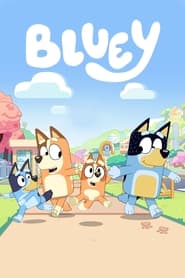
Heeler-family episodes built around imaginative play, emotional regulation, and parent-child negotiation. TVI Kids methodology shaped and reviewed by Cordelia Witty, EdS., NCSP. Profile: balanced kids show with exceptional SEL.
Kids · Age 2–7The Wire leads with cognition. Bluey leads with educational density and SEL. Both earn Masterclass; both earn it differently. The rubric reveals the shape, not just the headline number.
Find your personal TV IQ or get your full viewing personality report.
Rotten Tomatoes aggregates critic sentiment. IMDb aggregates audience sentiment. TVI rates observable cognitive demand, educational value, and craft. It does not predict what a title will do to an individual viewer.
| What it measures | TV Intelligentsia | Rotten Tomatoes | IMDb | Common Sense Media |
|---|---|---|---|---|
| Cognitive complexity scored | ✓ | ✗ | ✗ | ✗ |
| Educational value scored | ✓ | ✗ | ✗ | partial |
| Measures the show, not audience mood | ✓ | ✗ | ✗ | ✓ |
| Kids developmental review by credentialed expert | ✓ | ✗ | ✗ | editors, not specialists |
| SEL (social-emotional learning) scores | ✓ | ✗ | ✗ | ✗ |
| Weighted multi-dimensional formula | ✓ | ✗ | ✗ | ✗ |
| Head-to-head show comparison tool | ✓ | ✗ | ✗ | ✗ |
| Scores films AND TV series | ✓ | ✓ | ✓ | TV/films only |
Think your ratings platform measures this?
Or see how each score is calculated: view the full scoring rubric →
TVI IQ Score is not affiliated with, endorsed by, or derived from Rotten Tomatoes, IMDb, or Common Sense Media.
Every list below is built on the formula above, ranked by IQ Score. No paid placements, no fabricated numbers, just the rubric applied at scale.
Enter the 3–5 shows you're watching right now. The same three-dimensional methodology you just read, applied to your specific diet, in 60 seconds.
Score my watchlist →