Inception vs Interstellar
Two Nolan Films, Compared, scored on TV Intelligentsia's published methodology rubric.
Inception scores 164/200 (Masterclass tier); Interstellar scores 189/200 (Masterclass tier). Interstellar outscores Inception by 25 points on TV Intelligentsia's published methodology rubric.
Neither score on this page has yet been re-verified under the current standard; both are legacy scores, published before August 2026 under our earlier workflow and queued for re-verification. Each title page states its class. About score classes → · Verification status →

Dimensional Breakdown
The thesis
Inception and Interstellar are Christopher Nolan's two most-cited films of the 2010s. Both are large-scale science-fiction works that test specific scientific premises (dream architecture, relativistic time dilation) through dramatic storytelling. The TVI rubric lets us name what each is doing without resorting to fan-vs-fan polemics.
The case for Inception
Inception (164, Masterclass) earns its score through architectural commitment. The five-layer dream structure is the formal apparatus; the heist within the dream within the dream is the formal joke. C=44, E=33, Q=47. Lower Educational Value because the dream architecture is invented, not researched. The Hans Zimmer score and Wally Pfister cinematography are at the top of the form.
The case for Interstellar
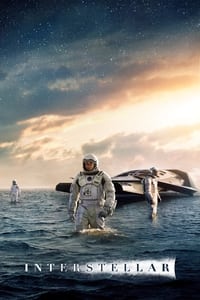
Interstellar (189, Masterclass) earns its score through research-driven ambition. Kip Thorne's general-relativity consultancy gives the time-dilation sequences a research-grounded specificity Inception's dream architecture does not have. C=49, E=44, Q=49. Substantially higher Educational Value because the relativistic physics is rigorously rendered.
The verdict
Interstellar outscores Inception by 25 points (164 vs 189). The gap reflects Interstellar's research-driven Educational Value and its more-ambitious scientific scaffolding. Inception is the better-constructed heist movie; Interstellar is the more-substantively-informed science-fiction film.
Frequently asked
Is Inception's score (164) really fair?
Yes, on the rubric. The 164 reflects its dimensions: high Cognitive Stimulation (the dream architecture demands sustained attention), moderate Educational Value (the architecture is invented, not researched), high Craft (the cinematography and score are top-tier). Inception sits in the lower Masterclass tier; Interstellar's research-grounded Educational Value is what opens the gap between them.
Which has the better ending?
Inception. The spinning-top ambiguity is one of the most-cited final shots in modern cinema. Interstellar's ending is more emotionally resolved but more narratively complicated; the love-as-fifth-dimension argument divides viewers.
Which is harder to follow?
Inception. The nested-dream architecture demands working-memory tracking across five layers simultaneously. Interstellar's relativistic physics is conceptually harder but narratively easier; the film telegraphs the time-dilation stakes explicitly.
Are both worth a re-watch?
Yes. Inception rewards re-watch for the architectural clarity it adds. Interstellar rewards re-watch for the emotional weight Cooper's choices accumulate in retrospect.
See what your watchlist asks of you.
Enter 3 to 5 titles. Get your TVI Score, your profile breakdown, and personalized recommendations. Free, 60 seconds.
Run the 60-second watch audit →