Past Lives vs Aftersun
Two A24 Memory Films, Compared, scored on TV Intelligentsia's published methodology rubric.
Past Lives scores 129/200 (Competent tier); Aftersun scores 157/200 (Stimulating tier). Aftersun outscores Past Lives by 28 points on TV Intelligentsia's published methodology rubric.
Neither score on this page has yet been re-verified under the current standard; both are legacy scores, published before August 2026 under our earlier workflow and queued for re-verification. Each title page states its class. About score classes → · Verification status →

Dimensional Breakdown
The thesis
Past Lives and Aftersun are the two most-cited A24 memory films of the early 2020s. Both center first-time directors (Celine Song; Charlotte Wells) using interior-time structures to render love and grief without conventional dramatic apparatus. They argue for different things the form can do. The methodology can hold both.
The case for Past Lives
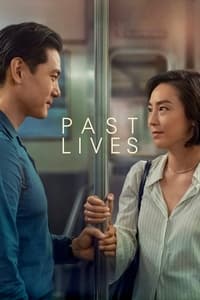
Past Lives (129, Competent, top end) earns its score through restraint commitment. Celine Song's debut feature renders Korean-American Nora's 24-year relationship with childhood friend Hae Sung through three time periods and a famously-restrained final scene. C=39, E=21, Q=37. Lower Educational Value because the restraint register substitutes for substantive content.
The case for Aftersun
Aftersun (157, Stimulating, top end) earns its score through memory-as-form commitment. Charlotte Wells's debut feature renders a daughter's reconstruction of her father from a recovered camcorder, refusing to dramatize his depression while making it the film's actual subject. C=41, E=33, Q=45. Higher across all dimensions because the structural ambition (the camcorder-as-form, the rave-strobe sequence) is more dimensionally executed.
The verdict
Aftersun outscores Past Lives by 28 points (129 vs 157). Both are well-executed A24 memory films at their respective ambitions. Aftersun is the more-structurally-ambitious work; Past Lives is the more-emotionally-direct one. The gap reflects Aftersun's higher Cognitive Stimulation and Craft.
Frequently asked
Should I watch both?
Yes. They occupy adjacent A24 memory-film territory but argue for different things. Aftersun is the formally-ambitious version; Past Lives is the restraint-driven version. Watching both maps the A24 indie-aesthetic of the 2020s.
Why does Past Lives score lower than I expected?
The 129 reflects Past Lives' restraint as a deliberate structural choice. Celine Song's commitment to refusing dramatic resolution lowers the rubric's Cognitive Stimulation and Educational Value scores; the film is well-executed at what it is, which is structural restraint.
Which has the better ending?
Past Lives, on the parking-lot final scene. Wells's Aftersun ends on a structurally-precise rave-strobe sequence that some viewers find revelatory and others find opaque. Past Lives' ending is more universally legible.
Are these comparable to the Before trilogy?
Past Lives is most-often compared to Before Sunrise. Both center two characters across long time periods; Linklater's trilogy works through dialogue, Song's debut works through restraint. Different traditions, related interests.
See what your watchlist asks of you.
Enter 3 to 5 titles. Get your TVI Score, your profile breakdown, and personalized recommendations. Free, 60 seconds.
Run the 60-second watch audit →