Lost Ending Explained
Lost ended with the survivors reuniting in a church. Here's what actually happened, the persistent misreading, and what TVI's methodology says about the finale.
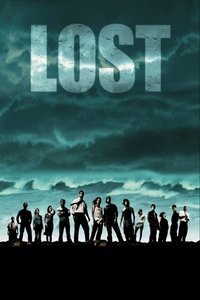
The recap
Lost aired on ABC from 2004 to 2010, created by J.J. Abrams, Damon Lindelof, and Jeffrey Lieber. The series finale 'The End' aired May 23, 2010. The two-and-a-half-hour conclusion intercut between the Island timeline (where Jack defeats the Man in Black and dies after saving the Island) and the 'flash-sideways' timeline (where the survivors gradually remember each other and gather at a Los Angeles church).
The closing image: Jack lies down in the bamboo grove where the pilot episode opened. Vincent the dog finds him. His eye closes. The other characters, in white light at the church, prepare to 'move on' together.
What actually happens
The most-repeated misreading: the survivors were dead the whole time, and the Island was purgatory. This is wrong. Christian Shephard explicitly tells Jack in the church scene: 'Everything that ever happened to you is real. All those people in the church, they're all real too.' The Island events happened. The survivors lived through them.
The flash-sideways timeline (Season 6's parallel narrative) is the only afterlife construct. It is a purgatory the survivors built together because their time on the Island was the most-important experience of their lives. They needed to find each other again before moving on.
Structurally: characters died at different times in their post-Island lives. Some lived for decades after the Island. The flash-sideways exists outside linear time. Jack dies on the Island after the helicopter departs in the finale. Hurley becomes the Island's new protector with Ben as his number two. Kate, Sawyer, Claire, and others escape on the Ajira plane. They all eventually die in the real world, at different points, and meet again in the flash-sideways construct.
What the ending earns
On the TVI rubric, Lost scores 174 (Masterclass tier). Cognitive Stimulation: 46/50. Educational Value: 39/50. Craft & Quality: 46/50. TVI rescored Lost from an earlier 151 after reading the show as a phenomenology of conscious experience rather than as a puzzle box. Graded as a puzzle, the unresolved mythology costs it. Graded as a work that turns states of consciousness into image and structure, it belongs in the highest tier.
Where the ending earns: the structural commitment to the flash-sideways construct as actual emotional payoff (rather than as plot resolution) is rare prestige-TV finale territory. The character reunions in the church are emotionally specific in a way most series finales refuse.
Where the ending fails: the mythology questions the show had built across six seasons (the Numbers, the Egyptian iconography, Walt's specialness, the smoke monster's mechanics) are largely abandoned. The structural commitment to character-emotional closure came at the cost of the mythology-cognitive closure the show had asked viewers to invest in. That unevenness is why Lost sits at the lower edge of Masterclass rather than near its ceiling.
Frequently asked
Were the survivors dead the whole time on Lost?
No. This is the most-common misreading of the finale. Christian Shephard explicitly tells Jack in the church scene that everything that happened on the Island was real. The flash-sideways timeline (Season 6's parallel narrative) is the only afterlife construct, and only the survivors who appear in the church scene are dead at that moment in the flash-sideways.
What is the church scene at the end of Lost?
The church is a construct the surviving characters created together to find each other again after death. They each die at different points in real-world chronology (Jack on the Island, others years or decades later). The flash-sideways exists outside linear time. They gather at the church when they are all ready to 'move on' together.
Did Lost explain what the Island actually was?
Partially. The Island is presented as the source of a primordial light that connects to every soul. Jacob's role was to protect it. The Man in Black (the smoke monster) was Jacob's brother who tried to leave. The mythology was left intentionally ambiguous in service of the character-emotional finale, which is the show's most-debated structural choice.
What is Lost's IQ Score on TV Intelligentsia?
Lost scores 174 out of 200 (Masterclass tier). Cognitive Stimulation: 46/50. Educational Value: 39/50. Craft & Quality: 46/50. TVI rescored Lost from an earlier 151 after grading it as a phenomenology of conscious experience rather than as a puzzle box.
TV Intelligentsia scores every major series on a published methodology rubric. IQ Score is a content rating, not an intelligence measurement.
See the full Lost score breakdown