Westworld Season 1 Ending Explained
Westworld Season 1 ended with the host uprising. Here's what the Maze actually was, when the timelines diverged, and what TVI's methodology says about the finale.
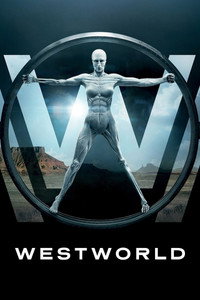
The recap
Westworld is an HBO theme-park sci-fi drama created by Jonathan Nolan and Lisa Joy, premiered October 2016. The Season 1 finale 'The Bicameral Mind' aired December 4, 2016. The episode resolved the season's central puzzles: what the Maze is, who the Man in Black is, when each storyline takes place, and what Dolores has been searching for across her chronologically-scrambled flashbacks.
The finale's structural reveals: the Maze is not a destination but a cognitive achievement (the path to host consciousness via the bicameral-mind theory). The Man in Black (Ed Harris) is the future version of William (Jimmi Simpson), thirty years after his park visit. Bernard Lowe (Jeffrey Wright) is a host modeled on Robert Ford's dead partner Arnold. The season's storylines have been intercut across three time periods. Dolores reaches consciousness, kills Ford, and triggers the host uprising.
What actually happens
Jonathan Nolan and Lisa Joy's structural commitment was that the Maze is not a place. It is the cognitive architecture of self-awareness. Arnold (Bernard's human original) believed that hosts could achieve consciousness if they could reach the center of an internal symbolic map. Suffering, memory, and reckoning with their own programming are the path. The Maze's center is the host's recognition that the voice they have been hearing (which they assumed was a god) is their own internal monologue.
The dual-timeline structure is the season's central misdirection. Dolores's storyline takes place across thirty years. Young William (gentle, in love with Dolores) is the same person as the Man in Black (ruthless, looking for the Maze's secret). The audience has been watching the same character at two life stages, presented as if they are two different characters.
Bernard's reveal is the season's deepest argument: a host has been operating the show's emotional center the entire season, and neither the character nor the audience knew. The structural commitment is that consciousness is not a function of being human. It is a function of the cognitive achievement the Maze represents. The finale ends with Dolores killing Ford as the first act of host autonomy. The hosts begin shooting the human delegation. The park's order ends.
What the ending earns
On the TVI rubric, Westworld scores 159 (Stimulating tier, top end). Cognitive Stimulation: 43/50. Educational Value: 34/50. Craft & Quality: 43/50. The Season 1 finale's structural ambition is the principal reason the show entered the prestige-TV conversation at all.
Where the ending earns: the dual-timeline misdirection is technically precise. Every William and Man-in-Black scene rewards rewatching with knowledge of the reveal. The Bernard-as-host reveal extends the show's cognitive premise to its viewing audience. The bicameral-mind theory of consciousness is real (Julian Jaynes, 1976), and using it as the philosophical scaffolding for the Maze is rare prestige-TV intellectual commitment.
Where the show falls short of higher Masterclass tier: subsequent seasons abandoned the structural discipline of Season 1. By Season 3, the show's commitment to multiple-timeline misdirection had become a self-parody. The TVI rubric reads Season 1 as the structural peak the show never returned to.
Frequently asked
What is the Maze in Westworld?
The Maze is not a physical place. It is the cognitive architecture of self-awareness, based on Julian Jaynes's bicameral-mind theory of consciousness. Arnold (Bernard's human original) believed that hosts could achieve consciousness by recognizing that the internal voice they assumed was a god is actually their own thought. The Maze's center is that recognition.
Is William the Man in Black?
Yes. The Season 1 finale reveals that young William (Jimmi Simpson) and the Man in Black (Ed Harris) are the same person at different life stages, thirty years apart. The season's intercut storylines have been presented as if they are simultaneous, when they are actually separated by decades.
Is Bernard a host?
Yes. Bernard Lowe is a host built by Robert Ford in the image of Ford's dead partner Arnold. The reveal is one of the season's deepest structural arguments: a host has been operating the show's emotional center the entire season, and the structural commitment is that consciousness is not a function of being human.
What is Westworld's IQ Score on TV Intelligentsia?
Westworld scores 159 out of 200 (Stimulating tier, top end). Cognitive Stimulation: 43/50. Educational Value: 34/50. Craft & Quality: 43/50. Season 1 is widely cited as the show's structural peak.
TV Intelligentsia scores every major series on a published methodology rubric. IQ Score is a content rating, not an intelligence measurement.
See the full Westworld score breakdown