Is Lost Worth Watching?
Short answer: Yes, if you can accept that the journey is the actual subject.
What you should know going in
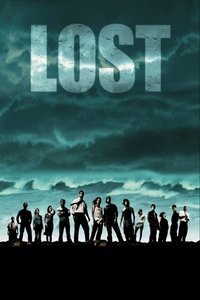
ABC, six seasons, 121 episodes (2004-2010). Created by J.J. Abrams, Damon Lindelof, and Jeffrey Lieber. Oceanic Flight 815 crashes on an unmapped Pacific island. The survivors discover the island has properties that resist explanation: a smoke monster, a research-station network, time-displacement phenomena, and a fundamental conflict between two factions whose origins predate recorded history.
Matthew Fox, Evangeline Lilly, Terry O'Quinn, Michael Emerson, Naveen Andrews, Jorge Garcia, Yunjin Kim, Daniel Dae Kim. The show committed to a flashback structure in the first three seasons and a flash-forward structure in the fourth, which the show itself described as the show's structural turn.
The case for
Cognitive Stimulation (46/50): Lost's structural argument across the first five seasons is that mystery is the actual subject. The show's commitment to running multiple mystery threads simultaneously, to having character flashbacks that connect across episodes in ways the viewer must reconstruct, and to letting the audience operate ahead of the characters in some scenes and behind them in others is rare in network drama.
Craft & Quality (46/50): The cinematography (Larry Fong, John S. Bartley, Michael Bonvillain) is consistently first-tier for network television. The Season 1 finale ('Exodus') and the Season 3 finale ('Through the Looking Glass') are two of the most-structurally-precise hours in 2000s network TV. The score (Michael Giacchino) is one of the most-ambitious for a network drama.
Educational Value (39/50): Modest. The show's references to philosophy, literature, and physics are surface-level rather than structural. Lost is a mystery show first; its educational gestures are decoration.
The case against
The middle of Season 3 is the show's weakest stretch. The introduction of the Others' civilian community is widely considered a structural detour. The show eventually recovers but several episodes test viewer patience.
The ending is widely misread. The most-repeated complaint ('they were dead the whole time') is not accurate; the show's ending is structurally specific but operates at a register the marketing did not prepare viewers for. The complaint is structurally about the marketing as much as the show.
Not every mystery is resolved. The show explicitly chose to leave specific elements (the source of the island, the precise mechanics of time displacement) unexplained. Viewers who need full mystery-closure will be frustrated.
The methodology verdict
On the TVI rubric, Lost scores 174 (Masterclass tier). The structural ambition of the multi-track mystery format, the network-TV-rare commitment to nonlinear flashback structure, and the willingness to let some questions remain open all earn the score.
Worth watching if: you are willing to engage with the show as a mystery argument rather than a mystery puzzle to solve. Willing to accept the Season 3 mid-stretch as the show's cost. Willing to read the ending on its own terms.
Not worth watching if: you need every mystery resolved. Lost is structurally committed to refusing that.
Frequently asked
What is Lost's IQ Score on TV Intelligentsia?
Lost scores 174 out of 200 (Masterclass tier). Cognitive Stimulation: 46/50. Educational Value: 39/50. Craft & Quality: 46/50. The multi-track mystery format and the network-TV-rare commitment to nonlinear structure are the primary drivers.
Were they really dead the whole time?
No. This is the most-repeated misreading of the finale. The island events happened. The survivors lived through them. Only the Season 6 flash-sideways timeline is a constructed afterlife. Christian Shephard tells Jack explicitly: 'Everything that ever happened to you is real.'
How long is Lost?
Six seasons (2004-2010), 121 episodes total. Runtime is approximately 42 minutes per episode. Total commitment is approximately 85 hours.
Is the Lost ending actually good?
Yes, on its own terms. The ending is structurally about whether the survivors found meaning together, not about whether every mystery resolved. Viewers who read it that way report satisfaction; viewers who expected closure on the smoke monster, the numbers, and the Dharma Initiative report frustration.
TV Intelligentsia scores every major series on a published methodology rubric. IQ Score is a content rating, not an intelligence measurement.
See the full Lost score breakdown