Is Shogun Worth Watching?
Short answer: Yes. Subtitles are not a barrier; they are the feature.
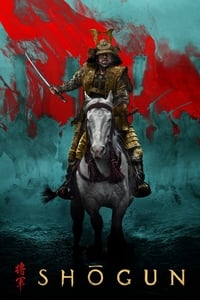
What you should know going in
FX, ten episodes, 2024. Co-created by Rachel Kondo and Justin Marks. An adaptation of James Clavell's 1975 novel about the political maneuvering inside feudal Japan around the year 1600. An English navigator, John Blackthorne, is shipwrecked on the Japanese coast and becomes a pawn in the succession crisis between Lord Toranaga and the Council of Regents.
Hiroyuki Sanada, Anna Sawai, Cosmo Jarvis, Tadanobu Asano. The vast majority of dialogue is in period Japanese. The cinematography commits to seasonal symmetry and the production design is precise about regional architectural distinctions.
The case for
Cognitive Stimulation (46/50): Shogun's structural argument is that political power in pre-Tokugawa Japan operated through ceremonial precision, indirect communication, and the active management of personal honor. The show refuses to translate these dynamics into Western dramatic shorthand. Every scene asks the viewer to track multiple simultaneous registers: the surface conversation, the implied power exchange, the audience watching the audience.
Craft & Quality (49/50): The cinematography (Christopher Ross, Marc Laliberté, Sam McCurdy) is the strongest of any prestige TV in 2024. Specific shots (the Osaka harbor, the seppuku sequence, the earthquake aftermath) are composed with painterly precision. The score (Atticus Ross, Leopold Ross, Nick Chuba) uses period-accurate instrumentation as structural argument.
Educational Value (48/50): The show is the rare Western-produced drama about Japan that treats Japanese characters as the structural subject and the European character as a guest in the story. The result is genuinely educational about a period of Japanese history that most American viewers know only through stereotype.
The case against
Approximately 70 percent of the dialogue is subtitled Japanese. Viewers who refuse subtitles cannot watch this show. The show is structurally indifferent to that refusal.
The pacing is deliberate. The political maneuvering is the actual subject, not background. Viewers expecting a samurai action show will be confused by how few sword fights occur.
The ending is structurally faithful to the novel but withholds the climactic battle the genre conventionally promises. The show argues this is the correct structural choice; viewers who wanted the battle disagree.
The methodology verdict
On the TVI rubric, Shogun scores 190 (Masterclass tier, top decile). The structural commitment to letting Japanese characters be the actual subject, the cinematography's precision, and the willingness to refuse the genre's conventional climax all earn the score.
Worth watching if: you can read subtitles, are willing to engage with political maneuvering as the actual plot, and can sit with a pace deliberately slower than streaming convention.
Not worth watching if: you refuse subtitles or expect a samurai action show. Shogun is structurally a political drama in costume, not an action piece.
Frequently asked
What is Shogun's IQ Score on TV Intelligentsia?
Shogun scores 190 out of 200 (Masterclass tier, top decile). Cognitive Stimulation: 46/50. Educational Value: 48/50. Craft & Quality: 49/50. The structural commitment to centering Japanese characters and the cinematography's precision are the primary drivers.
How much of Shogun is in Japanese?
Approximately 70 percent. The show is structurally committed to letting Japanese characters speak Japanese, even in scenes where Western convention would default to English. This is part of the show's argument, not an accommodation problem.
Is Shogun based on a true story?
Adapted from James Clavell's 1975 novel, which is itself loosely based on the historical figure William Adams (the English navigator who became a samurai under Tokugawa Ieyasu around 1600). The specific events are dramatized but the political context is historically grounded.
Will there be a second season of Shogun?
FX has ordered Seasons 2 and 3. The original ten episodes were designed as a complete arc faithful to Clavell's novel; the additional seasons will extend the narrative beyond the novel's ending.
TV Intelligentsia scores every major series on a published methodology rubric. IQ Score is a content rating, not an intelligence measurement.
See the full Shogun score breakdown