Flowers & fiddle · Side A
Look over her shoulder.
Watch Sita sing among the flowers. Wind the drawings again, this time with your eye just past her hair.

01:12 to 01:51 · The needle
Before the story starts, a peacock that is also a gramophone plays its first record, "Moanin' Low." Nineteen seconds in, the film takes two seconds of the song and plays them ten times, according to Paley's music cue sheet, while the peacock's beak rests on the record.
The whole song doesn't come back until 56:57, when Rama sends Sita into the forest.
Paley built the film on eleven of Annette Hanshaw's records, made between 1927 and 1929. These are the places she put them, in the order they play. Each one starts and stops at the second her cue sheet gives.
Some of the songs still belong to their owners, so we play them only where Paley put them, inside her film, from her own public-domain copy on the Internet Archive.
Flowers & fiddle · Side A
Watch Sita sing among the flowers. Wind the drawings again, this time with your eye just past her hair.
Sita Sings the Blues (2008), Nina Paley, public domain (CC0). Played from archive.org/details/Sita_Sings_the_Blues.
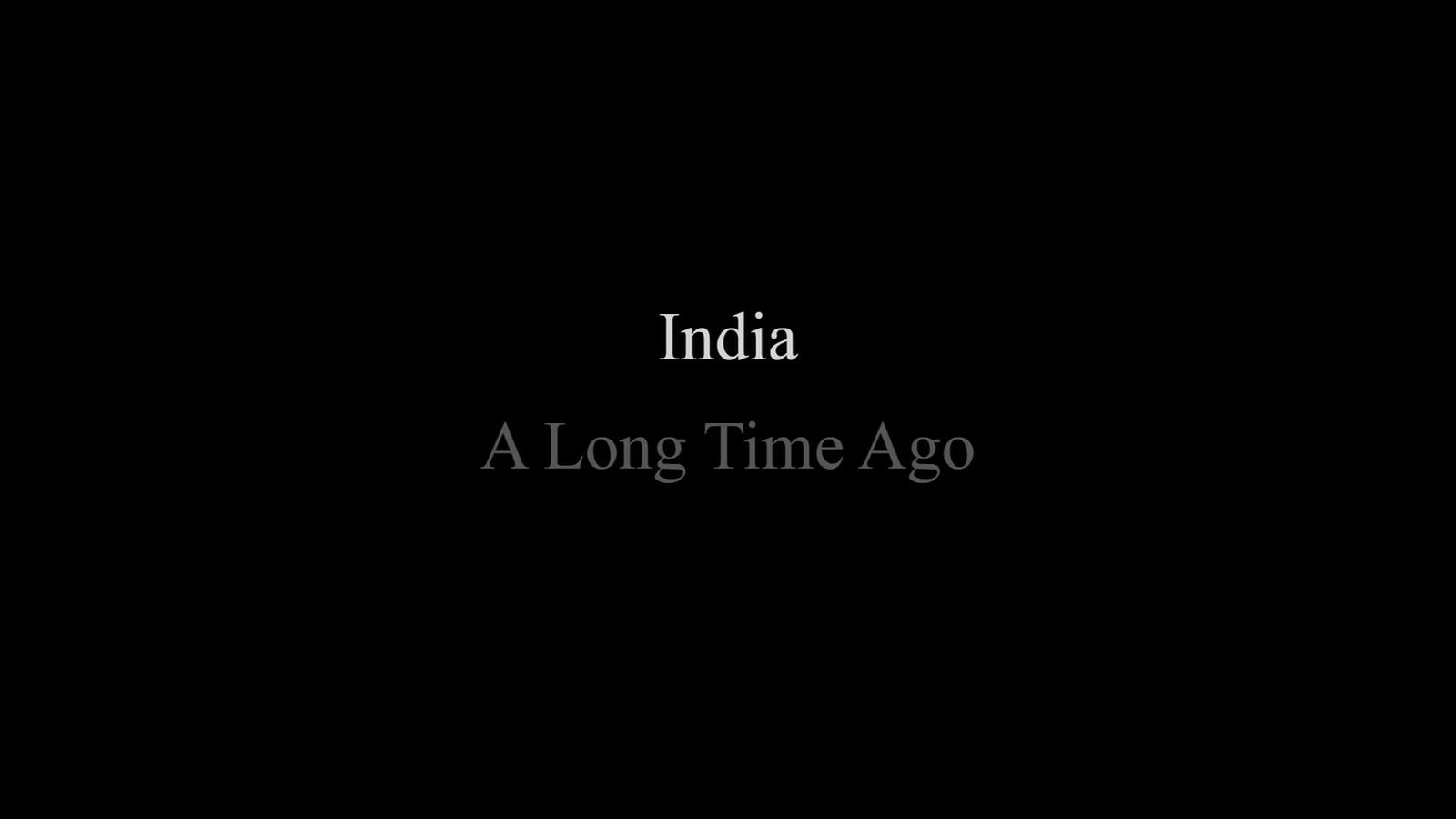



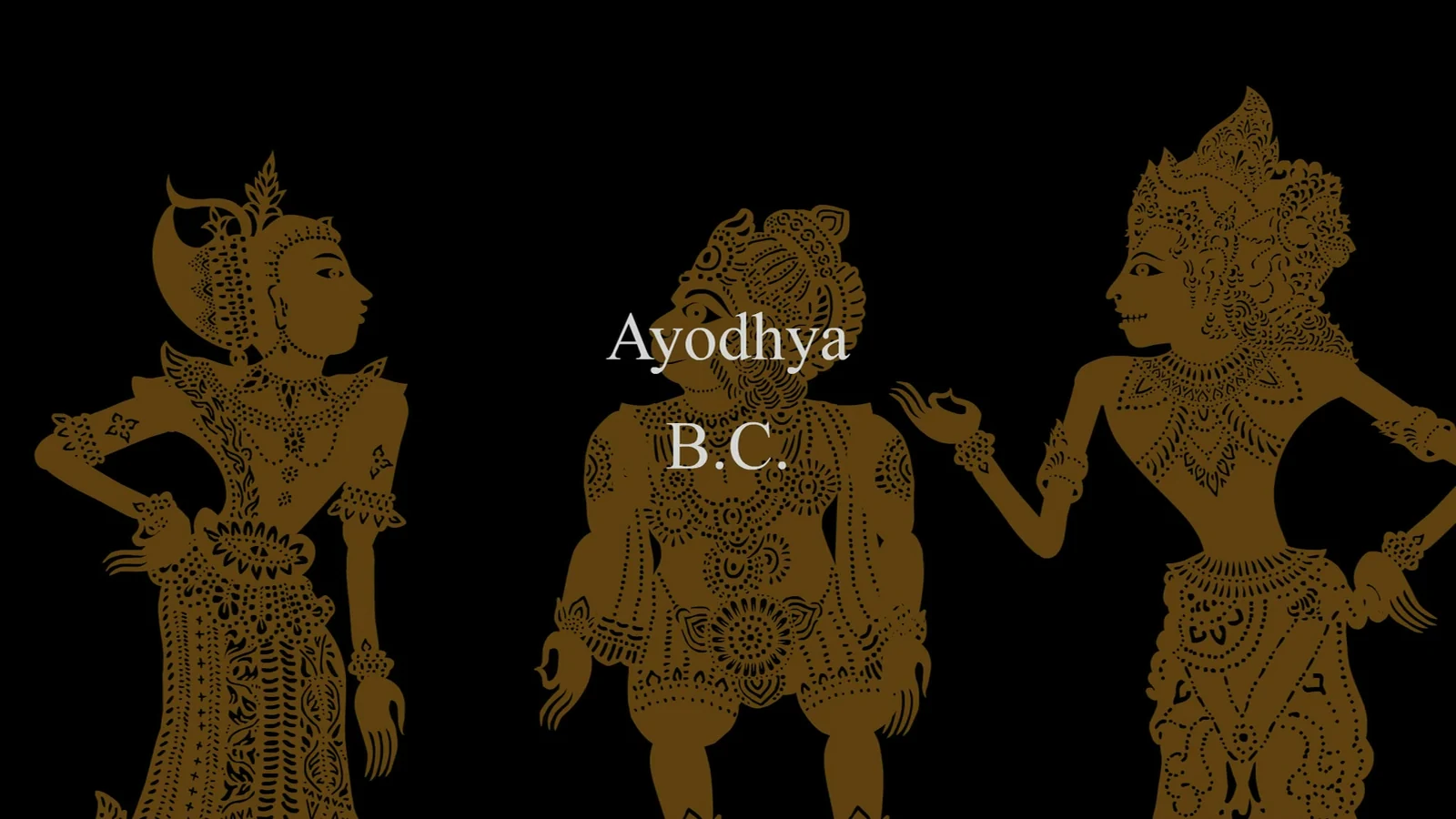
The three narrators try to remember when the Ramayana happened, and the caption on screen changes every time one of them has an idea. Drag through the twenty-four seconds.
India · A Long Time Ago
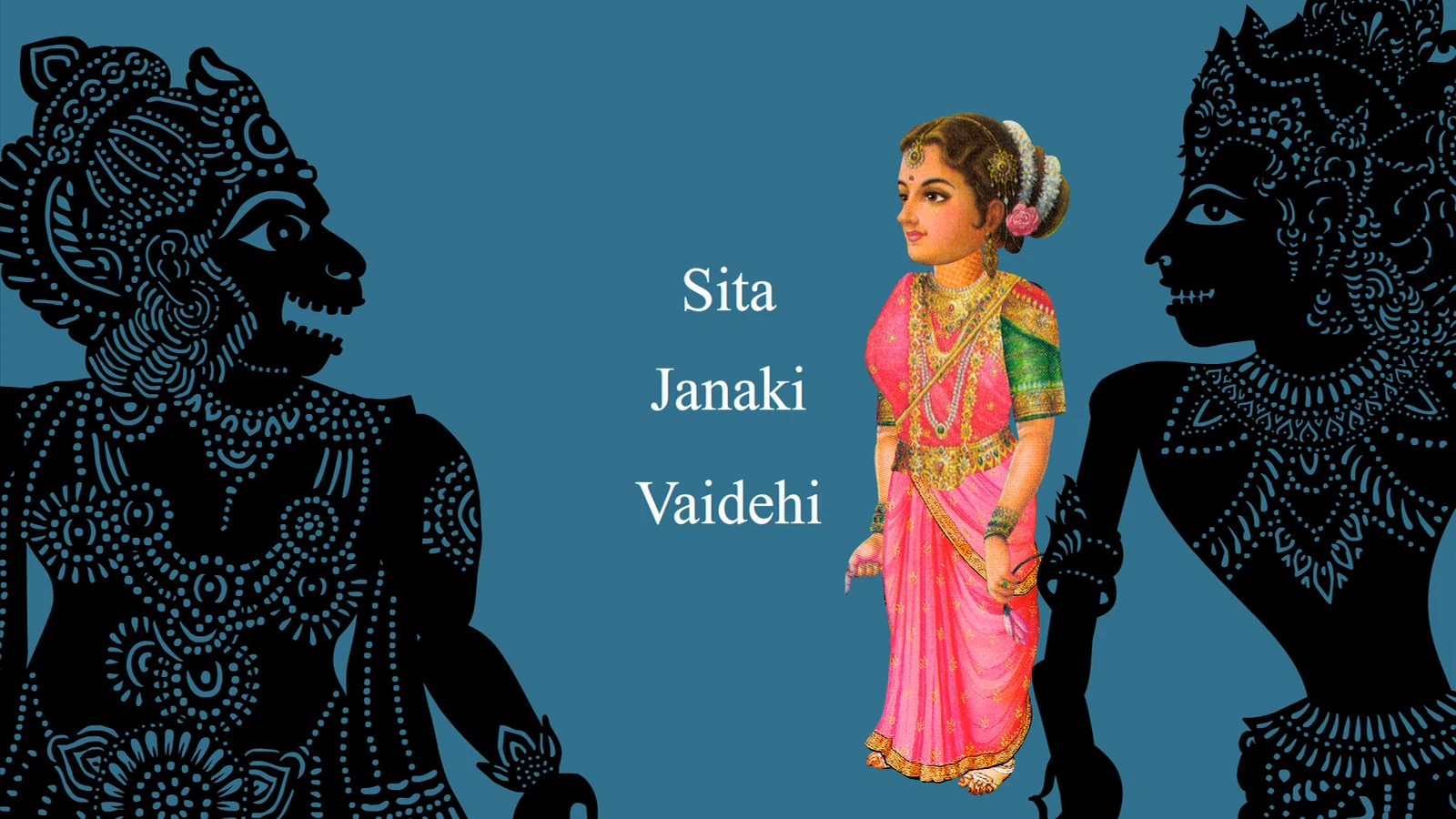
The woman in Brooklyn is called Nina, and so is the woman who drew her.
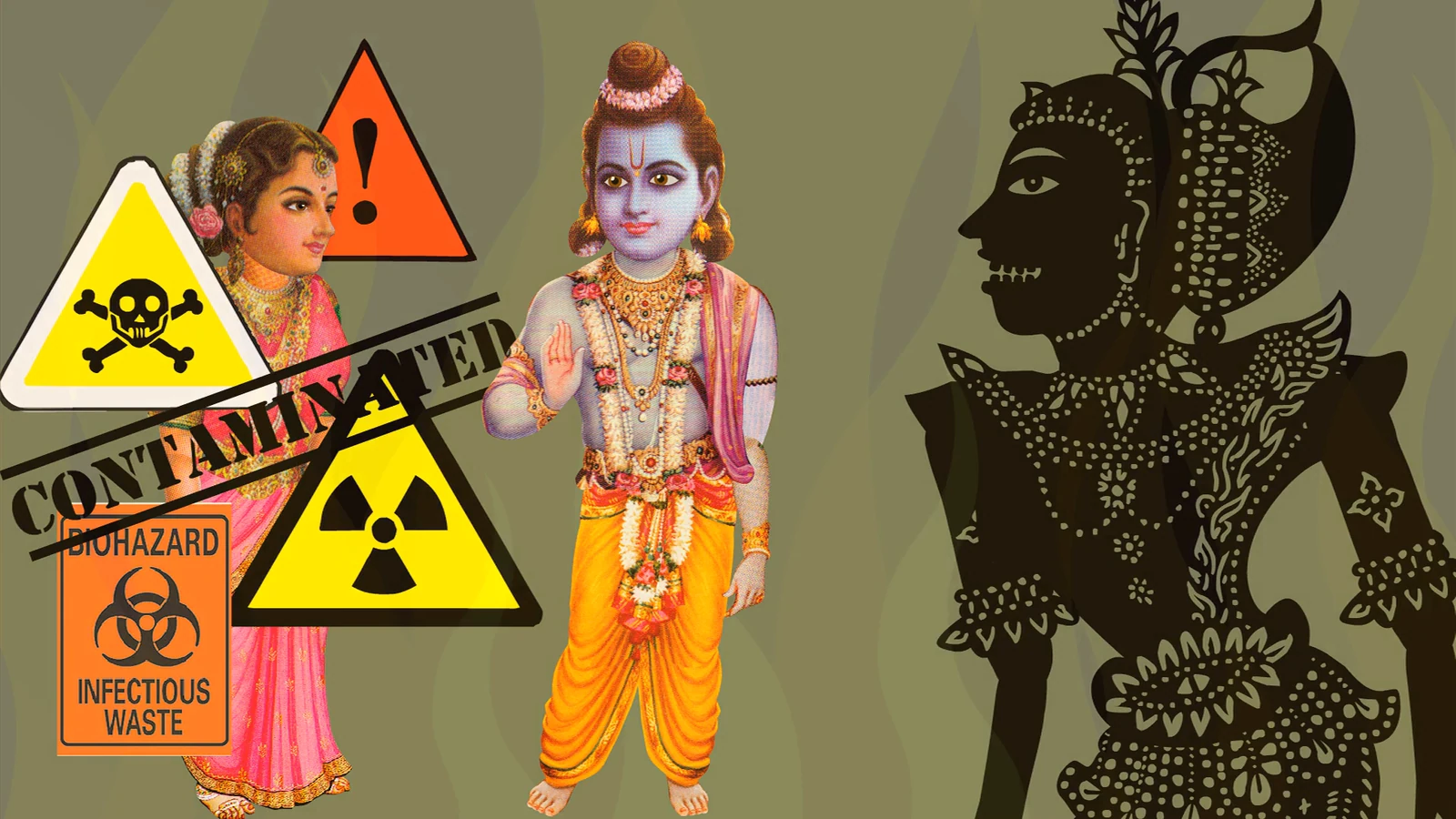
All three names tell us where Sita comes from. After the fire, the words move from beside her to across her body. Now they tell other people how to treat her.
See the first stamp · 42:58First they call her contaminated. Then they call her sanitized. Less than fourteen minutes later, look at what she is wearing again.
“Moanin’ Low”
At the start, the peacock’s needle caught on two seconds of “Moanin’ Low.” Now Hanshaw gets to finish the song, and across Sita’s body the old verdict is back.
Dave's email is on Nina's laptop at 51:20. A heart appears on her shirt at 51:29 and breaks apart at 51:37. At 51:40 she screams. Reena Shah begins singing "Sita on Fire" at 51:43, and by 52:01 a hand drawn in one white line is holding a flame.

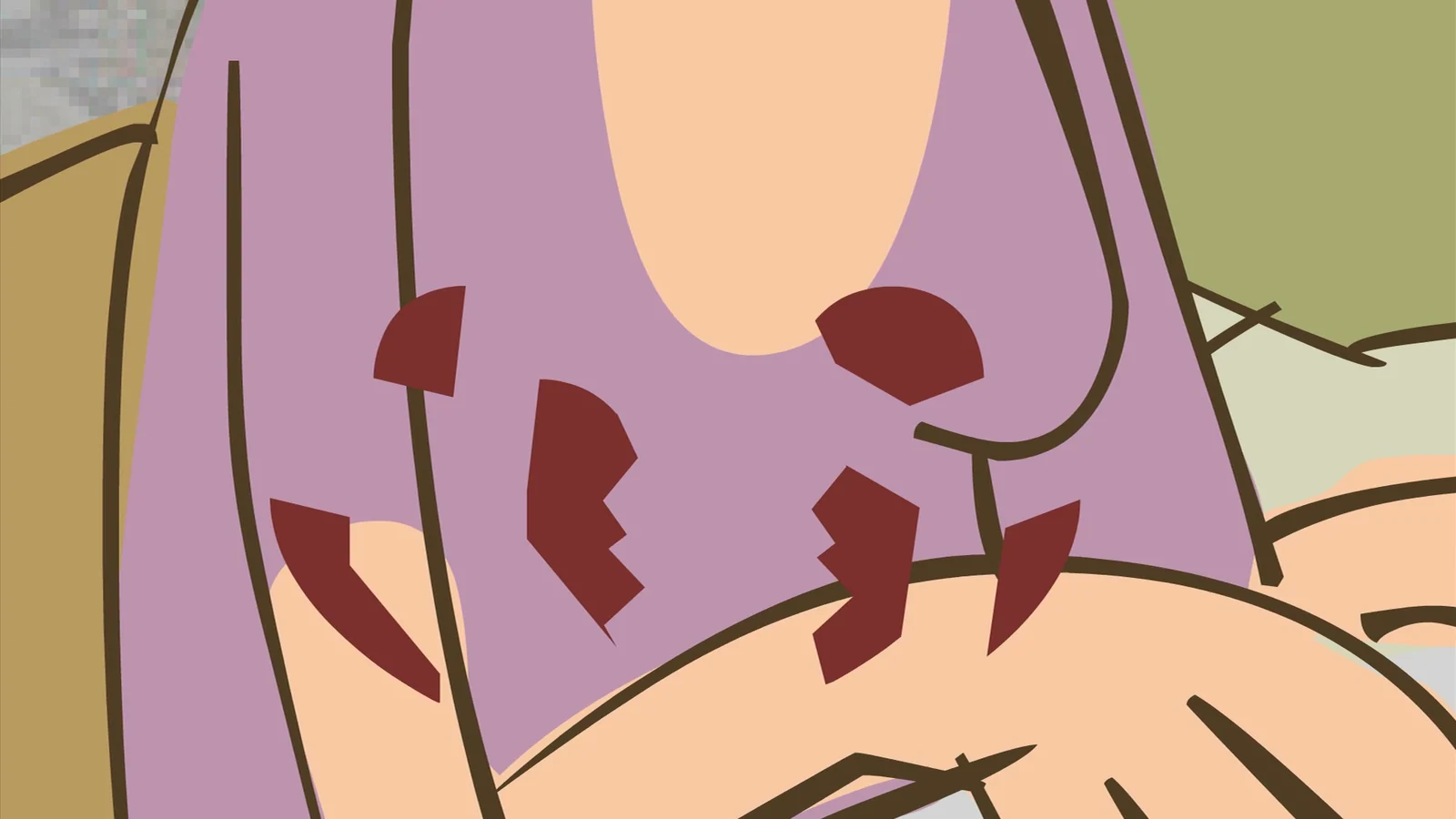



Sita has already been through the fire once, in words. Before the intermission, while Hanshaw sings "Mean to Me," the narrators tell us she walks into the flames and comes out pure. Paley doesn't show it then. She brings the trial back as "Agni Pariksha," out of the story's order, at 51:43, just after Nina's heart has broken.
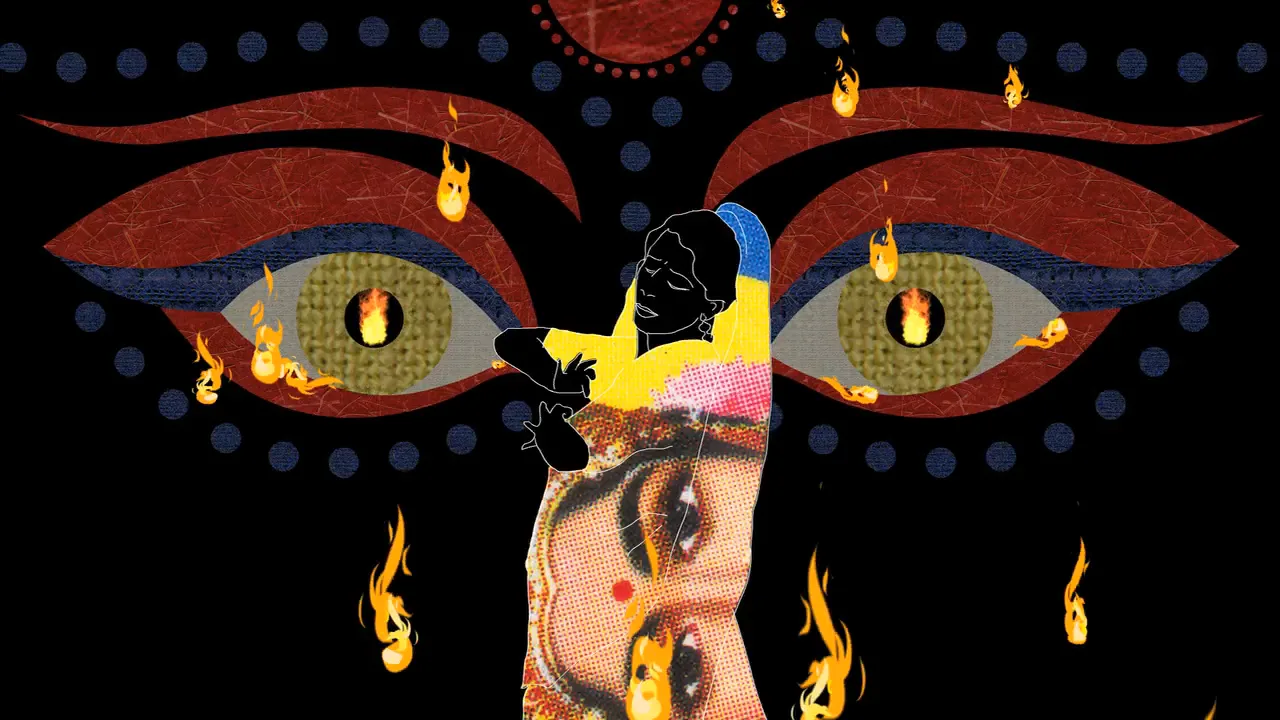
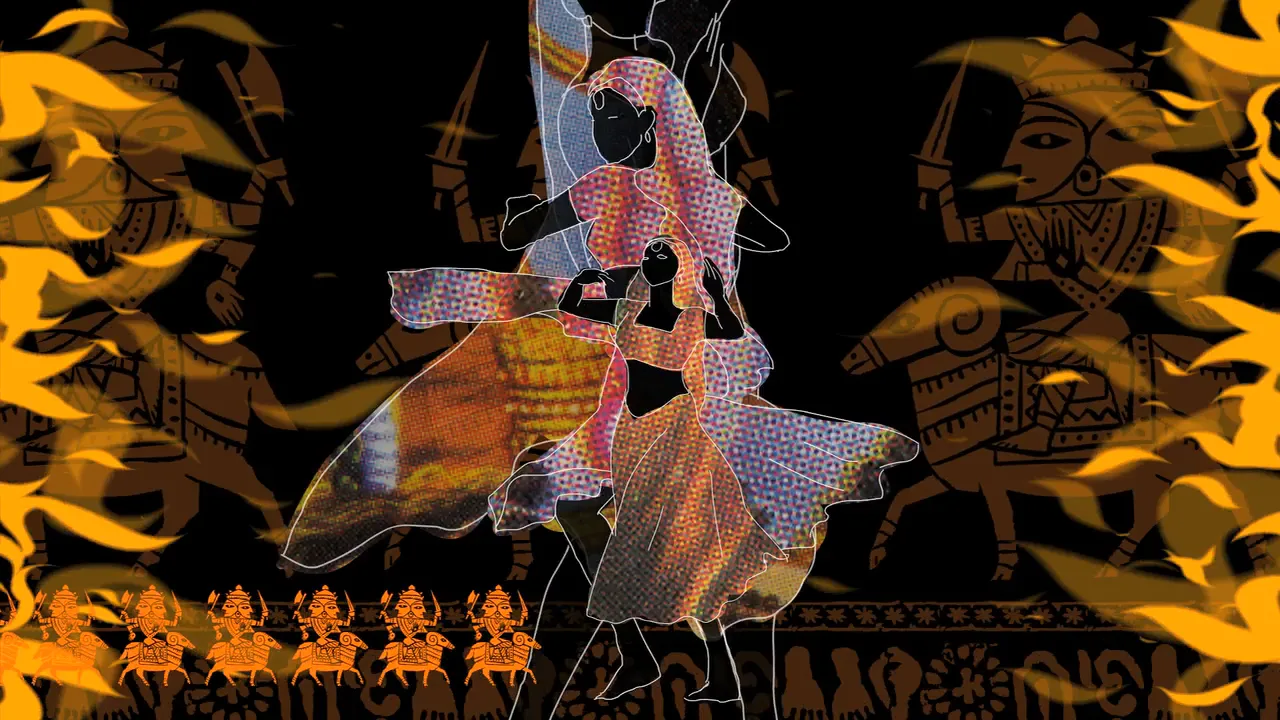
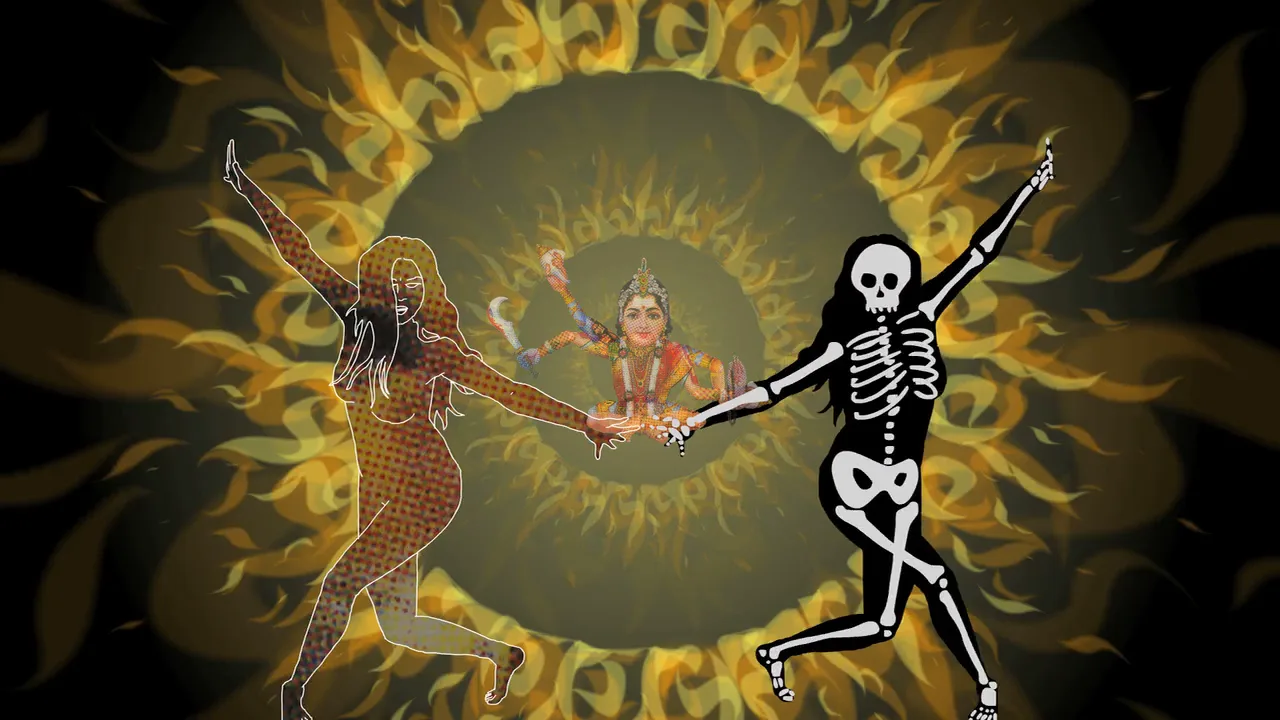
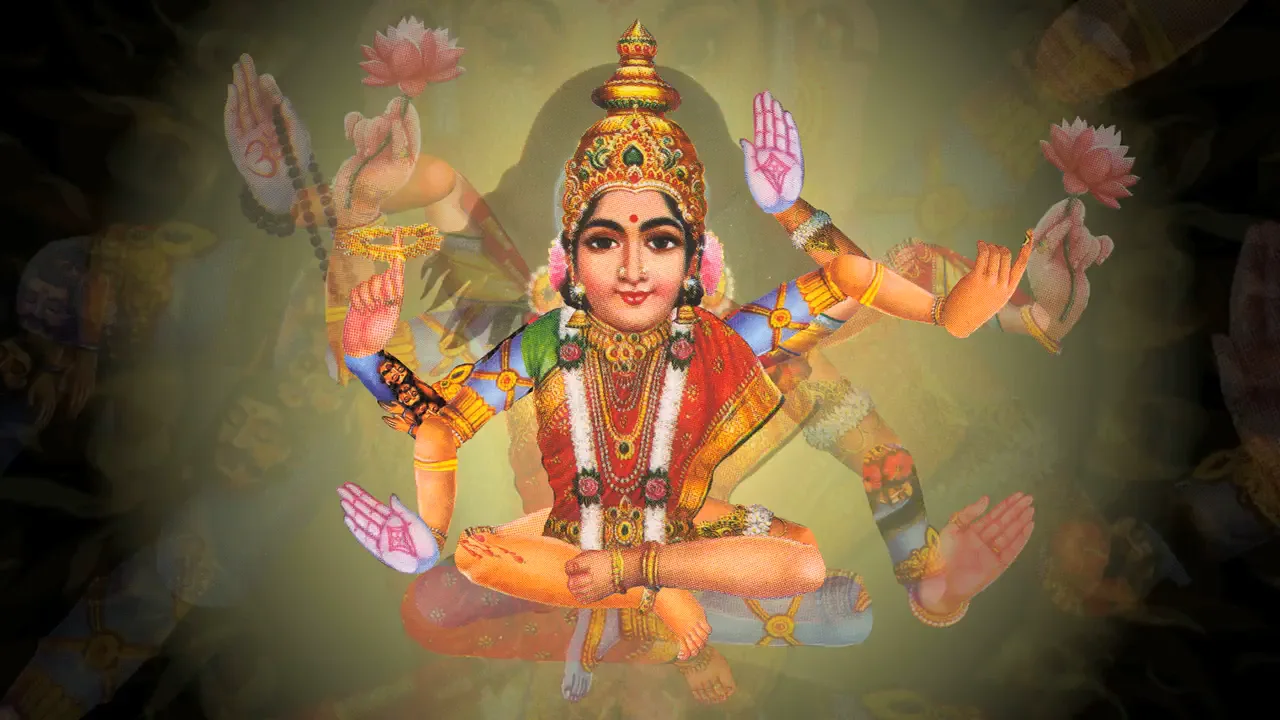
By 53:00 it has turned into collage. The dancer is cut from patterned paper and photographs and set against the flames. A pair of painted eyes fills the screen, with fire in the pupils. A woman and a skeleton dance hand in hand around a ring of flame with a seated figure at its center, and a goddess with many arms takes up the whole frame. Reena Shah keeps singing through all of it. As the song ends, a woman drawn in one white line holds up a small flame.
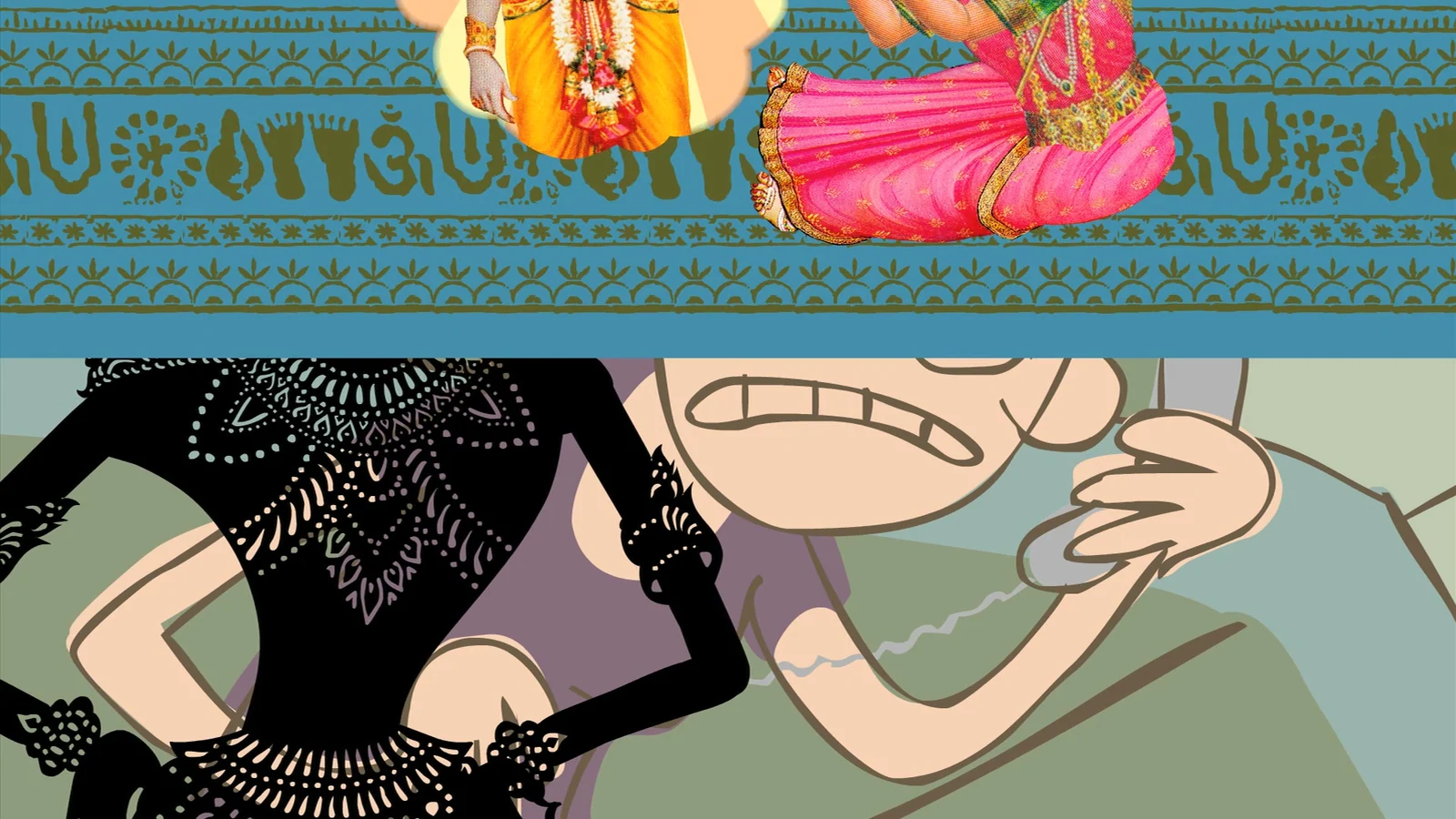
Nina is on the phone in Brooklyn, begging. A shadow puppet steps into her bedroom, and the painted epic slides down behind it. For one frame of the original film, the bedroom and the painted epic are the same picture.
 1:07:27.90
Valmiki hears the survivor cry, and his grief comes out in meter. Shoka, grief; shloka, verse. The tradition counts it as the first poem.
For Pathé Actuelle, Harmony, Velvet Tone, Puritone, Okeh and Columbia.
The songs and the epic seem to her to tell the same story.
Aseem Chhabra, Bhavana Nagulapally and Manish Acharya. Nothing they said was scripted.
Written, directed, produced and animated by Nina Paley. Eighty-two minutes.
She borrowed $50,000 to "decriminalize the film," in her words, and some restrictions on the songs stayed.
The film goes into the public domain. The songs keep their owners.
The Song Is Ended
Hanshaw's last record plays over the end credits, beside the card about Lexi the cat.