After watching: this article discusses the plot.
Before and after Sita Sings the Blues
Choose a resource for where you are in the viewing. Content details are labeled.
Before watching1 resource
- Score & viewing detailsSita Sings the Blues: score and viewing details
The catalog record, score status and viewing options.
Content details may appear in the rationale
After watching1 resource
- ReviewFilm reviewSita Sings the Blues: The Song Has Ended, but the Melody Lingers On
The critical argument, for reading after you have watched.
Plot details; may discuss the ending
Sita Sings the Blues: The Song Has Ended, but the Melody Lingers On
The epic gives Sita's suffering a purpose. The breakup turns devastation into high art.
Sita Sings the Blues (2008) scores 172/200 on TV Intelligentsia's published methodology, Masterclass. Jordan Robinson's review follows Nina Paley's animated Ramayana, which is narrated by shadow puppets, reimagined through painted scenes, emotionally recounted in Annette Hanshaw's 1920s voice and set beside a modern breakup that asks why the epic gives Sita's suffering a purpose while the breakup feels devoid of meaning.
Sita Sings the Blues (2008). Written, directed, produced and animated by Nina Paley. 82 minutes, not rated. Voices: Reena Shah, Annette Hanshaw, Debargo Sanyal, Sanjiv Jhaveri; narrators Aseem Chhabra, Bhavana Nagulapally and Manish Acharya.
Full spoilers follow, including the ending.
How to read this page
Paley weaves three tracks in four styles, because Sita's own story moves between painted scenes and Hanshaw's songs. Each paragraph below is set in the style of the part of the film it describes. The mark in the margin tells you which, and the label in the corner names it as you scroll.
Nina's world
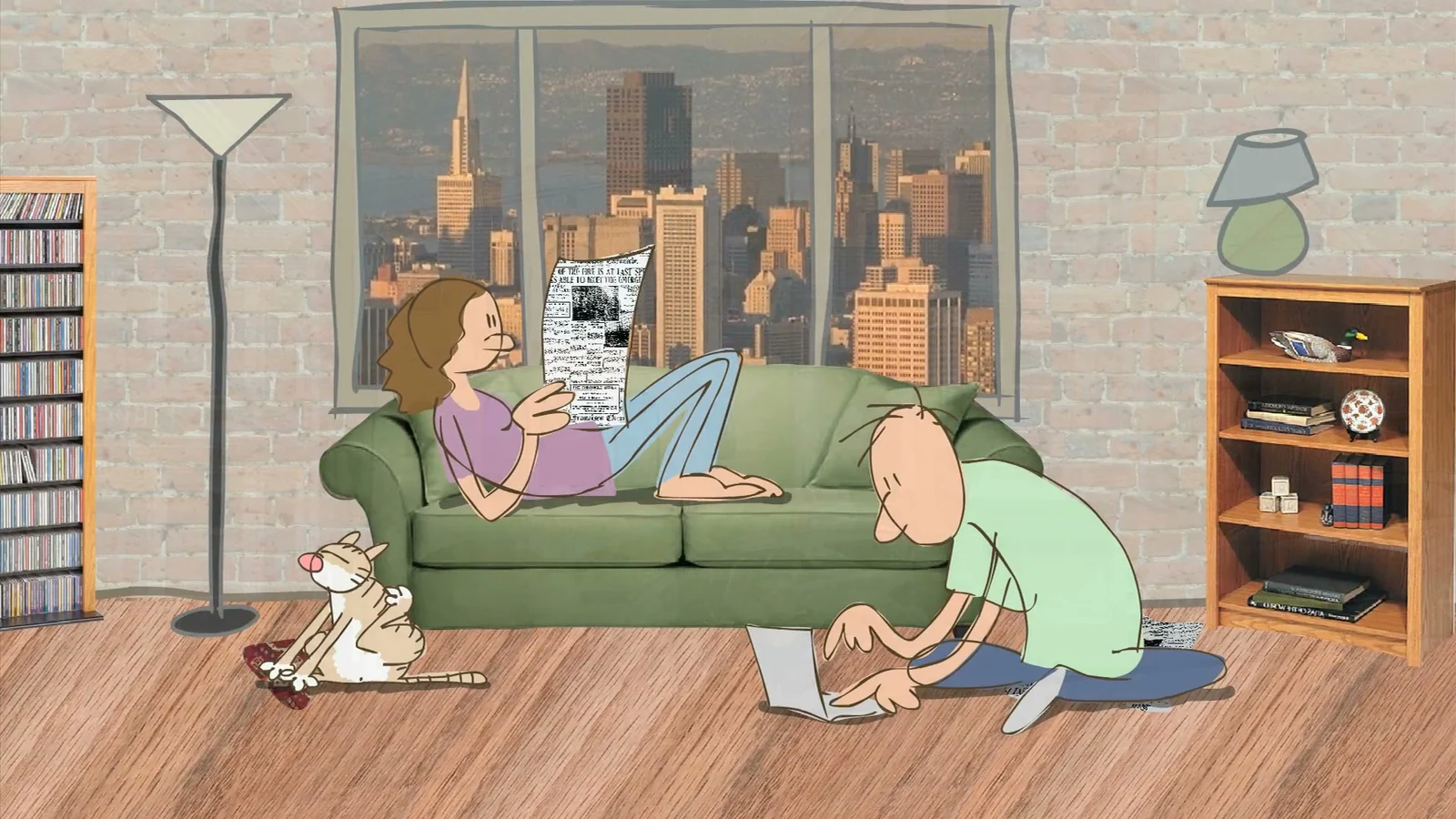
Paley's own breakup, in San Francisco, India and New York, drawn in loose lines over photographs.
A hand-drawn wavy line:
The narrators
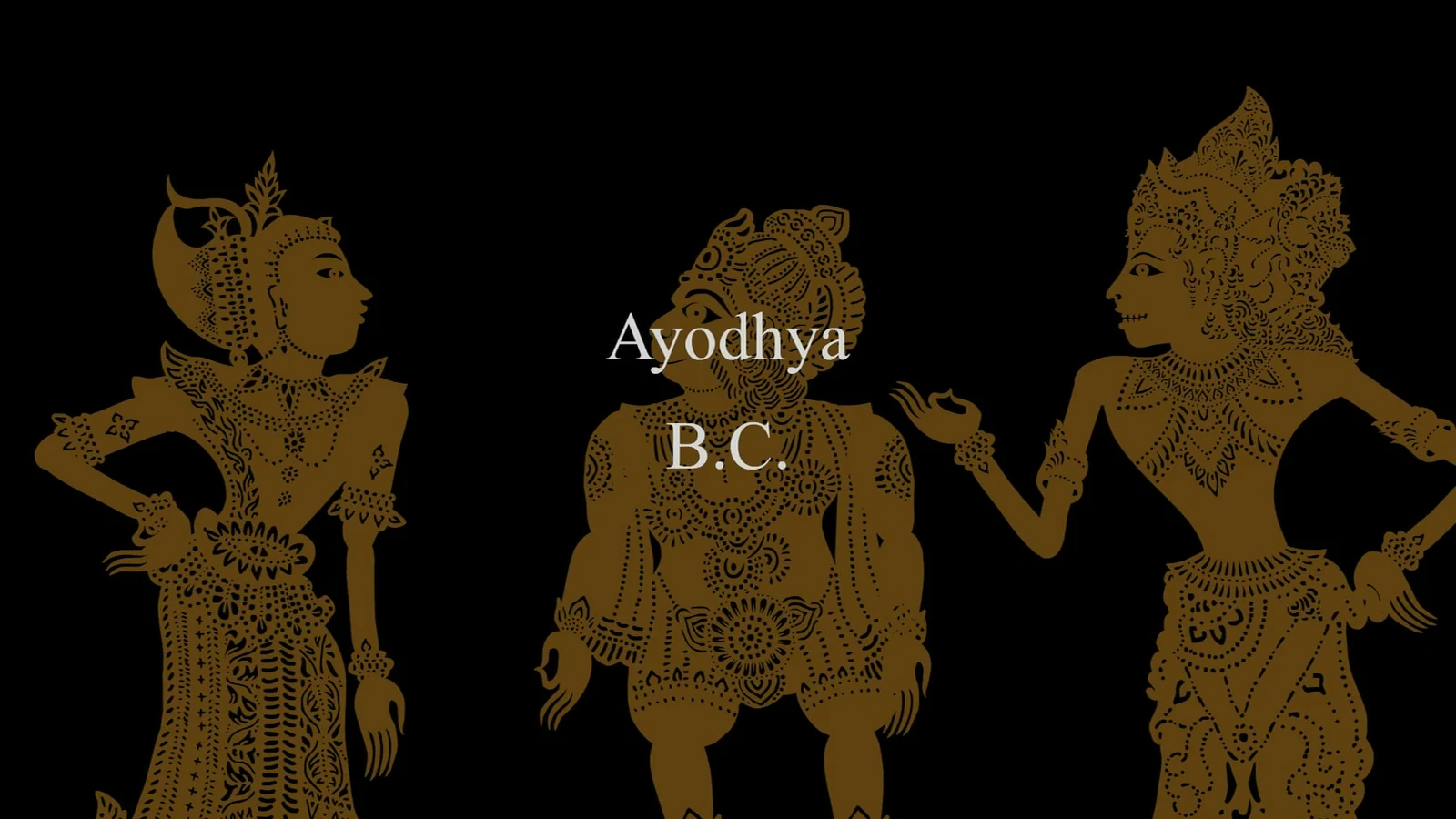
Three shadow puppets piecing the Ramayana together from memory, and arguing as they go.
A dotted line, warmer type:
The epic
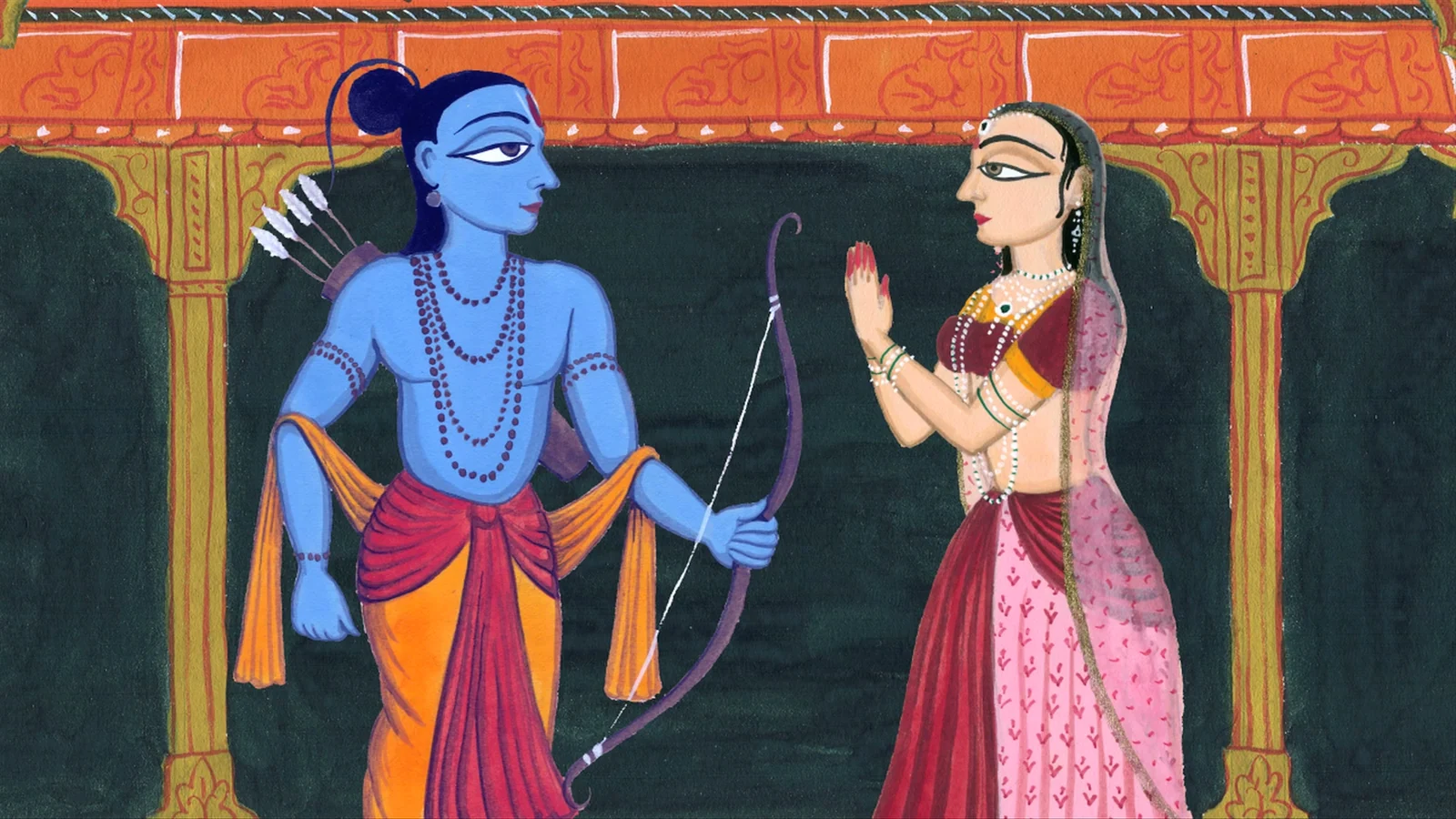
Sita and Rama's spoken scenes, in the manner of Indian court painting.
A double line, serif type:

Hanshaw sings
The musical numbers, where Sita sings with Annette Hanshaw's recorded voice.
A colored bar, italic type:
Paragraphs with no mark step back from the film to talk about it as a whole.
The tradition says the first poem began with a death. A hunter shot one of a pair of birds by a river. Valmiki watched the surviving bird cry for its mate, and his grief came out in meter. The Sanskrit words sit a letter apart: shoka, grief, and shloka, verse. From that verse came the Ramayana, the story of Prince Rama and his wife Sita, told and retold for some two thousand years.
Valmiki could not have known where his verse would travel. One place it landed is an animated film about a breakup.
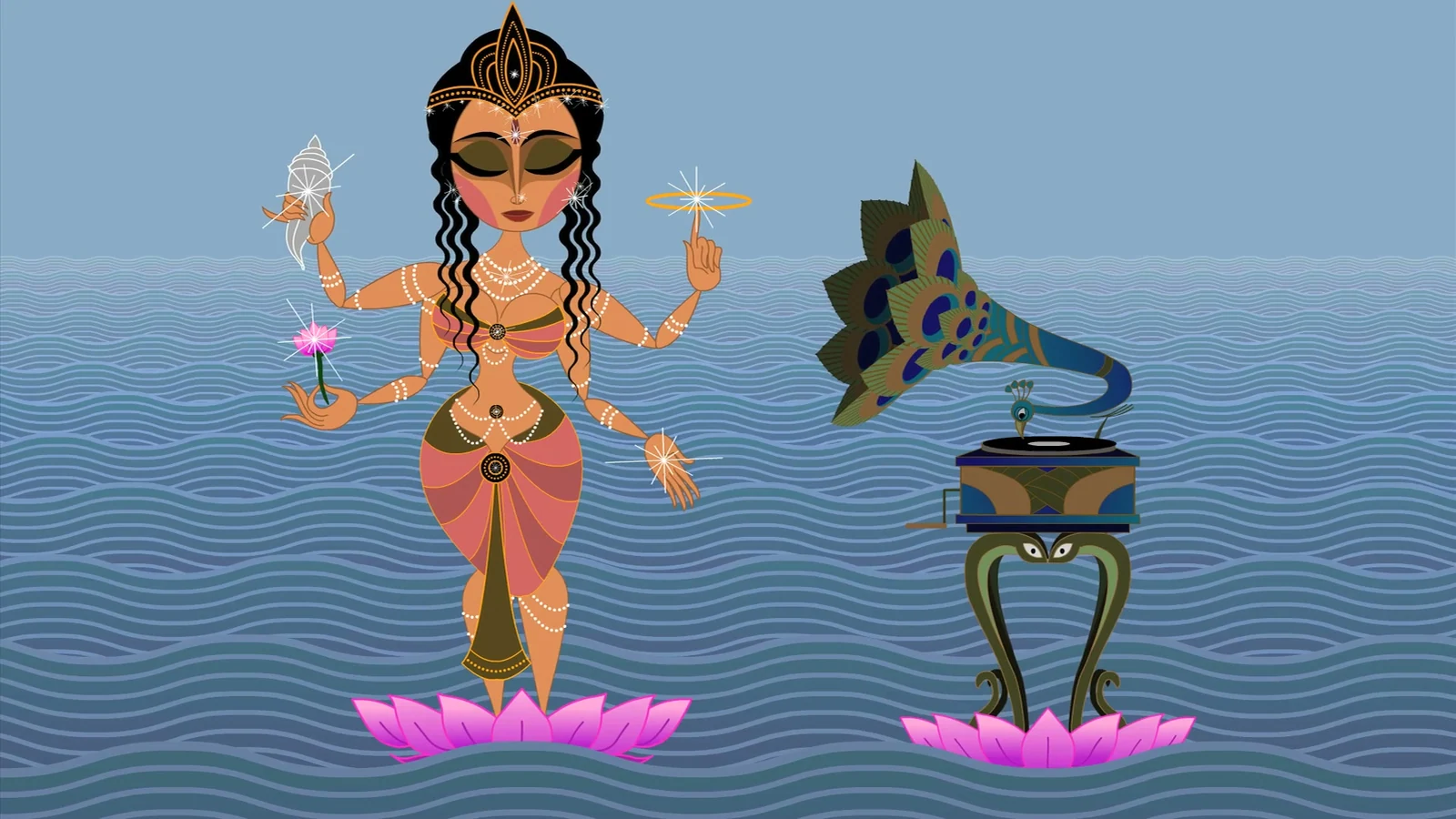
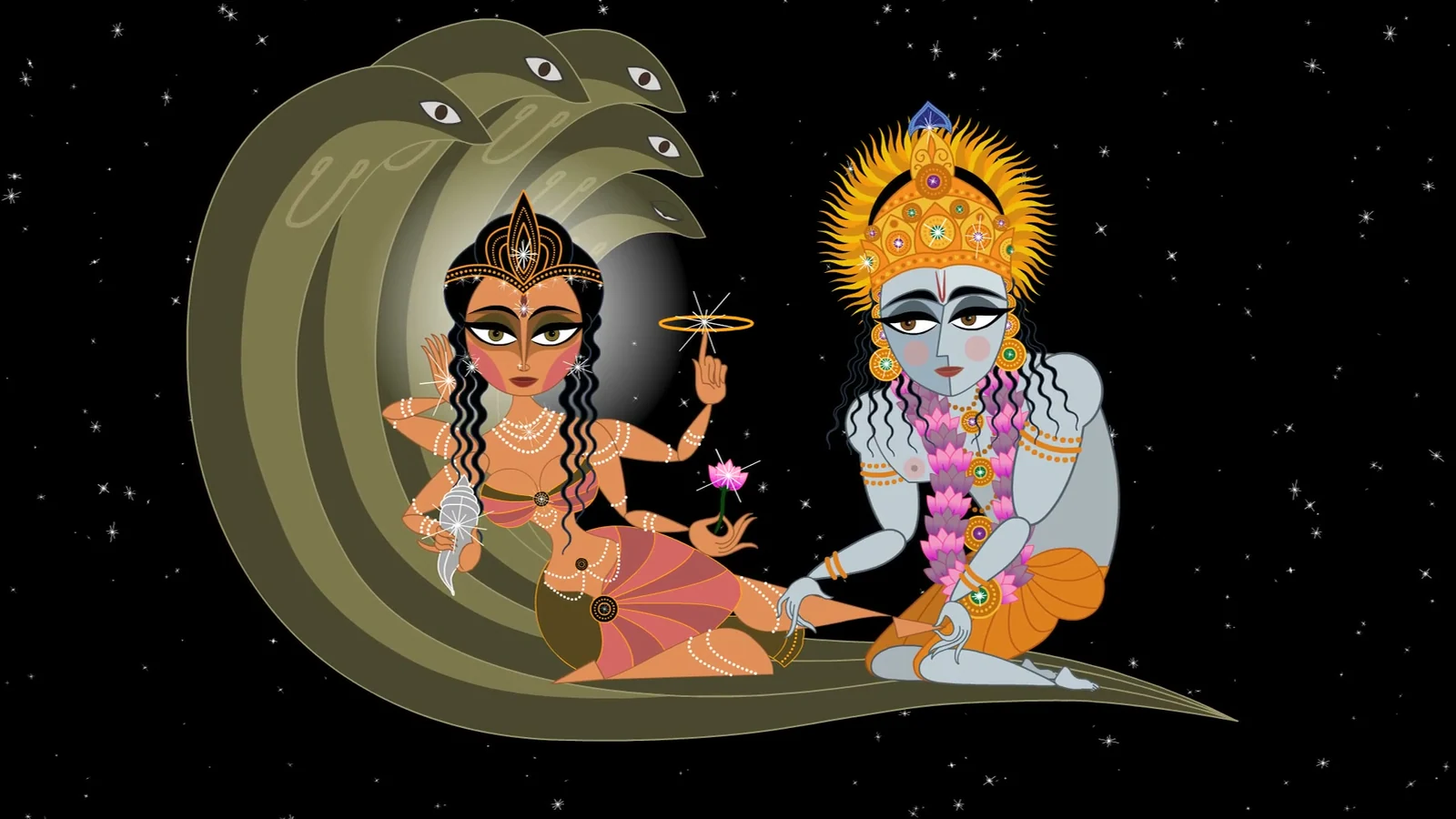
A goddess stands on a lotus floating on the sea beside a peacock that is also a gramophone. Its tail forms the horn, and its beak lowers to the record like a needle. The titles bill Annette Hanshaw as a star and name the Ramayana of Valmiki as the source. Then a crowned blue god sleeps on a coiled serpent while a goddess tends his feet. These are Vishnu and Lakshmi, who come to earth as Rama and Sita.
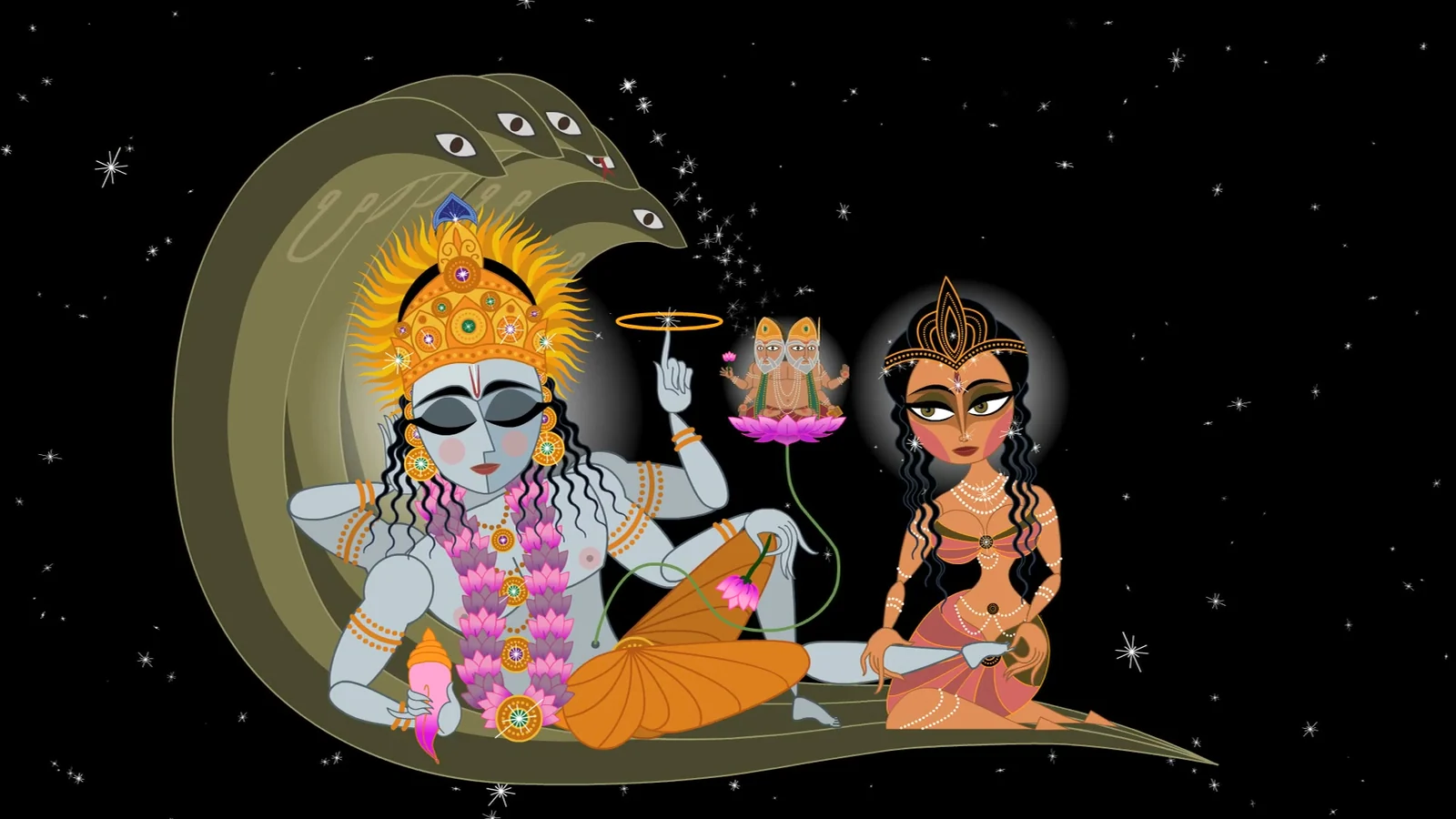
Here We Are
The film runs on three tracks and draws each in its own style, so you always know which one you are in. The first opens on SAN FRANCISCO, written by hand over a waterfront cut from paper. Nina and Dave live with their cat, Lexi, in an apartment with photographed brick walls, and their outlines wobble as if they could lift off the page. Dave has news. Rick wants to hire him, at a new studio. Where is it? India.
The second belongs to three shadow puppets, black cutouts patterned like lace, who try to remember the Ramayana out loud. Aseem Chhabra, Bhavana Nagulapally and Manish Acharya voice them. Paley recorded the three friends, whom she describes as "all natives of India," for an hour in a New York studio. Nothing they said was scripted.
You can hear that it wasn't. When did all this happen? The caption on screen tries "A Long Time Ago." Someone suggests the fourteenth century, and the caption obligingly changes. Someone else thinks the eleventh, and it changes again, then retreats to "B.C." Finally someone offers a place instead of a time, Ayodhya, and the caption takes that too. Since Ayodhya really is in Uttar Pradesh, one of them jokes, the story must be true.
Through the puppets, the film admits who is telling it. Paley is an American retelling a Hindu epic sacred to millions, a tradition she did not grow up inside. Her narrators grew up in India. They disagree with each other and with the story, and she lets them. On screen, one Sita stands beside three names: Sita, which means furrow; Janaki, after her father, King Janaka; and Vaidehi, after his kingdom.
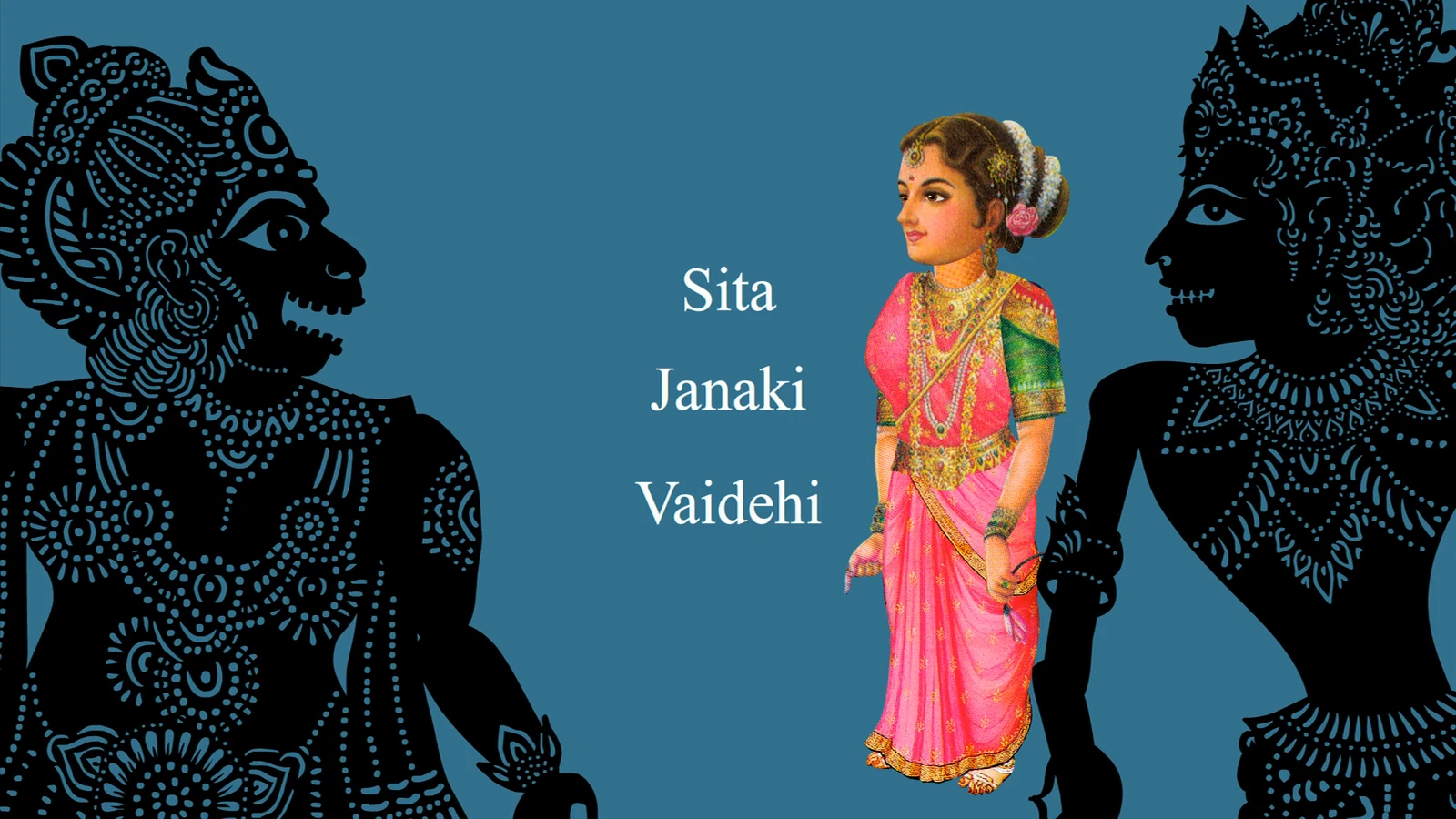
The third track is Sita's story. Its spoken scenes are painted like old Indian court pictures, with the formality of scripture in translation. King Dasharatha has an old vow to keep. He cannot crown his son Rama; he must send him into the forest for fourteen years. Rama accepts the exile, and Sita insists on sharing it. "A woman's place is next to her husband," she says. "I will accept any hardship. I cannot live without you."
Then the peacock leans over its record again, and the whole picture changes key. Sita's eyes grow wide and round, and Rama becomes broad-shouldered and turquoise. From her small round mouth comes a voice from 1920s records, Annette Hanshaw's, singing "Here We Are." Hanshaw was a recording star of the late twenties and a radio star of the early thirties, and she sounds as if she is smiling through a long wait. Reena Shah speaks Sita's lines. Hanshaw sings them. You enjoy the pairing long before you understand it.
When the song ends, the forest becomes an airport. Nina and Dave are the only people in color among gray passengers. "It's only a six-month contract," he tells her. "I'll be back before you know it." Next to a prince banished for fourteen years, six months sounds manageable. He goes. She stays home with the cat.
What Wouldn't I Do for That Man
Nobody in the film says these are one story. It just keeps cutting. A golden deer draws Rama away from the hut. While he is gone, Ravana, the king of Lanka, comes to take Sita. Before he carries her across the sea, Hanshaw sings for her "What Wouldn't I Do for That Man," keeping Sita's promise to accept any hardship in our ears as she is taken away.
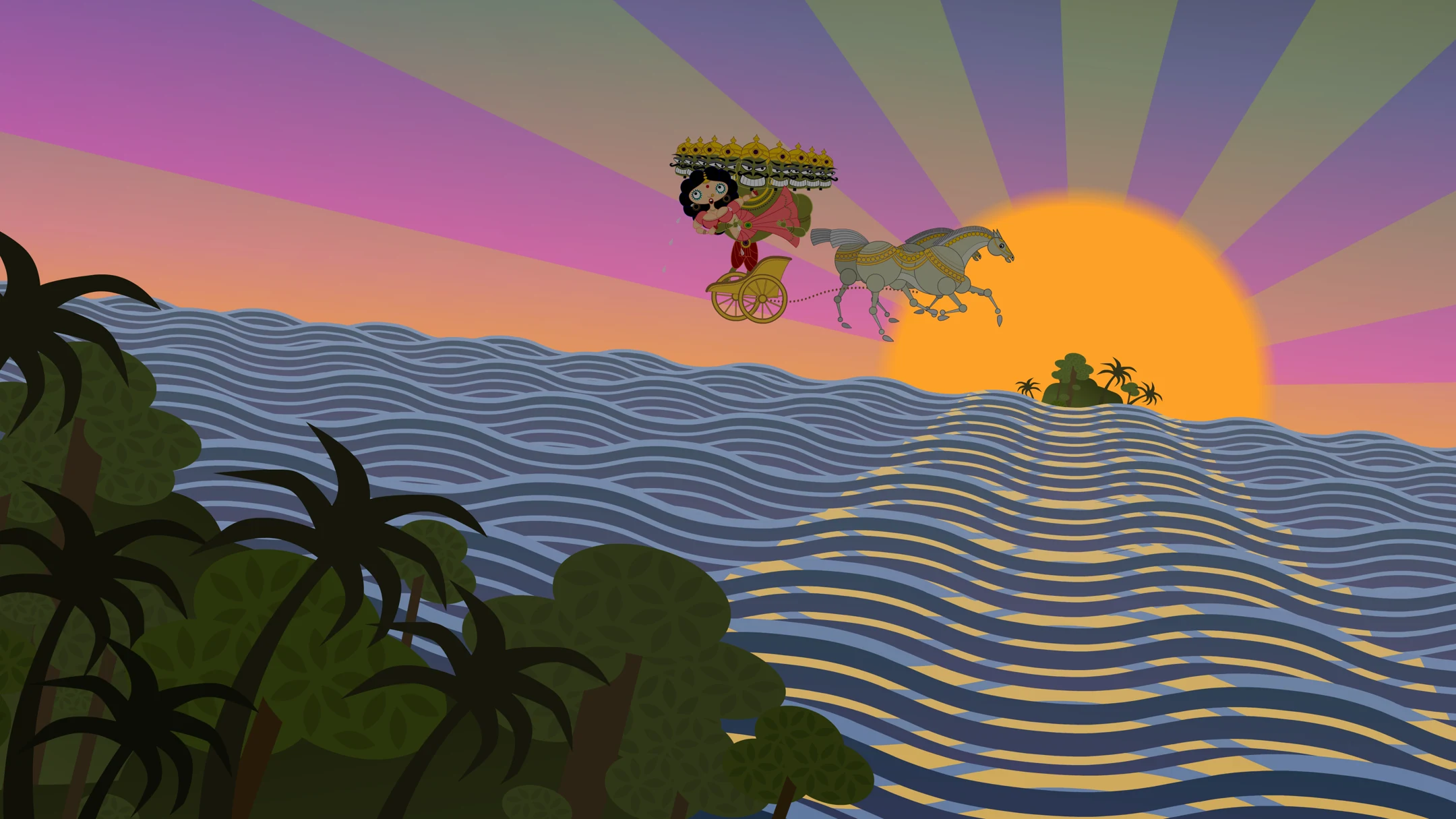
On the way, the narrators can't agree whether Sita still had any jewelry to drop along the road for Rama to follow. Somebody gives up: "Don't challenge these stories."
The phone rings in San Francisco. Nina is on a bed in the dark with the cat. Dave is in bright daylight against green leaves. They share one call, and the pictures keep them a world apart. "They've extended my contract another year." She reminds him he said six months. She asks about Lexi and their apartment, and about herself. "Don't cry, Nina. I love you. You could come here." It sounds like an offer. The year is already settled.
In Lanka, Sita refuses Ravana: "I belong to Rama as the rays belong to the sun." Hanshaw sings "Daddy, Won't You Please Come Home," a record from the late twenties about a different absent man. It fits Sita's captivity so closely you would think it had been waiting for her.
Nina goes. First she posts an ad to sublet the apartment, with one condition in capitals: MUST LOVE CAT. A red line crosses the Pacific and stops at a star marked TRIVANDRUM. Both women have followed their husbands a long way from home.
Mean to Me
Rama crosses the sea with an army of monkey warriors and wins Sita back. I knew the Ramayana's name and little of its story. I thought the war had brought them to the part where they could live happily ever after.
Nina arrives in India. A handwritten card gives the city both its names, THIRUVANANTHAPURAM (TRIVANDRUM). She has reached the place Dave invited her to.
In Lanka, Rama looks at the woman he has just fought a war for and says, "You have lived in another man's house, so you are unfit to be my wife." He has done his part by rescuing her, and now he is done with her. My first reaction was not one I can print. Sita asks for a funeral pyre. "Despite my virtues," she says, "my husband has rejected me."
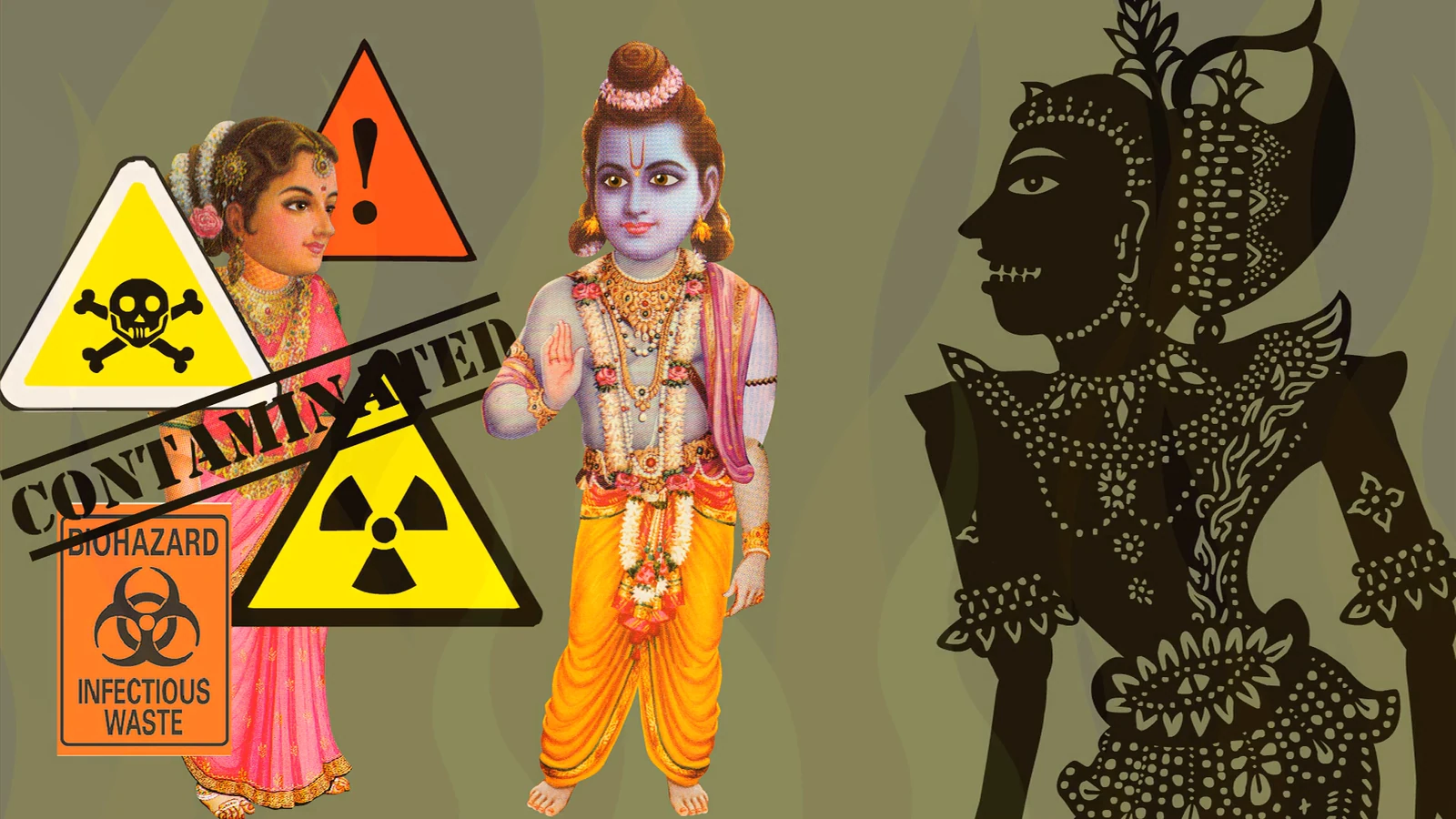
The narrators can't make the purity question add up. Ravana never forced himself on Sita, they point out, and nobody gives him any credit for it. Hanshaw sings "Why must you be mean to me?" and, the narrators tell us, Sita goes through the fire and comes out pure. Paley stamps her CONTAMINATED and surrounds her with hazard signs. Then a tidier label replaces the stamp, Sanitized, and Rama takes her in his arms. "I guess you are pure after all. Will you forgive me, Sita?" "Of course, Rama."
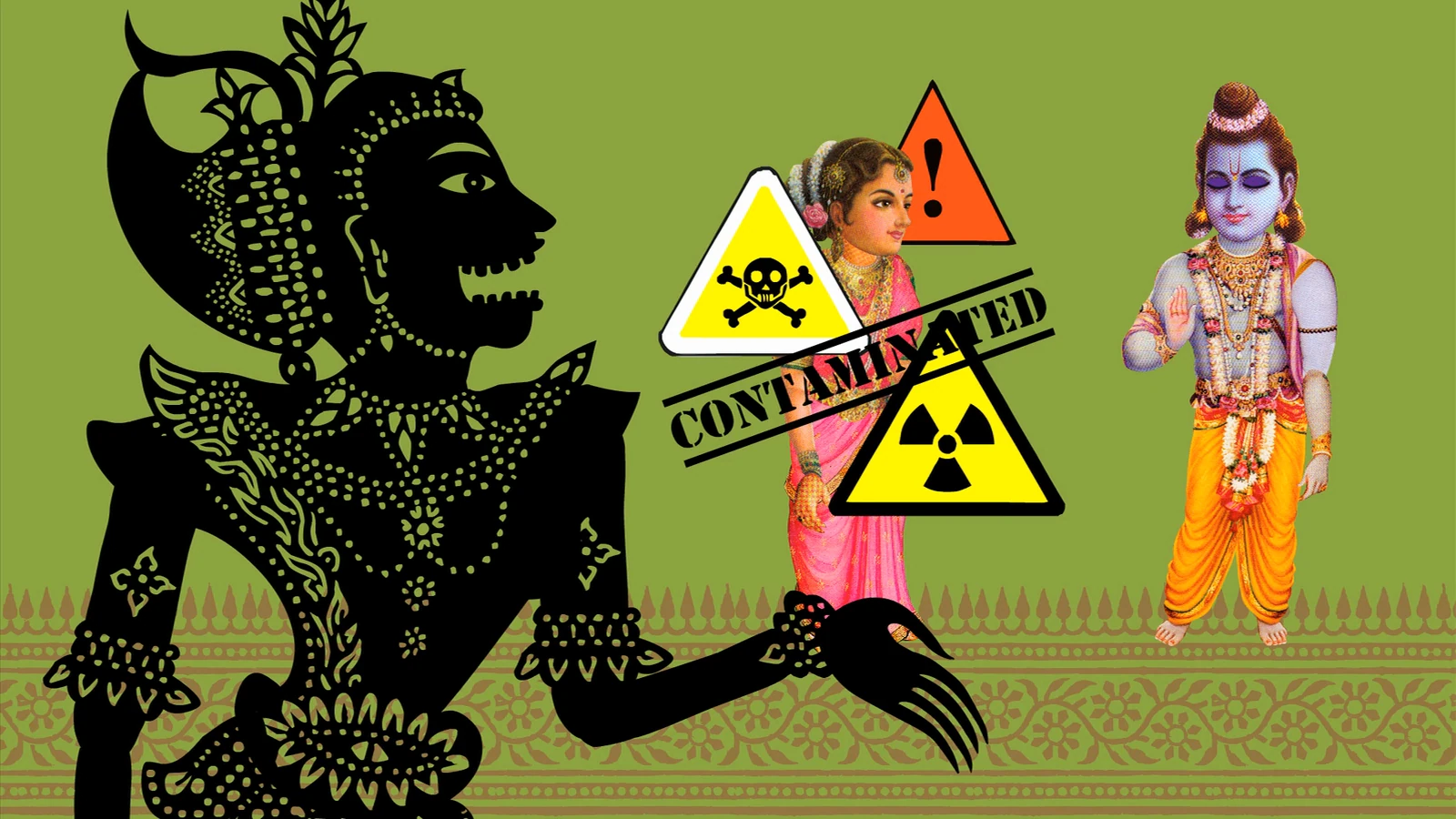
It would be easy to stop at outrage, and I think that would miss what the epic is doing. Rama is worshipped today, and the Ramayana was built to do a different job than a modern love story: it lifts a virtue up and holds it there, and here it asks its listeners to weigh a king's good name against his marriage. Its own tellers have argued over Sita's ordeal for centuries. In some devotional versions, the Sita who entered the fire was a shadow, Maya Sita, and the real one had been sheltered there all along. In Valmiki's poem, Sita herself challenges the accusation, asking Rama why he speaks to her as a common man speaks to a common woman. Her objection belongs to the epic too.
In Trivandrum, Nina is asked to a meeting in New York, five days, all expenses paid. "It'll be fun for you," Dave says. "See you next week." Hanshaw sings, "If you want the rainbow, you must have the rain."
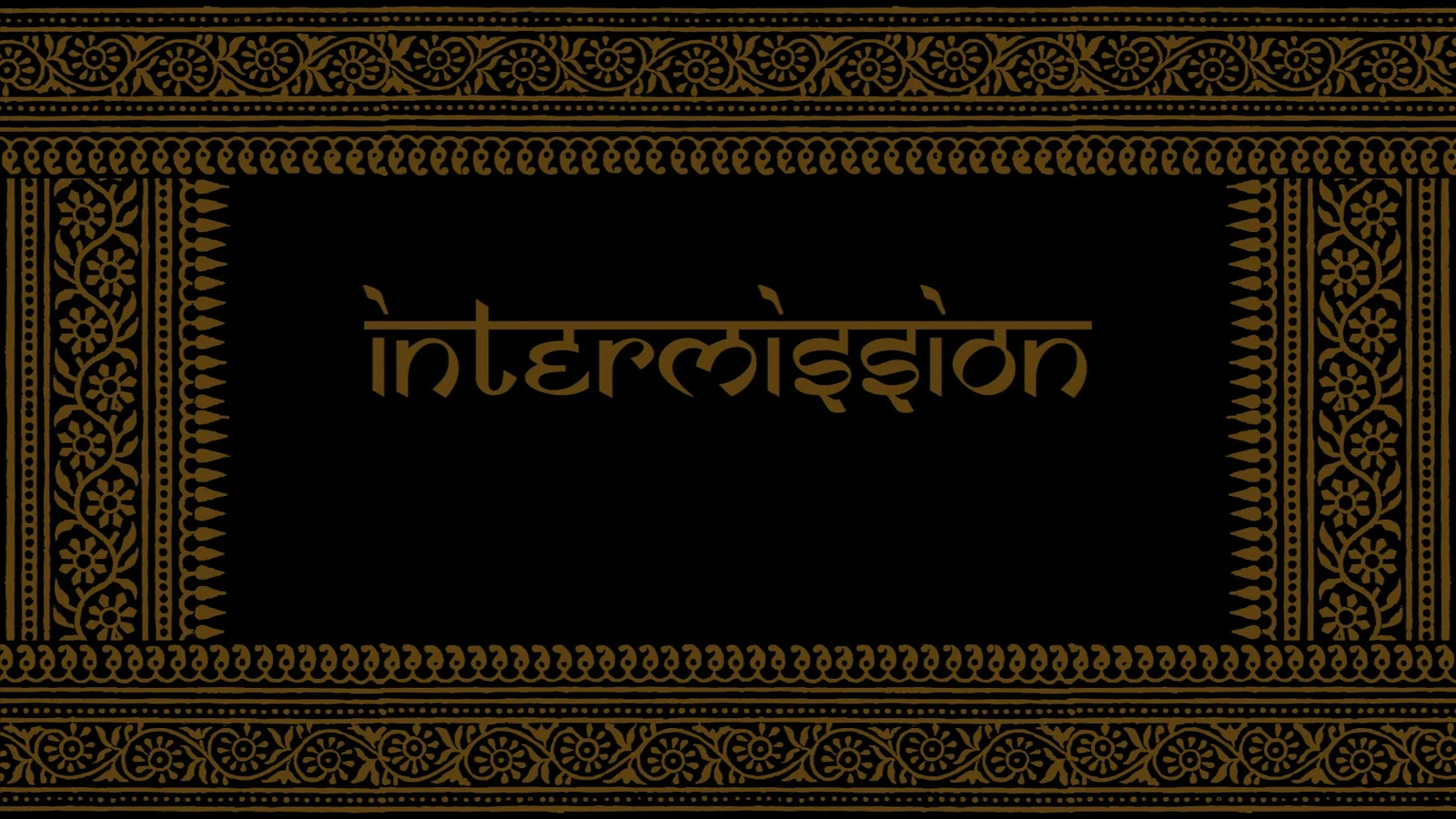
Intermission
Then the film stops. A gold card reading intermission becomes a countdown, and the cast wanders across the numbers while the music plays, sometimes standing right in front of them. "Intermission?" someone in our room said, and soon after, "It's like one of the more creative things I've seen."
Am I Blue
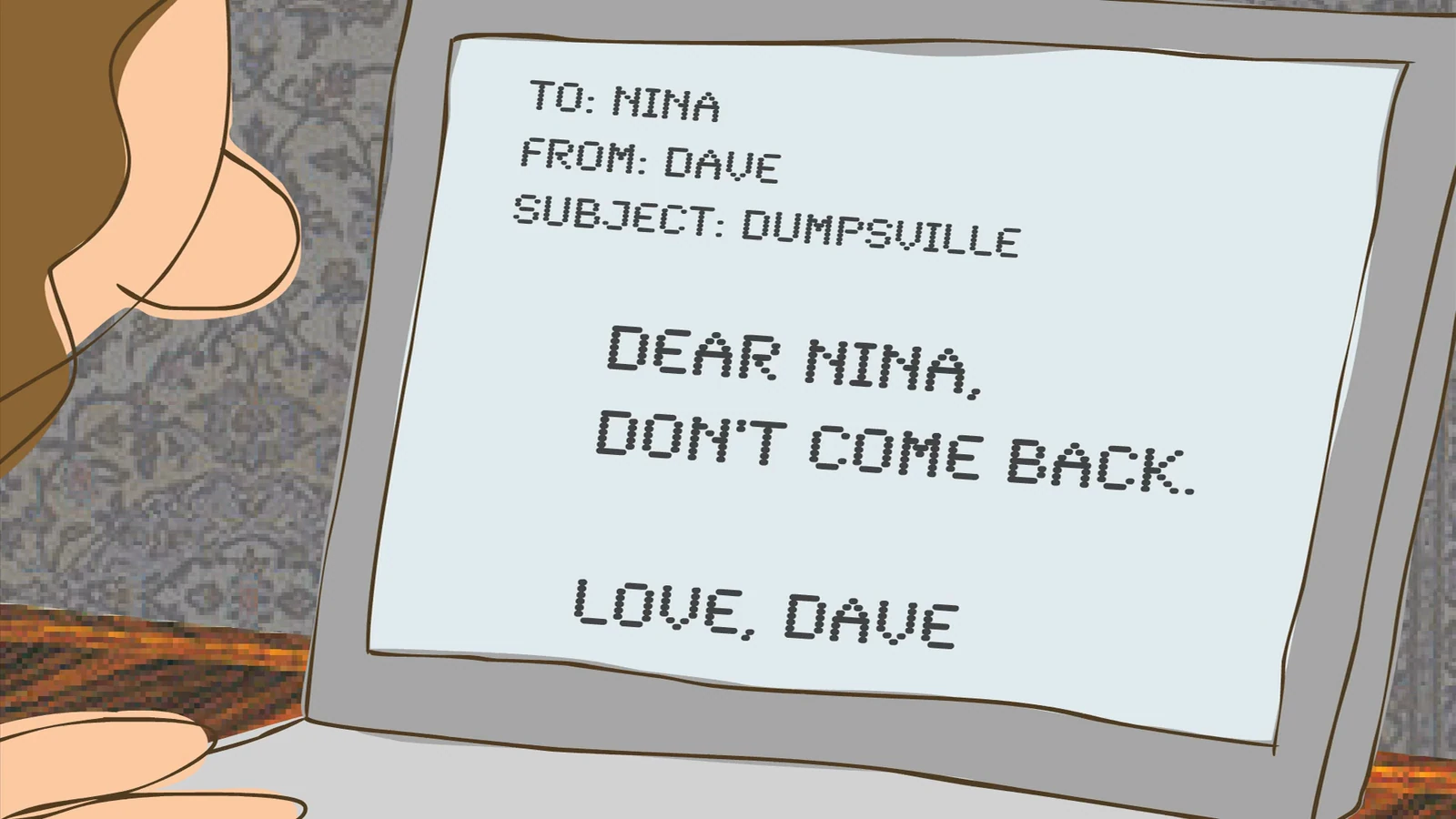
The rain arrives by email. When the countdown runs out, the film comes back on Nina's laptop in New York. To: Nina. From: Dave. Subject: DUMPSVILLE. "DEAR NINA, DON'T COME BACK." Then, under it, as if nothing in between had happened, "LOVE, DAVE." Paley leaves the dismissal and the sign-off on screen together, with nothing to connect them. Of all the places the two stories meet, that email hit me hardest.
Nina looks down. The red heart printed on her shirt cracks into pieces, and they fall off.

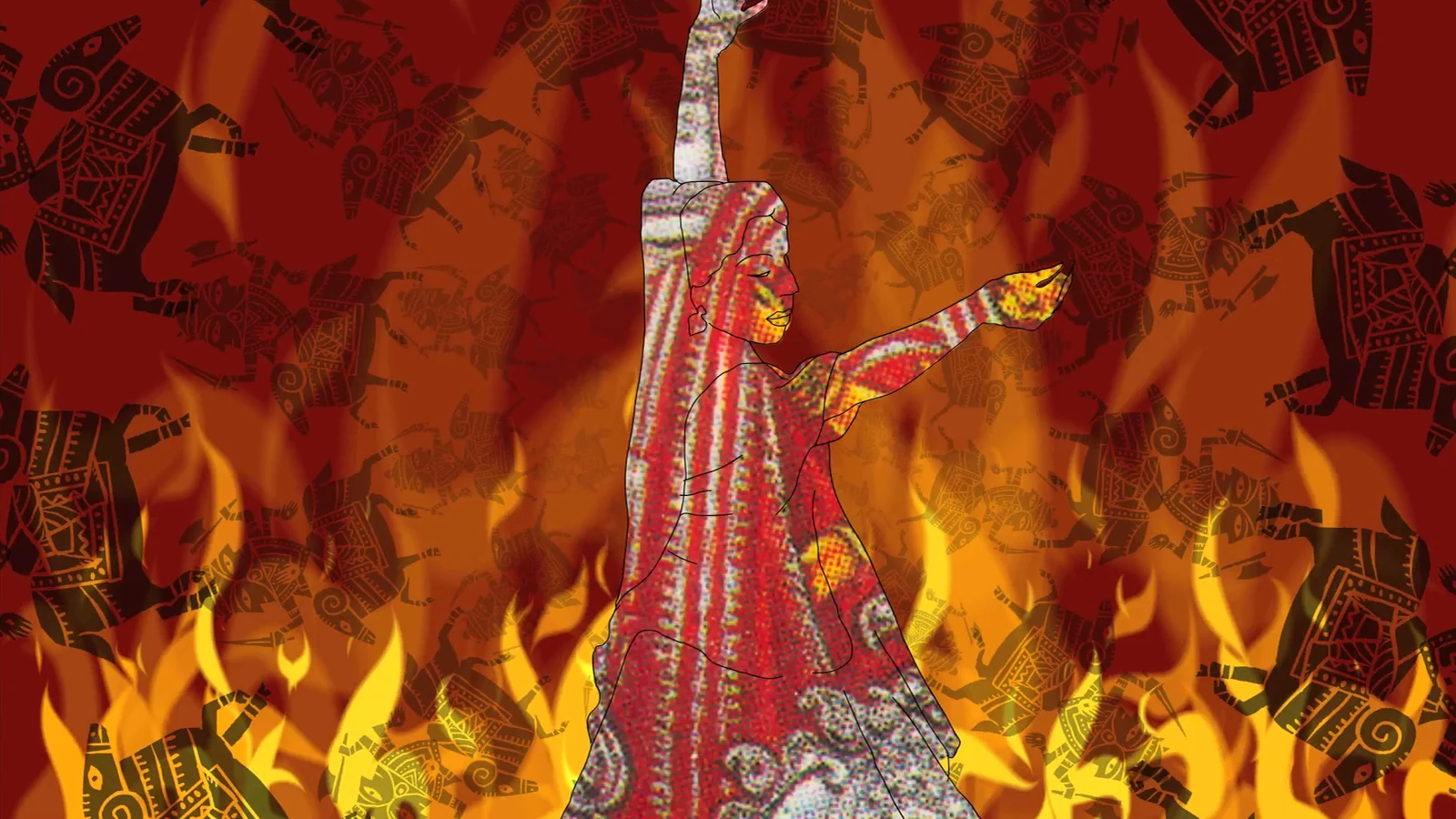
A tiny flame flickers in a hand drawn in a single white line. The hand becomes a dancer, and the dancer multiplies over layers of fire and faces while Reena Shah sings. The sequence is called "Agni Pariksha," Sita's trial by fire. The narrators described her ordeal before the intermission, and Paley brings it back now, out of the story's order, just after Nina's heart has broken.
In Ayodhya, the epic turns again. Sita tells Rama she is pregnant. People in Ayodhya have been gossiping about her, the narrators explain, and a king needs his subjects' respect. Rama tells his brother, "My wife's dubious reputation casts doubt upon my own. You must drive Sita to the forest and abandon her there." Rama appears in a halo with small white wings. Then, over the first bars of "Moanin' Low," the CONTAMINATED stamp returns, with more hazard signs than before. The label that cleared her didn't hold.
The tradition has argued about this too. One reading puts a king's duty to his subjects before his duty to his wife. Many scholars regard this final part of the epic as a later addition, and the translator Arshia Sattar notes that it reads more like the later Puranas than the rest of Valmiki. Tulsidas, retelling the story in the sixteenth century, largely leaves the banishment out.
Alone in the forest, Sita supplies a reason of her own: "I must have committed a terrible sin in the previous life to deserve such suffering. Were I not carrying Rama's son, I would throw myself into the river."
Dave's email and Rama's order both come when the happy ending seems due. Nina has made the move. Sita has survived captivity and the fire. Within the epic, her suffering can demonstrate her virtue or serve a king's duty, and she even looks to a previous life to explain it. Those reasons may trouble us, but they give her pain a purpose inside the story. Dave's email has LOVE at the bottom and no reason anywhere in it, and the film never supplies one.
We found out only after the film was over that the modern Nina is Nina Paley. Her name had been in the opening titles, and we still missed it. Every scene of Nina we had just watched, wobbly line and all, was Paley drawing a version of her own breakup. That was astonishing to learn, and it changes what the epic is doing in the film.
Paley recalls first hearing Hanshaw's records while "sofa surfing" after her breakup. The songs and the Ramayana seemed to tell her the same story, "that life is difficult and filled with love and heartbreak." Not everyone accepted where that led her. In 2008 the Forward quoted the Hindu Janajagruti Samiti's complaint that Paley "is trying to bring Sita down to the level of mortal love experienced by her." In the same article, her narrator Manish Acharya answered that "if people are offended, I don't think anyone has the right to tell them that they are wrong," and defended Paley's right to her reading. Three years later, a Queens screening drew more than a thousand protest emails and had to change venues twice. Its organizer was Hindu. Hindus were on both sides of this film. What could feel like a reduction to someone who reveres Sita had given Paley a way to recognize her own pain.
In Brooklyn, Nina dreams that the old San Francisco bed is back, with Dave and the cat in it, and wakes alone against a brick wall. Hanshaw sings "Am I Blue," and in the forest Sita finds shelter with Valmiki, whose grief had become verse.
Lover, Come Back to Me
Sita gives birth in exile to twin boys, Lava and Kusha, and Valmiki teaches them to sing. In the tradition they become the first singers of the Ramayana. In the film they sing their father's praise: "Rama's great, Rama's good, Rama does what Rama should." Then a ball starts bouncing over the words, the way a sing-along asks you to join in, and rows of women in red pass behind them. The verse it bounces over is "Rama set his wife ablaze, got her home, kicked her out." In the verse that lists what he did, he does what he must, and it closes on "Duty first, Sita last, Rama's reign is unsurpassed," before the boys go back to the chorus and to "should." The song is cheerful, and the story underneath it is not.
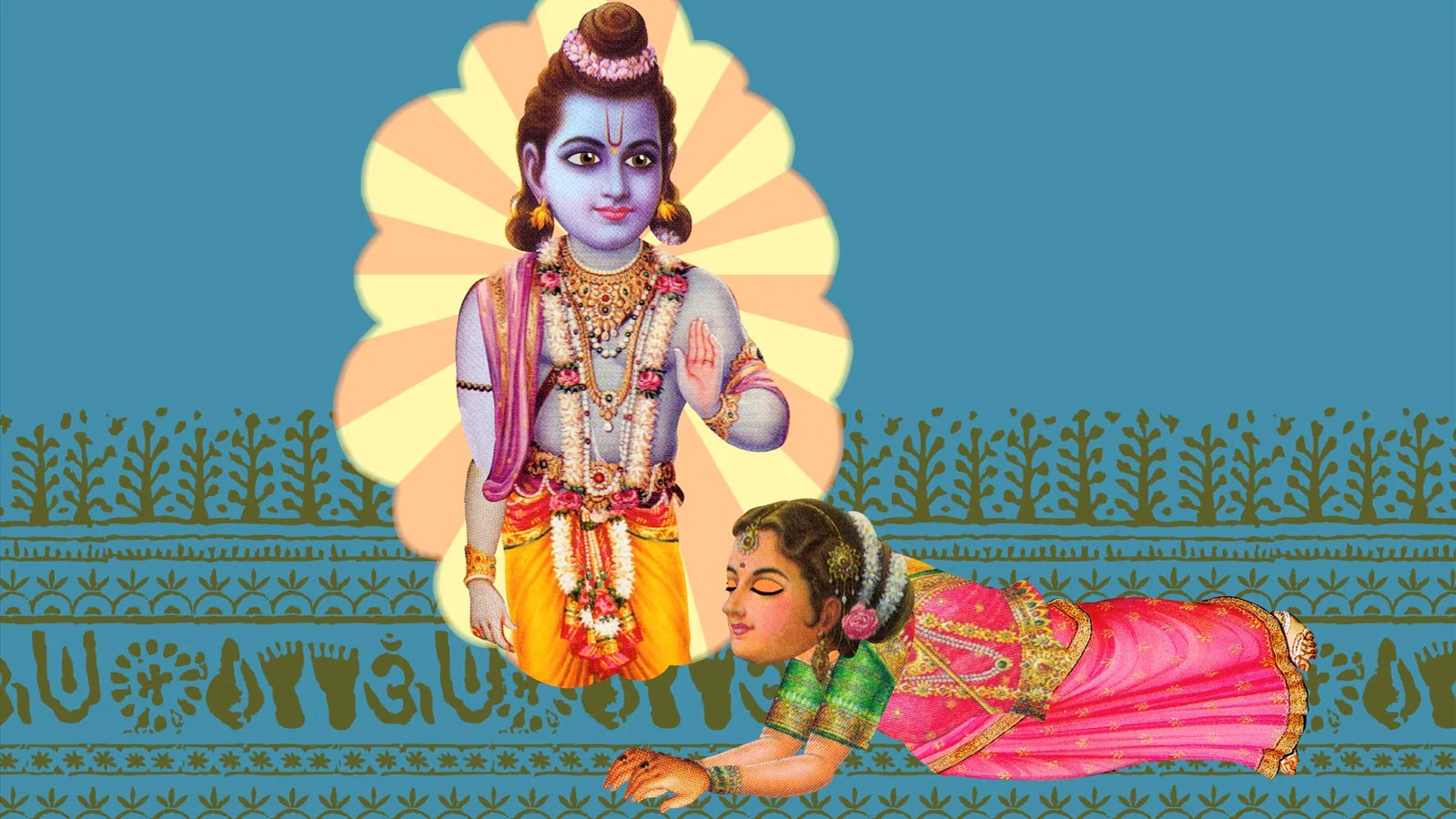
Right after the song, Nina is on the phone in Brooklyn: "Please take me back, please, please, please. I'll do anything, please." A shadow puppet steps in front of her, into her bedroom, and the epic slides down behind it until the background is Sita, bowed to the ground before Rama. For a few seconds the narrators stand between the two women, and one picture carries you from one rejection into the other.
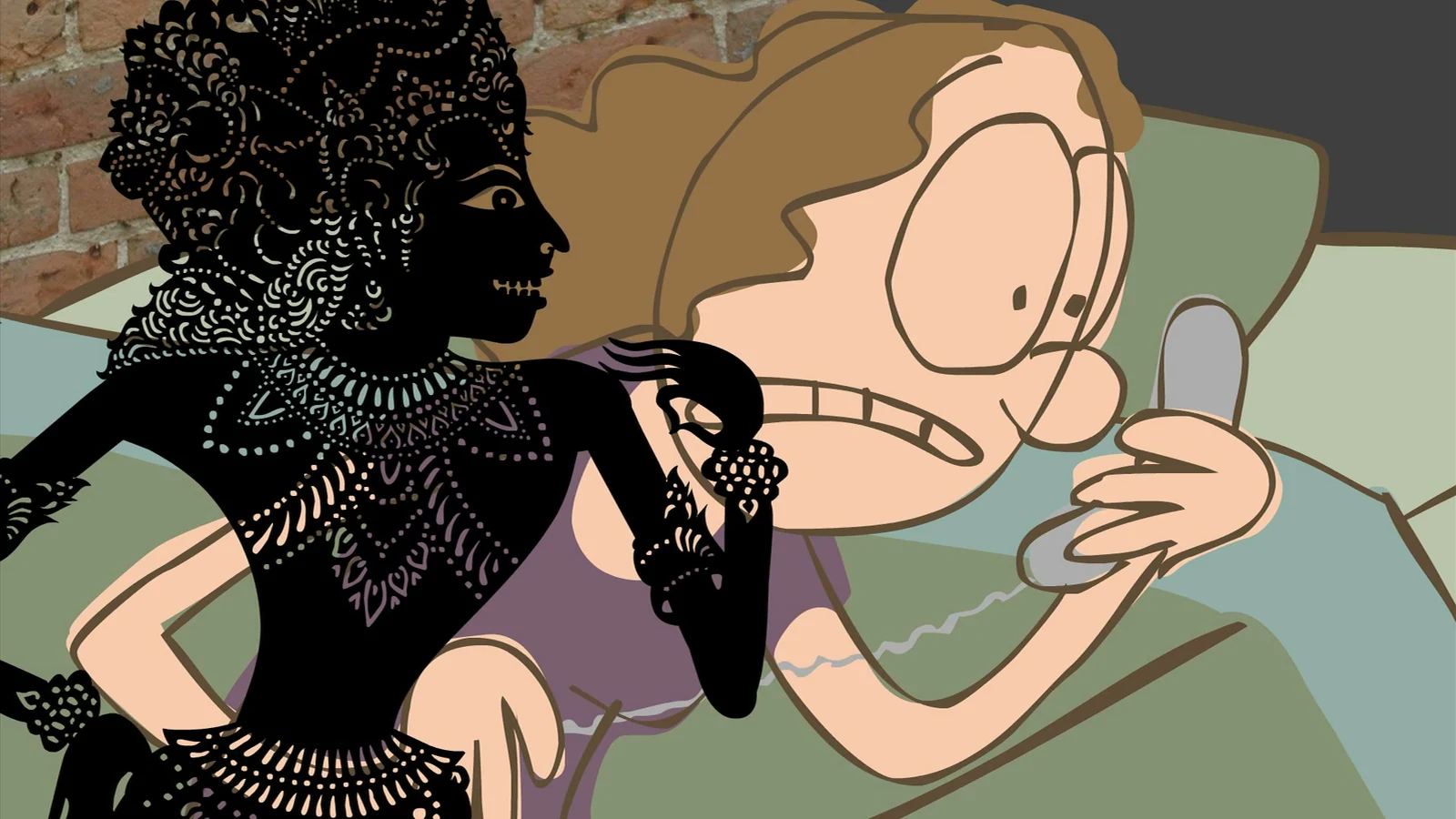
The narrators don't let either woman off easily, and they don't let each other finish. If your friend kept sending a hot lunch every day to a man who treated her that badly, one of them asks, wouldn't you tell her to move on? Sita prayed for him every day, comes another voice. Come on. Somebody keeps coming back to unconditional love, and they can't agree whether it is the reason to admire her or the reason to worry about her. Hanshaw sings "Lover, Come Back to Me," and in the forest Rama hears two boys singing his own story and stops to ask who they are. "My sons," he says.
I've Got a Feeling I'm Falling
Rama calls his sons back to the palace, and the narrators say he wants one more proof of Sita's purity. She gives him something else. "I shall prove my purity to you. If I have always been true to Rama, if I have never thought of another man, if I am completely pure in body and soul, then may Mother Earth take me back into her womb." Sita, the first of her three names, means furrow; in the epic she was found as a baby in a plowed field. The earth opens and takes its daughter home, out of reach of anyone's judgment.
The ground closes over her, and Hanshaw comes in brighter than she has all film: "I've got a feeling I'm falling," falling for nobody else but you. The song keeps her devotion going without her.
The Song Is Ended
In New York, a black cat winds around Nina's legs. That evening it lies in her lap while she reads, and the cover comes into focus: The Ramayana, the source named in the opening titles. Other tellings sit on the shelf, including Sita's Story and Ashok K. Banker's Prince of Ayodhya. Centuries of retelling brought the poem to that shelf. We know who is holding the book now. This may be the night the film we have just watched began to take shape. That thought blew my mind.
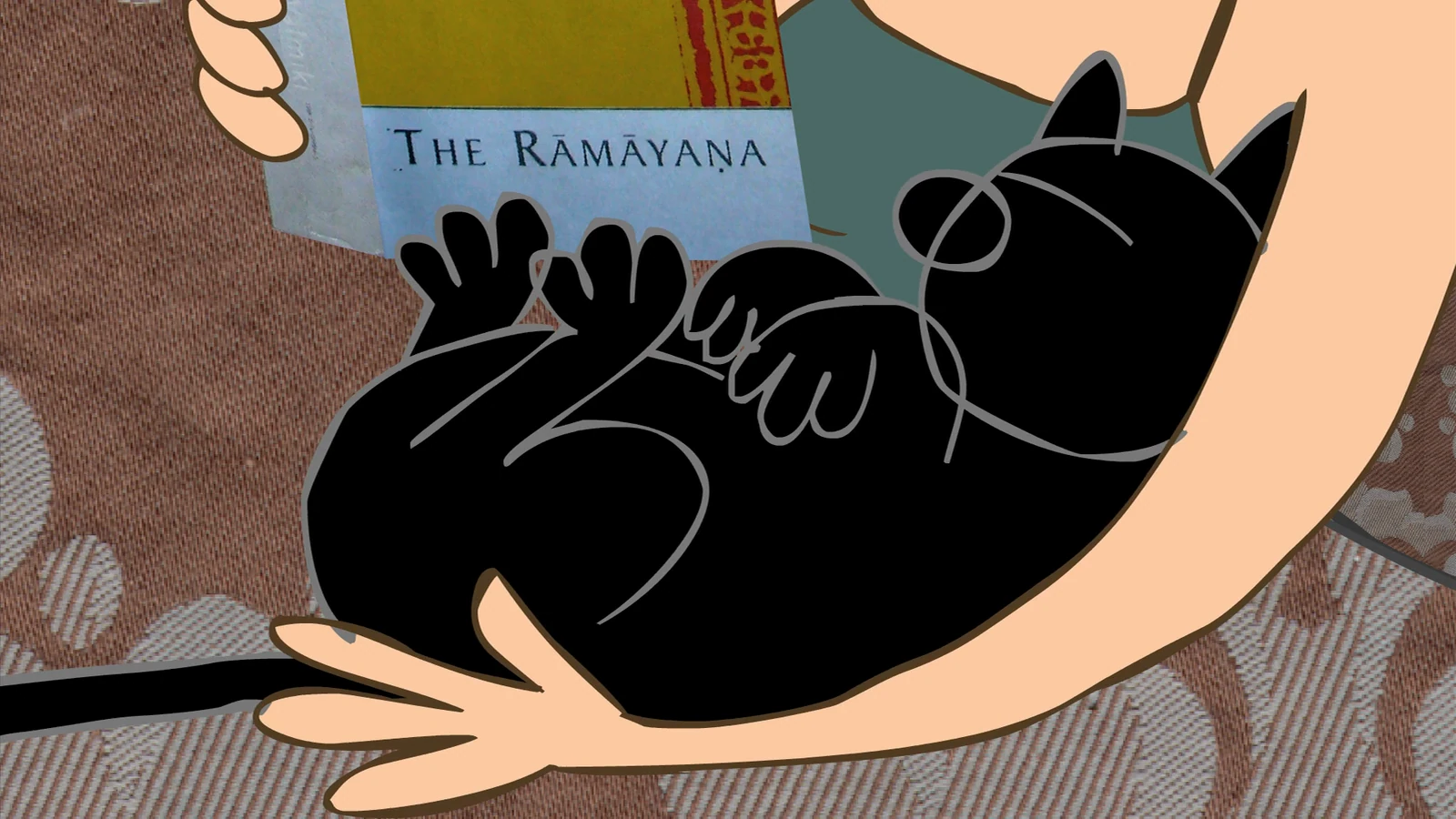
Knowing that changes the two boys too. I think of the film as Paley's child. Like Lava and Kusha, it learned to sing the story of the woman who was sent away, and it carries that story to whoever is listening.
The opening picture returns with the figures' places exchanged. Lakshmi reclines on the serpent, and Vishnu tends her foot. For a moment, the devotion runs the other way. An end card reports that the San Francisco subtenants adopted Lexi. MUST LOVE CAT, the ad said, and they did. The cast roll gives Sita two voices: Reena Shah's for speaking, and for singing, a woman who made her records about eight decades before anyone drew Sita this way.
The songs the peacock's needle played had owners. Paley said the first quotes averaged "$20,000 per song," for eleven songs, more than it cost to make the film. She "borrowed $50,000 to decriminalize the film," though her own account makes clear that restrictions on the songs remained. From 2009 anyone could watch the film for free, and in 2013 she gave up the copyright she controlled. Sita's pain had a story to hold it. Nina's had none, so Paley made one and let it go to everyone. Paley borrowed to clear the songs, then gave the film to you for nothing.
Over the end credits Hanshaw sings Irving Berlin's "The Song Is Ended (but the Melody Lingers On)." Valmiki couldn't have known his verse would reach a woman in New York, and Hanshaw couldn't have known her records would reach her too. Paley can't know who will find her film next, or what they will be carrying when they do. The song is ended, and Hanshaw is still singing.
TVI Score: 172 out of 200
Sita Sings the Blues earns a TVI Score of 172 out of 200, in our Masterclass tier. Cognitive Stimulation is 45 of 50. You follow three tracks in four styles at once, and it gets full marks for conceptual novelty, because I don't think I have ever seen anything in the same dimension as this. When court painting gives way to round eyes and a jazz record, it almost feels like traveling into another realm. Craft and Quality is 47 of 50, with full marks for what Paley achieves with her resources and for an ending that brings every story back to the woman making the film. Educational Value is 38 of 50, strongest on the epic and its retellings, lighter on anything you would carry home as a life skill. I can see some viewers drifting at points. I never did.
The Intelligentsia Report
Film and television criticism, watch guides, and updates from TV Intelligentsia. Free. Unsubscribe anytime.
TVI Score Breakdown
| Dimension | Weight | Score |
|---|---|---|
| Cognitive Stimulation | 40% | 45 / 50 |
| Educational Value | 35% | 38 / 50 |
| Craft & Quality | 25% | 47 / 50 |
| TVI Score | 172 / 200 · Masterclass |
Formula: round((C × 0.40 + E × 0.35 + Q × 0.25) × 4) = 172. The three weighted dimensions do not sum to the total; the formula scales them.
Disclaimer: TVI's score is a content rating, not a measurement of intelligence.
Common questions
What is Sita Sings the Blues' IQ Score?
Sita Sings the Blues (2008) scores 172 of 200 on the TVI rubric, Masterclass tier, with Cognitive Stimulation 45 of 50, Educational Value 38 of 50, and Craft and Quality 47 of 50. It is the film's first TVI score.
What is Sita Sings the Blues about?
Nina Paley's 2008 animated feature retells the Ramayana from Sita's side in three styles at once: unscripted shadow-puppet narrators, painted epic scenes, and musical numbers sung in Annette Hanshaw's 1920s recordings, set beside a modern breakup in San Francisco, India and New York.
Is Sita Sings the Blues free to watch?
Yes. Paley released the film free online in 2009 and dedicated it to the public domain (CC0) on January 18, 2013. Her film site links to the full film on the Internet Archive.
Film: Sita Sings the Blues (2008), written, directed, produced and animated by Nina Paley. All frames are from the film, which Paley dedicated to the public domain in 2013. The IQ Score is a content rating, not an intelligence measurement.