Moana and the Courage We Give Each Other
Beyond the reef, a girl and a demigod discover how much becoming yourself has to do with other people.
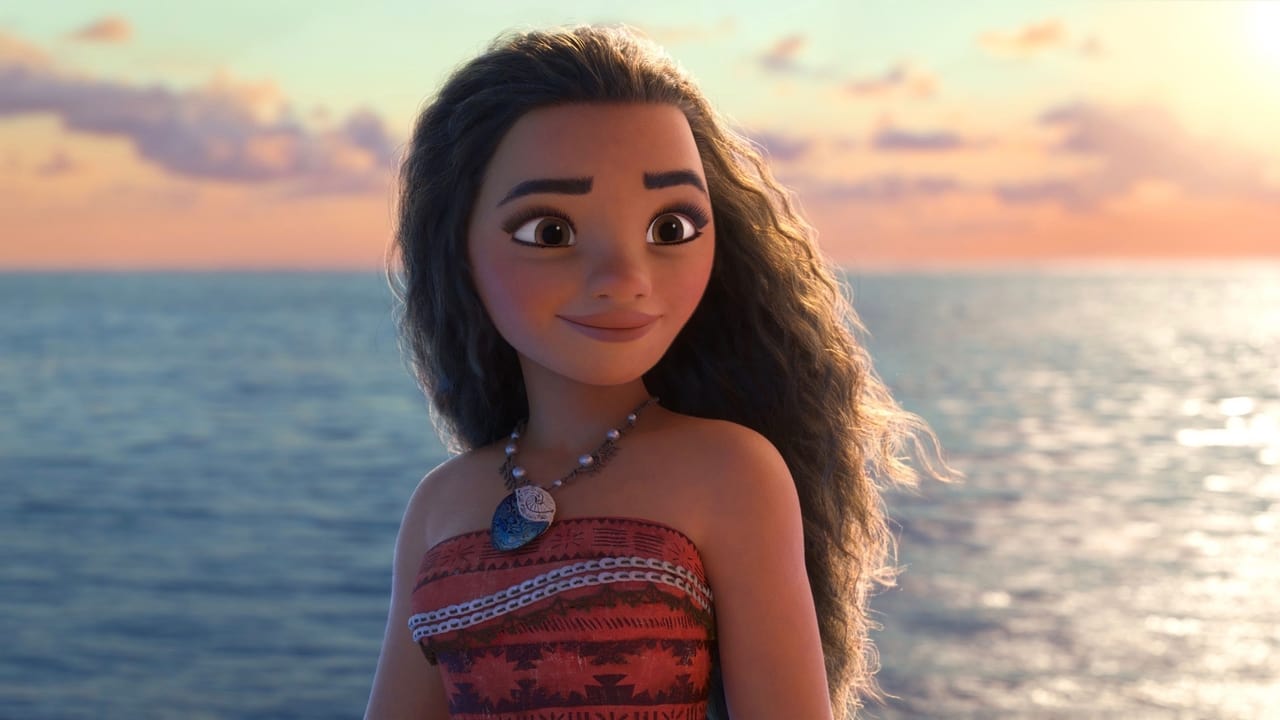
Moana scores 134/200 on TV Intelligentsia's published methodology, Stimulating, on a verified receipt, with an SEL score of 38 and a TVI Kids band of 6 and up. Ron Clements and John Musker's film sends a girl who has not learned to sail across an ocean with a demigod who would rather be admired than corrected, and the voyage teaches both of them.
Full spoilers for Disney’s animated Moana (2016).
Moana is learning to lead an island, but her eyes keep drifting out to sea. On Motunui, she helps solve the village’s problems, listens to her father, and tries to picture the life he is preparing her for. There is love in that life, and purpose. She keeps returning to the shore anyway. “How Far I’ll Go” makes the longing soar without making home seem small. She wants to discover what lies beyond the reef, and she wants to be someone her people can count on. She does not yet know how to do both.
Her grandmother, Tala, tells a story that will send her beyond the reef. Long ago, the demigod Maui stole the heart of Te Fiti, the goddess whose power creates life. His theft brought decay into the world. When Motunui’s fish disappear and its coconuts begin to rot, that old story becomes a crisis Moana can see. The ocean has chosen her to return the heart. She must find Maui, get him across the sea, and persuade him to repair what he did.
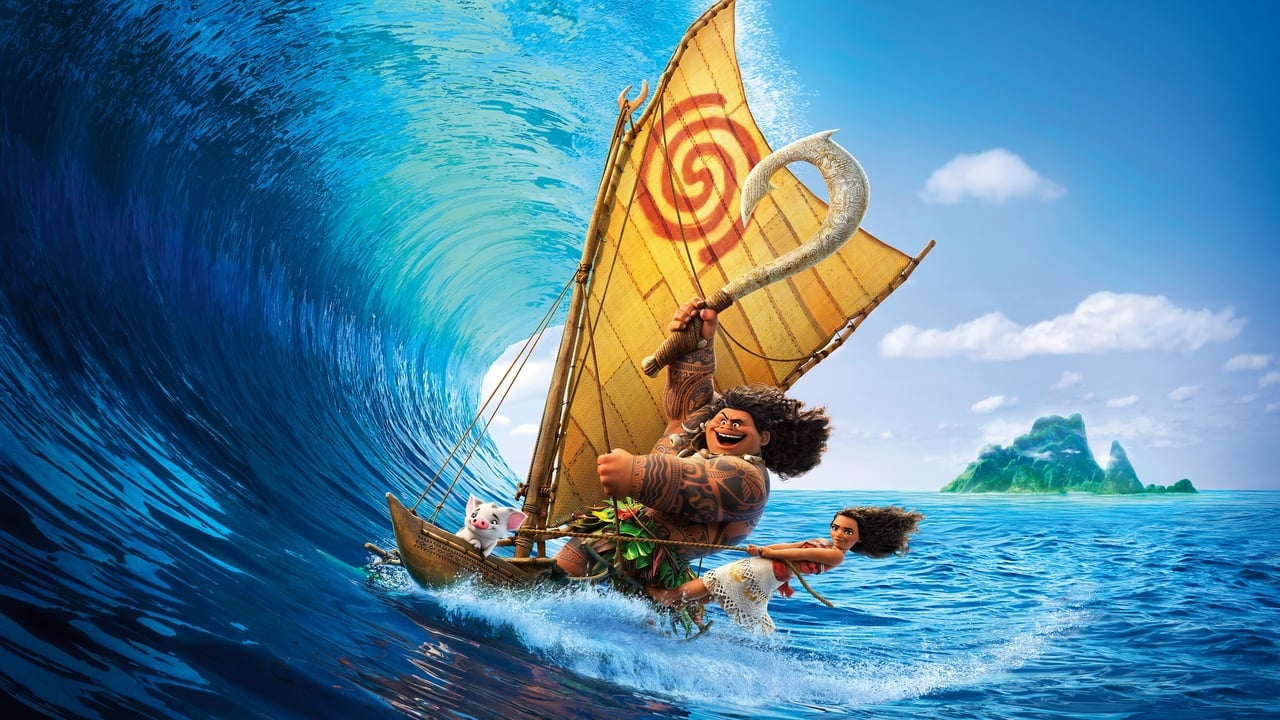
It is a considerable assignment for someone still learning to sail. Maui, meanwhile, has more experience being celebrated than being asked to apologize. Putting them in a boat together gives Moana its comedy and much of its heart. Each arrives with something the other needs, though neither is especially pleased with the arrangement at first. Across the voyage, their quarrels give way to lessons and the beginnings of a friendship. Finding themselves becomes inseparable from learning how to see each other.
A home worth returning to
Moana’s father knows what a voyage can cost. He once ventured beyond the reef and lost his closest friend. His prohibition carries that grief, and the film respects it enough to make him more than an obstacle to his daughter’s ambitions. He is trying to keep her from a danger he remembers all too well. What he cannot yet accept is that staying may also become dangerous. Keeping Moana where he can see her will not protect her from what is happening to their home.
Tala opens another part of the family’s history when she reveals the ancestral boats. The people who now refuse to cross the reef were once voyagers. Moana has grown up knowing where she is not allowed to go. Here, at last, is evidence of where her people have been.
The discovery changes the meaning of her longing. Her pull toward the sea no longer has to be evidence that she belongs somewhere else. It connects her to a part of her people’s history she has never been taught. The voyaging chorus gives that recognition its exhilaration. A desire that sounded lonely in “How Far I’ll Go” suddenly has other voices behind it.
The boats also give that discovery a practical shape. This inheritance can be sailed. The film’s Pacific Island setting matters because ancestry, navigation, and communal life are part of the work Moana has to learn, not just scenery to cross. She can carry her love of home onto the water. She will need to learn what to do once she gets there.

Two students in one boat
When Moana finally finds Maui, he assumes she wants an autograph. She has come to confront him about a theft; he supplies a song about everything humanity owes him. “You’re Welcome” is a musical acceptance speech for an award no one has presented. The characterization is sharper than the song.
His showmanship becomes more interesting when he tells her where it began. His human parents rejected him. The gods gave him the hook and the extraordinary powers with which he built his identity. His gifts to humanity became attempts to secure the love he had been denied. Even stealing Te Fiti’s heart could fit that purpose: he would give people the power of creation, and surely then they would want him.
There is something painful beneath all that self-congratulation. Maui has made himself magnificent without becoming secure in anyone’s affection. The achievements are real, but they cannot answer the question he keeps asking through them. Moana arrives needing his help, and he can barely recognize a relationship that does not begin with admiration.
Finding his missing hook takes them into the realm of monsters and the collection of Tamatoa, a giant crab who has covered himself in treasure. His vanity makes Maui look almost restrained. “Shiny” gives him more time to admire himself than the film needs; the number establishes its point early and keeps polishing it. Neither this detour nor Maui’s introduction has the musical force of Moana’s songs or the voyaging chorus.
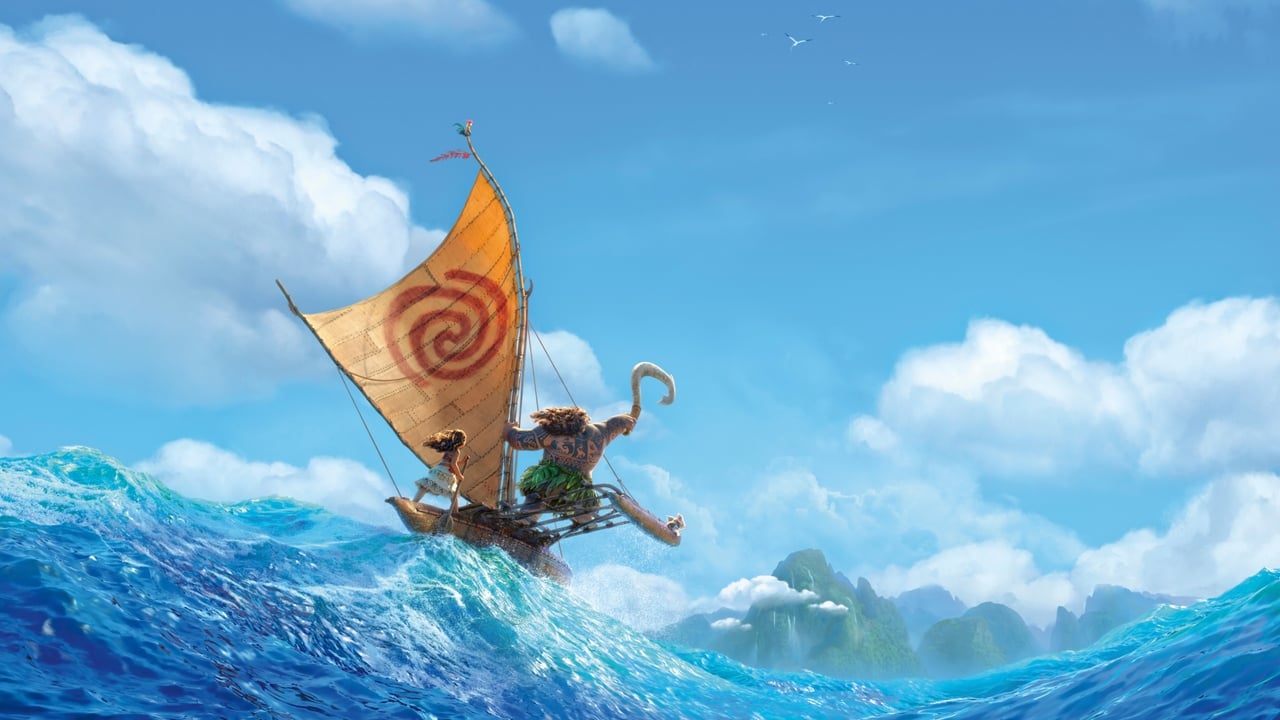
Maui nevertheless knows things Moana needs to learn. The ocean chose her without teaching her to sail, and his lessons give her ambition something practical to work with: handling the boat, reading the stars, attending to the water. His explanation of wayfinding joins the skill to the larger journey. To know where you are, you have to know where you have been. The lesson belongs as much to the girl who has just discovered her ancestors’ boats as it does to the sailor learning to navigate.
This is why their partnership matters beyond the business of getting the heart back. Moana needs Maui’s knowledge to become the voyager she hopes to be. Maui needs a relationship in which someone can value him and still ask him to change. She is willing to learn from him without treating him as infallible. He begins to see in her a wayfinder where he first saw an inconvenient passenger. The ocean seems to have brought together two people who can help each other become ready for the work ahead.
Neither is ready yet. On their first approach to Te Kā, the fiery being blocking the route to Te Fiti, Moana presses forward despite Maui’s warning that they will not make it. The attempt cracks his hook. She begins looking for another way through, while he sees the loss of everything that makes him valuable. The hook genuinely gives him powers. His mistake is believing those powers are the entirety of his worth.
He leaves rather than risk losing them. Moana, who has built her hope around having been chosen, is left wondering whether the ocean chose wrong. She asks it to find someone else.
The comfort of home
Far from Motunui, Moana receives a visit from the person who helped her leave it. Tala returns as a spirit. The grandmother who encouraged the voyage could insist that she keep going. Instead, she tells her granddaughter that if she is ready to go home, she will be with her.
Moana does not have to restore the heart to remain someone her grandmother loves. For the adult watching beside a child, this may be the most generous scene in the film. It shows encouragement that does not turn another person’s potential into a debt. Tala believes Moana can do something extraordinary without making her affection the prize for doing it.
Here is the assurance missing from Maui’s story. He has been trying to become so impressive that nobody could reject him; Moana, at the moment she feels least impressive, is promised company. Tala gives her a way to face failure without having to face it alone.
That promise would mean less if it were only a clever way of getting her back to work. The scene is moving because going home is allowed. When Moana hesitates, the hesitation belongs to her. Something in her still wants to continue, and now there is room to hear it without another demand being placed on her.
Her answer comes in a song that gathers together the parts of her life she has struggled to reconcile. Her father’s daughter, her grandmother’s granddaughter, a descendant of voyagers, a girl who has crossed an ocean and learned from it: all of these can belong to the same person. The life behind her gives her something to go on, and so does the journey she has already made, including the part that went wrong.
Even her familiar declaration changes. Earlier, she rehearsed what Maui would do: board her boat, sail across the sea, restore the heart. Now she makes that promise herself. She still names Motunui as her home, and she will sail using the skills Maui taught her. She no longer needs him to agree before she can begin. Soon she is explaining her new route to the chicken, an audience with very little to contribute.
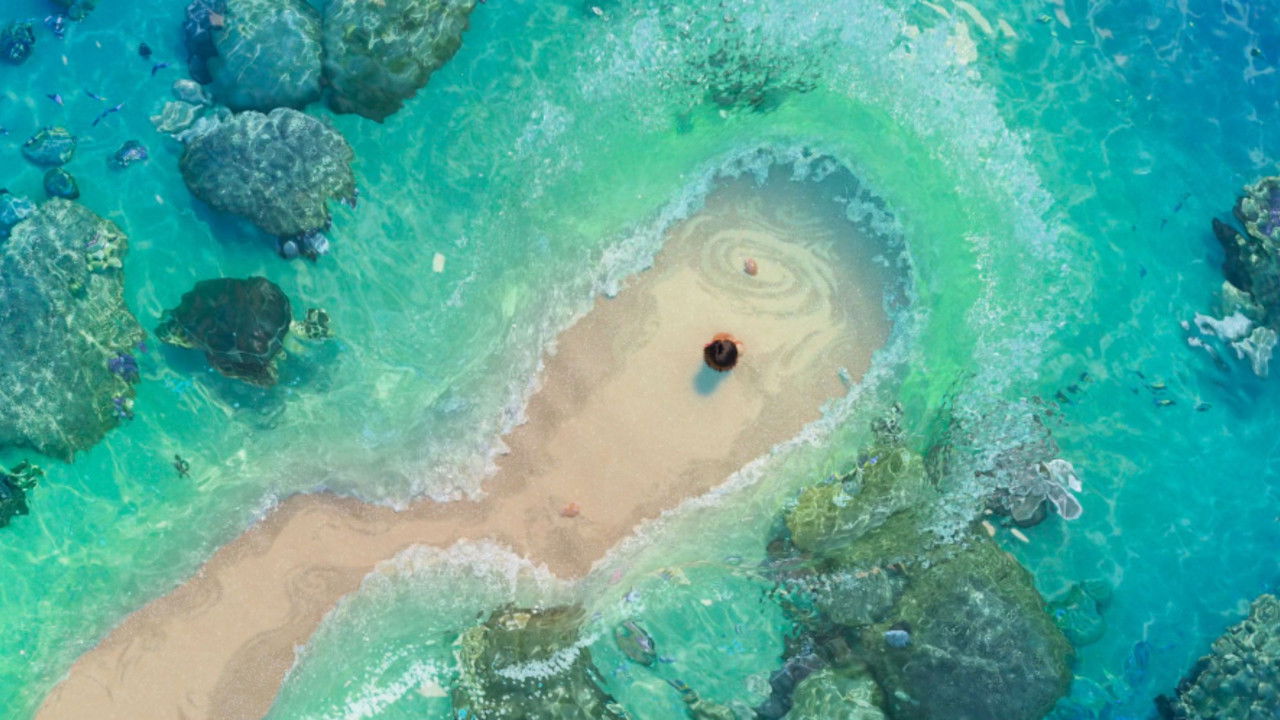
Moana does not have to restore the heart to remain someone her grandmother loves.
The heart beneath the fire
Maui comes back while his damaged hook is still at risk. He does not know that he will receive another. Whatever he has come to understand in his absence, the film lets his return show it: helping Moana finish the work now matters more to him than protecting the thing he once called his entire worth.
Moana’s final discovery asks for a different change. Te Kā is not a separate monster standing between her and Te Fiti. She is Te Fiti, transformed by the loss of her heart. The spiral gives Moana the recognition she needs: the being she has been trying to get past is the being she came to restore.
Continuing bravely now requires changing what she does. Another attack would repeat the mistake. She asks the ocean to let Te Kā come to her.
A person’s anger can become so much of what we see that we stop asking what happened to them. Moana’s recognition opens another possibility: the work may be to understand and address an injury rather than defeat the person carrying it. The film makes that possibility concrete. She has the stolen heart in her hand, and she returns it. Her understanding matters because it leads to an act of repair.
There is a family resemblance between this encounter and the one with Tala. Her grandmother could see Moana through her disappointment; Moana can now see Te Fiti through her fury. In each scene, someone is recognized as more than the state in which she has been found. The response fits what is needed. Tala offers company. Moana returns what was taken.
Maui, at last, apologizes to Te Fiti without making his accomplishments a defense. That humility makes room for the connection he has been seeking. Moana has seen him boast, fail, leave, and return. Her friendship is with someone she knows, not a legend she has been asked to admire. The closeness he wanted from humanity is there in a relationship with someone who knows what he did, knows he is more than it, and expects him to help put it right.
The new hook does not undo that change. He has already acted without the promise of replacement. When Moana invites him to come home because her people need a master wayfinder, he recognizes that they already have one. For once, the person whose abilities he wants someone to appreciate is not himself.

Her understanding matters because it leads to an act of repair.
The way home
The film does not handle every part of this journey equally well. Its plot is mostly linear, its meanings are heavily signposted, and its songs vary considerably in strength. The ocean’s selective assistance also leaves the adventure’s rules unclear. It can rescue Moana, return the heart to her, and intervene when the story needs it. Maui’s joke about why it cannot finish the job itself acknowledges that convenience without quite explaining it.
There is a better answer to why it puts these two in a boat together. The voyage gives Moana a chance to become capable and Maui a chance to take responsibility. Getting the heart to its destination requires more than moving an object across the water. They have to learn how to finish the work, and why they are willing to do it.
Complexity and emotional depth are not the same achievement. “How Far I’ll Go,” the voyaging chorus, and Moana’s renewed declaration give longing and belonging a reach that dialogue alone would struggle to match. The animation can make a threat enormous and still leave room for the intimacy of a grandmother beside a disappointed child. The film is at its most affecting when the scale of the adventure makes those moments of closeness more precious.
Tala’s promise holds the film’s tenderness and its demands together. Moana is loved when she thinks she has failed, and the work still matters. Maui’s worth can survive the loss of his powers, and he still owes a repair. Neither has to become less capable or less ambitious. They have to understand what their abilities are for, and what those abilities cannot give them.
Moana comes home having learned from someone difficult, made a costly mistake, accepted comfort, and changed her understanding of the task before her. What she brings back belongs to more than her own future. When the fleet sails at the end, the sea is no longer only the place she wanted to go. It is the place they can go together.
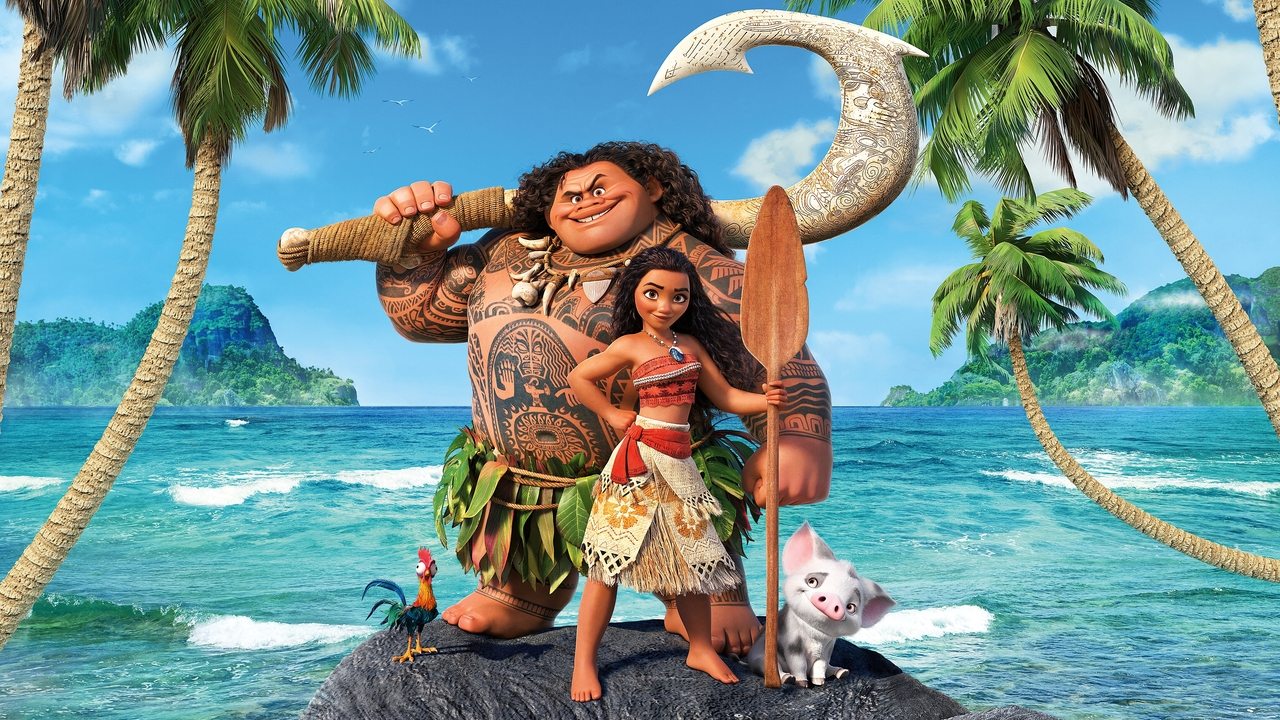
For parents
Watch this one with a grown-up nearby for the youngest viewers. TVI places it at ages 6 and up. Moana's grandmother dies partway through, and the film returns her as a spirit rather than pretending the loss did not happen. There is real menace in the coconut pirates, in Tamatoa's lair, and above all in Te Ka, whose fire fills the screen. Maui's account of his childhood is the quietest hard thing in the film: his human parents threw him into the sea, and everything showy about him grows out of that.
One conversation is worth having afterward, and it is not about the monster. Tala tells Moana she will be with her whether or not she finishes. A child can hear that as permission to stop, which is exactly what it is. Saying out loud that the offer was real, and that Moana chose to keep going anyway, keeps the scene from collapsing into a lesson about never giving up.
Questions to talk about afterward
Pick the ones that fit what your child noticed. They are invitations, not a quiz, and none of them asks a child to share a loss of their own.
Notice what happens
- What does Maui actually teach Moana to do, and how can you tell she has learned it?
- Moana's father does not want her to cross the reef. What happened to him that makes him say no?
Compare meanings
- Tala tells Moana she will be with her even if she goes home. Why does that make it easier for Moana to keep going, instead of harder?
- Maui thinks his hook is what makes him worth something. What do you think makes him worth something?
Follow the story's design
- Moana works out that Te Ka and Te Fiti are the same person. How does knowing that change what she does next, not just how she feels?
- Near the start, Moana practises telling Maui what he is going to do. Later she says almost the same words about herself. What changed in between?
The record
Moana scores 134 out of 200 on the TVI Score, Stimulating tier: Cognitive Stimulation 30, Educational Value 33, Craft and Quality 40, with an SEL score of 38 out of 50. The score is verified under TVI's current standard, receipt f9e3606e. The catalog previously carried a higher legacy number with a lower SEL and a wider age band; the reassessment and the earlier figures are recorded at `/corrections/`.
Scored jointly by Jordan Robinson with Cordelia Witty, EdS., NCSP, across a recorded rewatch on September 6 and 7, 2026, against a reference viewer of six. The earlier score and SEL were withheld until the new ones were locked. The TVI Score is a content rating, not an intelligence measurement.
The credibility layer for what to watch
One scored, argued editorial a month, plus the next TVI Essential. No paid placements. No spam.
TVI Score Breakdown
| Dimension | Weight | Score |
|---|---|---|
| Cognitive Stimulation | 40% | 30 / 50 |
| Educational Value | 35% | 33 / 50 |
| Craft & Quality | 25% | 40 / 50 |
| TVI Score | 134 / 200 · Stimulating |
Formula: round((C × 0.40 + E × 0.35 + Q × 0.25) × 4) = 134. The three weighted dimensions do not sum to the total; the formula scales them.
Disclaimer: TVI's score is a content rating, not a measurement of intelligence.
Common questions
What is Moana's TVI Score?
The film scores 134 of 200 on the TVI rubric, Stimulating tier, with Cognitive Stimulation 30 of 50, Educational Value 33 of 50, and Craft and Quality 40 of 50, and an SEL score of 38 of 50. The score is verified on a public receipt from a joint founder rewatch on September 6 and 7, 2026.
Is Moana OK for kids?
For most children from about six, with a grown-up nearby. TVI places it at ages 6 and up. Moana's grandmother dies partway through and returns as a spirit, the coconut pirates and Tamatoa's lair are genuinely frightening, Te Ka is a wall of fire, and Maui describes being thrown into the sea by his parents. The parent decision page carries the full inventory.
Why did TVI change Moana's score?
The film had carried a legacy number set before the current standard, with no component-judgment record behind it. Both founders rewatched the complete film on September 6 and 7, 2026 and rescored it in a full receipted session on the kids branch, blind to the earlier number. The score went down, the SEL score went up, and the age band narrowed. The change and the earlier figures are recorded on the corrections page.
Who made Moana?
Ron Clements and John Musker directed it for Walt Disney Animation Studios, with songs by Lin-Manuel Miranda, Opetaia Foa'i and Mark Mancina, and Auli'i Cravalho and Dwayne Johnson as Moana and Maui. It runs 107 minutes and was released in 2016. The 2024 sequel and the 2026 live-action remake are scored separately.
Film: Moana (2016), directed by Ron Clements and John Musker for Walt Disney Animation Studios. Songs by Lin-Manuel Miranda, Opetaia Foa'i and Mark Mancina. 107 minutes. The TVI Score is a content rating, not an intelligence measurement.