The Pitt Review: The Medical Drama That Finally Understands the Room
On the single-shift form, throughput as plot, and the burnout the show still softens
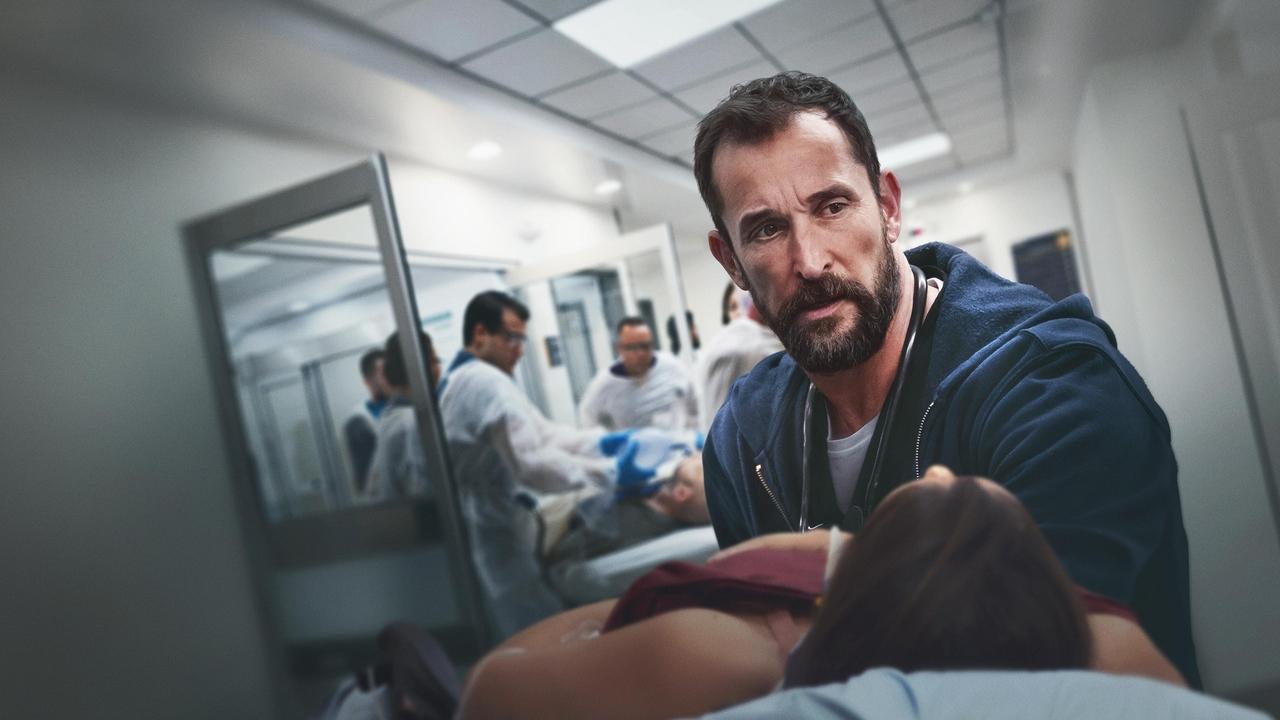
The Pitt scores 163/200 on TV Intelligentsia's methodology, a Masterclass. It is the first medical drama built entirely around the truth that emergency medicine is the management of an overfull room, not a sequence of heroic saves. Its one real flaw is framing structural burnout as one man's private burden.
This review covers Season 1, the fifteen-episode single-shift season that established the show's form.
Fifteen episodes. Fifteen hours. One shift.
The patient from the second hour is still there in the ninth. The intake that looked routine becomes the disposition that cannot happen because no bed exists upstairs. Nothing resets between episodes, because a real emergency department does not reset. It only hands off.
That is the breakthrough. The Pitt builds its entire form around the fact almost every hospital drama has avoided for thirty years: the work is not a sequence of saves. It is the management of a room that is always too full, by people whose attention is the scarcest resource in the building.
I have watched almost every kind of televised hospital. ER, Grey's Anatomy, Code Black, House, The Knick, Scrubs, St. Elsewhere. Each taught its audience something about medicine, and each distorted the job in a different direction. Some made medicine romance. Some made it deduction. Some made it workplace comedy. Some made it heroic rescue.
The Pitt makes it a room.
I am a plastic surgery fellow and a Navy officer, the kind of viewer who has stood in the real version of the space the camera is reconstructing. The Pitt is the first scripted medical drama in years where I can sit on my couch and not spend the whole hour flinching. The attending behaves like an attending. The residents defer when residents would defer and push back when residents would push back. The bottleneck is not a plot excuse. It is the plot.
That sounds small. It is the difference between a show about doctors and a show that earns the word hospital.
We scored it 163, a Masterclass. The number is not a claim that the show is flawless. It is a claim that The Pitt understands the cognitive and moral shape of hospital work better than any medical drama in recent memory, and that the one place it softens the truth is worth naming because the rest is so unusually honest.
Quick verdict
Watch it as a procedural about a system, not a melodrama about heroes.
The Pitt is the strongest emergency-medicine drama on television because its accuracy is not garnish. It is the artistic achievement. Clinicians will recognize the room. Non-clinicians will understand the job in a way decades of hospital television never taught them.
The soft spot is real: the show sometimes frames burnout as one man's private burden when the season itself keeps proving the injury is structural. That flaw matters. It does not pull the show out of the top tier.
Every other hospital show is about the save. This one is about the room.
Every other hospital show taught us to look at the wrong thing
For thirty years, medical television has been organized around the individual heroic intervention. The flatline brought back. The impossible diagnosis caught at the last second. The surgeon whose hands are steadier than anyone else's in the building.
That template did useful work. It made hospitals emotionally legible to people who had never worked inside one. It also trained viewers to believe that medicine is primarily a sequence of dramatic rescues performed by exceptional individuals.
That is not how an emergency department feels from inside it.
Inside the room, the question is rarely only whether one patient can be saved. The question is whether the whole system can keep moving while every part of it is already under pressure. Who is unstable. Who is waiting. Who needs a bed. Who needs a consultant. Who is angry because they have been there six hours. Who is technically discharged but cannot leave. Who looks fine and is not.
The Pitt understands that emergency medicine is not one story at a time. It is simultaneous story management under resource constraint.
That is why the room is the main character.

The single shift is not a gimmick. It is how the job feels in the head.
Real time is hard to sustain and easy to praise for the wrong reason. The accomplishment is not that The Pitt is structured as fifteen hours of one shift. The accomplishment is what that structure makes the viewer carry.
You cannot drift. A patient you half-noticed earlier deteriorates later, and the show does not stop to re-teach you who they are, because the attending would not get a clean reminder either. The viewer is asked to hold a board: who is stable, who is sliding, who is waiting, who is about to walk in, who has not been seen, and who will become the problem if no one circles back.
That is procedural cognition rendered as form.
Most television gives you one or two threads. The Pitt gives you a department. The cognitive stimulation is not cleverness. It is load. The show makes the viewer experience a managed approximation of what clinicians do all shift: maintain a live map of risk while the map keeps changing.
That is why the form is the argument.

What the show gets right
A credentialed review earns its credential by being specific. Here is what mattered most to me as a clinician.
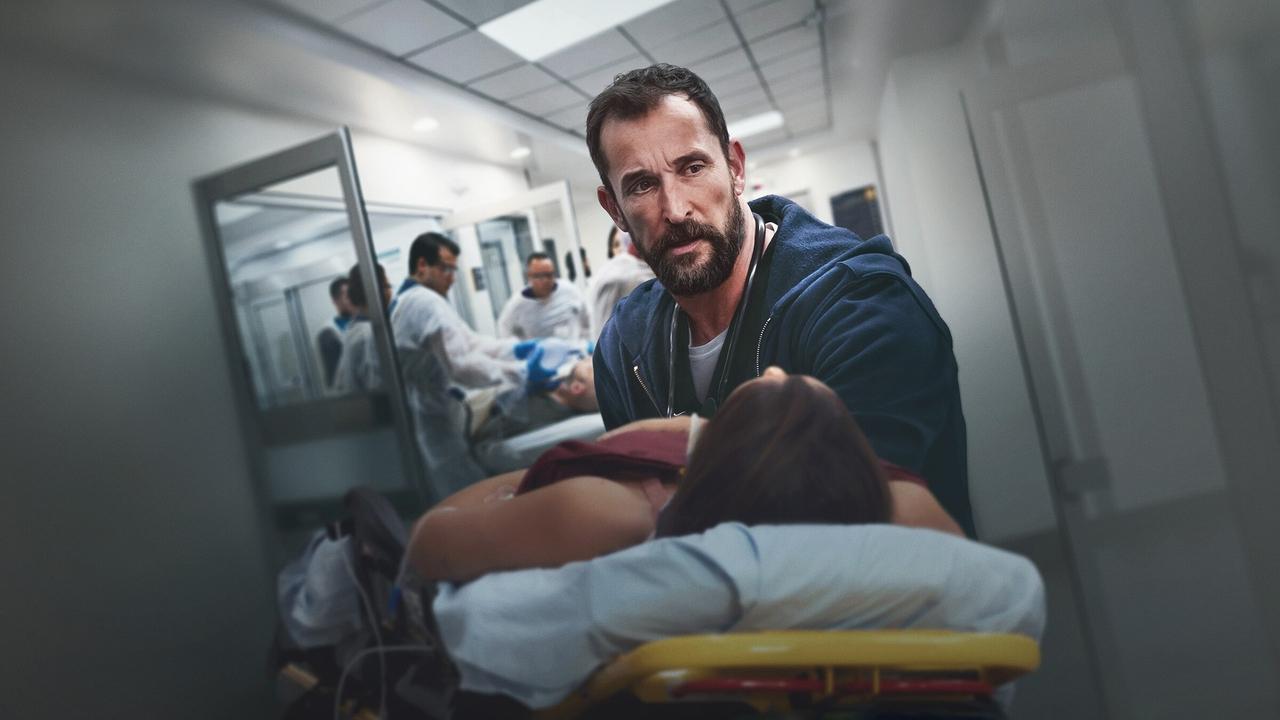
Attending behavior. Senior attendings absorb. They do not perform. The authority is in the restraint, in the person who is calmest because they have seen enough to know which fire actually needs them. Noah Wyle plays Dr. Robby that way. It is rare on medical television, where the attending is usually written as the most dramatic person in the room rather than the most regulated.
The chain of escalation. Junior to senior to attending, sometimes in seconds, and sometimes not fast enough. Most shows collapse hierarchy into one genius. The Pitt films the chain: the handoff, the moment a junior knows to call for help, the moment a senior decides whether to take over or let learning happen under supervision.
Throughput as plot. The bed upstairs that will not open. The consultant who has not returned the page. The disposition that is medically obvious and logistically impossible. The show treats the holding pattern as drama because the holding pattern is where system failure lands on patients.
The moral cost of attention. A clinician's attention is finite. The institution often behaves as if it is not. The Pitt understands that the most expensive thing in the department is not a drug, a scan, or a bed. It is the bandwidth of the people responsible for deciding what matters next.
The system blamed, not the character. When something goes wrong, the show mostly resists the lie that a better individual would have saved it. It points instead at the conditions that made the outcome likely: volume, boarding, delay, missing information, brittle staffing, and a room full of patients who all need more time than anyone has.
That is the rarest part. The show knows the difference between error and design.
It teaches the job without stopping to teach
The Educational Value mark is high because The Pitt transfers procedural literacy through immersion rather than exposition.
A non-clinician finishes the season with a better understanding of what triage means in practice, why throughput is the bottleneck people outside the system rarely see, and what senior residents and attendings are actually doing when they appear to be moving too quickly from one patient to another.
The show does not pause for a lecture on boarding. It makes the viewer feel the consequence of boarding. It does not define disposition. It makes disposition the thing everyone is trying to create and no one can always complete. It does not explain that the emergency department is often where failures elsewhere in the system collect. It shows the failures arriving at the door.
That is more durable than exposition. You did not learn a fact about triage. You spent fifteen hours inside the consequence of it.
You did not learn a fact about triage. You spent fifteen hours inside the consequence of it.
Noah Wyle is playing the attending his ER resident grew up to become
The casting is its own argument.
Noah Wyle became one of television's defining young doctors on ER. John Wells helped build that older medical-television grammar. Now Wyle returns, older, as the senior physician in a show that seems to understand what the genre could not yet tell the truth about in 1994.
That is not nostalgia. It is the genre aging into honesty.
ER was a necessary show. It taught a generation what the emergency department might feel like if every hour had narrative shape and every crisis revealed character. The Pitt arrives after the system has become more strained, after the language of burnout has entered public life, after the heroic-save model has become too flattering to carry the whole truth.
So the same lineage returns with a different premise. Not medicine as the place where heroes prove themselves. Medicine as the place where good people try to function inside conditions that keep asking more from them than a person can safely give.
That is a much harder show to make. It is also a truer one.

The craft is anti-prestige on purpose
The craft score is lower than the cognitive and educational scores, and that is not because the show is poorly made. It is because the show makes an aesthetic trade.
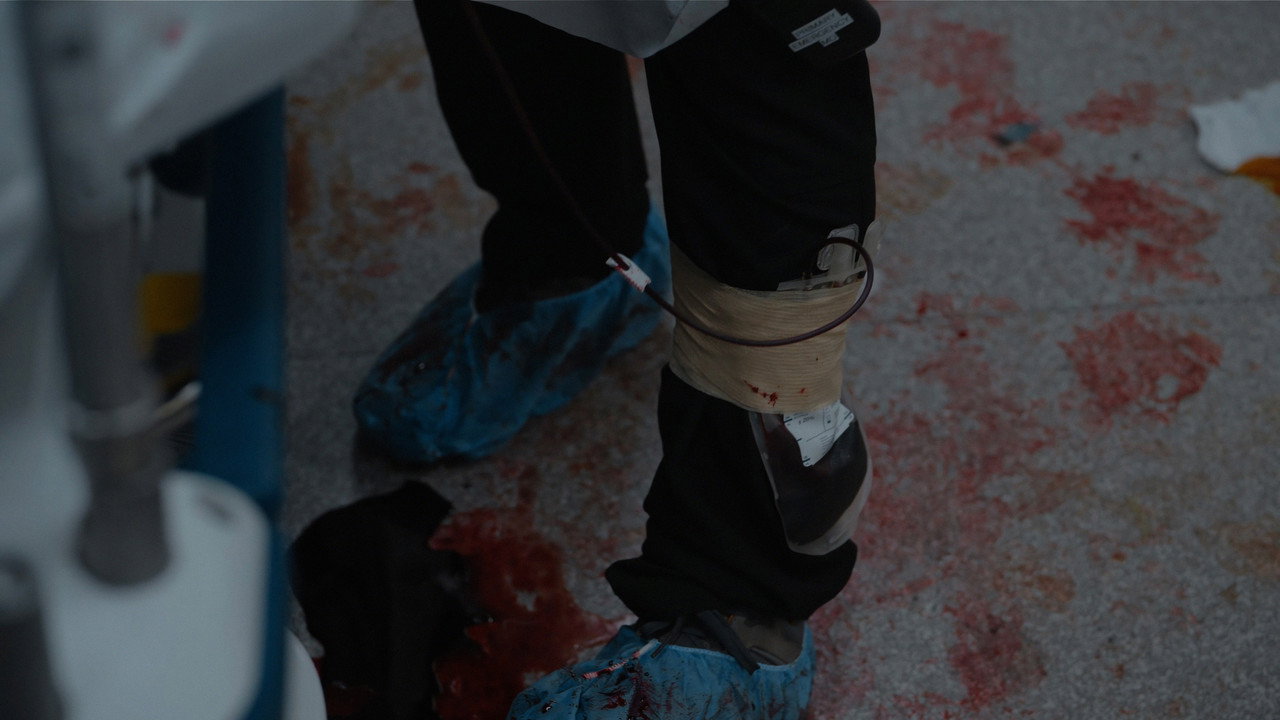
The Pitt refuses the warm-orange teaching-hospital palette medical dramas often fall into. It looks fluorescent, beige, functional, exhausted. The camera does not turn the emergency department into an object of beauty. It turns it into a workplace.
That restraint is easy to underrate. The direction is clinical without becoming dead. The performances hold under a real-time structure that exposes weak links. The show rarely cheats by making everyone more eloquent, more available, or more emotionally expressive than a real shift allows.
It is not trying to dazzle. It is trying to disappear into the work.
The rubric scores what appears on screen, and the show loses some conventional craft spectacle by choosing accuracy over visual romance. But as a piece of medical realism, that is the right trade.
The beige is part of the truth.

The honest limit
A credible defense has to keep the flaws in the room.
The volume of high-acuity events is compressed. Real shifts have long low-acuity stretches that would murder television pacing. Robby spends more time at bedside than a real attending usually could, because the camera needs a dramatic center. The documentation burden, which consumes an enormous portion of real clinical life, is mostly invisible. That invisibility is the largest practical compression in the show.
Those are forgivable. Drama is not a time-and-motion study.
The more important limit is burnout.
The Pitt sees the structural causes clearly: understaffing, boarding, delay, throughput pressure, the bed that will not open, the room that keeps filling, the institution that treats a clinician's finite attention as infinite. Then, at moments, it still asks Robby to carry the meaning of that failure as if the final question were whether one good man can endure.
That is the old medical-television temptation returning through the back door.
Burnout is not a character flaw to be overcome by resilience. It is not proof that someone was not strong enough. It is an injury produced by conditions, and the show is at its best when it lets the conditions stand accused. It is least honest when it makes the suffering feel too private.
The show diagnoses the system better than any predecessor. It still sometimes hands the bill to the individual.
That is the seam.
The show diagnoses the system better than any predecessor. It still sometimes hands the bill to the individual.
Where The Pitt sits in the medical-drama canon
Against TVI's catalog, The Pitt lands at 163, just above The Knick and below House M.D. That placement makes sense.
The Knick has richer period craft and a more overtly beautiful visual language, but it has no access to modern procedural reality. House is the smarter puzzle, built around diagnosis as deduction and spectacle. The Pitt is the truer room.
Those are different achievements. The rubric can hold them together because cognitive density and procedural truth are not the same thing. A show can be brilliant about diagnosis and less honest about the hospital. A show can be less spectacular as drama and more truthful as system.
The Pitt belongs in the top tier because it gives medical television a new unit of meaning. Not the patient. Not the case. Not the genius.
The room.
Why a working clinician should say this out loud
Depiction is how the public learns what a thing looks like before it can think clearly about the thing.
Most people will never stand in an emergency department as a clinician. Their mental picture comes from television, from the forms culture gives them before they need the real thing. That means the depiction matters. It changes what people expect from doctors, from hospitals, from waiting, from error, from speed, and from care.
That is why the credential matters here. Not because a surgeon's opinion is worth more than a critic's. Because the thing being depicted is a thing I have stood inside, and the gap between the depiction and the room is a gap I can measure.
The Pitt closes almost all of it.
The methodology is the product. The credential is the lens. The lens says, for the first time in a long time, that the show about the job behaves like the job.
Verdict
Watch The Pitt if you want to understand what emergency medicine actually is, not as myth, but as room management under moral pressure.
The show is not perfect. It compresses acuity. It hides documentation. It sometimes turns structural burnout back into one man's private endurance test. But its central invention is so strong that the flaws become part of the argument: even the show that understands the system better than anyone else still feels the gravitational pull of the hero.
That is exactly why it matters.
Every other medical drama taught us to look for the save. The Pitt teaches us to look at the board, the beds, the waiting room, the page unanswered, the attention fraying, the patient who is still there six hours later, and the clinician trying to keep the whole room alive.
That is medicine closer to the truth.
Not cleaner. Not prettier. Truer.
The credibility layer for what to watch
One scored, argued editorial a month, plus the next TVI Essential. No studio money. No spam.
TVI Score Breakdown
| Dimension | Weight | Score |
|---|---|---|
| Cognitive Stimulation | 40% | 42 / 50 |
| Educational Value | 35% | 42 / 50 |
| Craft & Quality | 25% | 37 / 50 |
| TVI Score | 163 / 200 · Masterclass |
Formula: round((C × 0.40 + E × 0.35 + Q × 0.25) × 4) = 163. The three weighted dimensions do not sum to the total; the formula scales them.
Disclaimer: TVI's score is a content rating, not a measurement of intelligence.
Common questions
What is The Pitt's IQ Score?
The Pitt scores 163 of 200 on the TVI rubric, Masterclass tier, with Cognitive Stimulation 42 of 50, Educational Value 42 of 50, and Craft and Quality 37 of 50.
Is The Pitt medically accurate?
Unusually so, as judged by a clinician. It gets attending behavior, the chain of escalation, throughput as the real bottleneck, and the difference between error and system design right. Its compressions are dramatic pacing, not medical error.
What is The Pitt actually about?
A single emergency-department shift told in real time across fifteen episodes. Its subject is not the heroic save but the management of a room that is always too full, under resource and attention constraint.
Series: The Pitt (2025 to present), created by R. Scott Gemmill, executive produced by John Wells and Noah Wyle, starring Noah Wyle. HBO Max. This review covers Season 1. Stills: The Pitt (2025), HBO Max, used for review. Reviewed against TVI methodology by Jordan Robinson, MD, MPH. Published at tvintelligentsia.com/reviews/the-pitt. The IQ Score is a content rating, not an intelligence measurement.