Community vs The Good Place
Two Michael Schur Comedies, Compared, scored on TV Intelligentsia's published methodology rubric.
Community and The Good Place both score 129/200 on TV Intelligentsia's published methodology rubric, tied in the Competent tier.
Neither score on this page has yet been re-verified under the current standard; both are legacy scores, published before August 2026 under our earlier workflow and queued for re-verification. Each title page states its class. About score classes → · Verification status →
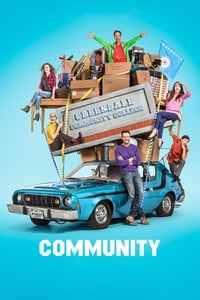
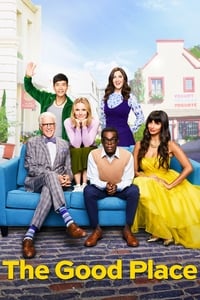
Dimensional Breakdown
The thesis
Community and The Good Place are not Michael Schur's exclusively, but both occupy the high-concept-sitcom register he refined. Community runs 110 episodes of formal experimentation; The Good Place runs 53 episodes of moral-philosophy structuring. They argue for different things the form can do. The methodology can hold both.
The case for Community
Community (129, Competent, top end) earns its score through formal-experimentation commitment. Dan Harmon's NBC series uses the community-college setting to render genre-pastiche episodes ('Modern Warfare,' the 'Remedial Chaos Theory' multiple-timelines episode, the documentary-format episodes) as structural arguments. C=38, E=21, Q=39.
The case for The Good Place
The Good Place (129, Competent, top end) earns its score through moral-philosophy commitment. Michael Schur's NBC series uses the afterlife premise to render Aristotle's, Kant's, Hume's, and T.M. Scanlon's ethical theories as plot-driving apparatus. C=38, E=23, Q=36.
The verdict
Tied (129 vs 129) on the TVI rubric. Both are at the top of Competent tier. Community has slightly higher Craft (39 vs 36); The Good Place has slightly higher Educational Value (23 vs 21). The choice is register: Community is formal-experimental, The Good Place is morally-substantive. Both are well-executed at their respective ambitions.
Frequently asked
Which is harder to follow?
Community. The formal-experimentation episodes (Remedial Chaos Theory, Pillows and Blankets, the paintball trilogy) demand active attention to structure. The Good Place's moral-philosophy is more legibly-paced; the show telegraphs its ethical references.
Which has the better ending?
The Good Place. The fourth-season finale is one of the most-cited sitcom endings of the 2010s. Community's six-season run ended without the planned movie that Dan Harmon has been promising; the series's structural arc is incomplete.
Does Community get worse after Dan Harmon left?
Yes, by consensus. Season 4 (the 'gas leak year') is widely considered the show's structural low point; Harmon returned for Seasons 5-6 but the show's formal ambition never fully recovered.
Are these comparable to Parks and Recreation?
Parks (also Schur) is the warmth-coded version of what Schur later refined into The Good Place's moral-philosophy register. Community is structurally separate; Harmon's formal-experimentation tradition is closer to Rick and Morty than to Parks.
See what your watchlist asks of you.
Enter 3 to 5 titles. Get your TVI Score, your profile breakdown, and personalized recommendations. Free, 60 seconds.
Run the 60-second watch audit →