Home / Kids / Guides / Shows That Teach One Thing Brilliantly
TVI Kids · Parents' Ultimate Guide
Shows That Teach One Thing BrilliantlyWhat Each One Builds, and What the Rest of the Rotation Has to Do
TV Intelligentsia · Editorial Team Built on the published TVI Kids methodology, with credentialed review
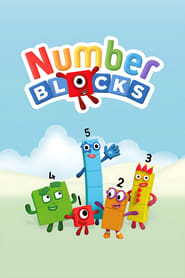
Some children's shows are generalists. They teach a little of everything and model how to be a person along the way. Others are specialists: they do one subject better than almost anything else made for children, and they do almost nothing else. Numberblocks is the clearest example. Its Educational Value is 48 out of 50, fifth of the 225 children's titles we have scored, and its SEL score is 16 out of 50, with only ten kids titles scoring lower against a median of 32. That is not a flaw to be fixed. It is what makes the maths as good as it is. The useful move for a parent is not to pick a side but to know which kind of show is on, so the rotation is not carrying a single subject twice and nothing else. Below are the twelve specialists in our kids catalog, sorted by what they are specialists in, each scored and linked to its full page.
We went looking for the mirror image of Numberblocks: a show that is emotionally rich and educationally thin. In 225 children's titles, it does not exist. Every title scoring 44 or higher on SEL also scores at least 34 on Educational Value, and the lowest of them is Stillwater at 34. The reason is in our own rubric rather than in television. Educational Value is five things, and two of them are emotional intelligence and life skills, so a show that teaches a child about feelings is teaching, by definition, and cannot score empty. The gap only runs one way. A show can teach brilliantly and stay quiet about being a person. The reverse is not a thing that happens.
Number and quantity
The strongest teaching lane in children's television, and the one with the widest specialist gap. All three keep the mathematics load-bearing in the story rather than decorative, which is the property to look for in anything you add.
A number is a character whose body is its value, so a five visibly splits into a two and a three. Quantity becomes a thing with a shape rather than a word a child recites, which is the foundation the rest of arithmetic sits on.
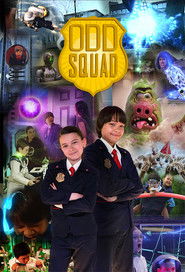
A deadpan crime procedural where child agents close cases using real fractions, sequences and geometry. The maths is how the case resolves, and the show treats the audience as capable of doing the cognitive work the agents do.
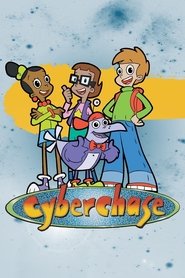
Pushes past arithmetic into mathematical reasoning: geometry, data, estimation, logic. The natural next demand once quantity is secure, and the stakes are built so the reasoning has somewhere to land.
Letters, reading, and story
The same method as Numberblocks applied to language. Both were developed alongside specialists, and both hide a sequenced curriculum inside something that looks like play.
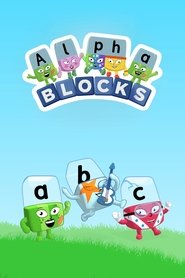
Letter characters whose interactions model phonics and blending in a sequenced curriculum built with reading specialists. It teaches decoding rather than letter recognition, which is a genuinely different and harder thing.
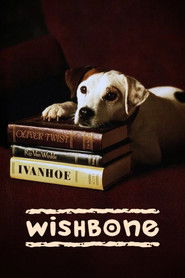
A Jack Russell terrier imagines himself into Don Quixote, Oliver Twist, Romeo and Juliet, with a modern storyline running in parallel. The cognitive work is tracking two narratives at once, and the exposure to the canon is real.
The living world
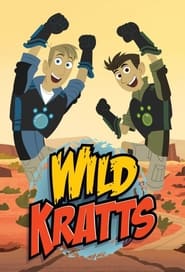
Both from the Kratt brothers, and both built on the same trick: the animal's actual adaptation is the episode's subject, so the biology is the plot rather than a fact tacked onto an adventure.
Animation combined with live-action wildlife footage to teach zoology and biome ecology at primary-school depth. The creature-power conceit is the teaching scaffold, not a gimmick sitting on top of one.
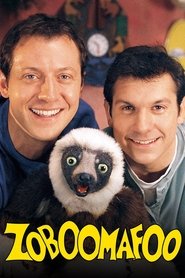
The predecessor, with more hands-on discovery and real wildlife footage integrated into studio segments. The classification and habitat concepts are where the cognitive demand sits.
How things work
Four shows that answer questions accurately instead of comfortably. This is the deepest bench in the specialist set, and the age range runs from preschool to twelve, so there is usually one that fits.
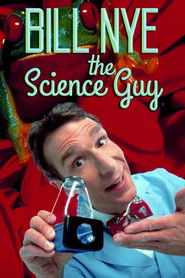
Every episode runs the inquiry cycle as its structure: hypothesis, observation, revision. It pitches vocabulary at the upper edge of the age range and trusts the audience to keep up, which is why it has aged as well as it has.
Each episode answers a question an actual child submitted, and answers it with real research. The musical-explainer format compresses genuine expertise into a preschool register.
One concept per episode, demonstrated with an experiment a child can repeat, and the conclusion left as the viewer's work. The cognitive demand is following experimental logic to a conclusion.
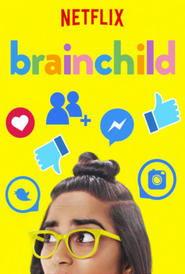
Neuroscience and psychology for tweens: emotions, memory, dreams, social media. It fills the Bill Nye slot for children watching on streaming rather than on a television schedule.
The past
The rarest specialist lane, because most children's history flattens into costume drama. This one does not.
Young reporters covering the American Revolution, with British, American, French and Native American perspectives held simultaneously. The cognitive demand comes from tracking competing motivations rather than memorising dates.
What to pair them with
Every show above is worth watching. None of them is a rotation. The pairing is the whole point of the guide, and it costs nothing to get right.
The default counterweight for the youngest half of this list. An SEL of 46 against a specialist's 16 to 26 is the difference between a rotation that teaches subjects and one that also teaches being a person.
Built with child-development guidance specifically to teach emotional strategies, with an SEL of 48. The strategies are small, concrete, and repeatable, which is what makes them stick.
Our highest kids SEL at 50 out of 50. It pairs unusually well with a fast concept show because its pace is the exact opposite, and the contrast is doing work of its own.
Common questions
Is Numberblocks actually good for maths?
Yes, and by a wide margin. Its Educational Value is 48 out of 50, fifth of the 225 children's titles we have scored. The reason is structural: a number is a character whose body is its value, so a child watches quantity behave rather than hearing a number named. The honest other half is an SEL score of 16 out of 50, with only ten kids titles scoring lower, which is why we recommend pairing it rather than leaning on it.
Why do so many educational shows score low on social and emotional learning?
Because the two are different jobs and doing one well usually costs attention that would otherwise go to the other. A show built to teach fractions is spending its running time on fractions rather than on characters who want something they cannot have. That is a legitimate design choice, and the maths in these shows is unusually good precisely because it is the whole point.
Is there a show that is emotionally rich but teaches nothing?
Not in our catalog. Every children's title scoring 44 or higher on SEL also scores at least 34 on Educational Value. The reason sits in the rubric rather than in television: Educational Value is measured across five things, and two of them are emotional intelligence and life skills. A show that teaches a child about feelings is teaching, so it cannot score empty. The specialist gap only runs in one direction.
How many of these should be in the rotation at once?
One is usually plenty. These shows are dense, and a child who loves one tends to want it repeatedly, which is fine and is how the concepts stick. The thing worth watching is whether the whole rotation is specialists, because that is a week of subjects with nobody modelling how to be a person.
What should my child watch after they outgrow one of these?
Within a lane, the ladder is usually visible: Numberblocks leads to Odd Squad and then Cyberchase, Zoboomafoo leads to Wild Kratts, Bill Nye leads to Brainchild. Across lanes, the better question is which subject has not had a turn yet.
Free guide
Not sure what to put on next?
Get the free TVI Kids Swap Guide: better shows for the kid who already loves what they love, every pick scored and reviewed by a school psychologist.