Quick verdict for parents
Yes. Put it on. Even better, watch it with them.
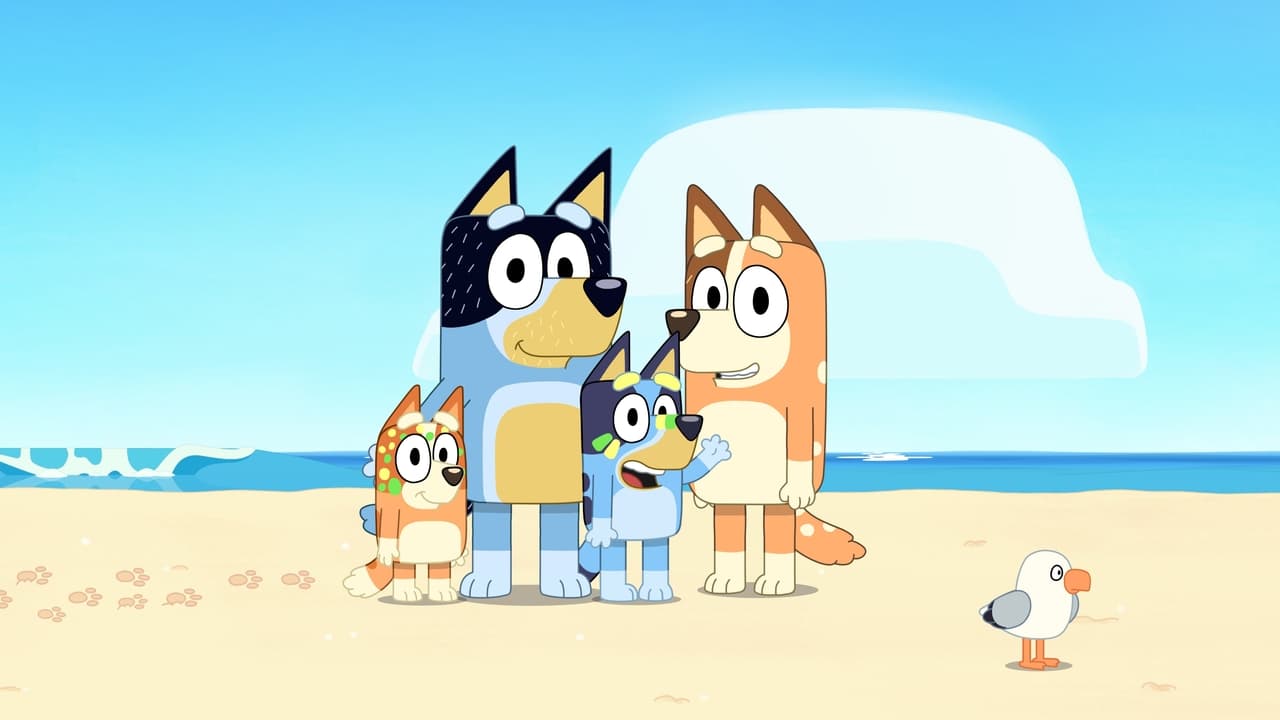
Bluey is one of the strongest family series TVI Kids has reviewed, and one of the few preschool shows that gives the adult in the room as much to notice as the child. Most of the time, you will be laughing at the same joke for different reasons.
It is best shared, especially with preschool and early elementary children, but it does not need a lesson afterward. Watch the game. Then notice what Bandit and Chilli do in the seconds after somebody gets hurt, overlooked, frightened, or told no. That is where the show actually lives.
A few episodes carry heavier material. In "Copycat," an injured bird dies despite the family's efforts to save it. "Camping" centers on a friend leaving without a goodbye. "Onesies" holds an adult grief that younger children may not recognize. "The Sign" turns on the possible loss of the family home.
No show raises a child, and no screen can do the relational work of a responsive adult. But some shows hand a family better language, better pictures, and a better next move. This is one of them.
A seven-minute theory of family life
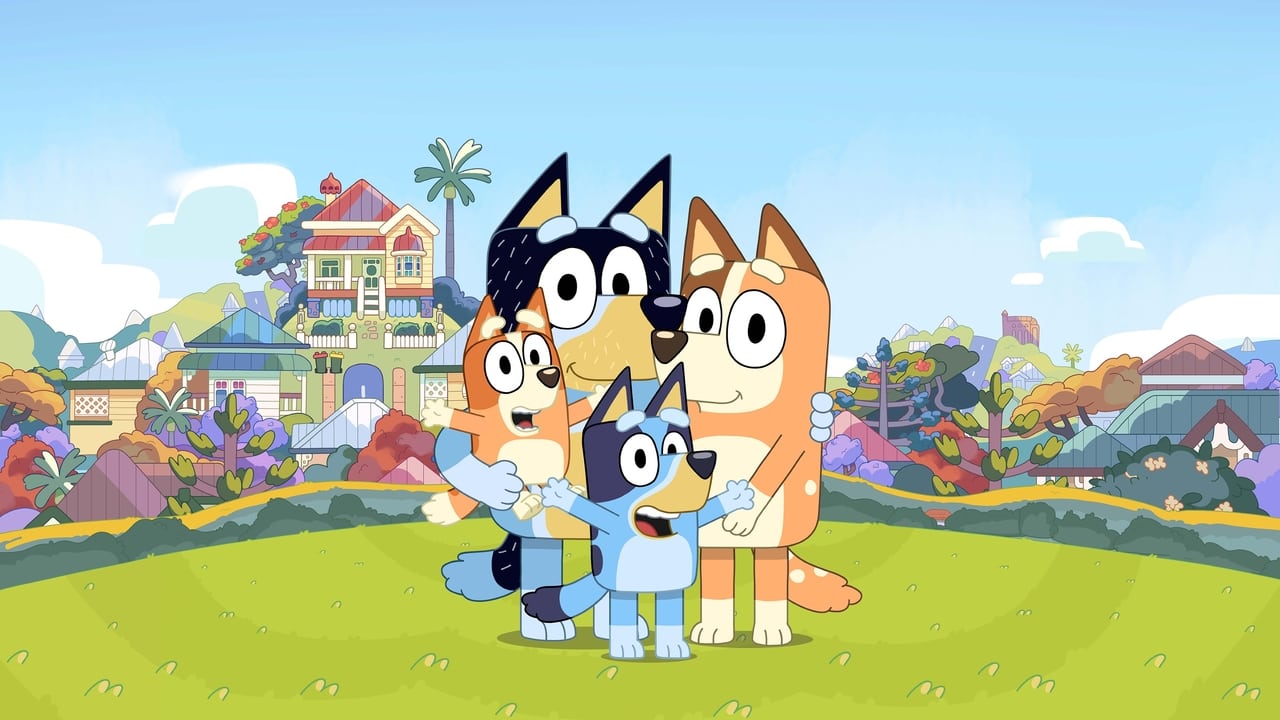
At bedtime, Bingo decides she wants to wake up in her own bed.
That is nearly the entire plot of "Sleepytime."
In about seven minutes, Bluey turns an ordinary night into a story about leaving, returning, and the kind of love a child can carry after the parent is out of sight.1
Before she falls asleep, Chilli tells her something ordinary enough to miss. If you get scared, I am always here.
Then Bingo dreams, and the dream sends her out through the solar system with Floppy. She sails past planets. Some of it is thrilling, some of it is funny, and none of it needs a parent. She is doing exactly what she said she wanted to do, which is to get through the night by herself.
Then she drifts out past everything familiar, and it is very cold, and she is alone.
Warmth arrives before she can name it. It reaches her first as heat, then as light, and only then does the light resolve into a shape, and the shape is her mother. The sun has been there the entire time.
Chilli says it again, the same sentence from bedtime, and this time it lands somewhere a four-year-old can keep it. The episode does not define attachment or independence. It hands a small child a sun.
That is Bluey's deepest talent. It makes ordinary family life visible at a child's true scale. A bedtime can become a planetary journey because, to a four-year-old, a night really is that big.
The story ends with Bingo back in her own bed. The parent has not become unnecessary. The relationship has become portable enough to carry into the dark.
Nothing that happens to a small child is small to them.
Seven minutes, one ordinary night, an entire theory of attachment
Sleepytime is the cleanest demonstration of what the series does. Bingo moves away because love remains available, and Holst gives a child's night the scale it has from inside the child.
Sleepytime, official full episode from Disney Jr., with English captions. Embedded for review.
The same promise, in another language
On 5 July 2026, for NAIDOC Week, "Sleepytime" became one of five episodes released in Yolŋu Matha, the first time Bluey had been dubbed into an Australian First Nations language. The five were recorded at Yolŋu Radio in Northeast Arnhem Land with the ABC and Ludo Studio, and chosen for their connections to family and Country.9
A story about love remaining reachable across a solar system now carries that promise across a language.
Present, not perfect
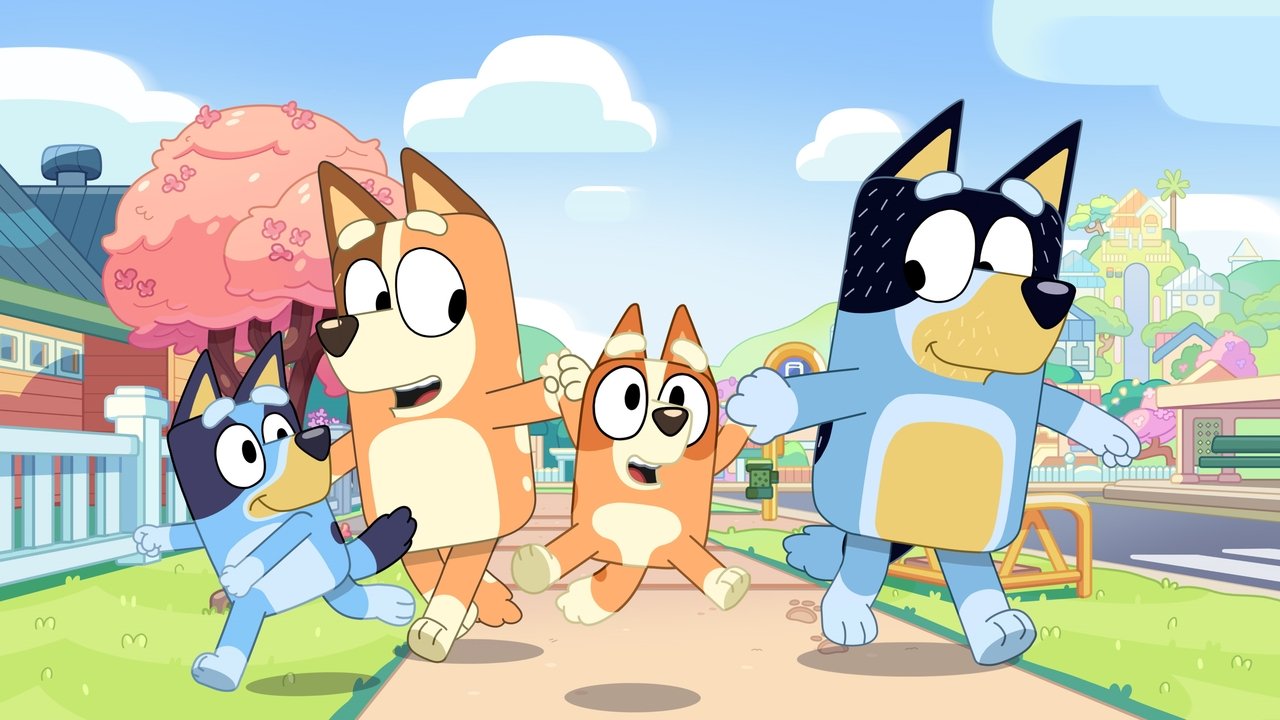
Bluey and Bingo build worlds from couch cushions and parental stamina. Bandit and Chilli enter the games. Then the camera turns toward the grown-ups: what do they do when the game goes wrong?
Children's television often offers one of two adults: the endlessly patient guide who always knows the right sentence, or the incompetent fool whose failure is the joke. Family life contains neither person for very long.
Bandit and Chilli are present, tired, funny, distracted, playful, impatient, and fully capable of getting it wrong.
And then they come back.
Self-regulation grows through repeated experiences with people whose presence can survive difficult feelings. A child signals. An adult notices and responds. The child borrows steadiness before gradually carrying more of it alone.23
Bluey never explains this process. It shows it. A child becomes overwhelmed. An adult enters the game instead of taking it over. A limit still holds. Somebody misses the mark. Then somebody returns and puts something right.
The research language is responsive interaction, co-regulation, rupture and repair. At home, it sounds simpler:
Something went wrong, and the grown-up came back well enough.
Not perfectly. Well enough.
That is why Bandit and Chilli feel like parents we might actually become, rather than parents we have already failed to be. Most children's television cuts from the mistake to the lesson. Bluey stays for the return.
Three episodes show what that return can require.1
In "Yoga Ball," Bandit plays too roughly and hurts Bingo. Chilli helps her find her "big girl bark," and Bingo tells her father when the game has gone too far. Bandit apologizes, then tries again. This time, he stops the moment she speaks. He does not defend what he meant. He responds to what she felt.
In "Dance Mode," Bandit eats Bingo's last chip and offers her three chances to make her parents dance. The family then takes over her turns and choices until she is sadder than she was about the chip. Making it up to a child still requires listening to what the child actually wants.
In "The Dump," Bluey catches Bandit unloading her drawings and questions his claim to be the best dad in the world. He apologizes, admits he does not know everything, and explains that the paper will be recycled into something another child can draw on. By the end, the "best dad" line returns from Bingo rather than from him.
Across the three, repair means honoring a limit, returning agency, and giving up the need to be infallible. In each case, the apology matters because something changes afterward.
The adult behind the adult

If "Sleepytime" shows why a child can venture away, "Baby Race" shows what a parent needs in order to let her.
Chilli remembers Bluey's first year, and the moment ordinary milestone-watching became comparison. Another baby rolled first. Another crawled first. Development became a scoreboard, and love began to feel like a performance she was losing.
Information was never the problem. Chilli already knew children develop differently. The part of her that needed help was not missing a fact. It had become frightened and lonely inside the comparison.
Then another mother tells her, simply, "You're doing great."1
Not advice. Steadiness.
It is one of the show's quietest insights. Parents help children regulate. Other adults help parents remain capable of doing it. The person holding everyone else still needs somewhere to lean.
Play is the learning

So why does a show that teaches almost no letters, numbers, or facts earn a 46/50 Educational Value score?
Fred Rogers wrote that "play is often talked about as if it were a relief from serious learning. But for children, play is serious learning."10 Bluey is what that sentence looks like when somebody films it.
Nearly every episode is a game. The children invent rules, test them, bend them, argue about them, and repair them. Along the way they practice waiting, perspective-taking, frustration tolerance, flexible thinking, losing, and deciding what counts as fair. In "Keepy Uppy," a balloon becomes shared attention. In "Shadowlands," rules become the structure that makes play meaningful.12
To enter a four-year-old's game, an adult has to put down the running list of everything else and take the child's world seriously for a while. That is not only good for the child. It returns the adult to a state many parents say they want and rarely reach: absorbed, unhurried, and fully where they are.
Nobody has to stop and announce the lesson. What the game requires is the lesson.
Play is not a break from learning. Play is the learning.
Gentle, not evasive
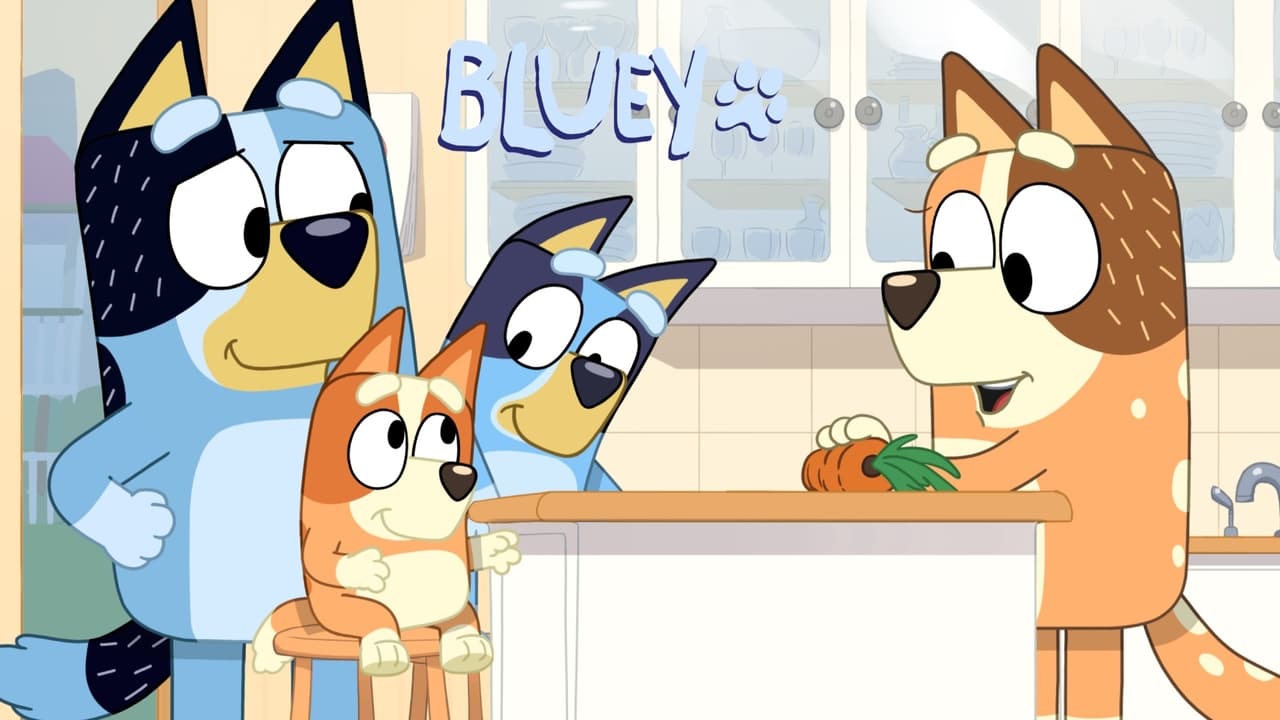
A children's series earns trust partly by refusing to lie about the difficult parts of being alive. Bluey is gentle. It is not evasive.
In "Copycat," Bluey and Bandit find an injured budgie, take it to the vet, and do everything they are supposed to do. The bird dies anyway. Bluey restages the morning as a game, but even the game refuses to give her the ending she planned. The episode holds two difficult truths at once: care matters, and outcomes are not always ours to control.1
In "Camping," Bluey forms a friendship without a shared language. Jean-Luc leaves before they can say goodbye. The tree they planted grows; years pass; he returns. A brief relationship is allowed to remain important without pretending the separation did not hurt.1
In "Onesies," an unnamed adult grief sits underneath a costume game. At the child register, the episode is a complete story about play. At the adult register, it is a second story about longing, estrangement, and a tentative return. Neither layer has to wink at the other.1
That double register is one of the series' great technical achievements. It protects children without pretending sadness is unreal.
What the evidence supports
A 2025 peer-reviewed content analysis of 150 standard episodes found resilience in 73 of them, with parents facilitating nearly two-thirds of those storylines.4 That tells us something meaningful about what is repeatedly on screen: trusting relationships, emotional communication, coping, problem-solving, and caregivers helping children through difficulty.
It does not prove that watching Bluey makes a child more resilient. Content analysis describes content, not developmental outcomes. The American Academy of Pediatrics' 2026 technical report emphasizes that even high-quality media cannot replace direct, responsive interaction with caregivers.5
The honest conclusion is narrower and stronger:
The show supplies unusually rich material for play, resilience, and repair. A responsive adult connects that material to real life.
Co-viewing does not mean interrogating a four-year-old after every episode. Sometimes it means laughing together. Sometimes it means noticing which game reappears on the floor. Sometimes it means returning to a scene days later, when a real feeling makes it useful.6
The show opens the door. You are still the one in the room.
Read the companion evidence review: What the Research Actually Says About Bluey.
The honest limit: repair requires margin

Every Essential should name the conditions its model quietly assumes.
The Heeler home contains a particular kind of safety: two engaged parents, a stable house, nearby relatives and neighbors, time to play, and enough left in the tank for an adult to circle back after a mistake. Many families are working with less time, less money, less help, more stress, more danger, or a different shape entirely.
Repair requires margin. A parent working two jobs, managing illness, surviving instability, or doing it alone may understand every lesson in this show and still not have what Bandit has on a Tuesday afternoon.
What the Heeler home makes visible is the condition, not the standard. The show should feel like an invitation, not an indictment. Bandit's availability should not become one more measure exhausted parents use against themselves.
Seven attentive minutes count. So does a parent saying:
- I was too sharp with you. I am sorry.
- I cannot play right now, but I can come back in ten minutes.
- You are allowed to be disappointed, and the answer is still no.
- I need help before I can help you.
A healthy boundary is not a failure of imagination.
Bluey is also not a curriculum or a treatment. Its strength is imaginative play, emotional understanding, social reasoning, and family life. It can make a healthy pattern visible. It cannot assess a child, change a family's circumstances, or replace individualized support.
Developmental read
Watch the ten seconds after Bandit knocks Bingo flat in "Yoga Ball." He does not explain that he was only playing. He crouches, listens, and changes what he does next. A child who cannot yet define repair has just watched the whole of it.
Bluey's strongest developmental pattern is responsive relationship rather than correct technique. The adults notice children's cues, enter imaginative play instead of directing it, support emotional recovery, and return after moments of misattunement. Those patterns are consistent with developmental evidence on responsive interaction, social support, and play as contexts for language, regulation, and relational growth.23
The series also gives hard feelings somewhere safe to sit. A balloon, a shop, a dream, an animal onesie: each can carry an emotional problem inside a game, where a character can approach it without first having to explain it. The play is not an escape from the problem. It is often the only form in which the problem becomes workable.
The SEL score of 46 reflects broad alignment with the CASEL 5, particularly relationship skills, social awareness, and self-management. It describes content TVI observes on screen. It does not claim that watching produces those competencies in a child.
TVI reviews the content and the methodology, not an individual child.
Why Bluey is a TVI Kids Essential
TVI Kids Essential is our highest designation. It is not another word for popular or beloved. A title must combine exceptional quality, strong developmental value, meaningful co-viewing, durability, credentialed review, and no structural problem that makes the recommendation unstable.
Bluey clears the quality and developmental bars at 184/200, in the Masterclass tier. Its layered storytelling rewards inference and symbolic play. Its educational value is developmental rather than academic. Its craft is unusually disciplined: concise writing, expressive animation, performances that never condescend, and continuity that allows a family history to accumulate across small episodes.
The one question that required a judgment was durability. Bluey premiered in 2018, short of TVI's ten-year circulation threshold. The framework allows a credentialed-review waiver for exceptional newer work, and that waiver was granted: nearly eight years in circulation, a large and rewatchable body of work, and a stable core of episodes that already function as reference points inside families. Bluey is TVI Kids Essential #3, ratified 2026-07-27.
The parents who come back
The ordinary events of Bluey are small enough to miss: a bedtime, a balloon, a game that changes rules, a parent who plays too rough, a child's choice taken over, a goodbye that arrives too soon.
The show makes them visible at their true scale.
A bedtime becomes a solar system. A balloon becomes shared attention. A baby milestone becomes a mother's private panic. A mistake becomes a chance to listen, restore, apologize, and return.
Children watch the game.
Adults are shown what the game requires of them.
That is why the series keeps working after the episode ends. It understands that family life is not built from uninterrupted attunement. It is built from thousands of small returns: the adult who notices, the child who risks speaking, the game that makes room for the feeling, the apology that changes what happens next.
Children do not need parents who never get it wrong.
They need parents who come back.
What to watch first
The argument ends above. What follows is reference: where to start, what to ask afterward, and how the score was built.
Start with episodes, not homework.
- For secure connection: "Sleepytime."
- For repair and agency: "Yoga Ball," "Dance Mode," and "The Dump."
- For the parent who needs holding: "Baby Race."
- For learning through play: "Keepy Uppy" and "Shadowlands."
- For loss, separation, and adult grief: "Copycat," "Camping," and "Onesies."
- For moving and family change: "The Sign."
One question after an episode is enough. A few worth having ready are below.
Discussion questions
One question is plenty. These are grounded in the episodes named above, so they work best after watching one of them.
For younger viewers, with a grown-up
- In "Yoga Ball," what did Bandit do after Bingo told him the game had gone too far?
- When Bingo got cold and lonely in her dream, what did she find?
- In "Dance Mode," how do you think Bingo felt when everyone took her turns?
For parents watching with children, ages 4 to 8
- In "The Dump," why did Bluey believe her drawings were being thrown away, and what was actually happening?
- Jean-Luc leaves without a goodbye in "Camping." Does a short friendship still count?
- In "Copycat," the family did everything right and the bird died anyway. What is that episode telling us?
For viewers of any age
- Which parent moment in this show felt most like your own house?
- What small repair do you already know you need to make?
Sources and evidence
1.Bluey Official Website. Series and episode pages for "Sleepytime," "Baby Race," "Yoga Ball," "Dance Mode," "The Dump," "Keepy Uppy," "Shadowlands," "Copycat," "Camping," "Onesies," and "The Sign."
2.Yogman M, Garner A, Hutchinson J, et al. The Power of Play: A Pediatric Role in Enhancing Development in Young Children. Pediatrics. 2018;142(3):e20182058. Reaffirmed January 2025.
3.Center on the Developing Child at Harvard University. Serve and Return.
4.Bohl KA, Smith BP, Bolling MT. "Oh, Biscuits!" Exploring resilience in the children's television programme Bluey. Educational and Developmental Psychologist. 2025;42(2):271-285.
5.American Academy of Pediatrics. Digital Ecosystems, Children, and Adolescents: Technical Report. Pediatrics. 2026;157(2):e2025075321.
6.American Academy of Pediatrics. Watch Together: Co-Viewing Media With Your Child.
7.Collaborative for Academic, Social, and Emotional Learning. The CASEL 5.
8.BBC Studios. Bluey production information. Created by Joe Brumm and produced by Ludo Studio for ABC Kids, with BBC Studios as co-commissioner and global distributor.
9.Australian Broadcasting Corporation. Bluey translated into an Indigenous language for the first time. Announced June 17, 2026; the five episodes released on ABC iview July 5, 2026 for NAIDOC Week.
10.Rogers F. You Are Special: Neighborly Words of Wisdom from Mister Rogers. Viking; 1995.
TVI scores are independent editorial assessments. The CASEL framework is used as an analytical lens and does not imply CASEL endorsement of the series or TVI.
Keep the questions nearby.
Print the age-banded discussion page for the next co-view.
The next useful family watch, when it is ready.
Scores, developmental reads, and the episodes worth starting with. Built for parents, reviewed against a published method, and sent only when there is something useful to say.
For the parent deciding what to watch next
Is Bluey good for toddlers?
Yes. TVI lists Bluey for ages 2 to 8. Toddlers can enjoy the games and family rhythms, while a nearby adult can help with episodes involving animal death, separation, grief, or a threatened move.
Why do parents like Bluey?
The series gives the adult in the room a complete emotional layer without winking over a child's head. Bandit and Chilli are present but imperfect, and the show often leaves their return and repair in the frame.
What is Bluey's TVI Score?
Bluey scores 184 of 200, Masterclass tier, with Cognitive Stimulation 44 of 50, Educational Value 46 of 50, and Craft and Quality 49 of 50. Its separate TVI Kids SEL score is 46 of 50.
Which Bluey episode should a family watch first?
Sleepytime is the clearest introduction to the show's emotional scale. Baby Race is strongest for parents, while Yoga Ball, Dance Mode, and The Dump make the repair thesis most visible.
Three useful next steps
Score page Bluey's full TVI profileScore, age fit, streaming availability, and the catalog rationale. Parent decision Is Bluey right for your toddler?A faster answer for age fit, sensitive episodes, and co-viewing. Compare Bluey versus Daniel TigerPlay and family repair compared with explicit strategy teaching.Bluey is created by Joe Brumm and produced by Ludo Studio for ABC Kids, with BBC Studios. TV Intelligentsia is independent and is not affiliated with the production. Images and video are the series' own materials, used in editorial context.
TVI's score is a content rating, not a measurement of a child's intelligence or a prediction of an individual child's response. Cordelia Witty, EdS., NCSP completed the page-level developmental review and personally approved the durability waiver for TVI Kids Essential #3 on July 27, 2026.