Cloud Atlas Review: The Pattern That Survives You
On reincarnation, moral recurrence, and the helix hiding inside the most earnest film of 2012
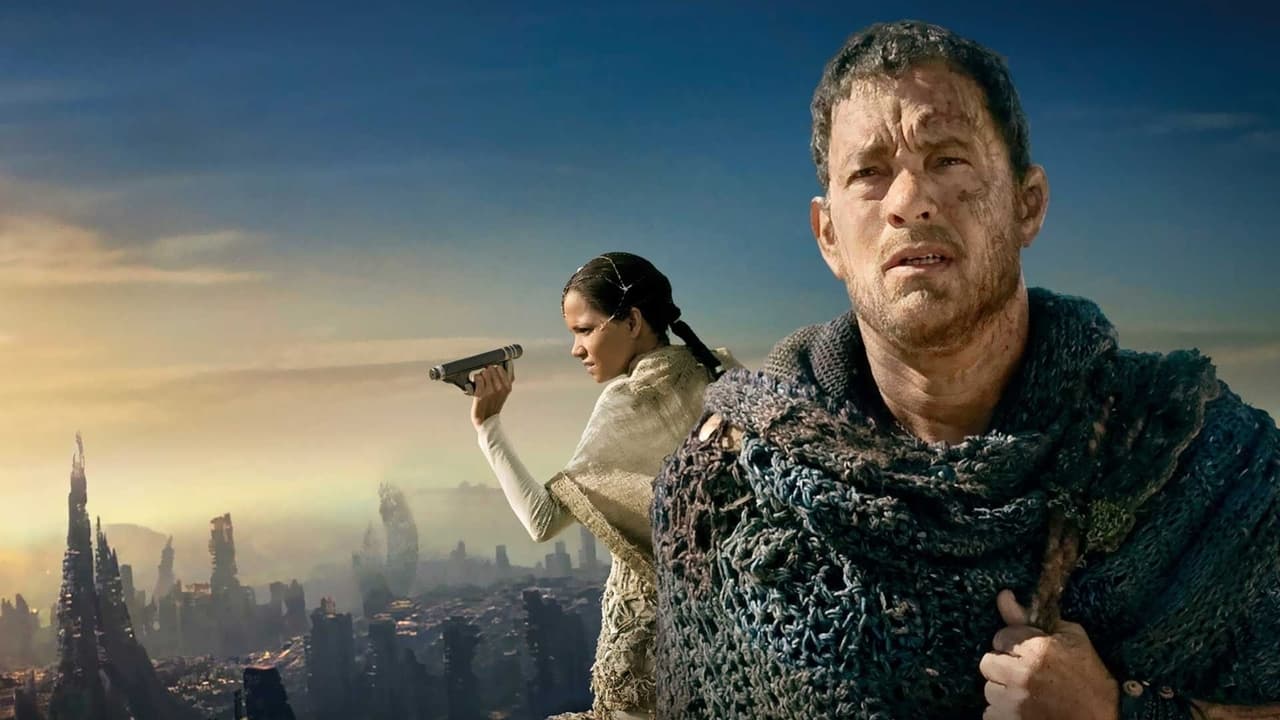
Is Cloud Atlas worth watching? Yes, with its flaws named up front. It is one of the most structurally ambitious films of its century: six eras, one moral pattern, and a cast recurring across bodies and ages to argue that what survives a person is the pattern they added to. It is also too long, too explanatory, and carries a cross-racial casting strategy whose harms are real. We scored it 171, a Masterclass, because the ambition is earned where it counts: no other studio film asks this much pattern recognition of its audience and pays it back this fully. Watch it in one sitting, and let the first hour be confusing on purpose.
There are films whose deepest problem is that they hide their thesis too well. Cloud Atlas has the opposite problem.
It tells you what it is about before you have time to discover it. Everything is connected. Our lives are not our own. An act of kindness ripples across centuries. A soul can travel from killer to hero. The film does not whisper the argument. It puts the argument in voiceover, repeats it across six storylines, stamps it with a comet-shaped birthmark, and asks the score to lift it into the heavens.
That is why Cloud Atlas is so easy to misread while thinking you have understood it.
The obvious review says the film is about reincarnation. The same souls return in different bodies, across time, carrying moral debts and unfinished longings. That is the film's stated mythology, and it is not wrong. It is also not the most interesting thing the film is doing.
The more interesting film appears in the gap between what Cloud Atlas says and what it shows.
What it says is reincarnation. What it shows is pattern.
Not one stable identity moving cleanly through time. Not a soul with a passport. Not a spiritual detective game where every actor tracks one essence from era to era. The casting is too loose for that. The birthmark is too blunt. The voiceover is too eager. The real continuity is not identity. It is a move.
Across every era, someone is told that a line cannot be crossed. Race. Class. Ownership. Capital. Institution. Programming. Tribe. Fear. Across every era, someone crosses it anyway.
That is the film.
The film is smarter than its narration
The official shape of Cloud Atlas is enormous: six interwoven stories adapted from David Mitchell's novel, spanning the Pacific in the nineteenth century, interwar Europe, 1970s corporate conspiracy, contemporary farce, dystopian Neo Seoul, and a post-collapse future. The film version, directed by Lana Wachowski, Lilly Wachowski, and Tom Tykwer, adds a device the novel does not use in the same way: the same actors return across eras in different roles, races, genders, classes, and moral positions.

That device is where the film becomes dangerous.
On paper, the repeated actors are meant to suggest continuity of souls. In practice, they suggest something stranger. Tom Hanks is not simply one soul becoming more virtuous. Halle Berry is not simply one soul changing costumes. Hugo Weaving does not carry one clean metaphysical identity. The actors recur the way motifs recur in music: recognizable, altered, sometimes inverted, sometimes almost hidden under the orchestration.
That looseness is not a weakness in the argument. It is the evidence.
If the same actor always meant the same soul, the film would become a spiritual matching game. Instead, the repetitions keep slipping away from literal identity. A face returns, but not with the same moral position. A relationship returns, but not in the same form. A structure returns: domination, capture, awakening, defiance, transmission.
That is why the film works better when you stop asking which soul is which and start asking what pattern is trying to survive.
Adam Ewing, the American notary, crosses the line of race and ownership when he moves toward Autua. Robert Frobisher crosses the line of class, sexuality, and artistic dependence when he turns his exploitation into music. Luisa Rey crosses the line of corporate power and fear. Timothy Cavendish, in the film's comic register, crosses the line of institutional imprisonment. Sonmi-451 crosses the line between programmed consumption and personhood. Zachry crosses the line of tribal fear by trusting Meronym.
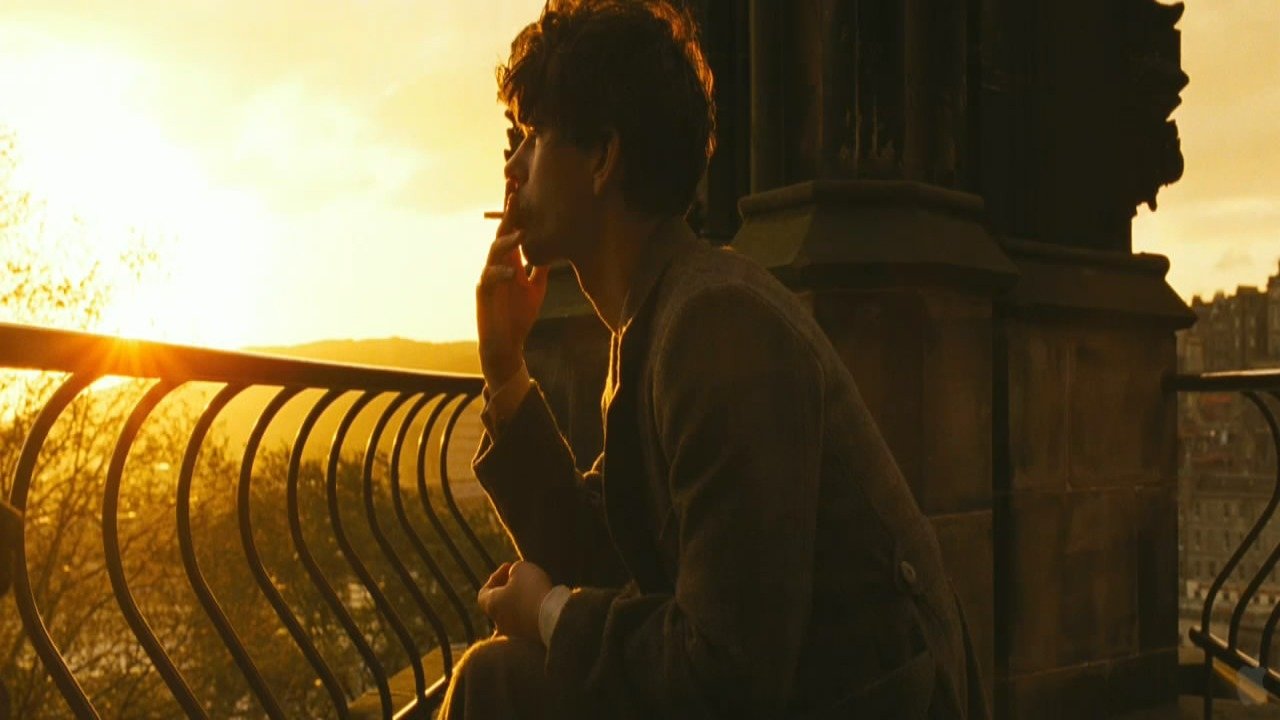
Different bodies. Different eras. Same pressure. Same invitation.
The soul, if the film has one, is not a private essence traveling intact through time. It is a pattern of moral recognition reappearing in new material.
Reincarnation is not the point. It is the picture.
The flattening move would be to say: so reincarnation is not real, it is just pattern recurrence.
That is exactly the wrong conclusion.
The film does not become more intelligent if we strip away its spiritual language and replace it with systems language. That only trades one reduction for another. The reincarnation framing carries something pattern-talk cannot carry by itself: moral dignity.
To say a pattern persists is accurate. To say a soul returns is charged. It makes the recurrence feel answerable. It gives the ordinary act a place in a larger moral field. It tells the person who has no institutional power, no army, no wealth, no guarantee of historical memory, that the choice still matters because choices are not trapped inside one life.
That is why Cloud Atlas needs its metaphysics even when the metaphysics becomes clumsy. The story is not asking the viewer to solve a literal system. It is trying to preserve the felt truth that one life is not sealed off from the next life, even if the next life belongs to someone else.
There is a grounded version of that claim. Culture transmits. Trauma transmits. Courage transmits. A forbidden friendship in one era can become language, music, archive, myth, law, rebellion, or permission in another. A person's body ends, but the pattern they participated in may not.
That is not a debunking of reincarnation. It is the phenomenon reincarnation has always been pointing at from the symbolic side.
The material changes. The pattern continues.
The old spiritual language says: the soul returns.
The systems language says: the pattern propagates.
The film needs both, because each protects something the other loses. The systems language keeps the reading from floating away into vague cosmic comfort. The spiritual language keeps the mechanism from becoming cold. Without pattern, reincarnation becomes greeting-card mysticism. Without reincarnation, pattern becomes an engineering diagram with the moral voltage drained out.
Cloud Atlas is best when it holds both.
The helix, not the circle
A circle returns to where it began. A line never returns at all. Cloud Atlas is neither.
It is a helix.
The same moral position returns under new conditions, not as repetition but as recurrence with altitude. The world turns. The pattern comes back. The material has changed. The stakes have changed. The old move appears in a new body and has to be chosen again.
That is why the film's crosscutting matters. Mitchell's novel is famously nested, moving forward through the first halves of its stories, reaching the future, then returning backward through the second halves. The novel has the elegance of a folded structure. The film abandons some of that elegance and pays a price in clarity. But it gains simultaneity. The movie is constantly telling you that these eras are not merely arranged before and after one another. They are playing at once.
That is not historical chronology. That is pattern recognition.
The film keeps cutting from one prison to another, one awakening to another, one act of risk to another. The point is not that Ewing becomes Frobisher becomes Luisa becomes Sonmi becomes Zachry in a literal chain. The point is that the same shape appears at different levels of the spiral.
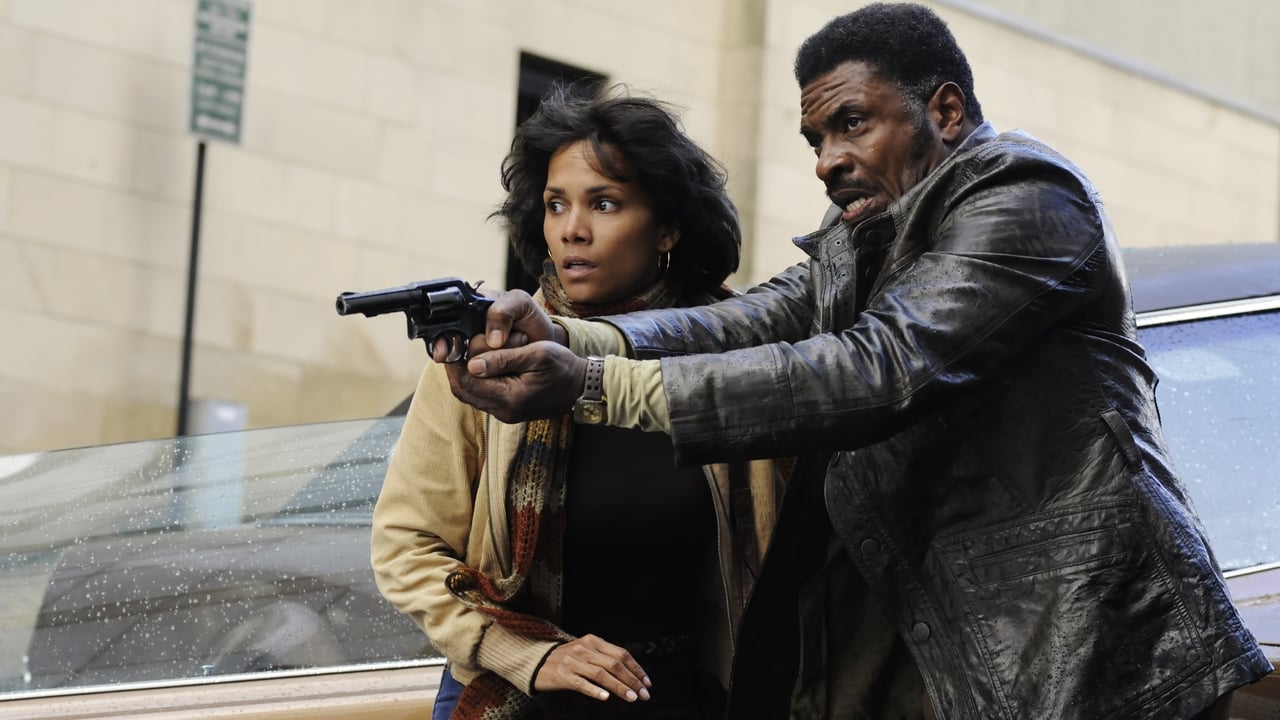
Defiance against domination.
Connection across a forbidden line.
A small act that becomes available to someone else.
That is the helix. Recurrence without repetition. Return without regression. The same angular position, higher up.
The body already knows this
The most useful way to understand Cloud Atlas is not to start with heaven. Start with the body.
You are not made of one permanent substance. Your cells turn over. Your memories revise. Your personality shifts under stress, illness, love, work, grief, and age. The child who once carried your name is gone in almost every material way, and yet something persists strongly enough that you call the whole sequence you.
That persistence is not the persistence of stuff. It is the persistence of pattern.
The body is already a cloud atlas: matter forming and reforming around an organization it did not invent at the level of conscious choice. The self is not a rock. It is weather with continuity.
That is what the film projects onto history. If a person can persist while the material substrate changes, perhaps a moral pattern can persist while persons, cultures, languages, and empires turn over. Perhaps history is not only a graveyard of finished lives. Perhaps it is also a medium through which certain forms keep trying to reappear.
This is where the film's sentimentality becomes more forgivable. It is not wrong to feel that your choices matter beyond your visible lifetime. It is only easy to say it badly.
Cloud Atlas sometimes says it badly. It also means it deeply.
The film's great danger is determinism
If patterns recur, why choose anything.
That is the trap. A weaker film would fall into it. Everything recurs, everything is connected, everything was always going to happen, so individual action becomes decorative. The cosmic system swallows the person.
Cloud Atlas refuses that.
The film's actual plots are not about inevitability. They are about interruption. Ewing does not have to change. Frobisher does not have to compose. Luisa does not have to keep investigating. Sonmi does not have to speak. Zachry does not have to trust Meronym. Each choice is small relative to the machinery around it, which is exactly why the choice matters.
The film's famous drop-and-ocean logic is not an argument that the drop is meaningless. It is the opposite. The ocean is only made of drops. The individual act does not control history, but it enters history. It changes what can be inherited.
That is the moral seriousness under the cosmic language.
A person cannot choose the whole pattern. A person can choose what they add to it.
The casting problem is not a footnote
The honest critique has to stay in the room.
Cloud Atlas made a bold formal choice by using the same actors across race, gender, age, class, and era. That choice is central to its argument about continuity across bodies. It is also the source of the film's most serious wound.
The yellowface makeup in the Neo Seoul sequences drew sustained criticism, including from the Media Action Network for Asian Americans, and the criticism is fair. The film's defense is that everyone crosses categories, that the actors are meant to show continuity of souls across the whole human field. But artistic intent does not erase representational history. There is no neutral use of yellowface in an industry with a long record of excluding Asian actors while using Asian faces as symbolic material.

This matters not because it ruins the film's thesis, but because it exposes the cost of literalizing it.
The film wants to say that identity is deeper than the body. Beautiful. But cinema works through bodies. Faces matter. Casting matters. Histories of representation matter. A metaphysical argument about transcending surface identity can still reproduce harm at the surface where actors actually work and viewers actually see.
That is the seam the film cannot close.
A review that ignores it is not serious. A review that treats it as the only thing worth saying is also too small. The point is harder: Cloud Atlas is a humane, ambitious, often beautiful film whose formal strategy both enables its spiritual argument and damages it.
That is the kind of contradiction worth reviewing.
The film says too much because it trusts too little
The other flaw is less ethical and more aesthetic. Cloud Atlas talks too much.
It does not always trust the images. It does not always trust the viewer. It narrates the secret it should have let the structure reveal. The film's worst habit is the exact inverse of the best version of symbolic storytelling: instead of letting the image carry the argument, it explains the argument, then shows the image, then lifts the score to make sure no one missed it.
That is why it can feel mushy. That is why it can feel like a cosmic greeting card. The sincerity is real, but the delivery sometimes rounds off the danger.
And yet the film's overstatement is also part of its charm. Cynical films rarely risk embarrassment. Cloud Atlas risks embarrassment constantly. It believes too much, says too much, reaches too high, and sometimes falls into the clouds it is trying to chart.

I would rather watch an ambitious film fail in that direction than watch a flawless film with nothing at stake.
The cleanest criticism is not that Cloud Atlas is silly. It is. The cleanest defense is not that it is profound. It is. The reason the film remains interesting is that both are true at once.
Why it still matters
The contemporary world is very good at describing systems and very bad at giving people dignity inside them.
We know that behavior propagates. We know trauma repeats. We know institutions outlive individuals. We know incentives shape choices. We know patterns persist. But the language can become so abstract that the person disappears inside it. You become a node, a data point, a product of forces, a predictable output of history.
Cloud Atlas refuses to let the person disappear.
It insists that the pattern is real and the person is real. That a single act is small and still not nothing. That freedom is constrained and still meaningful. That domination reproduces itself until someone interrupts it. That interruption may be forgotten, misread, punished, or buried, and still become usable later.
This is the film's moral gift.
It makes action feel load-bearing again.
Not grand action. Not heroic action in the inflated sense. A refusal. A kindness. A witness. A message. A composition. A decision to cross the line you were told not to cross.
The world is held together by more of those than history books can name.

For parents: the real age of access
The rating is R, for violence, sexuality, language, and one suicide. The real age of access is later than the premise suggests. The structure alone asks for a viewer who can hold six timelines, and the content asks for one who can sit with slavery, corporate murder, and a love story that ends in a bathtub. Mid-teens and up, and it earns a conversation afterward rather than a screening alone. For an older teen, the casting controversy is itself worth discussing: the film argues identity runs deeper than the body, and the yellowface problem shows what that argument costs when cinema tries to literalize it.
Verdict
Cloud Atlas is not a perfect film. It is too sentimental, too explanatory, too long, and too careless in parts of its cross-racial casting to be defended cleanly. But the ambition is real, the structure is rare, and the best idea is larger than the film's own language for it.
It says reincarnation.
It shows recurrence.
It says souls travel.
It shows patterns surviving through new bodies, new systems, new eras, and new choices.
The film is strongest when those two readings are allowed to stand together. Reincarnation gives the pattern dignity. Pattern gives the reincarnation mechanism. One preserves the moral charge. The other preserves the structure.
That is why Cloud Atlas still matters. It is not asking whether you will live forever as yourself. It is asking what part of what you do might become available to someone else after the version of you that did it is gone.
That is a better question than the one the film keeps narrating.
And it is why, underneath all the voiceover and makeup and excess, Cloud Atlas remains one of the most daring spiritual films of the twenty-first century: not because it proves that souls return, but because it makes you feel responsible for the pattern you leave behind.
TVI Score: 171 / 200. Masterclass.
The credibility layer for what to watch
One scored, argued editorial a month, plus the next TVI Essential. No studio money. No spam.
TVI Score Breakdown
| Dimension | Weight | Score |
|---|---|---|
| Cognitive Stimulation | 40% | 46 / 50 |
| Educational Value | 35% | 39 / 50 |
| Craft & Quality | 25% | 43 / 50 |
| TVI Score | 171 / 200 · Masterclass |
Formula: round((46 × 0.40 + 39 × 0.35 + 43 × 0.25) × 4) = 171. The three weighted dimensions do not sum to the total; the formula scales them.
Methodology note: The score reflects TVI's three weighted dimensions across a 0-to-200 scale. Cloud Atlas scores especially high in Cognitive Stimulation because of its six-era structure, cross-cutting narrative, repeated actors, and interpretive density. Educational Value reflects the film's unusually rich treatment of moral recurrence, domination, historical transmission, and symbolic reincarnation. Craft and Quality remains high but limited by uneven tonal control, over-explicit narration, and the ethical and aesthetic problems created by the cross-racial makeup strategy.
Disclaimer: TVI's score is a content rating, not an intelligence measurement.
Common questions
What is Cloud Atlas's TVI Score?
Cloud Atlas scores 171 of 200 on the TVI rubric, Masterclass tier, with Cognitive Stimulation 46 of 50, Educational Value 39 of 50, and Craft and Quality 43 of 50. The score reflects the film's six-era structure, cross-cutting narrative, repeated actors, and interpretive density.
Is Cloud Atlas worth watching?
Yes, with its flaws named up front. It is one of the most structurally ambitious films of its century: six eras, one moral pattern, and a cast recurring across bodies and ages to argue that what survives a person is the pattern they added to. It is also too long, too explanatory, and carries a cross-racial casting strategy whose harms are real. Watch it in one sitting, and let the first hour be confusing on purpose.
Why was Cloud Atlas's casting controversial?
The film used the same actors across race, gender, age, class, and era, and the yellowface makeup in the Neo Seoul sequences drew sustained criticism, including from the Media Action Network for Asian Americans. The criticism is fair: artistic intent does not erase representational history. The formal strategy both enables the film's spiritual argument and damages it, and that seam is the film's most serious wound.
About the author
Jordan Robinson, MD, MPH is the founder of TV Intelligentsia. He is a plastic surgery fellow at Vanderbilt University Medical Center and a US Navy veteran. He writes about film and television through the lens of medicine, military service, and decision-making under uncertainty.
About TV Intelligentsia
TV Intelligentsia is an independent credibility layer for what to watch. We score films and television on a public methodology grounded in cognitive science, developmental psychology, and media-effects research. We do not accept studio money. Find us at tvintelligentsia.com.
Film: Cloud Atlas (2012), directed by Lana Wachowski, Lilly Wachowski, and Tom Tykwer. Based on the 2004 novel by David Mitchell. Distributed in North America by Warner Bros. Pictures. Stills: Cloud Atlas (2012), Warner Bros. Pictures, used for review. Reviewed against TVI methodology by Jordan Robinson, MD, MPH. Published July 2, 2026 at tvintelligentsia.com/reviews/cloud-atlas. TVI's score is a content rating, not an intelligence measurement.