Interstellar Review: The Physics Is Secretly About Grief
On relativity, the asymmetry of time, and the hour a parent cannot get back

Interstellar scores 189/200 on TV Intelligentsia's methodology, a Masterclass and a TVI Essential. Beneath the wormhole and the black hole, the film is about time between people who love each other, using real relativity to make grief and separation literal.
Interstellar scores 189/200 on the TVI IQ Score, Masterclass tier. A former pilot leads a desperate mission through a wormhole to find a habitable planet as Earth becomes uninhabitable, earning Cultural Impact, Intellectual Substance, Rewatch Value, and Lasting Significance. TVI Essential is an editorial designation; IQ Score is a content rating, not an intelligence measurement.
A man watches more than twenty-three years of his children's lives go by in a few minutes, and he cannot answer a second of it.
He is sitting in a spacecraft, barely older than when he left. The screen in front of him plays message after message from Earth. His son, Tom, begins as a boy waiting for his father to come home and becomes a man with a family of his own before Cooper can wipe the tears off his face. His daughter, Murph, has refused to send messages for years. When she finally appears, she does not come to comfort him. She comes as the wound speaking back.
Nothing in the scene cheats. That is what makes it unbearable.
The physics is not decorative. It is the mechanism of the grief. Cooper did not miss his children because he stopped loving them, or because he forgot, or because the plot needed a melodramatic punishment. He missed them because time itself did not run the same way for him as it did for them.
That is the whole film.
Interstellar is remembered as the wormhole movie, the black-hole movie, the hard-science blockbuster with Kip Thorne behind the equations and Hans Zimmer's organ shaking the walls. All true. All incomplete. The film's real subject is not space. It is time between people who love each other, and the horror of discovering that distance is not measured only in miles.
The film was sold as cosmic adventure. It is, underneath, a grief machine built out of relativity.
That is why TVI scores it 189 of 200. Masterclass. Essential.
Quick verdict
Watch Interstellar on the largest screen you can find, and watch it as a film about time, not space. Its scientific ambition is real, but the science matters because the emotion depends on it. Miller's planet, the video messages, the watch, the bookshelf, the tesseract, and the final reunion all orbit one question: what can reach across a barrier time will not let you cross.
The film has one visible seam. Late in the story, it asks the language of love to carry almost more metaphysical weight than the script can support. But the deeper structure is stronger than the line people remember. Love is not the force that bends spacetime. Gravity does that. Love is the thing that tells Cooper where to speak.
That distinction saves the ending.
The wormhole is the disguise
The cultural memory of Interstellar is a memory of scale. Gargantua. The wormhole near Saturn. The frozen clouds. The endless water. The dust-choked Earth. The spacecraft slipping through blackness while a pipe organ turns space into a cathedral.
The film earned that memory. The images are enormous because the stakes are enormous.
But scale is also the cover. Nolan uses cosmic size to smuggle in the oldest ordinary wound: a parent leaves, a child waits, and neither experiences the waiting the same way.
That is the trick. The film does not use science to make the human story feel more important. It uses the human story to make the science hurt. Relativity stops being an abstraction the moment it is attached to a child who kept aging while the parent did not. Gravitational time dilation becomes, suddenly, not a concept but a loss.
A classroom can tell you that clocks run differently under extreme gravitational conditions. Interstellar makes you watch the clock become a family.
That is why the film has lasted. It is not only intelligent. It is emotionally intelligent about intelligence. It knows that the mind often needs a mechanism before it will let the heart admit what it already feels.
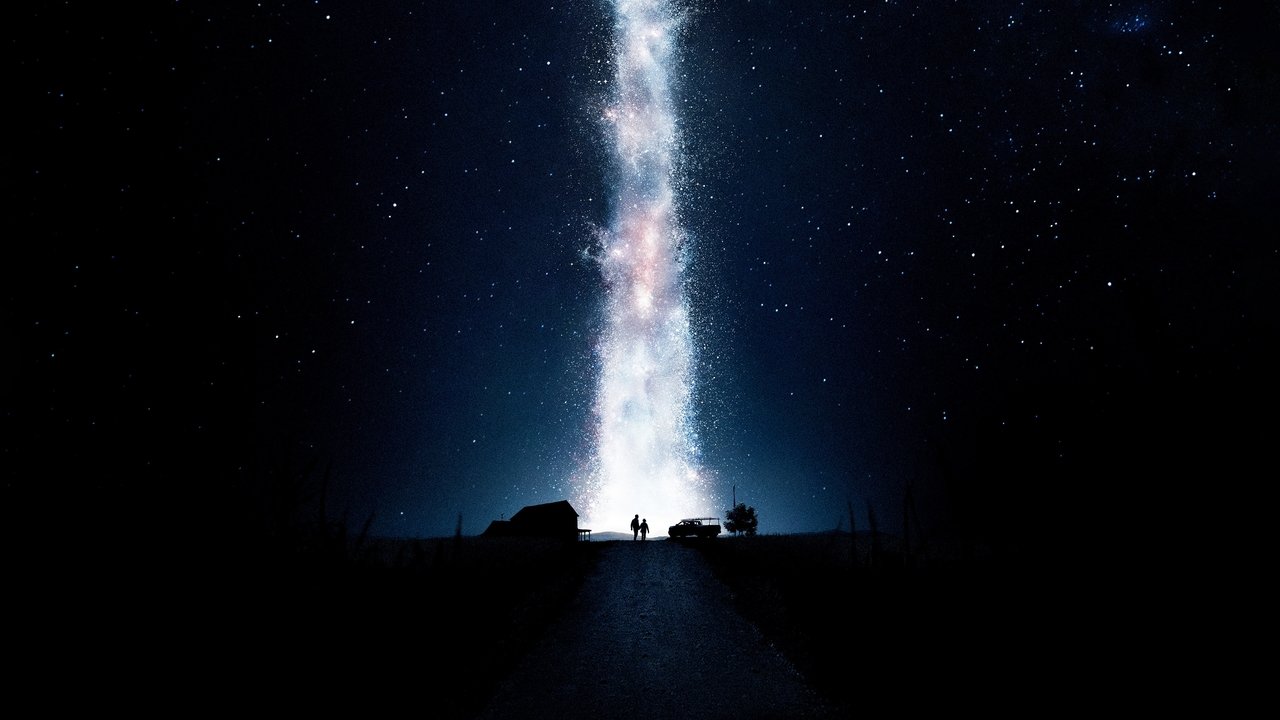
Relativity is the plot. The subject is asymmetry.
The film's great insight is that time is not emotionally democratic.
We all say time passes. That sounds equal, almost fair. But the experience of time is never evenly distributed. The child waiting for the parent and the parent doing the leaving do not inhabit the same hour. The person in the operating room and the family in the waiting room do not inhabit the same hour. The deployed service member and the person keeping life going at home do not inhabit the same year. The dying patient and the loved ones still bargaining with tomorrow do not inhabit the same future.
Interstellar makes that asymmetry literal.
That is what the science gives the film. It gives shape to a thing ordinary life usually hides. Time can run at different rates. The film simply points that fact at the place where it has always mattered most: love under separation.
Miller's planet is therefore not an adventure beat. It is the film's central wound in planetary form. One hour on the surface costs seven years elsewhere. The exchange rate is obscene because the emotional exchange rate was always obscene. A moment can cost a childhood. A mission can cost a marriage. A duty can cost the ordinary years no one gets back.
The genius of Interstellar is that you cannot separate the literal from the universal. The physics is true enough to take seriously, and the grief is common enough to recognize.
That combination is rare.
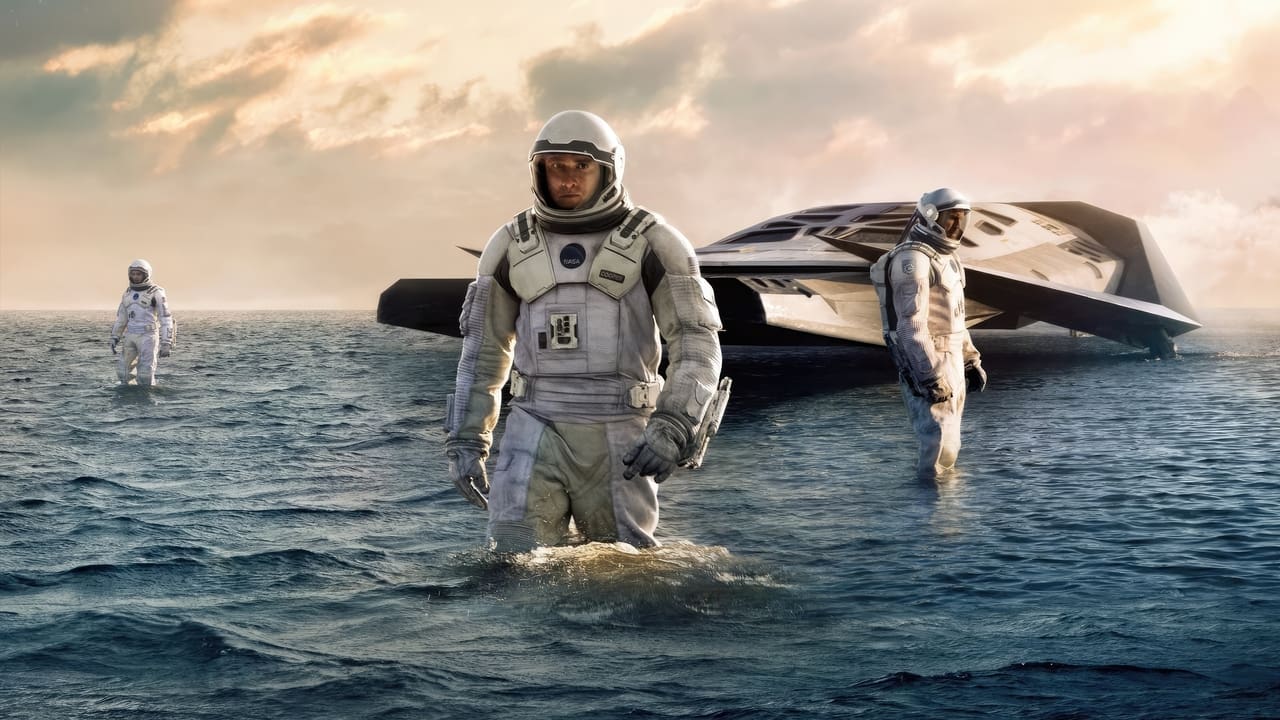
Miller's planet is the cruelest clock in cinema
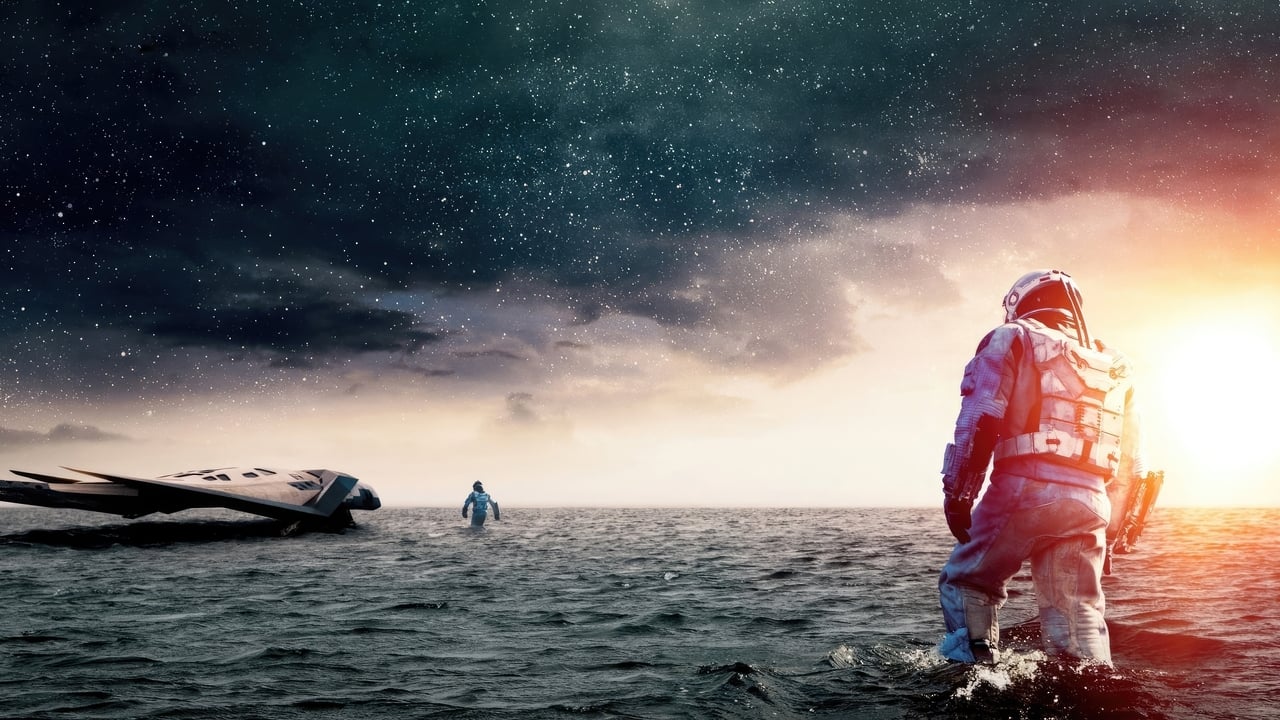
Miller's planet looks almost empty. Water, sky, wreckage, horizon. The simplicity is part of the terror. There is almost nothing there, and it still takes everything.
The crew knows the cost before landing. They discuss the time dilation. They understand that every minute matters. Then the planet does what planets do: it obeys no human urgency. The wave rises. The engine floods. Doyle dies. Brand hesitates. Cooper waits. Romilly ages.
By the time Cooper and Brand return to the Endurance, more than twenty-three years have passed for the man who stayed behind.
This is the film's most brutal idea: knowledge does not spare you from cost. Knowing the exchange rate does not make the payment less real. Cooper can do the math. The math does not give him the years back.
That is why the scene after Miller's planet matters more than the planet itself. The real catastrophe is not the wave. The real catastrophe is the backlog.
More than twenty-three years had passed for the man who stayed behind.
The messages are the film's true climax
Cooper sits down and watches time arrive all at once.
Tom records a message. Then another. Then another. He graduates into adulthood in fragments. He gets married. He has a child. He loses a child. He ages through the life his father promised to return to, and each message still carries the faint expectation that this one might be heard in time.
It is not.
Murph's silence is worse. She has not been sending messages because the wound was too deep to speak into a machine. When she finally appears, she is the age Cooper was when he left. She looks at him from the wrong side of the years and makes the leaving present again.
This is the emotional center of Interstellar. Not the launch. Not the docking. Not the black hole. A man in a chair watching the life he missed, unable to interrupt it.
That helplessness is the point. The messages cannot be answered in the time that produced them. By the time Cooper receives the need, the need has already become history.
I know a version of that problem from medicine and the military. You do not have to leave the planet for clocks to separate. A patient declines while a family is still trying to understand the last update. A service obligation turns years into a kind of distance no map can measure. A person can be present in one system and absent in the life where they are most needed. The wound is not only that time passes. It is that time passes unevenly among people who are bound to one another.
Interstellar did not teach me that. It gave the feeling an image precise enough that I could not pretend I did not already know it.
That is what great science fiction does. It does not escape life. It builds a structure large enough for life to climb into.

The love speech is not wrong. It is imprecise.
Here is the seam, because a credible defense of Interstellar has to name it.
Late in the film, Brand argues that love may be the one thing human beings can perceive that transcends time and space. The line has been mocked for years, and not without reason. After two hours of unusually disciplined science, the film suddenly seems to ask love to become physics.
Taken literally, that is too much. Love does not replace gravity. Love does not solve an equation. Love does not open the black hole or move the watch hand by itself.
But the film's structure is more careful than the speech. In the tesseract, Cooper does not save humanity by feeling hard enough. He saves humanity because future humans have built a structure, TARS has the quantum data, gravity can carry information across time, and Cooper knows where to send it.
Love is not the mechanism.
Love is the address.
That is the distinction the film needs, and the film has it even when the dialogue blurs it. Cooper can communicate across time because gravity allows the signal. He can choose the correct room, the correct shelf, the correct watch, and the correct child because love organizes attention. Love tells him where meaning lives.
That is not bad physics. That is good drama. The speech overstates the claim. The plot refines it.
The result is not that love conquers science. The result is stranger and better: science makes the impossible message possible, and love makes it intelligible.
Love is not the mechanism. Love is the address.
The ghost was always the father
The structure of Interstellar is a closed loop that does not feel closed until the end.
At the beginning, Murph thinks her room is haunted. Books fall. Dust arranges itself. A watch becomes meaningful before anyone knows why. Cooper, the rational engineer, tells his daughter not to call it a ghost. Then the film spends nearly three hours proving that she was closer to the truth than he was, if only because children are sometimes less embarrassed by mystery.
The ghost was real. It was her father.
That is the kind of structural payoff Nolan is built for, but Interstellar is warmer than the usual puzzle-box version of that move. The loop does not exist to show how clever the screenplay is. It exists to make Cooper keep a promise he failed to keep linearly. He told Murph he would come back. He cannot come back in time. So the film gives him a stranger burden: speak from outside time to the child he left inside it.
The bookshelf, the coordinates, the watch, the ghost, the tesseract: all of them become one system. The opening scenes are not explained by the ending. They are returned to the viewer with more grief inside them.
That is the difference between a twist and a revelation. A twist changes the answer. A revelation changes the wound.

The craft is built around intimacy at impossible scale
The craft reputation of Interstellar is deserved. The black hole imagery was developed with serious scientific collaboration. The rendering work became academically useful, not merely visually impressive. The film's science consultant, Kip Thorne, was not there to sprinkle legitimacy over nonsense. He helped define the boundaries inside which the film could speculate.
That matters because the film's emotional power depends on trust. If the science felt casual, the grief would feel rigged. The pain works because the rules feel real.
Hoyte van Hoytema's photography understands the same principle visually. The vastness is not there to dwarf the characters into insignificance. It is there to press scale against the face. A helmet visor, a farmhouse hallway, Murph's bedroom, Cooper's eyes filling with messages. The film keeps making the universe enormous and then returning to the smallest possible human unit: a parent and a child.
Zimmer's score does the same work. The organ makes space sacred, but the score reportedly began from a prompt about a father leaving a child, not from a description of a space epic. That origin story matters because the music never forgets where it belongs. Even when the sound becomes cathedral-sized, the emotional unit remains domestic.
A lesser version of this film would use the family plot to humanize the space spectacle. Interstellar uses the space spectacle to enlarge the family wound until it becomes cosmological.
That is why the film earns its scale.
The honest limits
A Masterclass is not a film without flaws.
The love speech remains the obvious one. The line reaches past what the surrounding science can comfortably support, even if the structure recovers the idea. Some exposition lands heavily. The Dylan Thomas refrain is powerful until the film repeats it one time too many. Mann's planet, while necessary as a moral counterweight to Cooper and Brand, briefly turns the film into a more conventional thriller than the rest of the structure needs.
These flaws are real.
They also happen inside an achievement large enough to absorb them.
The reason Interstellar survives its seams is that its central machine never stops working. Every major set piece returns to the same wound: time, distance, duty, love, and the cost of being unable to be where you are needed when you are needed there. The film wanders. The wound does not.
That is why the score is high and not perfect.
Why Interstellar is a TVI Essential
TVI Essential is our highest designation for adult titles. It is not a synonym for popular, famous, or beloved. It marks work where ambition, craft, cognitive density, and lasting value meet.
Interstellar clears that bar because it does real educational and emotional work at blockbuster scale. It teaches relativity as lived experience. It turns scientific accuracy into feeling rather than trivia. It builds a structure whose final act rewrites the first without cheapening it. It gives the viewer images that remain usable years later: the wave, the messages, the watch, the bookshelf, the hand reaching through time.
Its cognitive load is enormous but legible. Its educational value is unusually high for fiction because the viewer learns the science by suffering its consequences. Its craft is near the top of studio filmmaking, and its imperfections are the residue of ambition rather than indifference.
The film about the universe turns out to be about an hour you cannot get back. That is not a smaller subject than the cosmos. It is the reason the cosmos mattered in the first place.
Verdict
Watch it again, and not as the wormhole movie.
Watch it as a film about the asymmetry of time between people who love each other. Watch it for Miller's planet, the cruelest clock in cinema. Watch it for the messages, which are every voicemail you could not answer in time, every update that arrived after the moment it described, every year that closed while someone else was away. Watch it for the structure that turns a ghost story into a father trying to keep a promise from the wrong side of time.
And watch it for the one place it almost fails, because even that failure is revealing. Interstellar wants love to reach across the barrier that physics says cannot be crossed. Strictly speaking, the film needs gravity to carry the signal. But love tells the signal where to go.
That is enough.
The final claim of Interstellar is not that love defeats science. It is that science can describe the barrier and still not exhaust the reason we try to cross it.
The barrier is time. The message is love. The address is home.
The credibility layer for what to watch
One scored, argued editorial a month, plus the next TVI Essential. No studio money. No spam.
TVI Score Breakdown
| Dimension | Weight | Score |
|---|---|---|
| Cognitive Stimulation | 40% | 49 / 50 |
| Educational Value | 35% | 44 / 50 |
| Craft & Quality | 25% | 49 / 50 |
| TVI Score | 189 / 200 · Masterclass |
Formula: round((C × 0.40 + E × 0.35 + Q × 0.25) × 4) = 189. The three weighted dimensions do not sum to the total; the formula scales them.
Disclaimer: TVI's score is a content rating, not a measurement of intelligence.
Common questions
What is Interstellar's IQ Score?
Interstellar scores 189 of 200 on the TVI rubric, Masterclass tier, with Cognitive Stimulation 49 of 50, Educational Value 44 of 50, and Craft and Quality 49 of 50.
What is Interstellar actually about?
Beneath the wormhole and the black hole, Interstellar is about time between people who love each other. It uses real relativity, the asymmetry of time under gravity and speed, to make grief and separation literal.
Is Interstellar scientifically accurate?
Its physics is unusually grounded. Kip Thorne's relativity work shaped the depiction of time dilation and the black hole Gargantua. The film turns that accuracy into feeling rather than trivia, which is why it earns a high Educational Value mark.
For parents: the real age of access
The rating is PG-13 and the content is gentler than the reputation: intense peril, no gore, one bracing betrayal. The real gate is emotional. The film's engine is a parent leaving a child, and Murph's abandonment lands harder on some kids than any monster would. Around eleven or twelve with co-viewing it becomes one of the best family science films ever made, and the tears it produces in the adult are part of what it teaches the child.
Film: Interstellar (2014), directed by Christopher Nolan, written by Jonathan Nolan and Christopher Nolan, with Kip Thorne as scientific consultant and executive producer. Stills: Interstellar (2014), Paramount Pictures and Warner Bros. Pictures, used for review. Reviewed against TVI methodology by Jordan Robinson, MD, MPH. Interstellar named a TVI Essential. Published at tvintelligentsia.com/reviews/interstellar. The IQ Score is a content rating, not an intelligence measurement.