Lost, Twenty Years Later: The Eye Opens, the Eye Closes
A reading of Lost as a phenomenology of conscious experience.
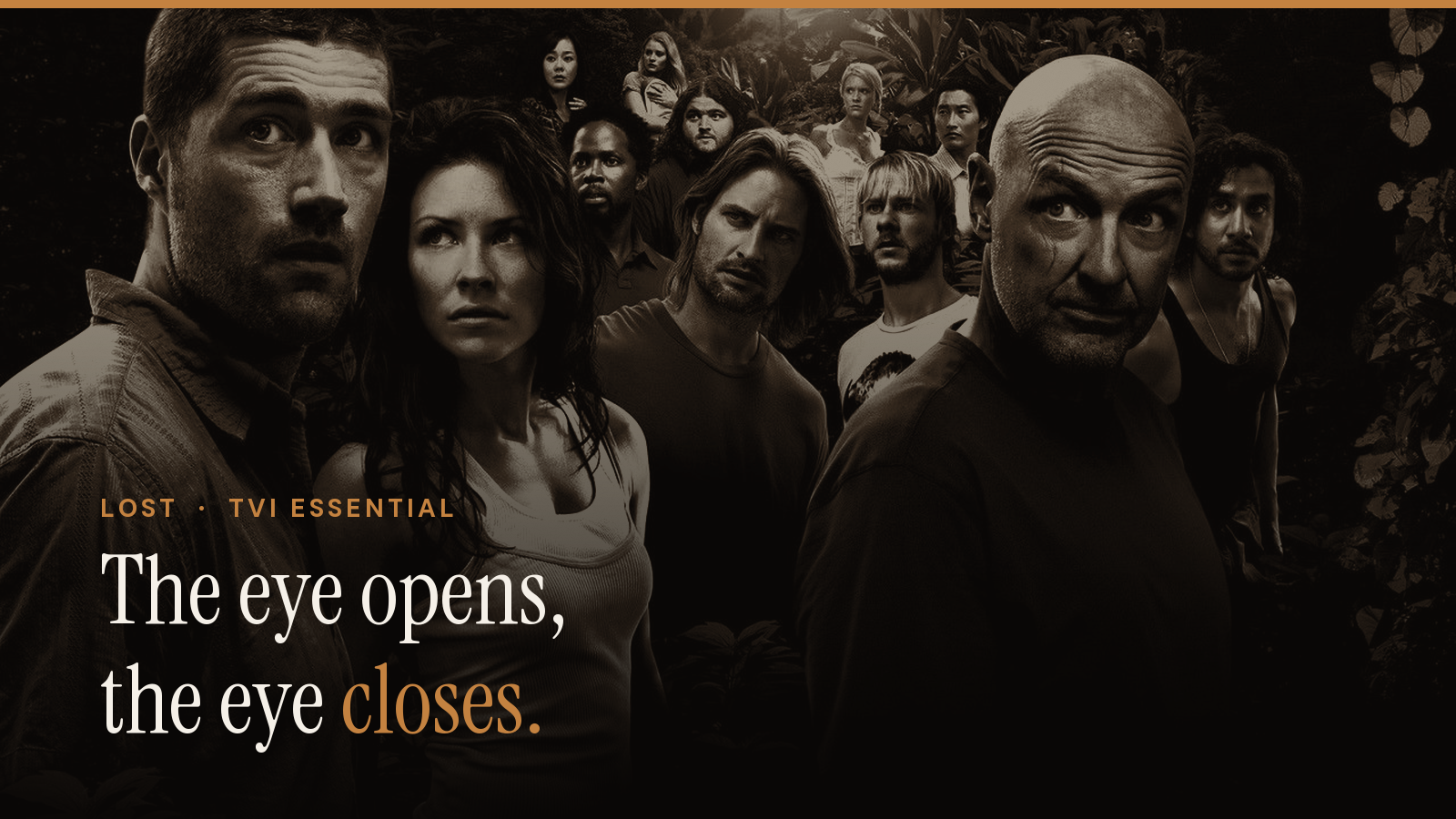
Lost scores 174/200 on TV Intelligentsia's methodology, a Masterclass and a TVI Essential. The show's mysteries were always the form and its bewilderment was the content: it makes the conditions of conscious experience literal, the past you cannot outrun, the shadow you cannot disown, the faith you cannot verify, and the aloneness you cannot survive. The finale resolves on connection rather than answers, which is why the long argument over the ending mistakes the lure for the animal.
Lost scores 174/200 on the TVI IQ Score, Masterclass tier. Its mysteries were always the form and its bewilderment was the content: the show makes the conditions of conscious experience literal, the past you cannot outrun, the shadow you cannot disown, the faith you cannot verify, and the aloneness you cannot survive, and it stays faithful to them through an uneven mythology and a finale that resolves on connection rather than answers. It earns Cultural Impact, Intellectual Substance, and Lasting Significance for a network drama that turned out to be a phenomenology of consciousness, still accumulating over a billion streaming minutes in a single week fourteen years after it ended. TVI Essential is an editorial designation; IQ Score is a content rating, not an intelligence measurement.
The first image of Lost is an eye opening.
Not a plane. Not an island. Not a monster. An eye.
A man wakes on his back in a bamboo forest, startled into a world he does not understand. He does not know where he is, how he got there, or what the people screaming on a beach a hundred yards away are about to become to him. Six seasons later, in the same place, the same eye closes. The man is dying. The dog lies beside him. He does not have to do it alone.
That is the whole show.
Everything between those two images is the island. And the island, finally, is not a puzzle. It is consciousness with the scaffolding removed. It is what a life feels like before ordinary life gives it names, jobs, addresses, passwords, explanations, and the blessed dullness of routine. Lost strips those protections away and leaves the human condition standing there in the jungle, loud and terrified and asking what anything means.
That is why people are still arguing about it. That is also why the argument is usually too small.

The wrong argument survived
The default Lost conversation has hardened into ritual.
Did the ending answer enough questions. Were they dead the whole time. What was the smoke. Why did the numbers matter. Was the island magic, science, purgatory, mythology, a game the writers were making up as they went along. The conversation repeats because the show made mystery addictive and then refused to detox the audience cleanly.
The complaints are not imaginary. The mythology was uneven. The final season sometimes behaved like explanation could be retrofitted into revelation. The show generated symbols with more force than it disciplined them. Any defense that pretends otherwise is fandom in a suit.
But the argument over answers still mistakes the lure for the animal.
Lost was rarely most alive when it explained itself. It was most alive in the moment before explanation, when a character had been led, by island logic, into the exact room of the self they had spent a life avoiding. The mysteries were not empty. They mattered because they generated bewilderment, and bewilderment was the show's true element. The hatch, the numbers, the smoke, the whispers, the statue, the button, the empty coffin: each one looked like a question about the island and eventually became a question about the person standing in front of it.
The show did not fail because it left us in mystery. It was built on the fact that mystery is where we already live.
The show did not fail because it left us in mystery. It was built on the fact that mystery is where we already live.
The score, and what changed
TVI first scored Lost at 151. I rescored it to 174 because the first score had looked at the show through the wrong aperture.
Graded as a puzzle box, Lost loses points it deserves to lose. It overpromises. It leaves strands untied. It gives some answers that shrink the questions. But graded as a work of phenomenological television, as a show that turns states of consciousness into image, structure, setting, and character, it belongs in the highest tier.
So here is the grade, stated without apology and without flattery.
Cognitive Stimulation, 46 of 50. The show asks the viewer to hold an enormous interpretive field: flashbacks, flash-forwards, flash-sideways, a forty-person ensemble, shifting timelines, competing mythologies, and the constant revision of what kind of story this even is. The difficulty is not mere memory. It is orientation under uncertainty.
Educational Value, 39 of 50. Fiction has a ceiling here, and Lost presses against it. Free will, determinism, faith, grief, guilt, moral injury, identity continuity, tribalism, and the unconscious all become dramatic situations rather than lecture topics. The show does not explain philosophy. It puts philosophy under stress and watches what the characters do.
Craft and Quality, 46 of 50. The pilot remains one of the great television pilots. The ensemble is historic. Michael Giacchino's score carries metaphysical weight without becoming ornamental. The structure strains. The ambition still towers.
These three dimensions are not summed. TVI weights them into a single composite on its 200-point index, where Lost resolves at 174.
The number is not a claim that Lost is clean. It is a claim that the mess happens inside an achievement large enough to survive it. A weaker show with this mythology would have collapsed under the weight of its own unanswered questions. Lost does not collapse because the questions were never the foundation. The images were.
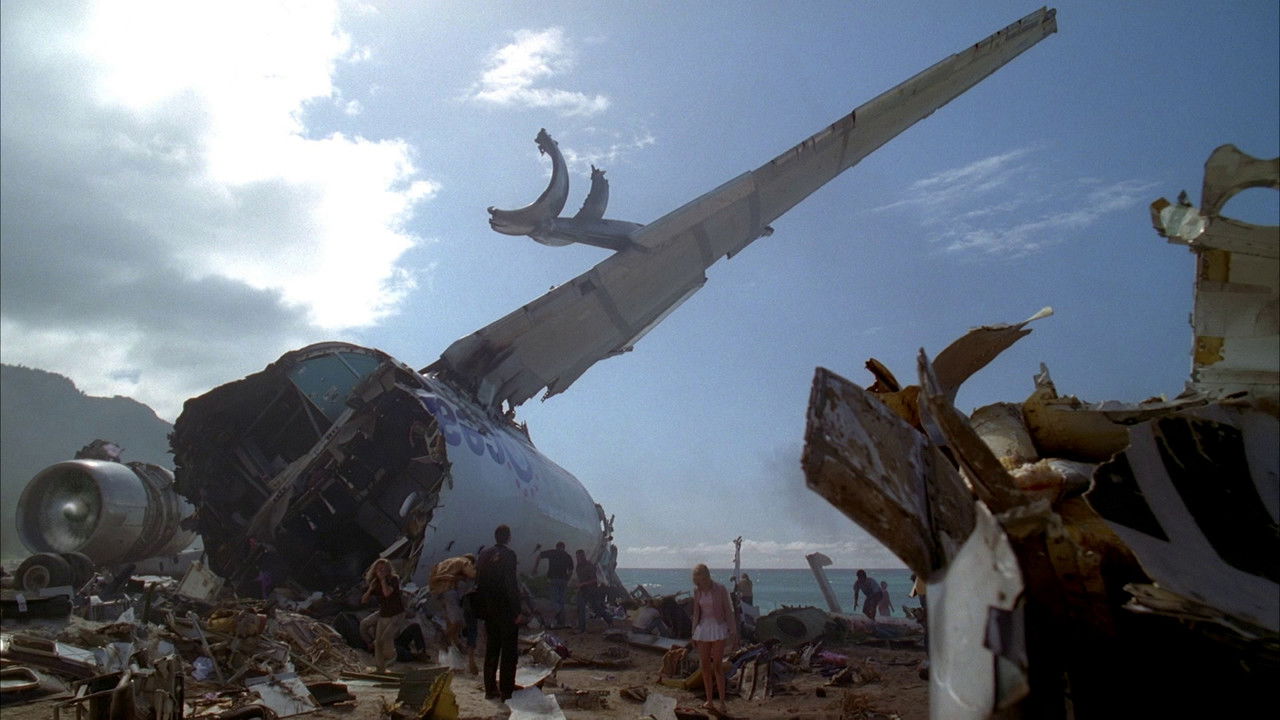
The island makes consciousness literal
Hold the first frame and the last frame together.
An eye opens. An eye closes. Between them: arrival, fear, hunger, love, tribalism, faith, work, loss, memory, guilt, repetition, repair, death. That is not a clever visual rhyme. It is a structural confession. The island is the interval between waking and leaving, and the show keeps turning that interval into terrain.
A person wakes into a world they did not choose, beside people they did not choose, carrying a past they only half understand. The world is full of objects that feel meaningful before they are readable: a hatch in the ground, a sequence of numbers, a father who appears after death, a film that loops, a voice in the trees. Some of it gets explained. Explanation helps less than expected. The strangeness remains because the strangeness is not a problem in the plot. It is the experience of having a self.
The scene that did the most to me, the first time, is still the empty coffin.
Jack flew his father's body home from Sydney in the cargo hold of Oceanic 815. The plane crashed. The coffin reached the island. Jack opened it, and there was no body inside. A son crossed an ocean to bring his father home, and even the body would not stay where he put it. I watched that as a surgeon, as someone trained inside the fantasy that enough skill, enough speed, enough discipline can keep the person in front of you from disappearing. And there was another surgeon, prying open the box, learning that some losses do not become manageable because you name them correctly or perform well in their presence.
That is Lost at full strength. It takes a private wound and gives it weather, wood, sweat, music, and a place in the jungle. It makes the thing you were carrying visible enough that you cannot pretend not to know it.
What follows is the show's real architecture: six features of conscious life the survivors keep trying to escape or outrun. Four are burdens you cannot put down. Two are needs you cannot do without.

Not knowing
The survivors' first enemy is not the smoke monster. It is not knowing.
They do not know where they are. They do not know who else is there. They do not know who can be trusted, what the island wants, whether rescue is coming, or whether rescue would even mean rescue by the time it arrived. Under those conditions, tribalism is not irrational. It is ancient arithmetic. If the other group might kill you, you treat them as dangerous, because the cost of mistaken trust is death.
The show understands the instinct. Then it goes to work on it.
Every character first appears flattened by present behavior. Kate is the fugitive. Sawyer is the con man. Sayid is the torturer. Charlie is the addict. Jin is the controlling husband. Locke is the strange man with knives. That is how strangers arrive in fear: as types. Then the show reaches backward, again and again, and shows the wound beneath the type. The con man was a boy whose family was destroyed by a con. The torturer was made useful to power and has never stopped paying for it. The fugitive killed the man who was hurting her mother.
The flashback is not a device. It is an ethic.
It performs, formally, the act we most often refuse in life: it insists there is always a before. No one is only the worst thing you can currently see them doing. No one is only the role fear has assigned them. The other tribe is full of inner lives, and the show makes that fact unavoidable by giving every face a history before the viewer can finish judging it.
This is one reason the series lasted. It did not merely ask what the island was. It asked what would happen if you had to keep learning the backstory of everyone you had already decided was simple.
No one is only the worst thing you can currently see them doing.
The past
The island offers the oldest fantasy: a clean slate.
The show names an early episode "Tabula Rasa" because it knows exactly what temptation it is staging. On the island, the man who could not walk, walks. The fugitive becomes trustworthy. The con man learns tenderness. The doctor gets to lead. The addict gets another chance. For a while, the fantasy is intoxicating. Maybe there is a place far enough away from your old life that the old self cannot find you.
Then the past arrives anyway.
It arrives in flashback. It arrives on another plane. It arrives wearing the face of a dead father. More importantly, it arrives as habit. Sawyer cons because conning is what his hands know how to do under threat. Jack fixes because the presence of something broken feels like an accusation. Locke believes because unbelief would take him apart. The self is not only a set of memories. It is a set of grooves, and pressure returns you to them before you can vote on it.
That is the crueler truth of Lost: you can change geography without changing pattern. You can wake up somewhere new and still bring the old machinery with you. There is no island distant enough to spare you from the work of turning around.
The show is not cynical about change. It simply refuses the cheap version. Escape is not transformation. Displacement is not rebirth. The slate can be wiped clean only after the hand that keeps writing the same sentence has been understood.
The shadow
The most frightening thing on the island is not a creature. It is recognition.
The smoke scans you and returns wearing the faces of your dead: the father you disappointed, the brother you buried, the people you failed to save. It is not horror from outside the self. It is judgment with your own fingerprints on it.
Call it the shadow and the show becomes almost too literal. The disowned part does not vanish because you deny it. It waits. It gathers force. It learns your gait. It comes back through the trees in a form you recognize because it was never foreign to begin with.
This is why the smoke monster works even when the mythology around it wobbles. As plot, it becomes less interesting the more it is explained. As image, it is indestructible. Everyone knows the experience of being hunted by something intimate: guilt, cowardice, anger, grief, envy, need, the memory of what you did, the memory of what you let happen, the version of yourself you have been trying to exile from the official story.
You do not get to disown a part of yourself and have it leave.
It waits in the tree line.
Faith
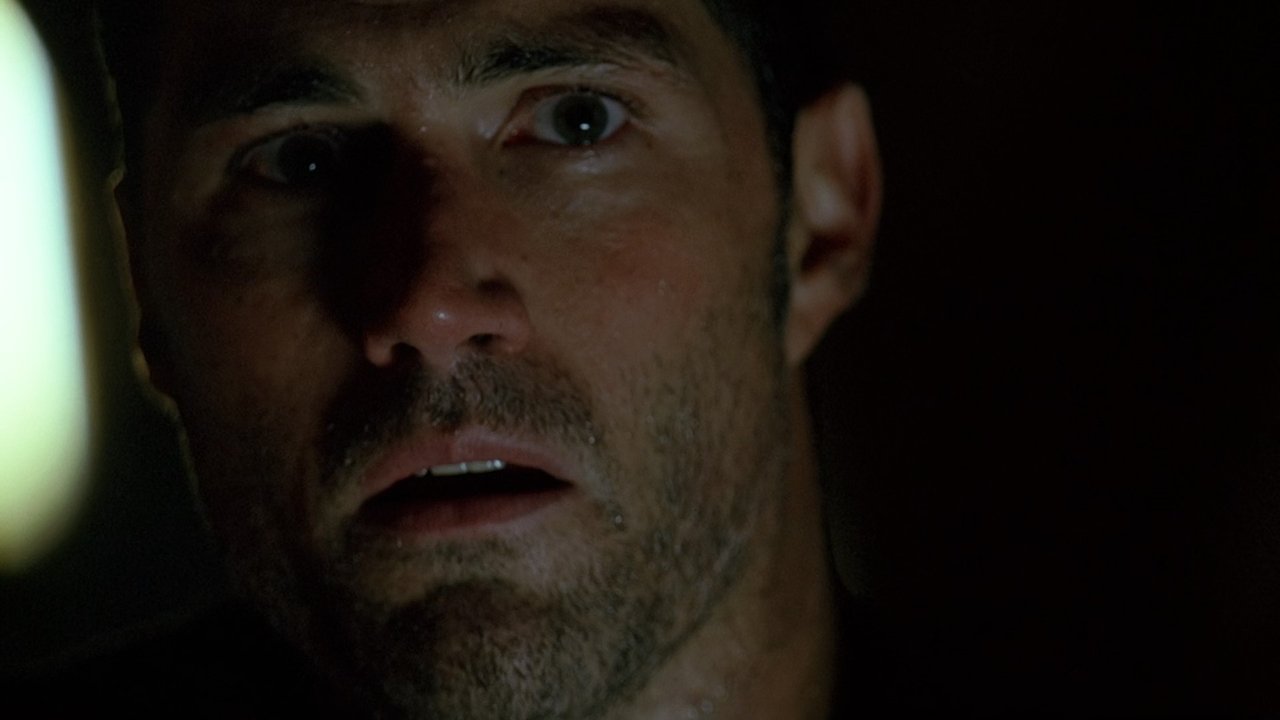
A man pushes a button every 108 minutes because a stranger told him the world ends if he stops.
That is the whole problem.
He cannot verify it. The ritual may be meaningless, or it may be the only thing preventing catastrophe. The evidence never becomes complete enough to remove the need for faith, and the cost of being wrong is too large to ignore. So he pushes the button.
People call this a religion metaphor, and it is. But it is also broader and more frightening than that. Faith is not just belief in a doctrine. Faith is consequential action under incomplete knowledge. It is what every person does whenever the stakes exceed the evidence. You raise a child, take an oath, remain in a marriage, begin treatment, cross an ocean, build a company, push the button. You act before certainty has finished arriving because certainty almost never finishes arriving.
The show stages the old argument through Jack and Locke, science and faith, evidence and belief. Then it refuses the childish pleasure of crowning a winner. That refusal is the honesty. The argument is not settled. It is lived. The man of science eventually needs belief. The man of faith is destroyed, in part, by what he believes. Most of us are running both systems and pretending the switch is more principled than it is.
The question is not whether you believe or know. The question is what you do when neither is enough and action is still required.
That is where life happens. That is where the button is.
Aloneness
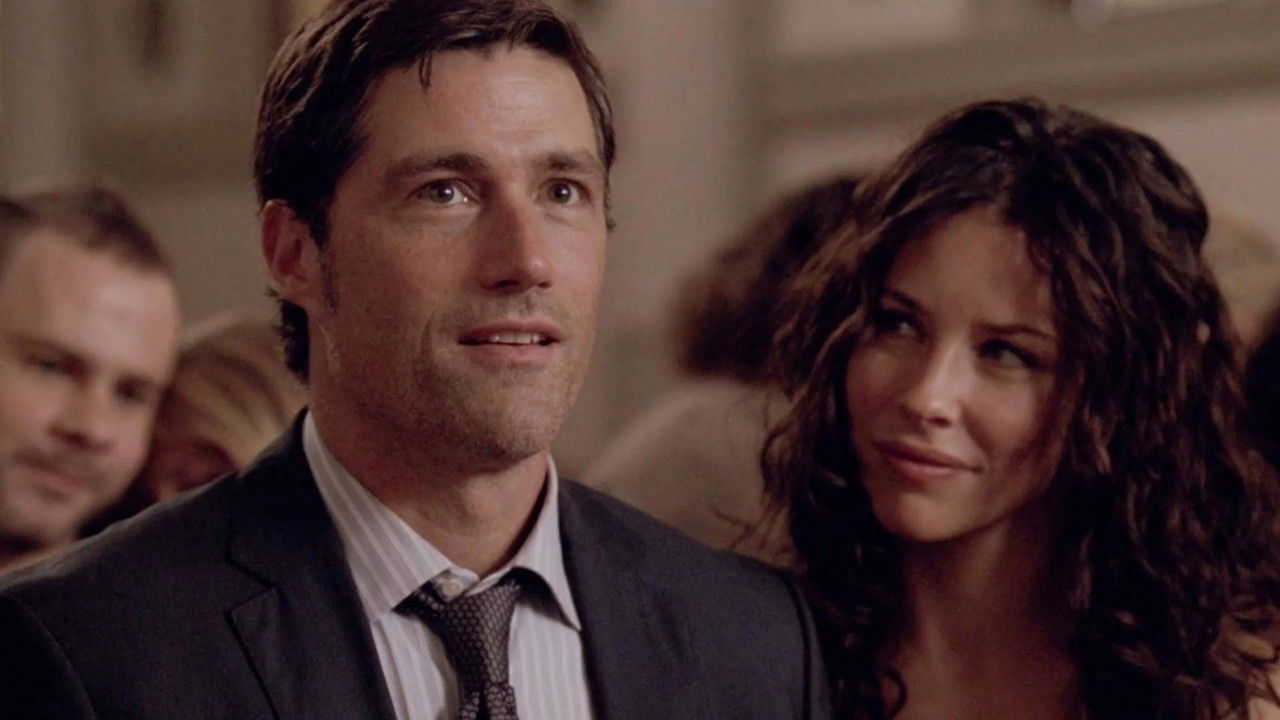
"Live together, die alone" became the show's slogan because it is the show's thesis in survival language.
At first it sounds practical. Strangers on an island need cooperation. Division kills. Basic enough. But Lost keeps deepening the claim until it becomes metaphysical. The survivors are not saved by solving the island. They are saved, insofar as they are saved, by becoming real to one another. The flash-sideways makes the point unmistakable: whatever that final realm is, its rule is relational. They cannot move on alone. They wait.
This is the finale's most important answer, and people missed it because they were still demanding a different kind of answer. The church is not a doctrine about the afterlife. It is the show's final refusal of the fantasy of the self-sufficient individual. The most important period of these characters' lives was not the period in which they understood the island. It was the period in which they found each other inside suffering and became necessary to one another there.
The island is brutal about isolation. People die when they retreat into themselves, into mission, into grievance, into private certainty. They survive when they become responsible for one another. Not sentimentally. Practically. Spiritually. Bodily.
No one gets out alone. The show says it first as a threat, then as a promise.
The constant
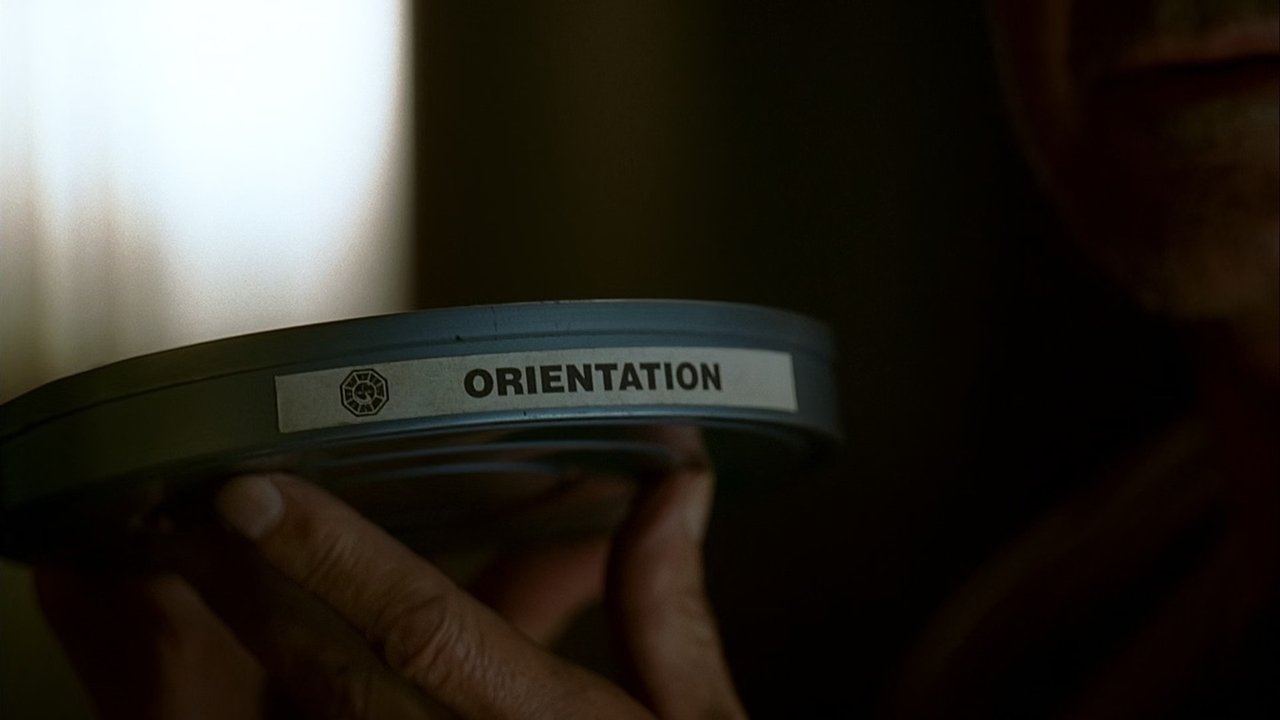
Then there is "The Constant," one of the finest hours television has produced.
Desmond comes unstuck in time. His consciousness flickers between years until the dislocation begins to kill him. Information cannot save him. Explanation cannot save him. Mastery of the island cannot save him. He needs one person with enough emotional reality in both times to anchor him. Penny answers the phone, and her voice holds him in the world.
The episode's claim is quiet enough to miss and enormous once felt. What keeps a conscious being from coming apart under the vertigo of existence is not certainty. It is not theory. It is not a complete account of the mechanism. It is a constant: someone real enough to orient toward when the self loses its coordinates.
The show spends most of its length on things we cannot escape. This is the thing we cannot do without.
Not an answer. A person.
The failures matter
A credible defense has to keep the failures in the room.
The Jacob and Man in Black material arrives late and sometimes feels like coherence applied after the fact. Walt's arc never lands. The middle stretch, especially before the show secured an end date, contains padding that even generous viewers have to forgive rather than reinterpret. The mythology is more powerful as atmosphere than as architecture. Some of the answers make the island smaller.
These are not footnotes. They are real limits on the work.
But they do not destroy it because Lost is not finally held up by the clean resolution of its mythology. A failed puzzle box dies when the answers disappoint. Lost survives because the images remain alive after the answers weaken. Jack's eye. The empty coffin. The hatch. The button. The smoke. The raft. Penny's call. The church. The dog. The eye closing.
A lesser show is remembered by its solutions. Lost is remembered by the parts of us its symbols found.
A lesser show is remembered by its solutions. Lost is remembered by the parts of us its symbols found.
Verdict
Twenty years later, I have stopped apologizing for the ending because I have stopped asking it to be faithful to the wrong thing.
The great mystery of Lost was never the island. The great mystery was the first frame: that an eye opens at all. That a person wakes into a world they did not order, in a body they did not choose, among people they did not select, carrying a past they did not fully understand, and is still expected to make meaning before the eye closes.
That is the condition. The show made it visible.
You arrive without context. You mistake strangers for enemies. You carry the past into every clean slate. You are hunted by what you disown. You act on faith because knowledge is incomplete. You look for an answer large enough to end the question, and some of them come, and most do not. And underneath all of it, the thing the island kept proving: you do not get through it alone, and the people who become real to you are what hold you together when the self comes apart. The question that matters in the end is not whether you solved the island. It is whether you found your people while you were there.
So watch it again, if you can. Not as a puzzle box. Watch it as a show about what it feels like to wake up, suffer, believe, fail, love, and leave.
The eye is going to close on all of us. Lost asks whether, before it does, we stopped trying to do it alone.
The credibility layer for what to watch
One scored, argued editorial a month, plus the next TVI Essential. No studio money. No spam.
Reviewed against the published TVI methodology by Jordan Robinson, MD, MPH. Lost named a TVI Essential, granted 2026-05-15. The IQ Score is a content rating, not an intelligence measurement. Stills: Lost (2004-2010), ABC, used for review. Published at tvintelligentsia.com/reviews/lost.