After watching: this article discusses the plot.
Before and after East of Eden
Choose a resource for where you are in the viewing. Content details are labeled.
Before watching1 resource
- Score & viewing detailsEast of Eden: score and viewing details
The catalog record, score status and viewing options.
Content details may appear in the rationale
After watching1 resource
- ReviewTV reviewEast of Eden Finds Genesis Still Happening
The critical argument, for reading after you have watched.
Plot details; may discuss the ending
East of Eden Finds Genesis Still Happening
Zoe Kazan’s adaptation of Steinbeck’s novel finds the same human failures repeating across generations. Florence Pugh, Christopher Abbott, and Hoon Lee bring psychological depth to a story about innocence, denial, and the possibility of choosing differently.
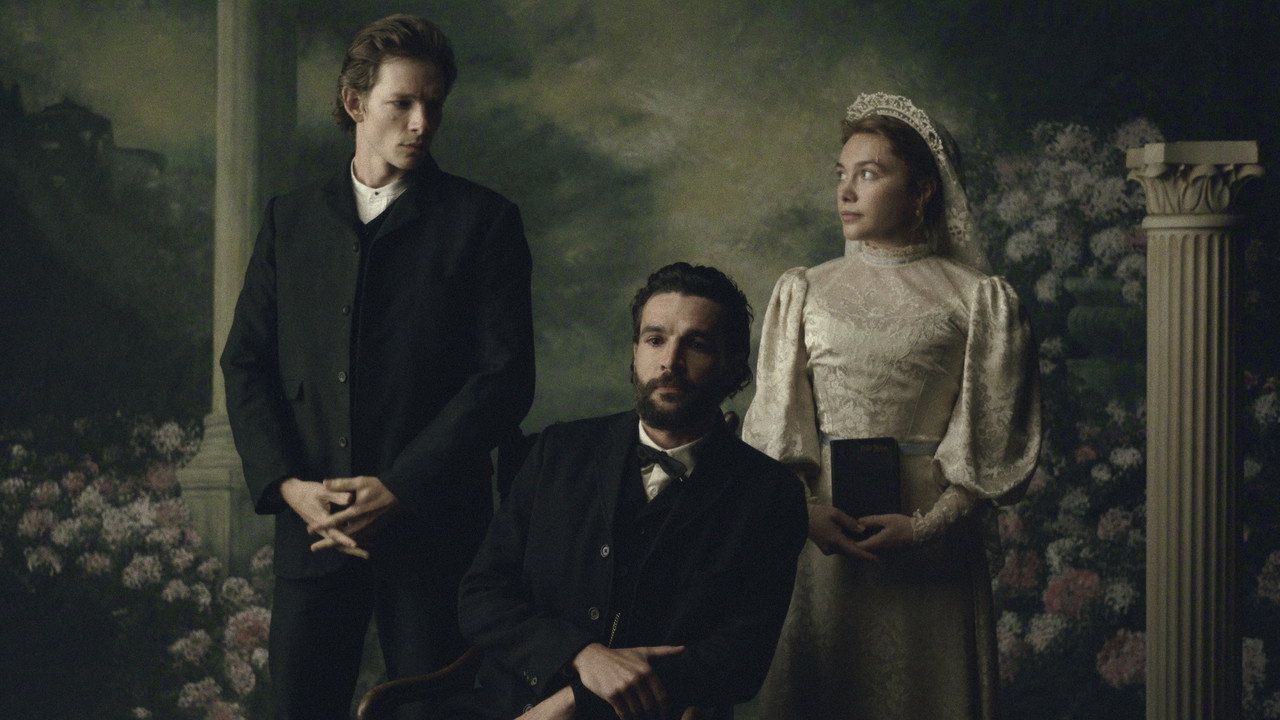
East of Eden (2026) scores 155/200 on TV Intelligentsia's published methodology, Stimulating, on a verified receipt. Jordan Robinson's review of Zoe Kazan's seven-episode Netflix adaptation of Steinbeck reads the Trask family as Genesis still happening: two generations of fathers favoring one son, and a last word, timshel, that leaves the next choice open. In his words: "We inherit the story, not the ending."
This review contains spoilers for the full series, including the ending.
When the Trask twins are named, Cain and Abel come up in the conversation. The family knows the biblical story well enough to invoke it, settles on Cal and Aron instead, and then spends another generation repeating it anyway.
We tend to learn the story of Eden as something that happened once, to two people, a long time ago. Zoe Kazan’s seven-episode Netflix adaptation of John Steinbeck’s East of Eden suggests it never stopped happening. The title comes from Cain’s banishment. After killing Abel, he settles east of Eden, in a world where innocence is already gone. The Trasks live in that world, and so do we. Genesis reads less like an account of where we came from than a description of what we keep doing.
The series shows the pattern before anyone names it. In the first episode, young Adam gives his father, Cyrus, a puppy he found in a field, and Cyrus treasures it. The knife Charles chose for him barely registers, and before long Charles nearly beats Adam to death. It is Cain’s refused offering, replayed between two brothers. A generation later, Adam is the father. Cal brings him $15,000, and Adam turns it away and praises Aron instead. The gifts have changed. The father’s judgment and the rejected son’s pain have not.
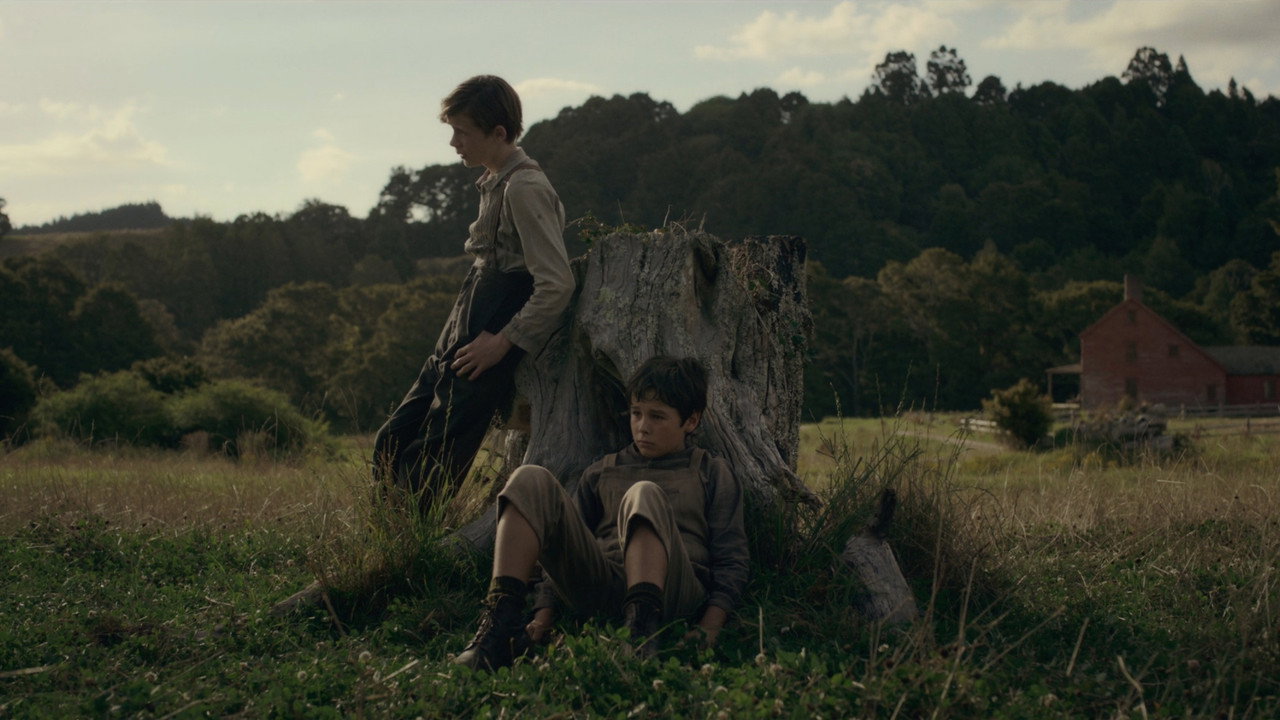
Kazan has a family reason to tell it this way. Her grandfather, Elia Kazan, directed the 1955 film with James Dean, which covers only the end of the novel: Cal, Aron, and their father. She starts a generation earlier, with Adam and Charles, so the repetition his film could only imply happens in front of us, father to son.
The characters recognize the story. What they cannot see is how completely they are living it, and no one is blinder to that than Adam.
Adam’s innocence depends on denial
Christopher Abbott’s Adam is Adam almost literally. He believes in purity with such conviction that he becomes profoundly gullible. He is not simply gentle or naive. He is obstinate in his understanding of the world, even when reality keeps contradicting him, and Abbott plays that stubbornness without asking us to forgive it. We are meant to lose patience with him.
Nowhere is that clearer than in his marriage to Cathy Ames, played by Florence Pugh. She turns up at the Trask farm beaten and bleeding, and Adam kneels to clean her wounds with a wet rag. From that moment he sees a perfect woman in someone plainly damaged, and he never stops seeing her that way. Cathy understands him far better than he understands her. She sees how simple his worldview is and how easily she can use it, while he keeps looking past her toward the woman he wants her to be.
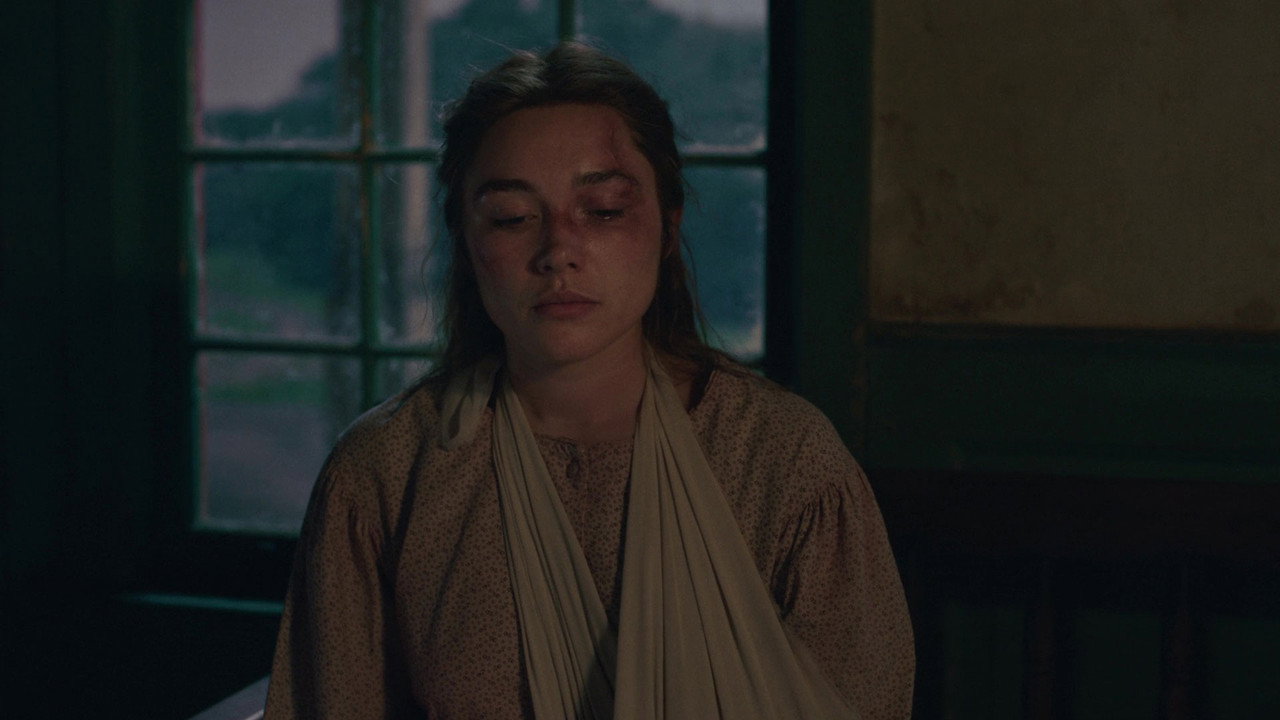
There is something familiar in that kind of idealization. A person can become so attached to an idea of someone that the real person has no room to exist. Adam’s blindness helps bring the marriage down, but it does not excuse Cathy, and the series never makes her choices easy to forgive.
Pugh never lets Cathy settle into a single moral category. She is damaged and calculating, able to draw our sympathy while causing much of the suffering around her. When Cathy becomes Kate, she stops running. Pugh plays a woman who has finally found an identity she recognizes as her own, done performing the purity Adam demanded of her.
A person can become so attached to an idea of someone that the real person has no room to exist.
That certainty does not hold. Kate begins hearing Charles’s voice, and in the last episode she sits applying her makeup while she answers him. Pugh makes her tired and unsure, a woman who once controlled everyone around her and now cannot trust her own mind. Only when Kate sees her sons does real love, or redemption, begin to feel possible, and even then she does not change course so much as end it. She takes her own life and leaves everything she owns to Aron.
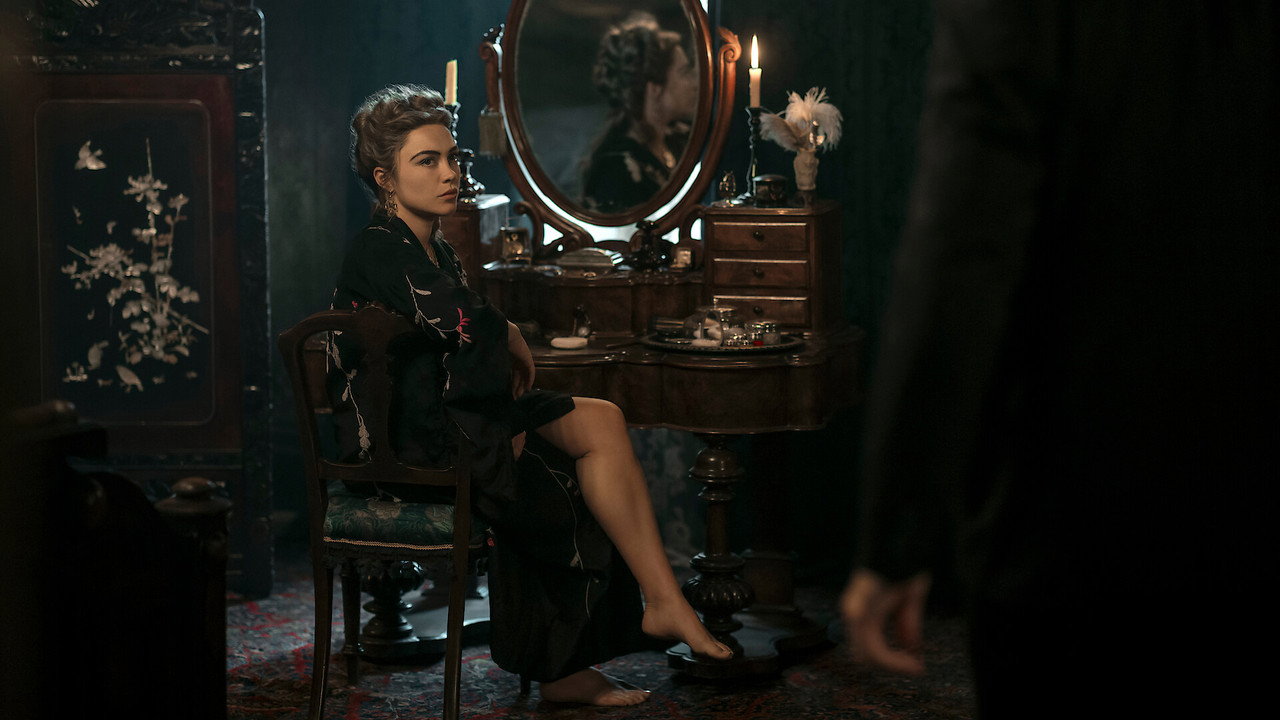
Steinbeck’s Cathy also invites a second biblical comparison. She holds Eve’s place as Adam’s wife, but Steinbeck keeps likening her to the serpent, the one who brings deception and destruction into the world Adam wants to preserve. When Cathy shoots Adam, he claims he shot himself. Even with the evidence of her violence in front of him, he protects his picture of her. His innocence has become inseparable from denial, and the consequences reach well beyond his marriage.
Adam insists on honesty, believes in purity, and often stays passive in the face of evil. None of it keeps him from causing harm. His sons need more from him than innocence. They need judgment, understanding, and a father willing to act, and for most of their lives he does not provide them.
Adam believes. Lee shows up.
What Adam cannot give his sons, Lee does. Played by Hoon Lee, he runs the Trask household and gives Cal and Aron the steady care their father cannot. He understands what the boys need and makes decisions with a wisdom and balance Adam lacks.
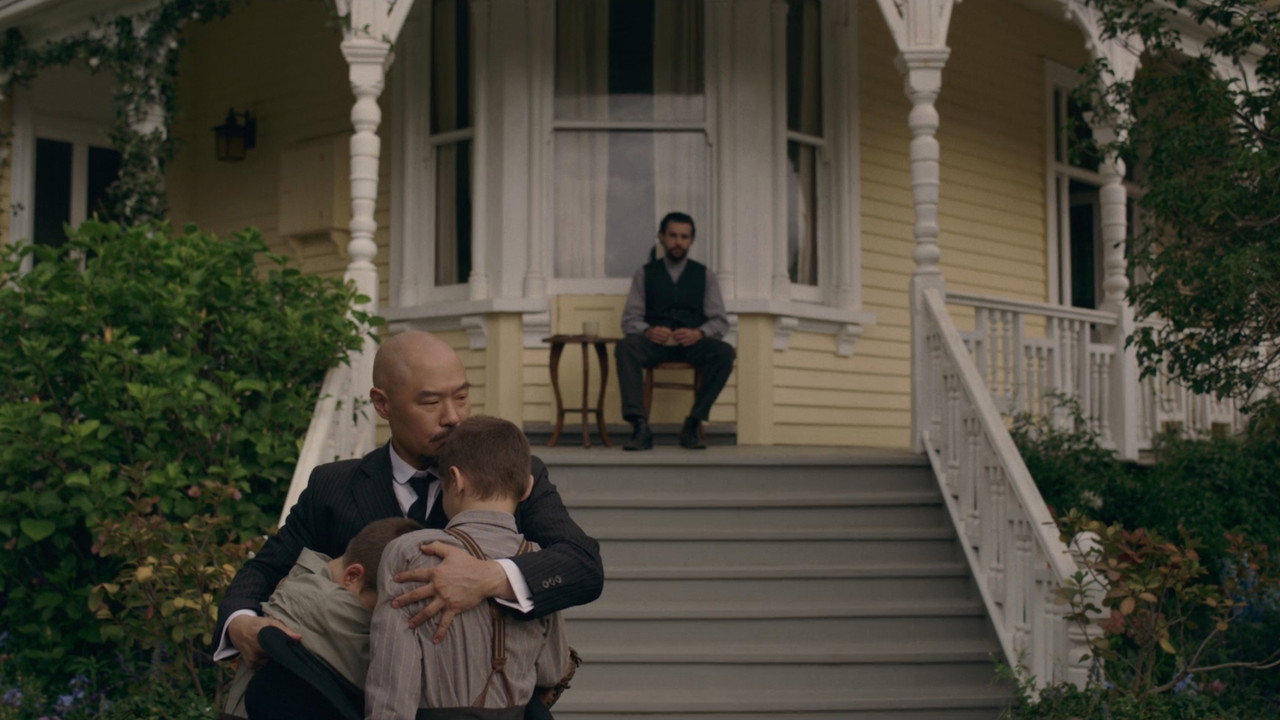
Hoon Lee is one of the series’ strongest performers. His care is sustained rather than occasional, and he does not need the family to be innocent or uncomplicated to stay committed to them.
Lee often has to be sterner and more persuasive with Adam than with the boys. In one scene he makes Adam agree to terms that put the two of them on more equal footing. He knows the limits of Adam’s thinking and how unlikely Adam is to change, and he keeps trying to steer him toward better decisions anyway.
That persistence is what separates the two men. Adam’s innocence often becomes an excuse for doing nothing. Lee’s wisdom demands involvement. It matters most at the end, when Lee sees that Adam may have very little time left and knows what the family stands to lose if father and son never reconcile.
The sins of the fathers
Adam’s failures do not end with him. They reappear in his children. Aron inherits his father’s habit of idealizing women. He sees Abra through an image of purity that does not match who she is. Reading his letters, Abra realizes Aron has imagined someone else in her place. It is painfully close to Adam and Cathy: two men so attached to an ideal that they cannot see the woman herself.
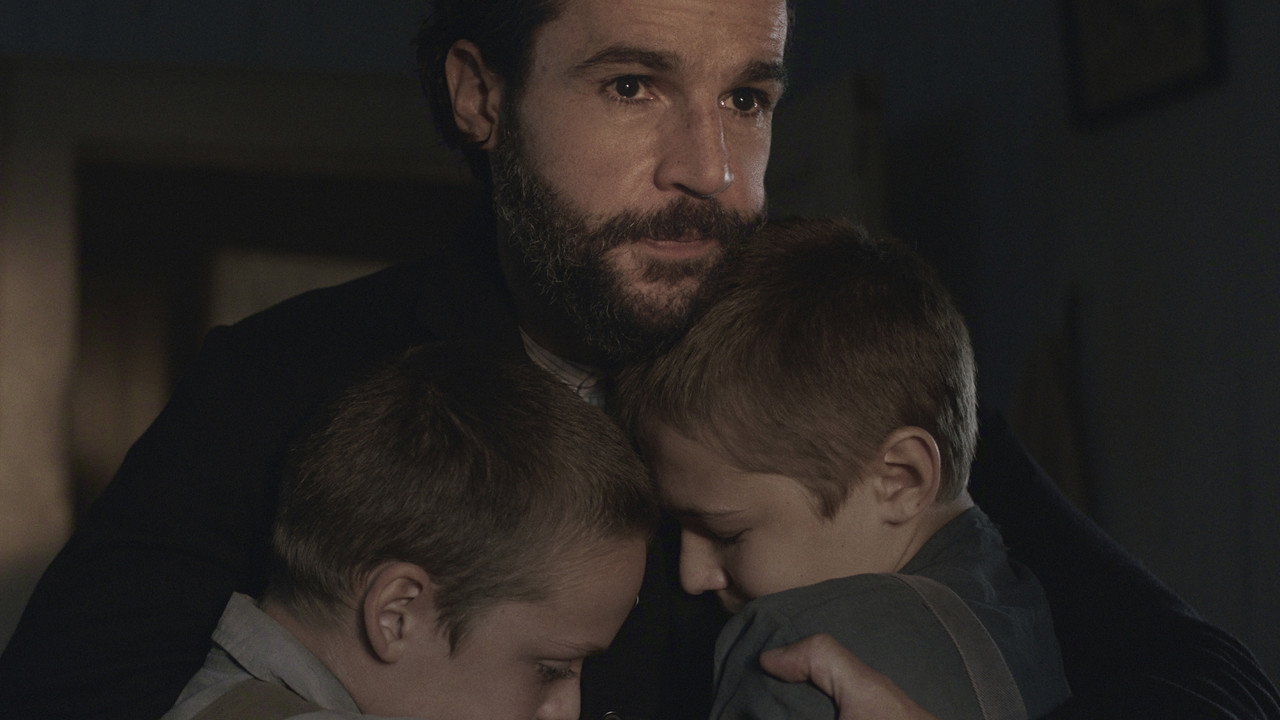
Cal, meanwhile, holds the darker role in the family’s biblical pattern. He is treated as the troubled son, the one destined to repeat Cain’s offense. But the line between the brothers is never as simple as good and evil, and the series blurs it even at the level of blood. It is not clear whose sons they are. Cathy sleeps with Charles after drugging Adam on their wedding night, and Kate later admits she does not know which brother fathered the twins. The series never settles it, and the ambiguity feels deliberate.
That doubt undercuts any attempt to sort the boys by inheritance. Light and darkness live inside the same people rather than belonging to opposing characters. Adam’s innocence produces weakness and harm. Cal’s capacity for cruelty sits alongside his capacity for goodness. The family keeps trying to tell the good son from the bad one while its own history undoes the categories.
Knowledge destroys innocence, again
The biblical pattern is most painful in the brothers’ final conflict. In Genesis, Adam and Eve’s eyes are opened after they take forbidden knowledge. Their innocence ends because they can no longer see the world as they once did. Something similar happens twice in the Trask family. Adam confronts Cathy’s violence when she shoots him. Aron confronts the truth about his mother when Cal takes him to the brothel. In both cases, knowledge destroys an understanding of the world built on innocence. But knowing the truth does not mean knowing how to live with it.
Innocence is also how this family measures goodness. Much of Aron’s purity is simply his innocence: nothing has yet forced him to see the world as it is. Cal has seen more, and by Adam’s measure he is the son who does not do good. In a sense, he is punished for what he knows. Charles carried the same mark a generation earlier. Both sons are exposed to things that ruin their innocence, and both are judged for the loss.
That is part of what makes the brothel scene so cruel. In taking Aron to Kate, Cal strips away the very innocence that made his brother the favored son, and he knows the damage it will cause. Joseph Zada plays the confrontation with some vindictiveness, but also an unsettling lack of concern. Cal looks almost unbothered by what he has done, at least at first.
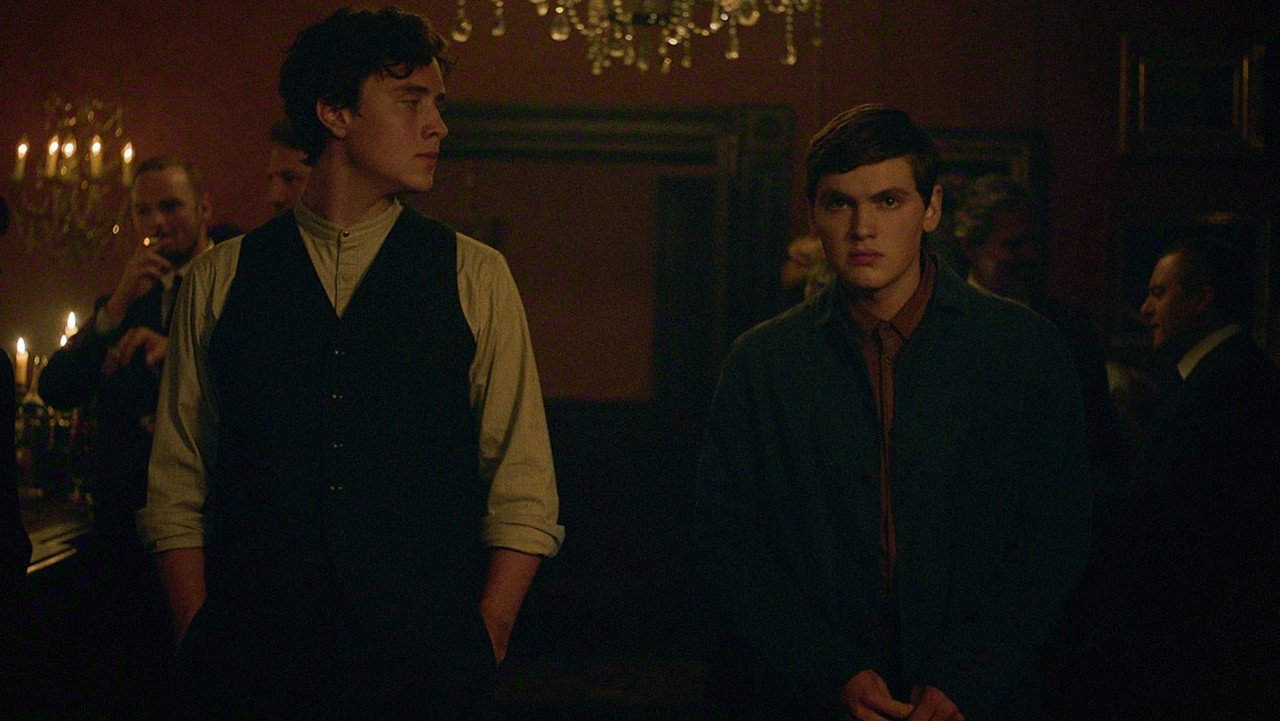
The regret comes later. By then, Aron has enlisted and died in the war, and Cal must face consequences he cannot undo. Zada lets the distance between those two states, the cruelty of the act and the remorse that follows, become part of Cal’s moral complexity.
In a sense, he is punished for what he knows.
The parallel with Cain and Abel is unmistakable, even though the act is different. Cain kills Abel directly. Cal uses the truth to wound his brother and sets in motion consequences that leave him carrying a terrible burden.
The series is strongest in its writing and performances, which make familiar human failures feel immediate. Some series land their revelations while you watch. This one gives up more of its meaning in reflection than from episode to episode, and by the end the performances and the parallels arrive at a cohesive point.
Thou mayest
At the end, Adam tells Cal timshel, which Steinbeck renders as “thou mayest.” Cal has spent his life under a judgment that came before his choices: the difficult son, the dark brother, afraid that what he has done is what he must always be. His father’s blessing offers another possibility. Cal cannot bring Aron back. He cannot erase the cruelty of what he did or the suffering that followed. But those actions do not have to decide every choice he makes afterward. He is free to choose what kind of person he becomes.
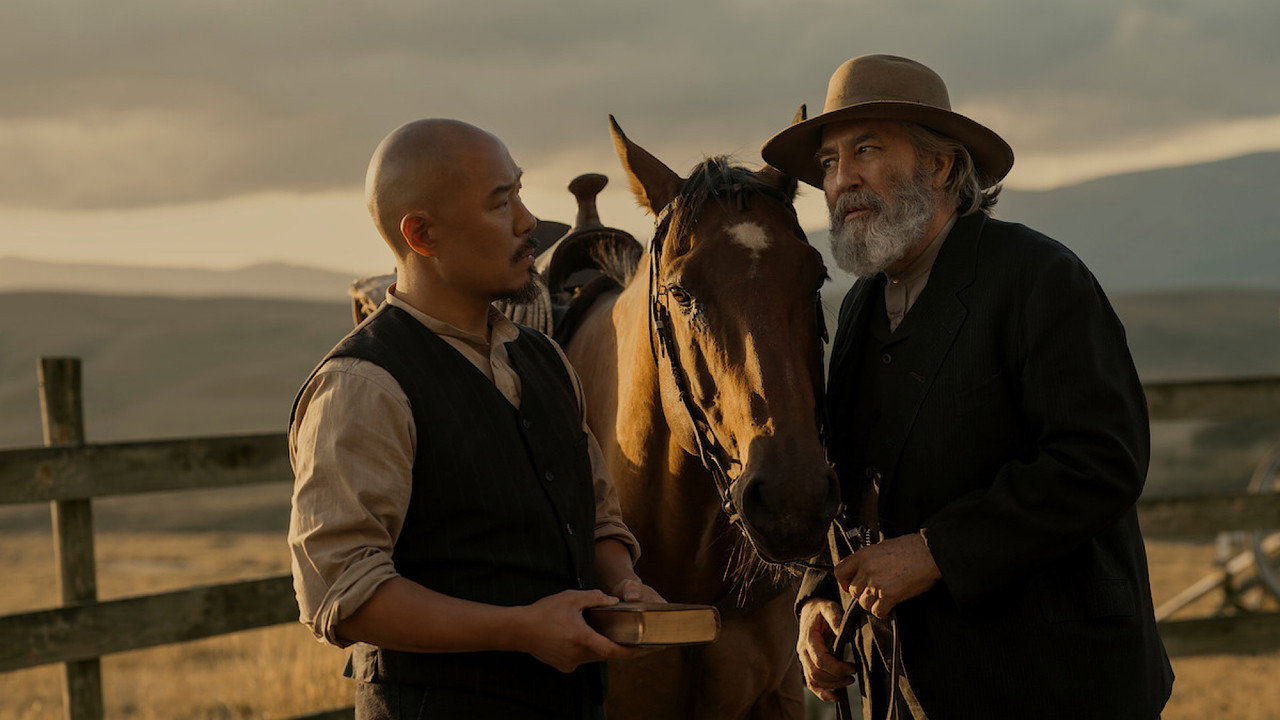
That idea runs against something deep in Christian thought. Even traditions that weigh original sin lightly tend to assume we live in a fallen world, one where we cannot choose the good without help from beyond ourselves. Timshel says otherwise. Our lives are not predetermined. We are not destined to relive the harm done to us, pass it on to others, or repeat the same cycles. We have a choice, and that makes all the difference. It may be the point of the whole adaptation, which ends on that word, spoken by a father to his son.
What makes the ending so moving is that the choice belongs to Adam as well. For much of the series, Abbott plays a man who stays obstinate even when his beliefs hurt the people he loves. Adam’s objection to Cal’s money is not empty. Cal made it on wartime prices, and Adam tells him to give it back to the farmers. But Adam answers the money and never the son who brought it, and he shows little concern for the pain he is causing.
By the final bedside scene, doing the right thing still does not come easily to him. Adam has had a stroke and can barely speak, and no one knows how much time he has left. Lee joins father’s and son’s hands, and Abbott lets Adam struggle toward the one word he has left. He has not suddenly become a different man. But he finally gives his son something he has withheld for most of his life: the freedom to move forward without staying trapped inside his father’s judgment.
Lee understands the urgency of the moment, and the series seems to as well. Illness or death can come for any of us, or for someone we love, without warning, and the chance to set things right does not wait. Adam, at last, responds.
The story that began with a father’s preference for one son over another ends with a father who chooses not to repeat it. The family has recognized Cain and Abel, reenacted their conflict, and suffered its consequences. East of Eden finds Genesis still happening, not because we are condemned to repeat our oldest failures forever, but because every generation has to meet them again.
In Genesis, the word comes to Cain before he kills his brother, and he does not take it. Cal hears it after the loss, from a father who spent most of his life refusing to see his sons as they were. His hand is in his father’s, and the rest of his life is in front of him.
The past shapes us, but it doesn’t sentence us. We inherit the story, not the ending. As it did for Cal at his father’s bedside, timshel means the next line is ours to write.
The Intelligentsia Report
Film and television criticism, watch guides, and updates from TV Intelligentsia. Free. Unsubscribe anytime.
TVI Score Breakdown
| Dimension | Weight | Score |
|---|---|---|
| Cognitive Stimulation | 40% | 38 / 50 |
| Educational Value | 35% | 37 / 50 |
| Craft & Quality | 25% | 42 / 50 |
| TVI Score | 155 / 200 · Stimulating |
Formula: round((C × 0.40 + E × 0.35 + Q × 0.25) × 4) = 155. The three weighted dimensions do not sum to the total; the formula scales them.
Disclaimer: TVI's score is a content rating, not a measurement of intelligence.
Common questions
What is East of Eden (2026)'s IQ Score?
East of Eden (2026) scores 155 of 200 on the TVI rubric, Stimulating tier, with Cognitive Stimulation 38 of 50, Educational Value 37 of 50, and Craft and Quality 42 of 50. It is the series' first TVI score, verified on a receipt from a scoring session on November 21, 2026.
What is East of Eden (2026)?
A seven-episode Netflix limited series created by Zoe Kazan from John Steinbeck's novel, released October 1, 2026, and directed by Garth Davis and Laure de Clermont-Tonnerre. Florence Pugh plays Cathy, Christopher Abbott plays Adam Trask, Hoon Lee plays Lee, Mike Faist plays Charles, and Joseph Zada and Joe Anders play Cal and Aron. It is rated TV-MA.
How is it related to the 1955 East of Eden film?
Elia Kazan's 1955 film, with James Dean as Cal, adapted only the last part of the novel. The series, created by his granddaughter Zoe Kazan, starts a generation earlier with Adam and Charles.
Is the TVI score a verdict on whether the series is worth watching?
No. The score rates cognitive stimulation, educational value, and craft on a published rubric. The review is the reviewer's reading of the series.
Series: East of Eden (2026), created by Zoe Kazan from the novel by John Steinbeck; directed by Garth Davis and Laure de Clermont-Tonnerre. Netflix, seven episodes. With Florence Pugh, Christopher Abbott, Hoon Lee and Mike Faist. The IQ Score is a content rating, not an intelligence measurement.