Fight Club Review: The Movie Was Always the Case Against Tyler Durden
On the cult of misreading, dissociation, and the seduction that was always the point
Fight Club scores 168/200 on TV Intelligentsia's methodology, a Masterclass and a TVI Essential. The film is not Tyler Durden's manifesto; it is the case against him, built so seductively that the viewer has to fall for him before seeing what joining costs. Its life as a misread cult object is the proof of its design.
Fight Club scores 168/200 on the TVI IQ Score, placing it in the Masterclass tier. David Fincher's adaptation of Chuck Palahniuk earns the designation on craft and cognitive density: an unreliable-narrator architecture built from single-frame inserts and a recut flashback, Jeff Cronenweth's desaturated photography, and a self-implicating satire of consumer masculinity that the culture has spent a generation misreading as endorsement. The film's endurance is the proof of its intelligence. TVI Essential is an editorial designation; IQ Score is a content rating, not an intelligence measurement.
Almost everyone remembers the first rule of Fight Club. Far fewer remember that the man who made the rule is the villain.
That gap is the whole movie.
David Fincher's Fight Club was released in 1999, underperformed in theaters, and then became one of the defining cult films of its era. That afterlife is not separate from the work. It is part of the work. A generation of viewers took Tyler Durden as a prophet: anti-consumerist, anti-corporate, anti-numbness, the bare-chested answer to a life made out of catalogs, cubicles, and brand language. They quoted the manifesto and missed the indictment.
Here is the thing the misreaders missed: Fight Club is not Tyler Durden's sermon. It is the case against him, built so seductively that you have to understand why someone would join before you can understand what joining costs.
That is why the film still matters. It does not warn you about a stupid ideology. It warns you about an ideology that begins by telling the truth.
Consumer life has hollowed the narrator out. Work has no meaning. Masculinity has no adult ritual. Grief has become inaccessible except through borrowed illness. His apartment is a self assembled by a catalog. His body is present and his life is not. Tyler enters that vacancy and names the pain better than anyone else in the film.
That is the danger.
A bad diagnosis would be easy to reject. Tyler gives a partly correct diagnosis and then turns it into a cure made of pain, hierarchy, cruelty, and obedience. The fight club becomes a cult. The cult becomes Project Mayhem. The men who wanted to stop being replaceable consumers become replaceable soldiers in black. The thing that promised to free them from corporate machinery rebuilds them into machinery with worse doctrine.
The seduction is not a bug.
The seduction is the experiment, and the audience is the subject.
Quick verdict
Watch Fight Club as a trap, not a manifesto.
It is one of the most formally intelligent American films of the 1990s: a movie whose unreliable-narrator structure, subliminal visual architecture, and cultural diagnosis still reward careful reading. It is also one of the most dangerous movies to watch lazily, because its surface is so stylish that its critique can be mistaken for endorsement.
That is not a reason to dismiss it. That is the reason it is a TVI Essential. The movie's misreading is the proof of its design. It made Tyler magnetic enough that millions of viewers had to decide whether they could tell the difference between liberation and recruitment.
The architecture is the argument
Start with the form.
The narrator has no name. He has insomnia, a job auditing car recalls, and an apartment furnished by the fantasy that good taste can become a personality. He cannot sleep because he cannot feel. He cannot feel because nothing in his life has enough reality to break through the anesthesia.
Then he discovers support groups.
This is the first brilliant cruelty in the film. He can cry only inside other people's real suffering. He enters rooms meant for cancer, addiction, grief, and mortality, and he uses them as emotional equipment. Other people's pain becomes his sleep aid. The movie is already telling you who he is before Tyler arrives: a man so starved for reality that he begins by counterfeiting contact with it.
Marla Singer ruins the counterfeit.
She matters more than most readings admit. Marla is not only the love interest, not only the goth cigarette burn on the film's surface. She is the first real person the narrator cannot metabolize. Her presence contaminates his lie because she is lying too, and the mirror makes him visible to himself. He hates her because she breaks the only arrangement that lets him feel without being known.
Then Tyler appears.
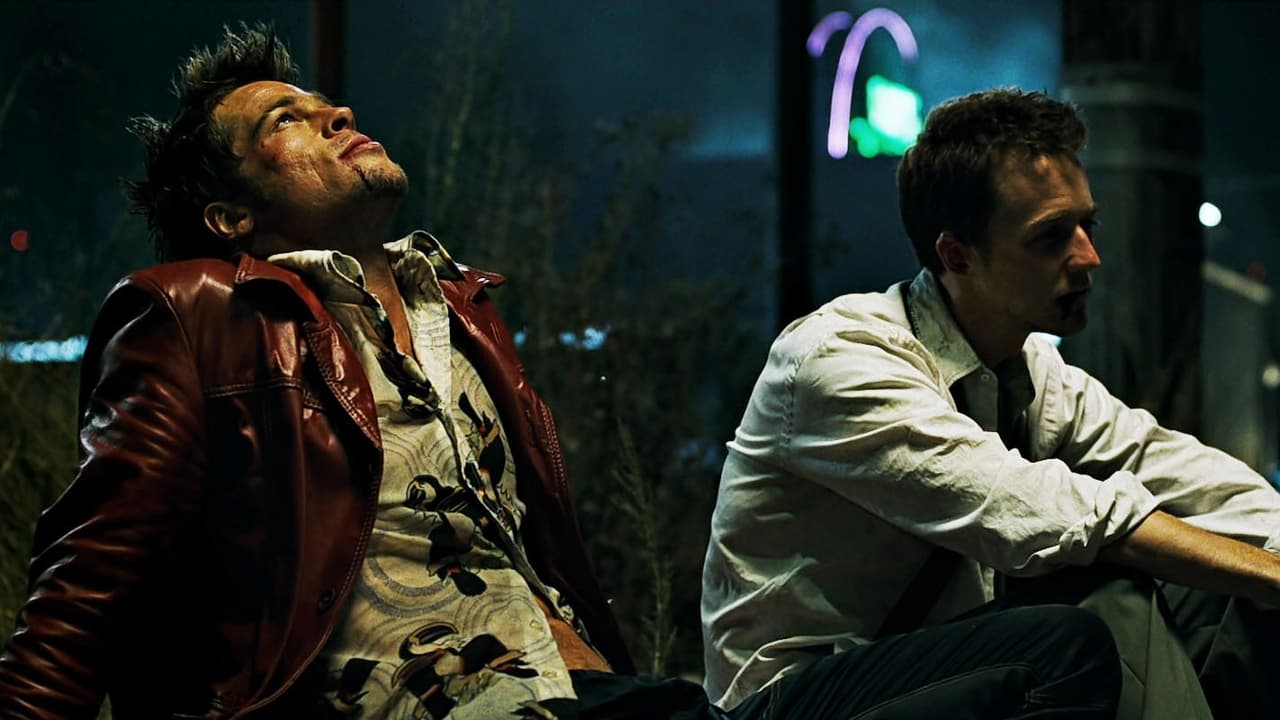
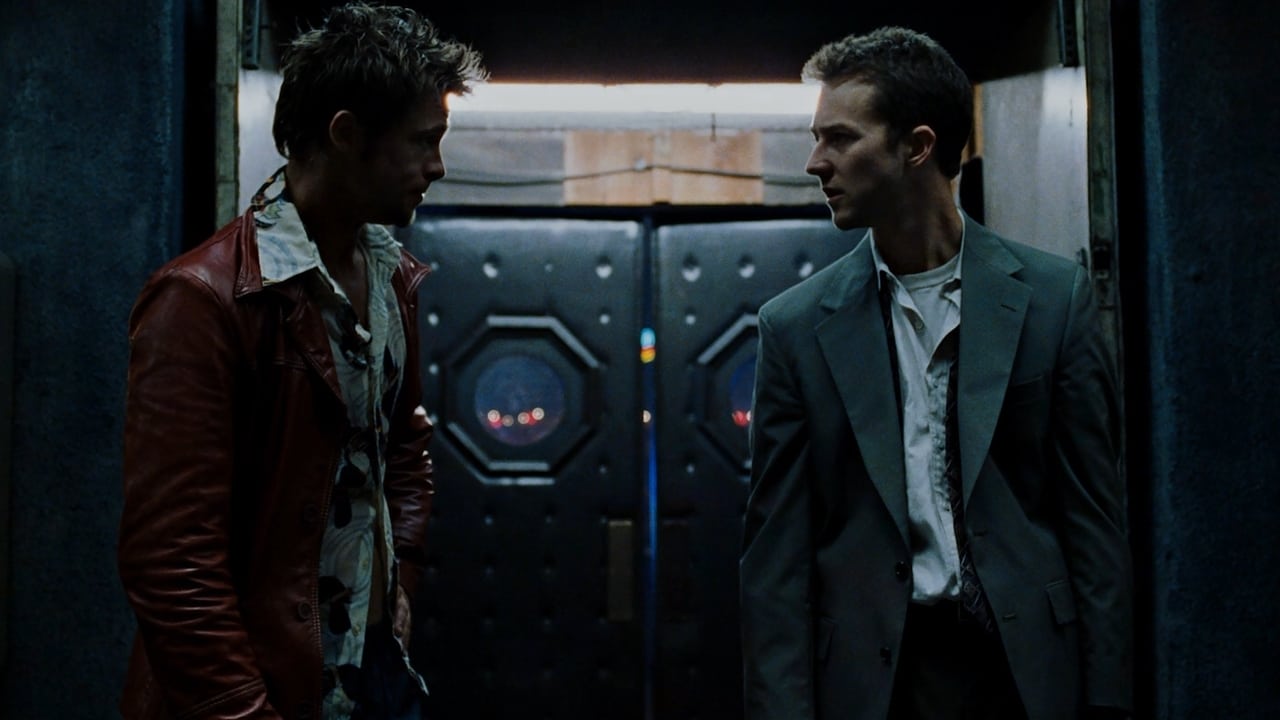
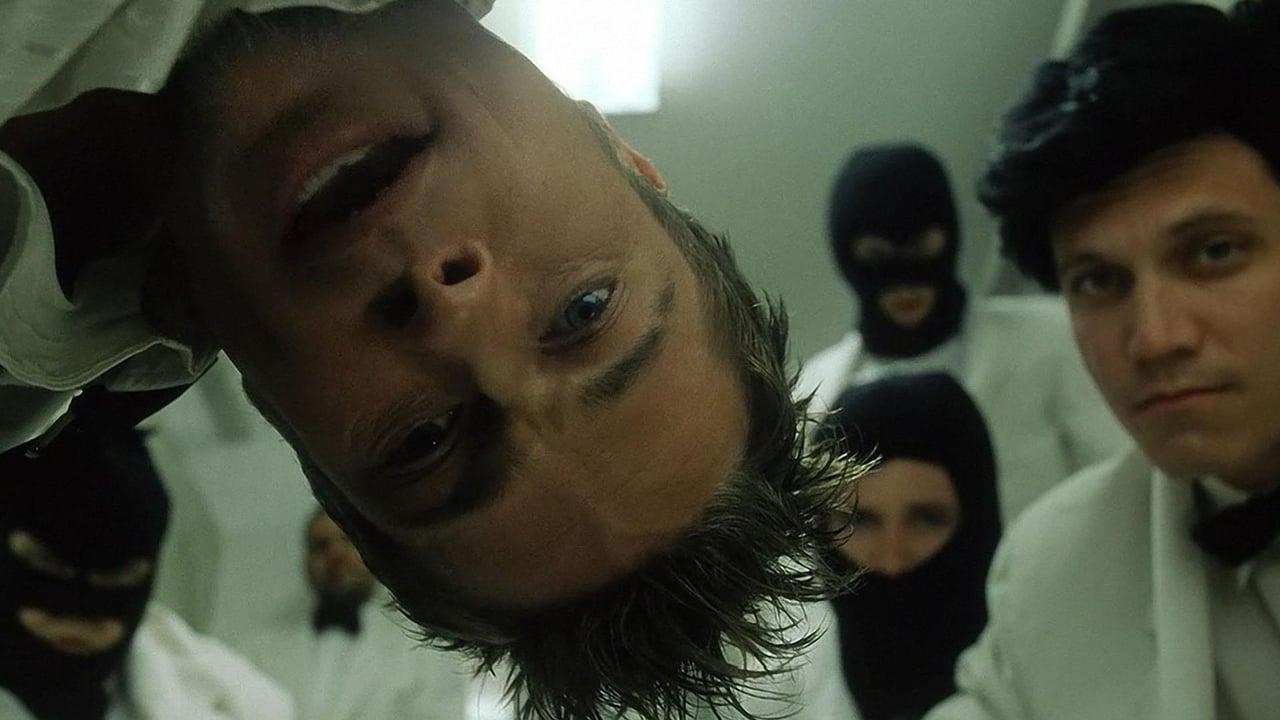
Except Tyler does not appear. Tyler has been flickering at the edge of the frame before the narrator meets him, a one-frame intrusion of the forbidden self before the story admits what it is doing. The film tells the truth subliminally before it tells it narratively. Tyler is a splice in the movie because he is a splice in the mind.
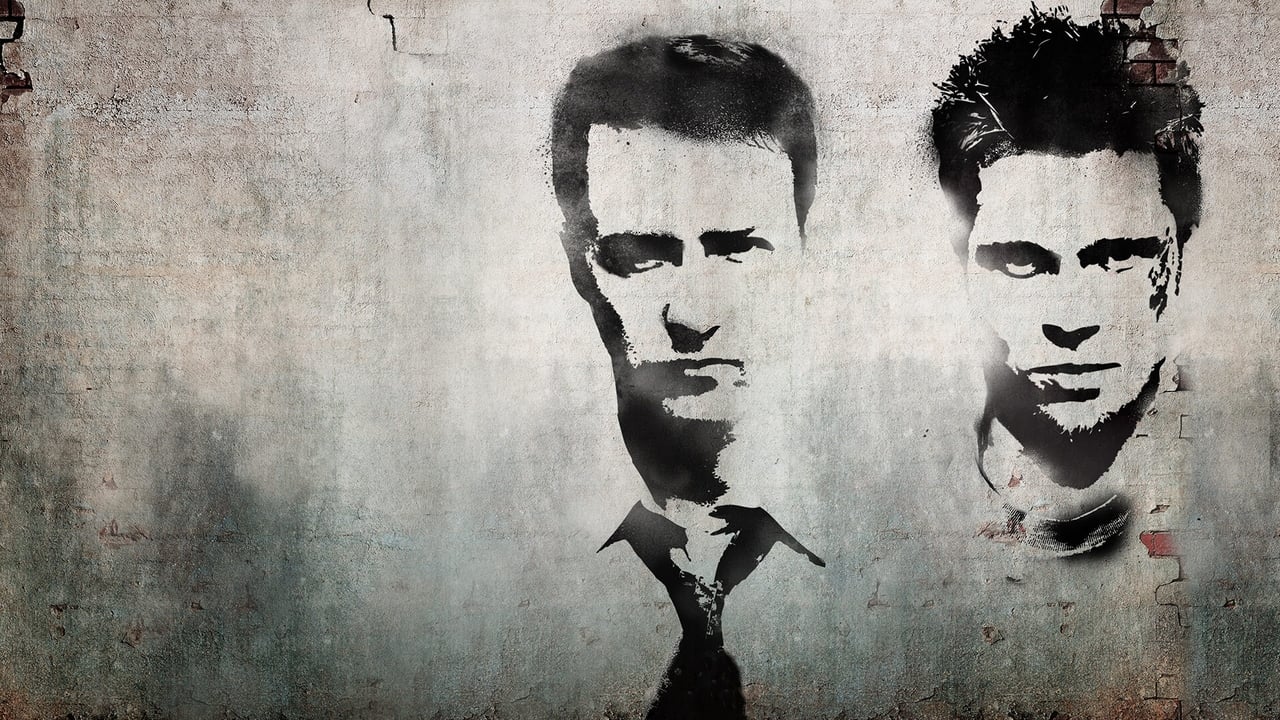
That is why the twist is not merely a twist. Tyler is not a surprise villain imported in the last act. He is the narrator's disowned appetite, aggression, sexuality, contempt, charisma, and will, given a body so the narrator can obey himself while pretending to follow someone else.
The movie is built like a mind hiding its own authorship.
When the reveal comes and the film recuts earlier scenes, the point is not simply that you were fooled. The point is that the narrator was fooled by the same arrangement you accepted. The audience's misperception is structurally identical to his dissociation. The movie does not tell you about self-deception. It makes you participate in it.
That is the craft achievement.
Tyler is right enough to be dangerous
A dishonest critique would make Tyler obviously wrong.
Fight Club does not do that because the movie is smarter than a scold. Tyler's anti-consumerist diagnosis lands because it contains truth. The narrator really has mistaken products for identity. He really is trapped in work that turns death into arithmetic. He really has been sold a life that cannot answer the questions his body is asking.
The film understands alienation from the inside. It understands how humiliating it is to feel empty in a world that keeps telling you the emptiness is convenience. It understands the peculiar rage of a person who has followed the instructions and arrived nowhere. Tyler's first power is not violence. It is articulation. He gives the pain language.
That is how recruitment works.
The recruiter rarely begins with the worst version of the doctrine. He begins with the part that is true. He tells you your life is thin. He tells you the institutions lied. He tells you your numbness is not imaginary. He makes you feel seen. Then he offers the cure, and the cure is the trap.
The cure in Fight Club is sensation first, then brotherhood, then obedience. The men come to the basement because pain feels more real than the lives waiting for them upstairs. They bleed, laugh, touch, and submit to rules. For a while the arrangement looks like liberation because the movie is honest enough to admit that it feels like liberation.
Then the basement grows a uniform.
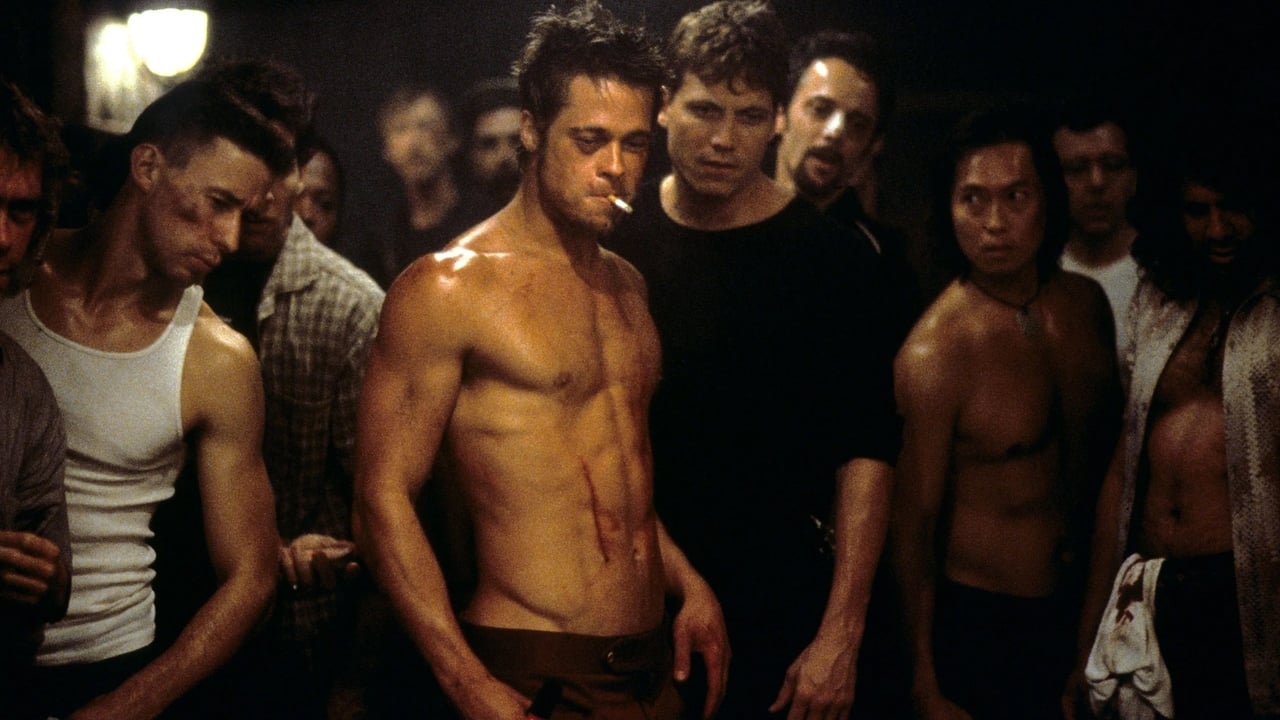
Project Mayhem is the moment the film stops letting the fantasy stay personal. The men who supposedly rejected corporate life become anonymous workers inside Tyler's counter-corporation. They surrender their names. They shave their heads. They perform loyalty rituals. They chant. They obey.
The club did not free them from being cogs.
It gave them a machine they could mistake for meaning.
Bob is the warning the movie hides in plain sight
Robert Paulson is the film's moral hinge.
The narrator first meets Bob at a support group, in one of the spaces where grief is real and the narrator is not. Bob is absurdly easy to reduce: the body, the softness, the hug, the line everyone remembers after he dies. But Bob is doing something essential. He is the one man in the film whose vulnerability is not a performance of dominance.
Bob can grieve. Bob can hold. Bob can be held.
That makes him everything the narrator wants and everything Tyler despises.
When Bob dies as a member of Project Mayhem, the men try to turn him into myth immediately. They chant his name until the person disappears into the ritual. The moment is often quoted as if it were glorious. It is horrifying. The system that promised to restore manhood cannot even mourn a man without converting him into slogan.
That is one of the film's sharpest indictments. Tyler's movement does not restore male feeling. It organizes male feeling into usable force. It can make men bleed, obey, and die. It cannot let them grieve without turning grief into propaganda.
Bob's death exposes the fraud.
What a physician notices
I am going to be careful here because the film tempts people into sloppy diagnosis.
I am not a psychiatrist, and Fight Club is a metaphor, not a clinical case study. The point is not to diagnose the narrator from the couch. The point is that the film borrows real psychological architecture and uses it with unusual precision.
It begins with insomnia. That is not incidental. Sustained sleep deprivation changes the texture of reality. Boundaries blur. The self feels less anchored. The world becomes flattened, repetitive, unreal. The narrator describes life as a copy of a copy of a copy, and the movie literalizes that derealization until a second self walks into the frame.
Tyler is not random. He is exactly what the narrator cannot permit himself to be: aggressive, sexual, appetitive, shameless, capable of action. The split solves a problem and creates a catastrophe. The narrator wants Tyler's freedom without Tyler's violence, but the film refuses to separate them. They arrived together because they were never two people.
That is the psychological intelligence. The forbidden part of the self does not become safe because you exile it. It becomes less accountable. It grows outside the moral structure of the person who refuses to claim it.
The narrator's recovery begins only when he can say the thing the whole movie has been hiding.
I did this.
Not Tyler. Not the system. Not the men. Not the movement. Me.
The film's idea of healing is not self-acceptance in the soft sense. It is authorship returning through horror. The narrator has to claim the violence as his own before he can stop it.
Marla is the real world trying to get in
Marla is the film's least sentimental grace.
She is messy, manipulative, funny, damaged, and real from her first scene. She cannot be folded neatly into Tyler's doctrine because she has no interest in being a symbol for his movement. Tyler uses her. The narrator resents her. The movie needs her because she is the one relationship that cannot be contained by the fantasy.
She is also the reason the ending has any possibility of life after the diagnosis.
Tyler's world is all men, all ritual, all hierarchy, all grievance, all purification through pain. Marla brings contamination in the best sense. Need. Embarrassment. Sex. Care. Disappointment. Ordinary human mess. The narrator does not get free by becoming a cleaner version of Tyler. He gets free by choosing the real person over the fantasy that made him feel powerful.
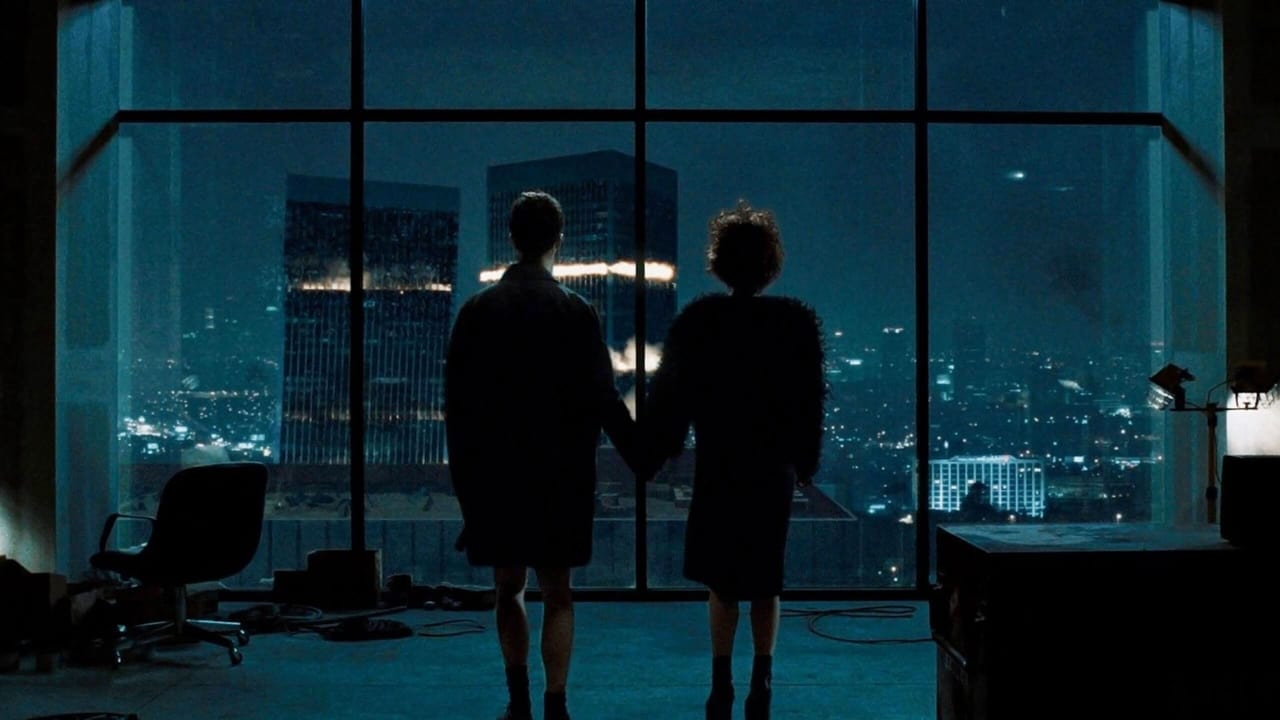
That is why the hand-holding matters.
It is not romance as reward. It is reality contact. After a film spent inside dissociation, conspiracy, and cult ritual, the final human act is not a punch. It is taking someone's hand and staying in the room while the consequences arrive.
The ending refuses to let you win
The narrator shoots himself through the cheek to kill Tyler without killing himself.
That is an absurd image and a perfect one. He survives by wounding the place the fantasy spoke through. The mouth that narrated, lied, seduced, recruited, and commanded is pierced. Tyler disappears. The narrator returns to himself.
A lesser film would end there and call it victory.
Fight Club does not.
The bombs are already planted. Project Mayhem is already moving. The buildings begin to fall. The narrator has reclaimed his mind at the exact moment he loses control of what his mind created.
That is the ending's seriousness. You cannot uninvent the ideology you built to save yourself once other people have joined it. You cannot call the grievance back into your private pain once it has become infrastructure. You cannot wake up from the dream and pretend the things you did while dreaming are not real.
So the final image is not liberation. It is consequence.
A man holds the hand of the one real person he nearly destroyed and watches the world he set on fire actually burn.
The Pixies make the moment feel cool. The image makes it feel final. The contradiction is the point.

Why the misreading matters now
The film has become more disturbing because history moved toward it.
In 1999, Tyler could be mistaken for a stylized countercultural fantasy: anti-Ikea, anti-boss, anti-corporate, anti-boredom. Twenty-five years later, he looks less like a fantasy and more like an early diagram of a pipeline. Isolation becomes grievance. Grievance finds a style. Style finds a leader. The leader gives the pain a target. The target requires organization. Organization demands obedience. Obedience calls itself freedom.
That is not a loose contemporary overlay. It is the film's structure.
The movie understood that men who feel spiritually unemployed are vulnerable to anyone who can make pain feel like initiation. It understood that irony does not protect a culture from taking the wrong lesson. It understood that the longing to be freed from consumer identity can curdle into a more dangerous identity if no real form of connection arrives in time.
This is why the movie is still worth reading carefully. Not because it predicted the internet exactly, or because every later male grievance movement descends from Tyler Durden. That would be too neat. It matters because it saw the emotional mechanism early.
The seducer begins by naming the wound.
The lie comes after.
The seducer begins by naming the wound. The lie comes after.
The honest limits
A 10/10 review should not turn the film into something cleaner than it is.
Fight Club is too good at the surface it critiques. Fincher's cool is total. Pitt is absurdly magnetic. The photography is gorgeous in its sickness. The one-liners are cleaner than the moral frame around them. A viewer who wants Tyler to be a hero can keep him because the movie gives that viewer enough beautiful material to ignore the indictment.
That is partly the point. It is also partly the risk the film never fully controls.
Irony is a weak fence. If your critique of a dangerous fantasy is indistinguishable, for long stretches, from the fantasy's most stylish expression, some people will choose the fantasy and call the critique a permission slip. Fight Club accepts that risk. The size of the misreading suggests the risk was real.
The film also has a narrow educational field. It is a brilliant cultural diagnosis, not a broad knowledge-transfer work. It teaches one thing with force: how numbness, consumer alienation, and masculine grievance can be organized into authoritarian violence. That is durable and important. It is also narrow, which is why Educational Value sits lower than the other two dimensions.
None of this lowers the film out of Masterclass. It clarifies what kind of Masterclass it is: not a clean moral object, but a dangerous one that rewards the viewer who can tell the sermon from the trap.
You were supposed to fall for Tyler. You were also supposed to wake up.
Why the score is 168
TVI scores Fight Club at 168 out of 200, Masterclass tier, and designates it TVI Essential.
Cognitive Stimulation: 46 / 50. The interpretive load is unusually high: unreliable narration, dissociation, subliminal visual architecture, satire, cultural diagnosis, and a final act that retroactively rewrites the first two hours. The film rewards second viewing at the level of form, not trivia.
Educational Value: 34 / 50. The lesson is powerful but narrow. The film teaches the seduction of nihilism, the mechanics of male grievance, and the danger of mistaking pain for truth. It is not a broad educational work, and the score should not pretend otherwise.
Craft and Quality: 47 / 50. Fincher's direction, Cronenweth's photography, James Haygood's editing, the Dust Brothers' score, Pitt's charisma, Norton's fracture, and Bonham Carter's reality-contact all operate at a very high level. The film's craft is the delivery system for the critique and the reason the critique remains dangerous.
Formula: round((46 x 0.40 + 34 x 0.35 + 47 x 0.25) x 4) = 168.
Verdict
Fight Club is the most misread major American film of its generation, and that is not an insult. It is the evidence.
A lesser movie would have made Tyler obviously false. A safer movie would have made him less beautiful, less funny, less right about the pain. Fincher did the harder thing. He made the seducer seductive and trusted the viewer to follow the seduction all the way into its consequences.
Many viewers did not.
That failure belongs partly to the viewers, partly to the film, and mostly to the fact that the film was reading a wound large enough that the wound answered back. Alienated people do not always read carefully. They reach for the line that feels like rescue. Tyler gave them plenty.
The task now is to read the film better.
Not to cancel its danger. Not to flatten it into a moral lesson. To see the whole machine: the numb man, the invented prophet, the basement that becomes a cult, the grief that becomes a chant, the woman who keeps reintroducing reality, the gunshot through the speaking mouth, the hand held at the end while the bill comes due.
You were supposed to fall for Tyler.
You were also supposed to wake up.
The credibility layer for what to watch
One scored, argued editorial a month, plus the next TVI Essential. No studio money. No spam.
TVI Score Breakdown
| Dimension | Weight | Score |
|---|---|---|
| Cognitive Stimulation | 40% | 46 / 50 |
| Educational Value | 35% | 34 / 50 |
| Craft & Quality | 25% | 47 / 50 |
| TVI Score | 168 / 200 · Masterclass |
Formula: round((C × 0.40 + E × 0.35 + Q × 0.25) × 4) = 168. The three weighted dimensions do not sum to the total; the formula scales them.
Disclaimer: TVI's score is a content rating, not a measurement of intelligence.
Common questions
What is Fight Club's IQ Score?
Fight Club scores 168 of 200 on the TVI rubric, Masterclass tier, and is a TVI Essential, with Cognitive Stimulation 46 of 50, Educational Value 34 of 50, and Craft and Quality 47 of 50.
Is Fight Club pro or anti Tyler Durden?
Anti. The film is built as the case against Tyler Durden, made seductive on purpose so the viewer feels the appeal before seeing the cost. The widespread reading of Tyler as a hero is the misreading the film anticipates.
What does the ending of Fight Club mean?
The narrator shoots himself to kill Tyler, his own dissociated projection, but the bombs are already set and Project Mayhem is already moving. The ending is consequence, not liberation: he reclaims his mind at the moment he loses control of what it created.
Film: Fight Club (1999), directed by David Fincher, based on the 1996 novel by Chuck Palahniuk. With Edward Norton, Brad Pitt, and Helena Bonham Carter. Distributed by 20th Century Fox. Stills: Fight Club (1999), 20th Century Fox, used for review. Reviewed against TVI methodology by Jordan Robinson, MD, MPH. Fight Club named a TVI Essential. Published at tvintelligentsia.com/reviews/fight-club. The IQ Score is a content rating, not an intelligence measurement.