In *Fjord*, the Children Speak When Spoken To
Cristian Mungiu makes the adults' arguments riveting and the children's losses impossible to dismiss.

Fjord scores 179/200 on TV Intelligentsia's published methodology, a Masterclass, on a verified receipt. Cristian Mungiu's Palme d'Or winner lets the school, the agency, the court, the church and the parents each make a strong case, then ends on a loss none of those arguments can repair.
Discusses the whole film, including the ending.
In Fjord, Cristian Mungiu's Palme d'Or winner, a devout Romanian-Norwegian couple's children are placed with foster families while child protection investigates bruises on their teenage daughter. The arguments reach from discipline to freedom of belief. The film begins with a much smaller one.
Noora wants the Gheorghiu children next door at her birthday party. They are being punished, so she takes her appeal to their father. Hasn't he forgiven them? He has, Mihai tells her, but the punishment stays: canceling it might teach them they can escape the consequences of being wrong. Noora tries another argument. He is making them sad. They will be cheerful when they are grown, he answers, and maybe that matters more.
Mihai is thinking about the adults his children will become. Noora is thinking about the friends she wants at her birthday. Her objection is still worth hearing after he has explained himself. She loses the argument anyway.
There's No Dracula Here
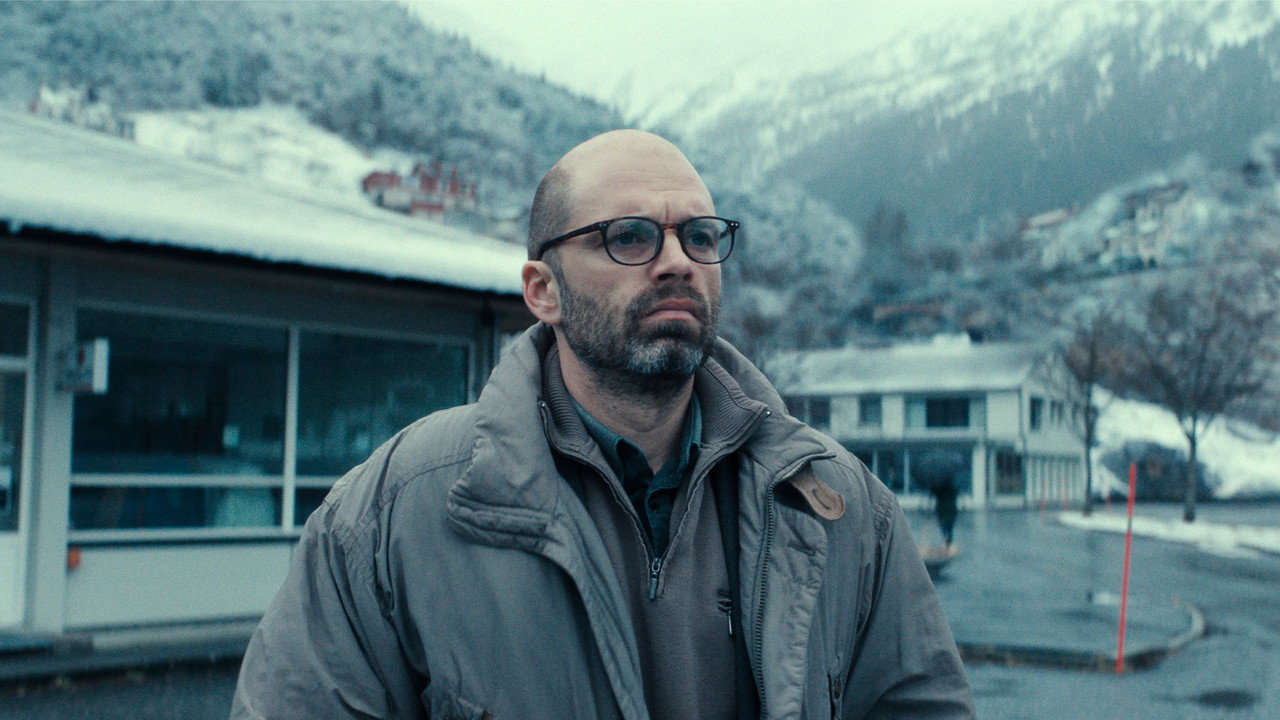
Mihai (Sebastian Stan), an aeronautical engineer from Bucharest, has come to handle the village's IT. His wife, Lisbet (Renate Reinsve), is Norwegian and often has to translate for him. At school, the children's welcome includes a joke: "We're all very kind and friendly. There's no Dracula here." It is warm and awkward, and it tells the newcomers what they are before they have said a word.
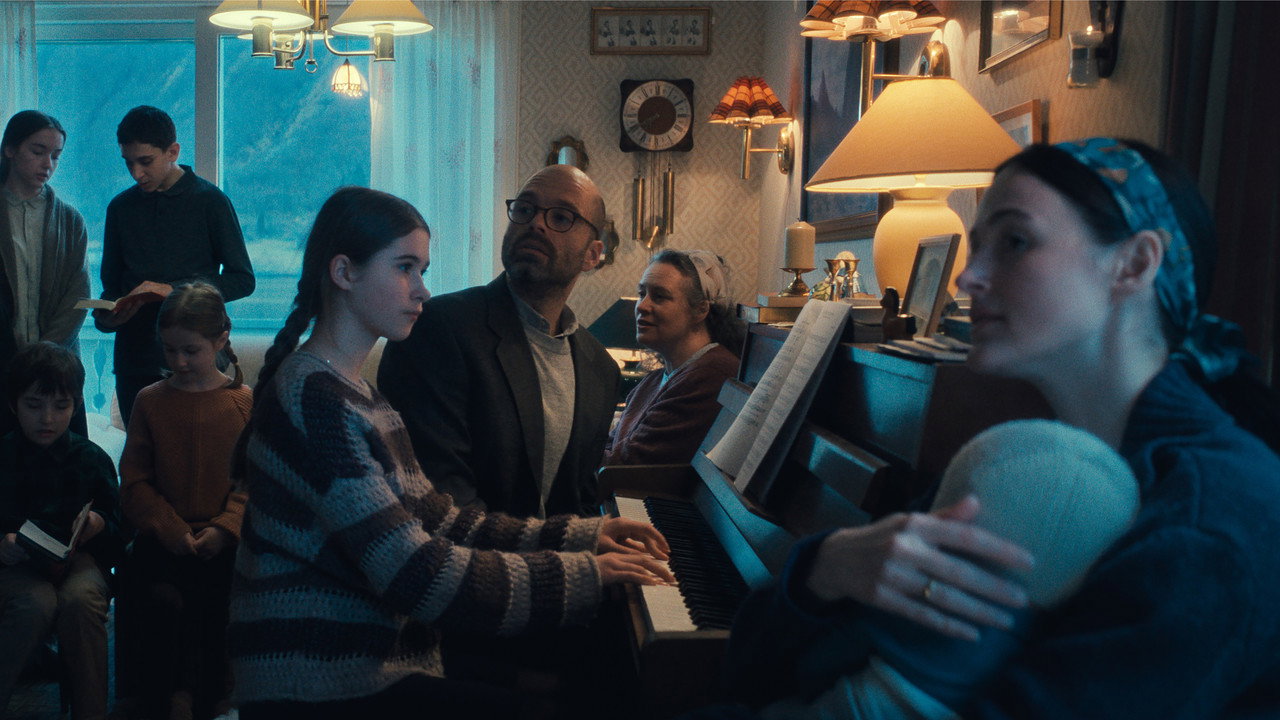
The household runs on prayer, Bible quizzes and a points system for conduct. Next door, Noora has a phone, a boat and freedoms her new friends do not. At dinner, a neighbor asks whether the Gheorghiu children were willing to leave their friends behind and move to Norway. The question goes to their parents.
The teenage daughter grows close to Noora before their parents have decided what they think of each other. One of the girls does a magic trick, the other wants to know how, and the answer is "You have to believe first."
It's Just an Investigation
The investigation begins with bruises and three accounts of them. One child blames their mother, another denies it, and the injured girl says she fell down the stairs. The school cannot choose the least troubling explanation and send her home. It reports the family.
An adult then questions two of the children about prayer. One distinguishes between having to pray and doing it every day. The next question concerns punishment. From prayer, the conversation moves through the points system to physical discipline, guided by what the adult chooses to pursue. Here the children speak when spoken to. An adult chooses the question and later decides what the answer means.
By the time the parents defend themselves, the children are living with foster families. The baby goes too. A lawyer tells them breastfeeding is not enough to prevent the separation while abuse is suspected. They can send his mother's milk.
The film gives the officials grounds for concern: unexplained marks, conflicting accounts and descriptions of physical punishment the parents will acknowledge. They cannot assume the family's affection makes the home safe. The family's side is as easy to see. Bruises have ordinary causes, and what justifies an investigation does not automatically justify separating a family. The parents cannot recover the time lost to separation simply by getting their children back. The film makes the decision urgent without making its consequences temporary.
Mungiu never settles what caused the bruises. He withholds the fact we most want while giving us reasons to believe we can infer it. We have spent time with the family before it becomes a case; many officials reach us mainly through decisions that separate them. That difference shaped the sympathy I brought to the evidence. I assumed that parents who so obviously love their children would not hit them hard enough to leave marks, when they conceivably could. Once I believed it, every scene became evidence for it. The magic-trick line describes my own viewing. No film in recent memory has made me look harder at my own beliefs.
Just a Preliminary Statement
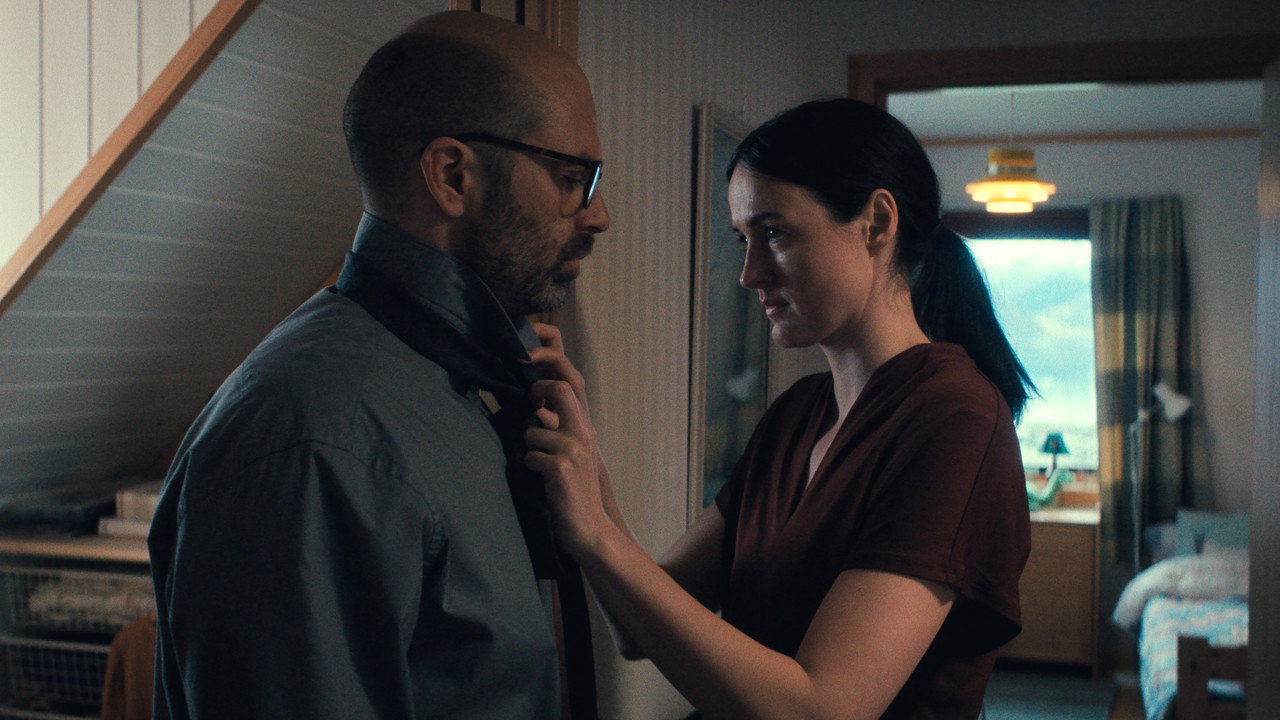
At the police station, Mihai objects to the statement drawn from his interview. He says he admitted light slaps when the children were small, not repeated hitting. He is told the statement is preliminary, the details can come later, and he can go home if he signs.
"Once I sign it, somebody might interpret that I admit that I hit my children."
"But you did."
"No, that's a matter of interpretation. A slap on the butt is not hitting."
"Maybe not in your view. But in Norway, as you know, it is."
The officer asks whether a slap on the hand could explain bruises on a child's face and back. Mihai answers that he loves his children and would never hurt them, which does not answer the question. Both people in that room are partly right, and only one of them controls the form. He signs.
Stan plays Mihai as a man supplying context to people who have already decided what it means, and every qualification makes him sound a little more evasive. Reinsve has the harder silences. When the authorities come to the house, Lisbet moves from defensive to frustrated to angry to frightened; you can watch her working out which reaction will make things worse. Both are walking the same tightrope: say what you think without incriminating yourself, to people who now decide whether your home stays yours.
Both people in that room are partly right, and only one of them controls the form.
Compulsory for Their Own Good
The investigation loses momentum in the middle, and my attention went with it. The hearings wake the film up, with some of the best courtroom writing I have seen in years. The camera stays with the person being questioned. An answer can win the point and still be terrible news for the person giving it.
The lawyer opposing the children's return asks Mihai to translate a Romanian proverb about beating coming from heaven. Mihai must first ask whether to use Norwegian or English, neither his first language. He offers the gentlest reading he can: whatever method parents use is meant for the child's good. "That's already an interpretation," the lawyer answers, and offers his own: physical punishment is a sure method to get results. At the police station, interpretation was Mihai's defense against a statement he disputed. In court it belongs to the other side, and it is used to take his own proverb away from him.
Children must learn that some things are "compulsory for their own good," Mihai argues. Would he slap the lawyer to make him do something? No. "Because I don't have responsibility for what you do with your life."
"But you have it for your children."
Parental responsibility cannot depend on winning a child's agreement to every decision. The lawyer challenges what that responsibility permits. The dependence that gives Mihai a reason to overrule his children can also require restraint toward people who cannot choose another parent.
Mihai says he has learned that slapping is wrong. "You needed to have your children taken away from you," the lawyer answers, "to learn that you cannot hit them." The language of the birthday scene returns, directed at the father. Mihai kept the punishment because of what it would teach; the lawyer describes his loss through what he needed to learn. Whether the lawyer means it as a lesson or only doubts that Mihai has changed, the children are living in other people's houses while the adults discuss what their father has learned.
At a hearing, a parent interrupts to insist the baby was loved at home and is told, "Please speak only when asked." The rule that governs the children now reaches their parents. Something urgent needs saying, and someone else decides whether it is their turn.

Educated in This Spirit
The hearing's inquiry widens from what the parents did to what they believe. Asked to define a traditional family, Mihai says a man and a woman, then asks whether he must feel guilty for that. The lawyer reads him two slogans from the family's supporters, "Satan speaks through your mouth" and "Satan is the secret progressive," and asks whether he shares such beliefs. A foster mother describes the children's lack of phones and prohibitions on modern music, dancing, games and YouTube. Then the question that turns a child-protection case into a referendum: "Won't we bear the responsibility for letting these children be educated in this spirit if we return them?"
The lawyer remains unconvinced: "It feels as if nothing in your profound beliefs has changed." Beliefs about hitting bear directly on a promise to stop. Beliefs about marriage need their own argument for why they should determine where a child lives. His church has a word for what the court is asking of him. The word is repentance, and the secular side is the one demanding it.
The family's lawyer asks why freedom of belief should protect some convictions and not others, and whether a society that forces its citizens to live by the norm is dangerous, however progressive the norm. The reply comes straight back: spend some time in a conservative society before lecturing anyone about tolerance. Mungiu lets the exchange remain difficult. Viewers who instinctively share the secular position still have to reckon with the family's case.
The film also gives that freedom a cost. A report describes a Gheorghiu child condemning a classmate's sexuality and telling her she would go to hell. That classmate is a child too, and the school was right to care, as anyone should care about a child in that house who grows up rejecting its faith. A defense of family freedom that cannot see those children has stopped defending children. Still, a cruel remark, a house without phones and an unexplained bruise are three different problems. The hearing is adding them up into one verdict on the parents.
Asked about the children's wish to return, Gunda, the caseworker (Ellen Dorrit Petersen), turns to the harm of breaking their new bonds with foster families. Those attachments may be real, and breaking them may hurt. The system that took the children because it was responsible for them now cites the bonds its own decision created as a reason for caution. Petersen plays Gunda as someone who need not enjoy the family's distress to take part in decisions that prolong it.
Noora complicates the comparison between the households. When the Gheorghiu children hesitate to join her for a nighttime boat outing, she threatens to hurt herself. They are the steady ones in that scene. Mungiu shows us more of her trouble than her family's warmth, weighting the contrast. Her loneliness still matters. Noora is a person before she is an argument. After the children enter foster care, she comes to their parents' door one night for news of her friend. Nobody has any. The adults send her home because it is late.
His church has a word for what the court is asking of him. The word is repentance, and the secular side is the one demanding it.
David Has Defeated Goliath
Mia, the family's lawyer, brings an offer: the children can come home if the parents plead guilty and say their abuse caused the bruises. The police-station bargain returns: then a signature to go home, now a confession to get the children back. They acknowledge slaps but deny causing the injuries, and worry that accepting would send them to prison. Their refusal does not establish what caused the bruises.
The eventual agreement returns the children with conditions, including contact with the foster families and continued supervision. Mihai asks for someone independent of the people who removed them. There will be no written conclusions. At the station, he had to sign words he disputed; the agreement restores the family without settling the disputed account. Coming home is not the same as establishing what happened.
At church, the congregation hears that truth and justice have prevailed and David has defeated Goliath. The supporters believed in the family before the case was settled. Mia receives a gift and offers a less triumphant account: "I believe we all have a lot to learn from everything that has happened." The supporters have their story, the agency has its agreement, and the Gheorghius are grateful, exhausted and, to their supporters, a cause.

The Boat Is the Only Way
With the children home, Mihai and Lisbet discuss leaving. It is for their own good, he says. They seem happy here, she answers. They might lose them forever if they stay.
"Won't we lose them even if we leave?"
Mihai hopes not, at least not right away. He is troubled by how much the children have bonded with Noora: a bit too much. We have seen reasons for his concern. To the children, she is a friend they made on their own. The parents who fought to undo one separation now choose another.
At the early dinner, a neighbor asked whether the children had been willing to leave their friends behind. Now they are leaving again. At the ferry, Lisbet tells her daughter to get back in the car, and the girl asks what her mother will do if she refuses. After a film about the limits of parental authority, the question has teeth. She may only want time to say goodbye.
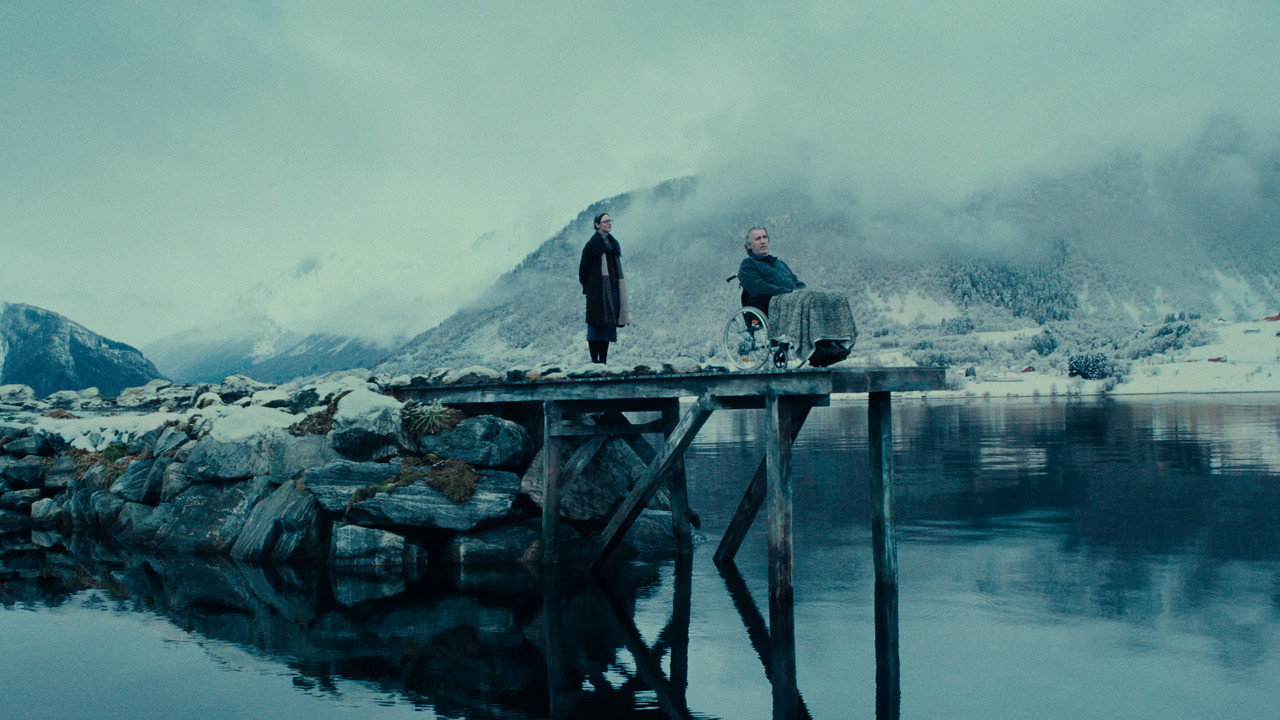
Noora follows her friend's location on her phone, an object the hearing treated as evidence of what the Gheorghiu children lacked. Now it helps a child try to find her friend. Early in the film, she said the boat is the only way to go around when it snows. Now a boat is how her friends leave. She reaches the ferry too late. The last shot leaves her on the pier, watching it pull away. The ending feels abrupt to us because it is abrupt for the children.
The film leaves us with the Norwegian girl whose home was never under investigation, the one who lost the first argument. For much of Fjord, we have been caught up in deciding whether the adults have good reasons. Mungiu makes that effort worthwhile, then brings us to a loss those reasons cannot repair. The children were the reason to investigate, the reason to resist, the reason to leave. They are also people who loved being together. The film ends with that love still intact and the children apart.
The record
Fjord scores 179 out of 200 on the TVI IQ Score, Masterclass tier: Cognitive Stimulation 44, Educational Value 46, Craft and Quality 44. The score is verified under TVI's current standard, receipt 632553b0.
Scored by Jordan Robinson in one recorded session on September 30, 2026, the day after a complete viewing with subtitles at NEON's press screening at AMC River East in Chicago. The film is in Romanian, Norwegian and English; a few lines here are paraphrased from scenes followed through subtitles. Fjord is fiction drawn from real cases, and this essay examines the film's depiction of the case, not the conduct of any real family or child-protection agency. The TVI IQ Score is a content rating, not an intelligence measurement.
With AI-assisted writing.
The credibility layer for what to watch
One scored, argued editorial a month, plus the next TVI Essential. No paid placements. No spam.
TVI Score Breakdown
| Dimension | Weight | Score |
|---|---|---|
| Cognitive Stimulation | 40% | 44 / 50 |
| Educational Value | 35% | 46 / 50 |
| Craft & Quality | 25% | 44 / 50 |
| TVI Score | 179 / 200 · Masterclass |
Formula: round((C × 0.40 + E × 0.35 + Q × 0.25) × 4) = 179. The three weighted dimensions do not sum to the total; the formula scales them.
Disclaimer: TVI's score is a content rating, not a measurement of intelligence.
Common questions
What is Fjord's IQ Score?
Fjord scores 179 of 200 on the TVI rubric, Masterclass tier, with Cognitive Stimulation 44 of 50, Educational Value 46 of 50, and Craft and Quality 44 of 50. It is the film's first TVI score, verified on a public receipt from a recorded session on September 30, 2026.
What is Fjord about?
Cristian Mungiu's film follows a devout family, a Romanian father and a Norwegian mother, newly arrived in a village on the Norwegian coast. After their teenage daughter comes to school with bruises, child protection places the children with foster families. Sebastian Stan and Renate Reinsve play the parents.
Does Fjord reveal what caused the bruises?
No. The film never settles it. This essay argues that the withholding is deliberate: it gives each viewer reasons to believe they can infer the answer, and the sympathy we bring to the evidence becomes part of what the film examines.
Film: Fjord (2026), written and directed by Cristian Mungiu. Mobra Films; released in the United States by Neon. With Sebastian Stan, Renate Reinsve and Ellen Dorrit Petersen. 146 minutes. The IQ Score is a content rating, not an intelligence measurement.