How You Could See Everything and Still Not Know
Nathan Fielder and Lance Oppenheim make an extraordinary documentary about Elizabeth Holmes and the uneasy distance between understanding someone and knowing what to believe.
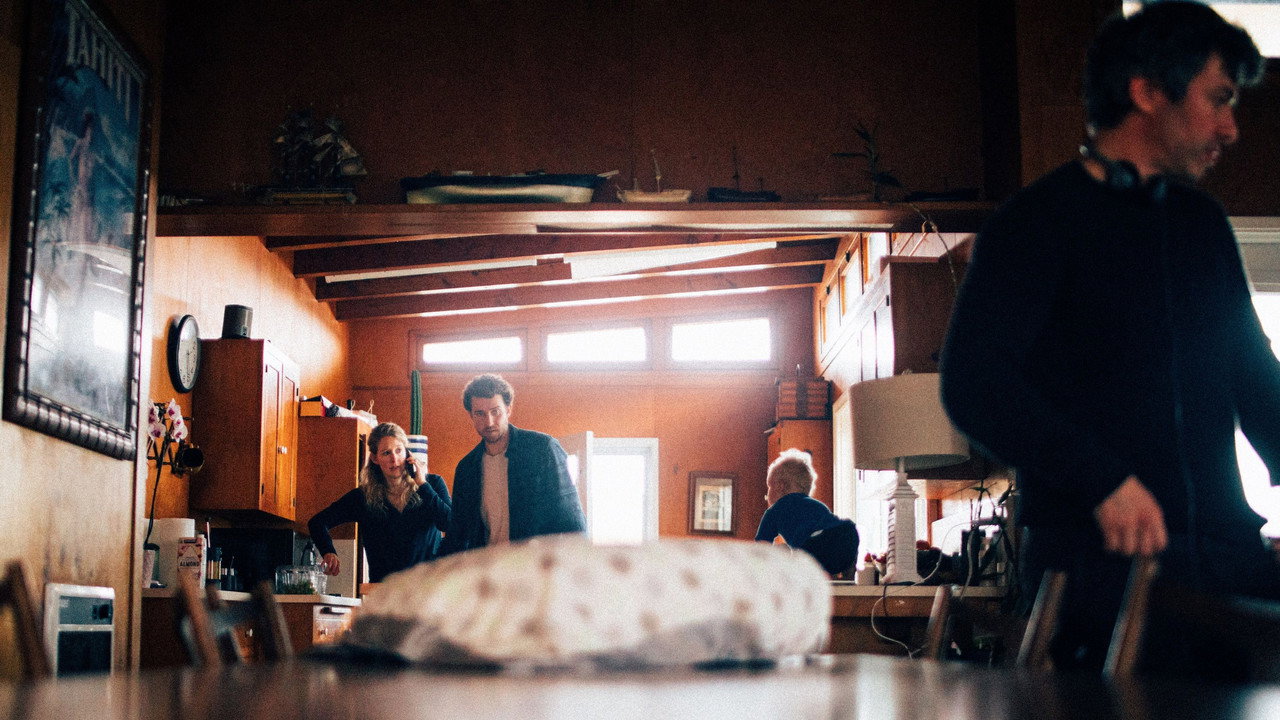
You Can See Everything scores 183/200 on TV Intelligentsia's published methodology, a Masterclass, on a verified receipt. Nathan Fielder and Lance Oppenheim follow Elizabeth Holmes in the weeks before prison, and the film's real subject is how closeness changes what we believe about a person.
Discusses the film's later sequences and its ending.
I came out of You Can See Everything far more sympathetic to Elizabeth Holmes than I expected. I also came out thinking it was one of the best documentaries I had ever seen. The connection between those reactions is where the trouble begins.
Nathan Fielder and his co-director, Lance Oppenheim, join Holmes thirty-four days before she reports to prison, following the Theranos founder through domestic life with her partner, Billy Evans. The invitation is to see enough of her life to understand who she is. What begins as a last stretch of time before their separation becomes something closer to a psychological thriller, an investigation that spans three years.
The film hints at this in its opening shot. The title sits on the horizon, its lower edge ever so slightly obscured, so that everything seems to dissolve into it. You can see almost everything. A perceptive viewer notices that you cannot see all of it, and the horizon itself only marks where our view runs out. It is a striking cue from the filmmakers, and a beautiful opening for a film that keeps showing us its own self-awareness.
The storytelling is fairly linear, but the experience of watching it is kaleidoscopic. Each scene unsettles what I thought I understood a moment before: about Holmes, Evans, Fielder, the documentary itself, even what had been reported about Holmes and Theranos. The effect is mind-bending. It plays more like a scripted film than a documentary, and that adds to the unease.
A pause could feel evasive, then vulnerable. Openness could seem generous, strategic, or both. I could recognize something ordinary in Holmes's affection for her family and then become suspicious of the same act. Was I finally seeing the person beneath a public caricature, or was I being won over the way so many investors once were?
The person behind the myth
Fielder asks Holmes early why she chose him. He has no scientific training, he admits, and cannot question her the way an interviewer trained to scrutinize the science could. Holmes says that was never the point; the purpose was not to litigate the science. In Fielder's reconstruction of their first meeting, the couple tells him they only let in people who think outside the box. It starts, she says, with who she is.
That invitation has force. Knowing what someone has done and spending time with them are two different ways of knowing a person. Most of us judge Holmes the first way, from reporting, testimony and the trial record. The film offers the second. In her house those facts belong to someone who gets embarrassed, offers reassurance, and puts her children to bed.
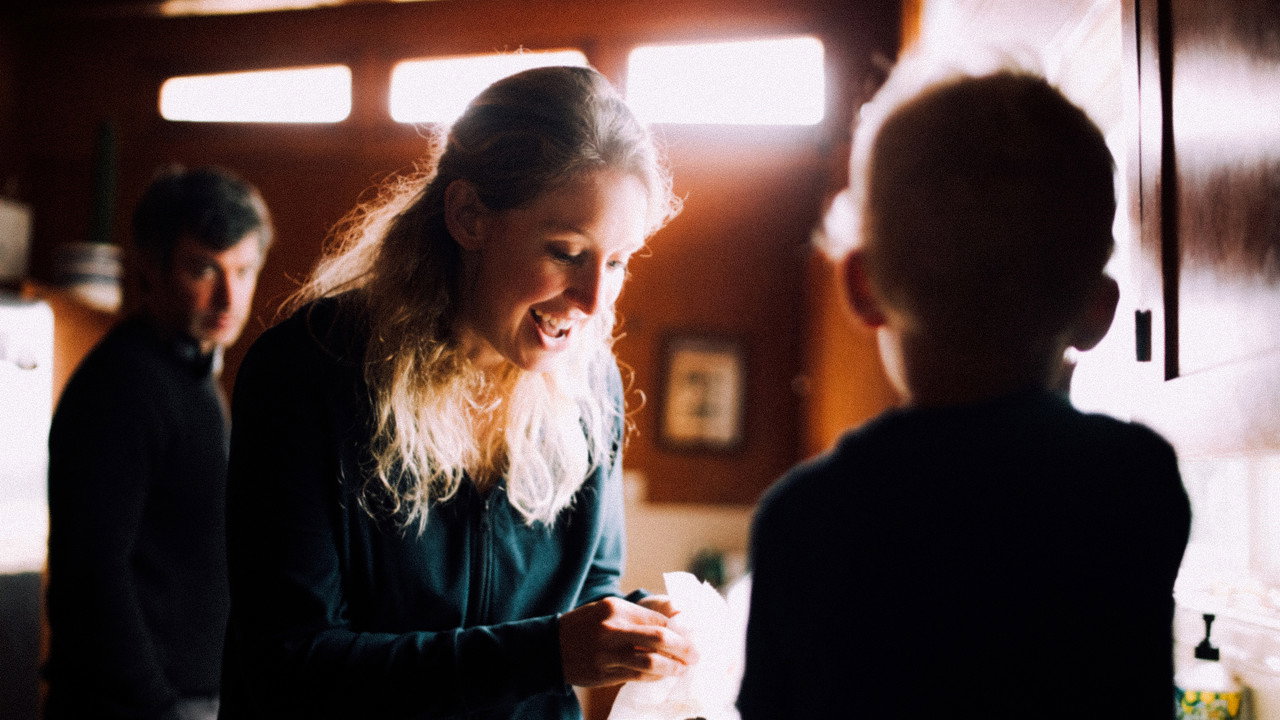
Watching Holmes prepare to leave her family, I could feel how little my loose familiarity with the Theranos story had told me about Elizabeth Holmes the person. Her grief became easier to imagine. Her guilt began to feel less certain. The two changes arrived so close together that I could easily have taken the first as evidence for the second.
In 2022, a jury convicted Holmes of conspiracy to defraud investors and three counts of investor wire fraud. It acquitted her on four patient-related counts. She admitted at trial that she had put pharmaceutical companies' logos on favorable Theranos reports. Representatives of those companies testified that they had neither independently validated the technology nor authorized the use of their logos.
Her grief became easier to imagine. Her guilt began to feel less certain.
Holmes's tenderness with her children can be real, and the evidence the jury heard can be sound. Holding both in mind is the hard part, because the film keeps her family in the frame and leaves most of the trial record outside it.
Who's on First?
An argument over blood-testing technology turns on a small word: can. Fielder plays Holmes a recording of herself describing a single device that can perform any test. She draws a distinction between what a machine is capable of doing and having developed the chemistry it needs to do it. Fielder wants to know why anyone hearing the original claim would have understood that qualification.
Holmes holds her position extraordinarily well, and I can follow her explanation. I still find it hard to believe nobody saw this misunderstanding coming. Theranos had a board, outside investors and, by 2014, a valuation of about nine billion dollars. The distinction she is drawing concerned the very capability people were being asked to trust. I would expect someone to have stress-tested the claim before it went out, separating what worked then from what still had to be developed.
The exchange has the tension of a confrontation held at conversational volume. Fielder keeps returning to the claim. Holmes keeps explaining why her words meant what she intended. Eventually, he reaches for Abbott and Costello.
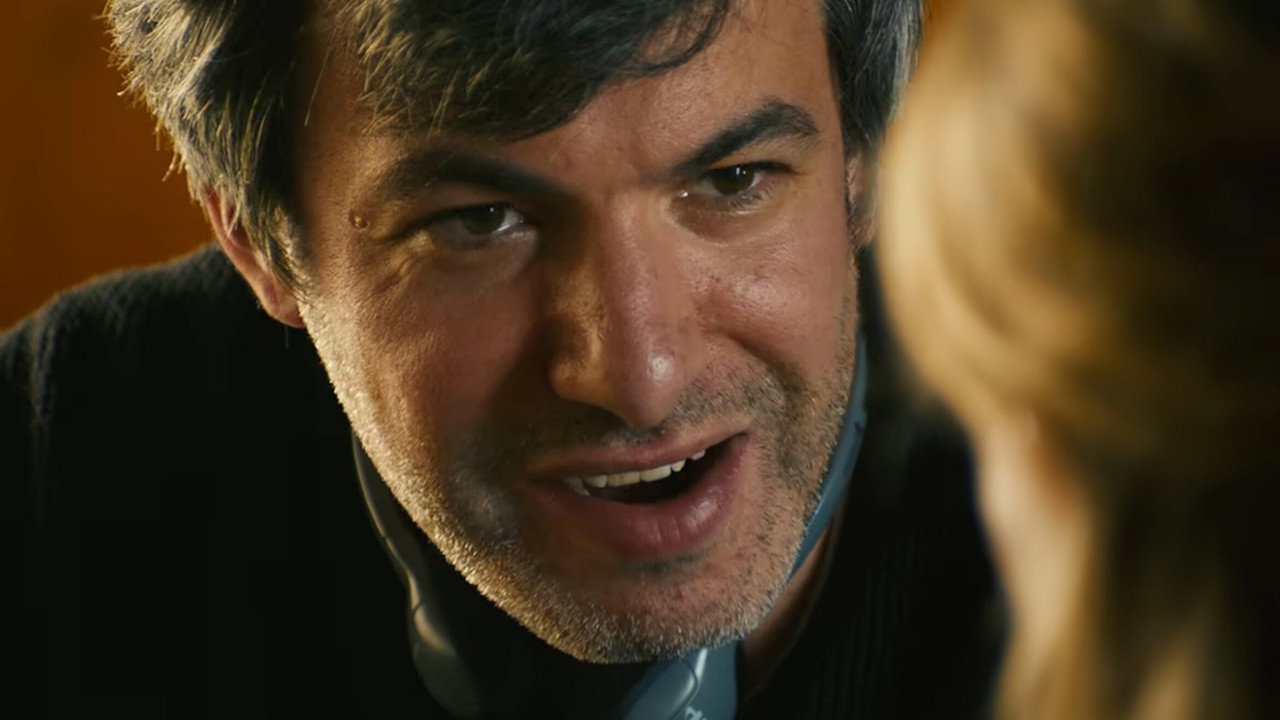
Holmes says she found Who's on First? funny because the two men kept talking past each other. Fielder asks for the first baseman's name. She says she doesn't know. As he explains that the player is called Who, their conversation starts to resemble the routine they have just watched.
Then Evans finds something beautiful in her confusion. To him, it shows how differently her mind works. Fielder has offered an example of how language can mislead, and Evans turns it into a reason to believe her.
It is a wonderfully maddening turn. I was back to wondering whether I had watched someone struggle to understand, protect herself, or perform that struggle. The scene keeps all three possibilities alive long enough to make any degree of confidence feel premature.
Fielder's pauses are crucial. He lets an answer sit long enough for its incompleteness to become audible, then asks a smaller, more specific question. We laugh at the social discomfort while noticing how much ordinary politeness might have allowed to pass. On Nathan for You he played a slightly more awkward version of himself, and those hesitations let him put blunt suspicions to someone while appearing unsure of himself. Like Holmes, he is someone whose self-presentation needs interpreting, and we are watching her through an encounter his own performance helps create.
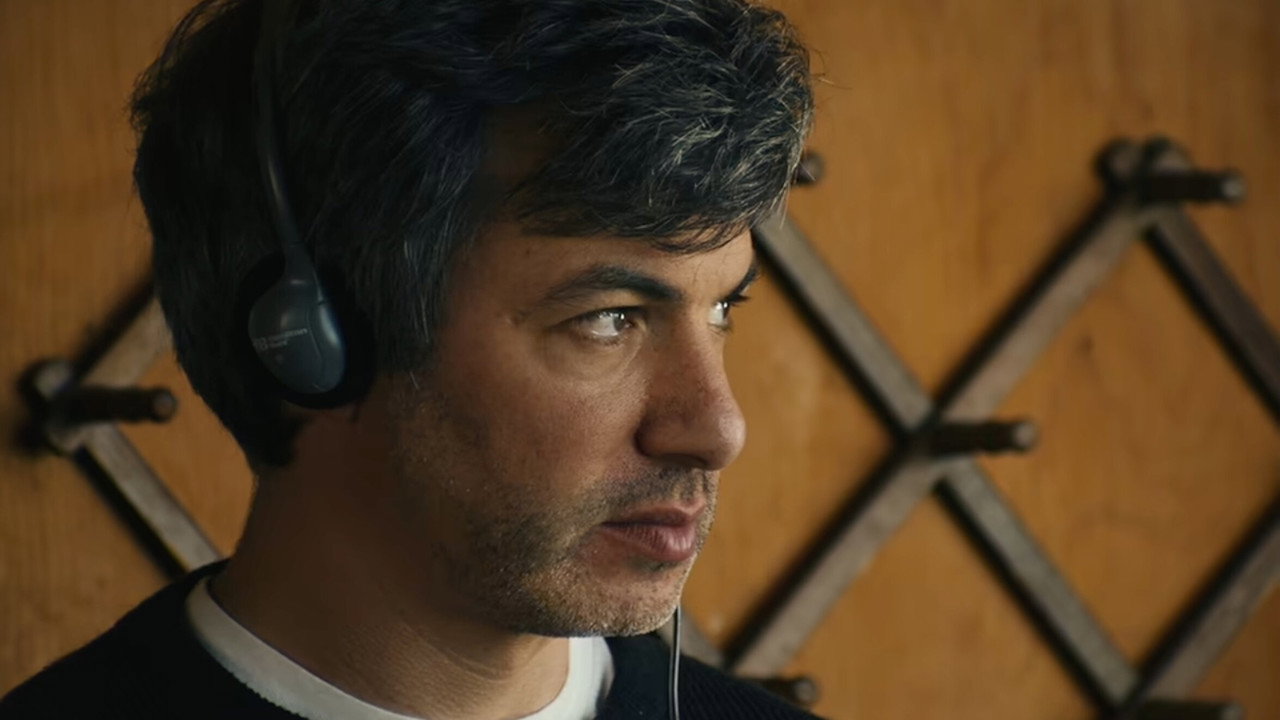
He even points out that his old show was about business scams, and that she is in trouble for one. Holmes says she never made the connection and that the situations are very different. When he jokes that she could have called Theranos a comedy bit, she reminds him that she is literal, and he concedes the joke may have been in bad taste.
A perfect match
Holmes and Evans often appear well matched, which is part of what makes them so hard to read. He takes charge; she often lets him. His forcefulness can look like protection, and her distance from certain decisions like confidence in her partner. That distance can also be convenient: if he made the decision, she can seem removed from it, and less answerable for what followed.
Much of what we see of Evans reads as a run of red flags. He tries to control what gets discussed and speaks with a certainty he has not earned. When he tries to redirect an interview, Fielder insists on choosing his own questions, and Evans insists that the cameras be switched off. The promise of access, it turns out, has terms. How something might play with the public is a line Evans will not let anyone cross.
That division of roles extends to Holmes's public voice. Evans posts what she emails him from prison, and some of the posts are his own; he shows Fielder one he wrote as her. Asked on X whether she had watched The Dropout, the account replied, "Never will." We have watched her agree to see it, and Fielder says she has. Amanda Seyfried, who played Holmes in that Hulu series and joins the film later, is all but certain Holmes has no idea the reply exists. If she is right, a misleading reply went out in Holmes's name without her knowing it had been posted.
Later, in his account of the prison visit, Fielder tells Holmes that a photograph she hates is on billboards across the country, and that Evans has had an AI version of her built that can say whatever he wants. How much of what the world sees of Holmes does she still control?
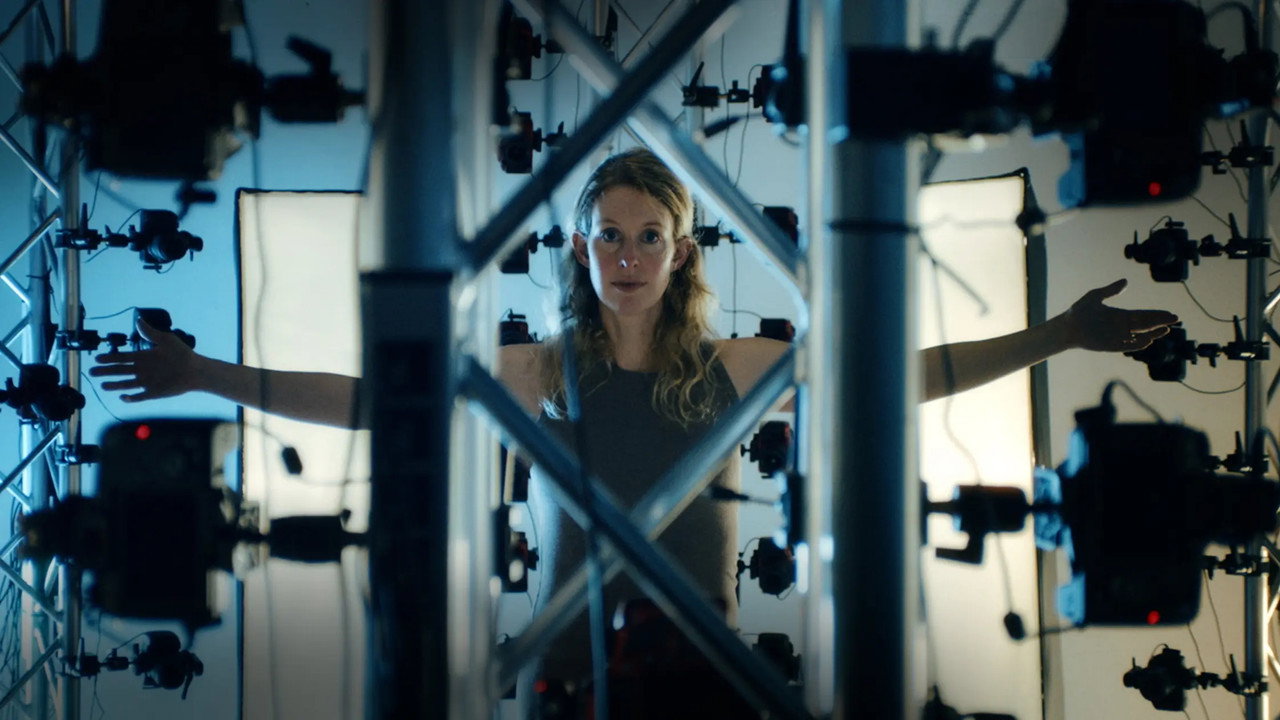
Their affection may well be sincere, but that is almost beside the point. The more pertinent question is how their relationship has shaped the story the public has been told about her.
Ambition, fear, and loyalty are easier to recognize here than in a public caricature. Some of the traits on display, including the unflattering ones, are traits I see regularly in high-performing people, and I sometimes wonder whether the way we reward success selects for them or simply brings them out. I also understand the urge to protect yourself, your family, and the life you still have.
When the stage meets reality
With Holmes in prison, Fielder can no longer simply ask her. He turns to Seyfried, who helps him reconstruct moments that were never recorded and tests his impressions against her own. Her portrayal is also part of the public image Holmes now lives with; in Fielder's account of the prison visit, Holmes says inmates and a guard have judged her by the show.
Seyfried and Fielder embody the two ways of knowing that the film keeps setting against each other. She says she prepared for The Dropout with ten hours of deposition tapes and every interview Holmes had given. He has stayed in Holmes's home. The record can hold evidence of what someone knew and intended without giving us the experience of knowing her. Time in her company can reveal genuine affection while making evasions easier to overlook. Seyfried becomes Fielder's counterpoint in the best sense.
The footage unsettles Seyfried's idea of the woman she played, and her questions unsettle Fielder in return. A moment that reassures him can sound evasive to her. The devotion he finds moving looks to her like cause for alarm.
In his reconstruction of their first meeting, Fielder recalls how little Holmes knew of his work. He tells her about David Blaine, who pushes an ice pick through his own hand in a way that looks like a trick, though Fielder says Blaine once explained he had made a small hole in his hand for it. Holmes, Fielder suggests, could be telling the truth and people would still not believe her. Her eyes lit up at the idea, he recalls. He had reached for a performer's predicament: how to be believed once people expect a trick.
Another reconstruction matters more than it first appears. Before agreeing to sign anything, Evans wanted a meeting with Fielder, Oppenheim, and two executives from A24. Holmes read aloud the opening chapter of a book she was writing, a lyrical passage about love; the guests praised it, and Fielder admits they were being polite. Then her oldest child could be heard in another room, and Holmes went to check on the children. Once she was gone, Evans brought up money. Did she leave because the children needed her, or so that she would not be in the room when he asked?
Evans wanted a share of any profits. The filmmakers objected that paying their subjects would raise questions about why they took part and whether they had creative control. He called it non-negotiable, and because filming had begun before Holmes signed a release, A24, Fielder says, felt it had no choice but to agree. Fielder considered leaving. He stayed partly because the arrangement might reveal how Evans does business and how Holmes operates with her partner. Now we have reasons to sympathize with him, too.
Days before she reported to prison, Holmes told the camera she had no economic interest in the film whatsoever. Fielder found her convincing. To Seyfried, there were only two possibilities: Holmes was completely sincere, or she was among the most manipulative people alive. Fielder still wanted to ask Holmes directly, and that meant a prison visit.
Where the camera cannot go
After a breakup of his own, Fielder writes to Holmes, wanting answers and also the concern of someone who has come to matter to him. In his account of the visit, he plans to arrive at eight, when visiting opens. Evans usually comes around nine. Fielder hopes for an hour to ask about the profit deal without Evans in the room.
Even keeping time becomes an obstacle. He cannot bring in so much as a watch, and Holmes does not appear. When he finally finds a clock, on the card reader of a vending machine, it is already eight thirty. By the time he goes to buy her a snack, it is 8:55, and he expects Evans any minute.
There is no recording of the visit. We learn what happened through Fielder's recollection, with Seyfried performing Holmes. At the moment he gets the access he wanted, we are most dependent on his account of it.
Eventually, he gets to the question he came to ask: what did Holmes know about the share of profits Evans negotiated? In Fielder's first reconstruction, she says she knew Evans was talking to the filmmakers about it, the deal. To Seyfried, that means Holmes knew they were discussing money.
At the moment he gets the access he wanted, we are most dependent on his account of it.
Fielder hesitates. He had not felt that Holmes was being deceptive. Maybe she said she knew Evans was discussing something. He asks Seyfried to change the word.
He is using the feeling he remembers to reconsider the words we will hear.
Holmes has spent much of the film asking him to understand what she meant by her words. Now he wants Seyfried to understand what he felt in an encounter he is still reconstructing. Could some of his sympathy come from knowing what it is like to have your words become evidence in someone else's story?
Earlier, Holmes disputed wording attributed to her in a newspaper profile, and Fielder wanted a recording to check it against. Now the missing recording is his own. The man who wanted closer access has become the witness whose memory we have to weigh.
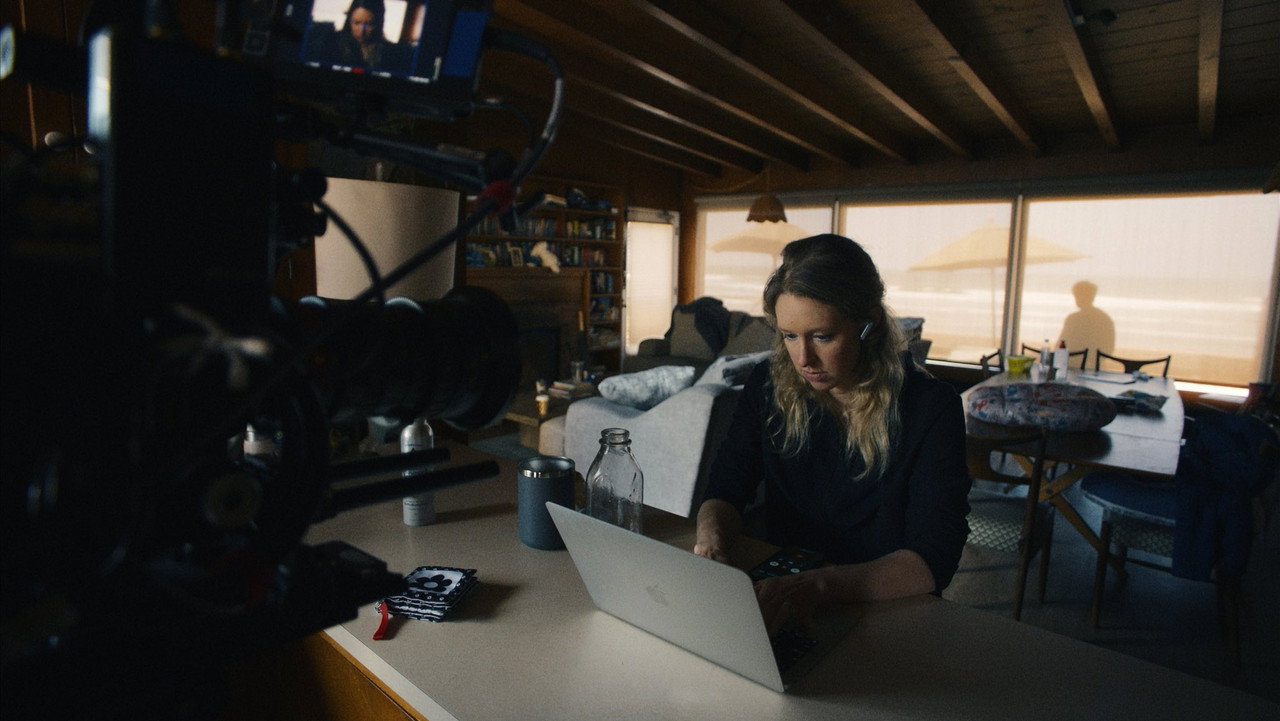
Seyfried asks whether he might be protecting Holmes. Fielder says he is trying to be accurate. It is an extraordinary exchange to include in your own film, and I admire the decision. I also noticed myself trusting him more for showing me why I should question his account. The man whose account we question is helping shape how we question it.
Seeing everything
My strongest reservation concerns what a viewer brings to the film. I had not seen the earlier HBO documentary about Holmes, and I entered with the outline of a notorious fraud and little knowledge of the underlying record. The film states the conviction and asks skeptical questions. Its sustained closeness to Holmes, though, made her present life far more vivid to me than the crimes that came before it.
A viewer steeped in the prior reporting may discover a human being where they had seen only a villain. Someone arriving with less context may start to reconsider the fraud itself because the human being has become so visible. The same footage can loosen one person's rigid judgment and give another's sympathy more weight than the facts warrant.
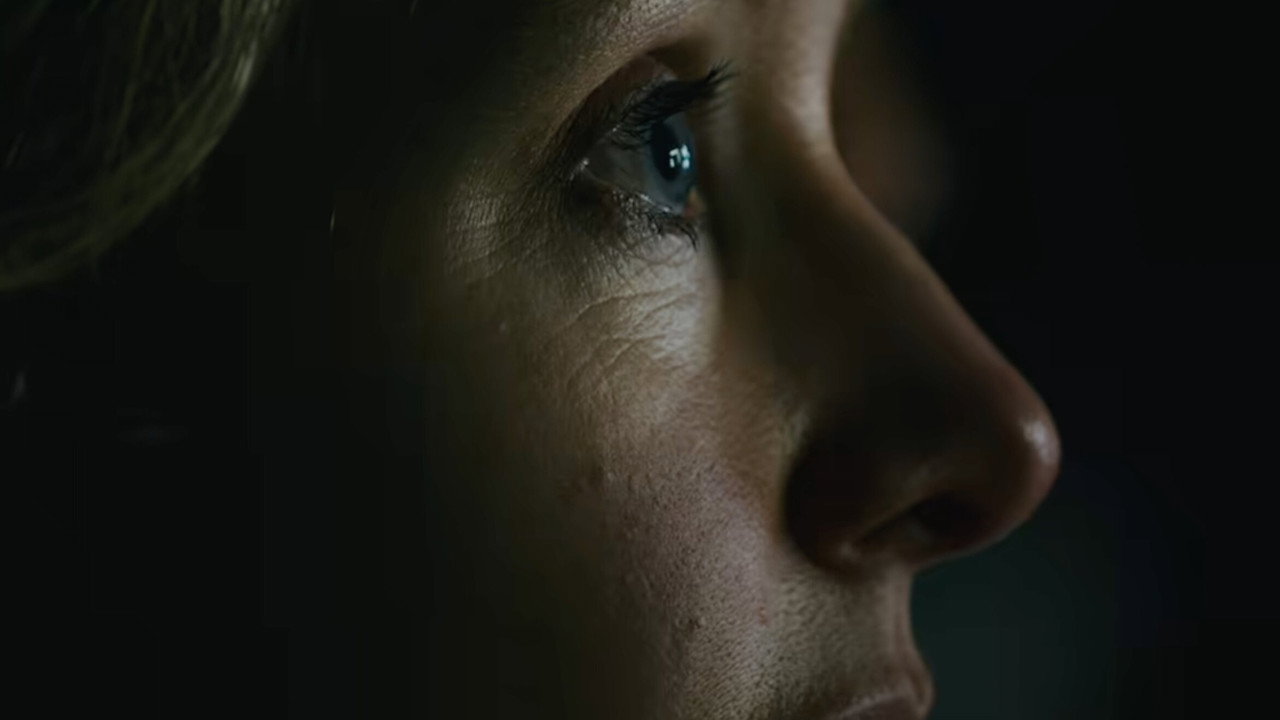
The people harmed by the fraud have a claim on our attention, too. Their losses felt less immediate to me than the family's approaching separation. That imbalance was part of my experience of the film.
So the thing to walk out with may be less a verdict on Elizabeth Holmes, since a court has reached one and it is hard to argue with, than something about how we come to know anyone. Celebrity gives us the familiarity of seeing someone again and again. A news cycle can turn the worst thing a person has done into an explanation for everything else about them. Both can make the work of knowing someone feel finished. Deception can come from either direction: numbers can be selected to support a preferred story, and intimacy can make us overlook evidence that challenges the person we think we know.
Fielder and Oppenheim give us the kitchen table, the arguments, the reconstructions, even Fielder's own doubts. But Fielder is also a performer with a long history of playing a version of himself, and the two of them decided what stayed in the film and what was cut. I came out trusting him more for letting me see what might have compromised him. That trust needed examining too. By the end of the film, it is clear that you can see everything and still not know what has persuaded you.
The record
You Can See Everything scores 183 out of 200 on the TVI IQ Score, Masterclass tier: Cognitive Stimulation 47, Educational Value 43, Craft and Quality 48. The score is verified under TVI's current standard, receipt 50636fed.
Scored jointly by Jordan Robinson with Cordelia Witty, EdS., NCSP, in one recorded session on October 18, 2026, two days after watching the complete film together in a theater: first scoring, one theatrical cut. The TVI IQ Score is a content rating, not an intelligence measurement.
With AI-assisted writing.
The credibility layer for what to watch
One scored, argued editorial a month, plus the next TVI Essential. No paid placements. No spam.
TVI Score Breakdown
| Dimension | Weight | Score |
|---|---|---|
| Cognitive Stimulation | 40% | 47 / 50 |
| Educational Value | 35% | 43 / 50 |
| Craft & Quality | 25% | 48 / 50 |
| TVI Score | 183 / 200 · Masterclass |
Formula: round((C × 0.40 + E × 0.35 + Q × 0.25) × 4) = 183. The three weighted dimensions do not sum to the total; the formula scales them.
Disclaimer: TVI's score is a content rating, not a measurement of intelligence.
Common questions
What is You Can See Everything's IQ Score?
You Can See Everything scores 183 of 200 on the TVI rubric, Masterclass tier, with Cognitive Stimulation 47 of 50, Educational Value 43 of 50, and Craft and Quality 48 of 50. It is the film's first TVI score, verified on a public receipt from a joint session on October 18, 2026.
Does You Can See Everything make Elizabeth Holmes sympathetic?
For many viewers, yes. The film spends most of its time in Holmes's home in the weeks before she reports to prison and keeps most of the trial record outside the frame. It states her 2022 conviction and asks skeptical questions, and this essay argues that the sympathy it produces is itself worth examining.
Who made You Can See Everything?
The documentary is directed by Nathan Fielder and Lance Oppenheim and released by A24, in United States theaters from October 16, 2026. It follows Elizabeth Holmes and her partner, Billy Evans, and Amanda Seyfried, who played Holmes in The Dropout, appears in its reconstructions.
Film: You Can See Everything (2026), directed by Nathan Fielder and Lance Oppenheim. A24. With Elizabeth Holmes, Billy Evans, and Amanda Seyfried. Released in United States theaters October 16, 2026. The IQ Score is a content rating, not an intelligence measurement.