The Trouble with Seeing Everything
Alex Gigler on Nathan Fielder and Lance Oppenheim's You Can See Everything, Elizabeth Holmes, and why living with someone does not settle who she is.
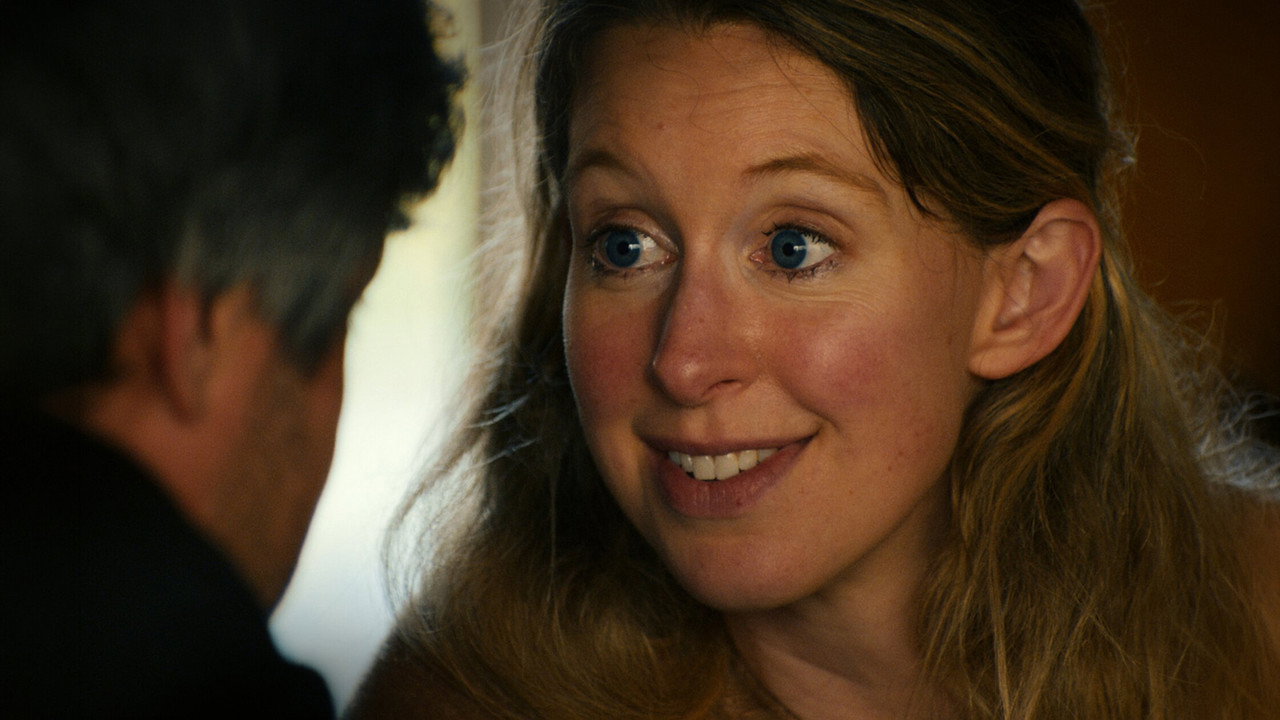
Alex Gigler reads Nathan Fielder and Lance Oppenheim's You Can See Everything as a film about the limits of seeing. Self-deception means a lie need not stay a lie in the mind of the person telling it; Fielder, living with Elizabeth Holmes, becomes her double as the line between director and subject collapses; and Amanda Seyfried, who studied Holmes from a distance, is no freer of projection than Fielder is of influence. Access to everything does not guarantee understanding it.
Who, exactly, is Liz Holmes? The more we see, the less certain we become of what we are looking at. Is she a calculating fraud who knowingly manipulates those around her? A naive, perhaps well-meaning woman who has become entangled in circumstances beyond her understanding? Someone who has herself been manipulated by powerful men? Or someone who has learned to use the appearance of vulnerability as a means of manipulation? Perhaps most unsettling is the possibility that these explanations are not mutually exclusive.
We tend to think of deception as a deliberate act, perhaps because it is more comforting to imagine that we ourselves are only deceptive when we intend to be. A deceitful person knows the truth and consciously chooses to conceal it. But psychoanalysis has long challenged the assumption that we are fully aware of our own motivations. Through self-deception, rationalization, and other unconscious defenses, we become capable of believing our own inventions, investing so deeply in the stories we tell about ourselves that the distinction between performance and conviction begins to dissolve. The lie need not remain a lie in the mind of the person telling it.
It is here that Nathan Fielder becomes essential to the film's larger inquiry. Initially, Nathan occupies the familiar position of the documentary investigator, standing apart from his subject and gathering evidence. But as he spends more time with Liz, his frustration, curiosity, and apparent sympathy begin to intrude upon the investigation. His relationship with her becomes part of the story, and the distinction between Nathan as director and Nathan as subject begins to collapse.

For anyone familiar with Nathan's previous work, this carries an additional ambiguity. His artistic identity has long depended on manipulating authenticity, presenting himself as a character whose apparent sincerity is inseparable from his performances. Yet here, he appears increasingly vulnerable to the very forces he is attempting to investigate. Or is this vulnerability itself another performance?
We cannot know whether Nathan genuinely becomes seduced by Liz's version of reality or deliberately constructs the appearance of having been seduced. Perhaps his apparent loss of objectivity was always part of the project. Perhaps it emerged unexpectedly and was subsequently shaped through editing. Even if his emotional involvement was spontaneous, his decision to reveal it remains deliberate. The filmmaker who appears to lose control of his investigation is also the filmmaker who controls how that loss of control is presented.
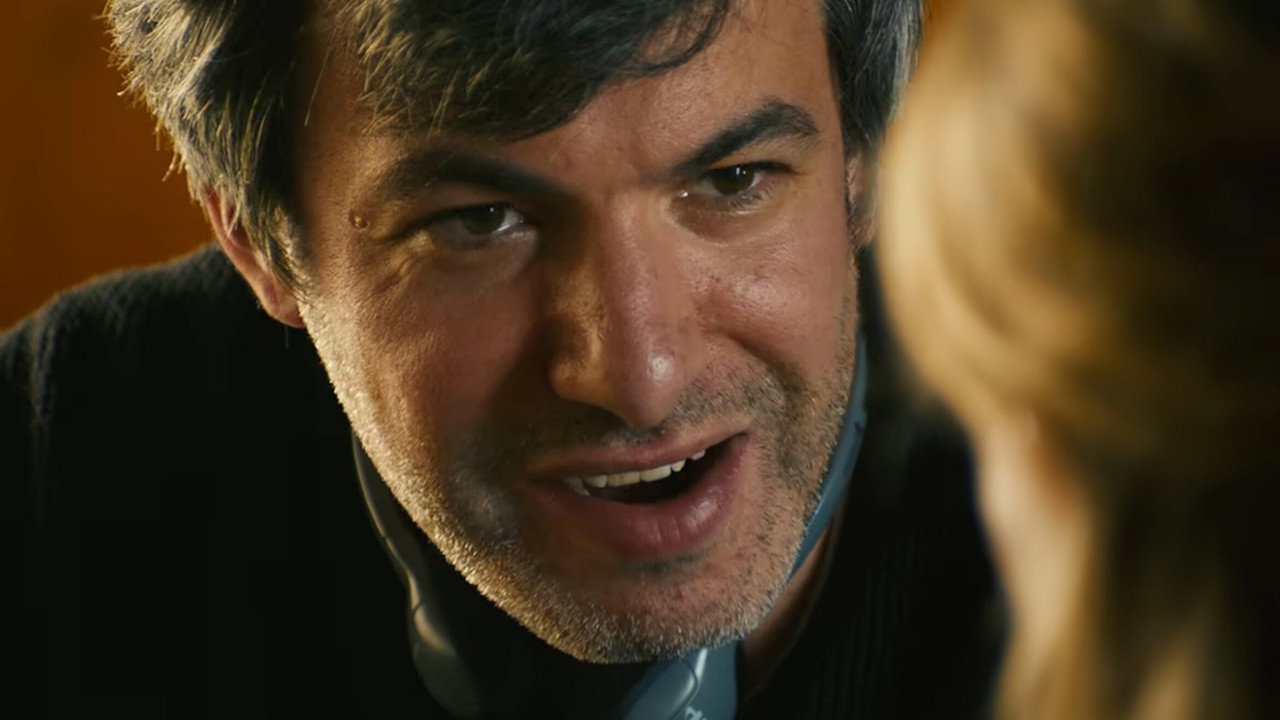
The filmmaker who appears to lose control of his investigation is also the filmmaker who controls how that loss of control is presented.
In this sense, Nathan becomes Liz's double. Both construct realities through which they present themselves to others, inviting belief in their sincerity while simultaneously giving us reasons to question it. More importantly, neither may fully recognize the extent to which their own performances have become indistinguishable from their identities. There is something uncanny about this resemblance. In Freud's conception, the uncanny involves the unsettling return of something familiar that has become strange or alien to us. Nathan's encounter with Liz can be understood in this light: in attempting to expose her manipulation of reality, he comes to embody something uncomfortably familiar about his own relationship to performance, deception, and authenticity. The investigator begins to resemble the investigated, as though he has encountered an aspect of himself in the very person he is trying to understand.
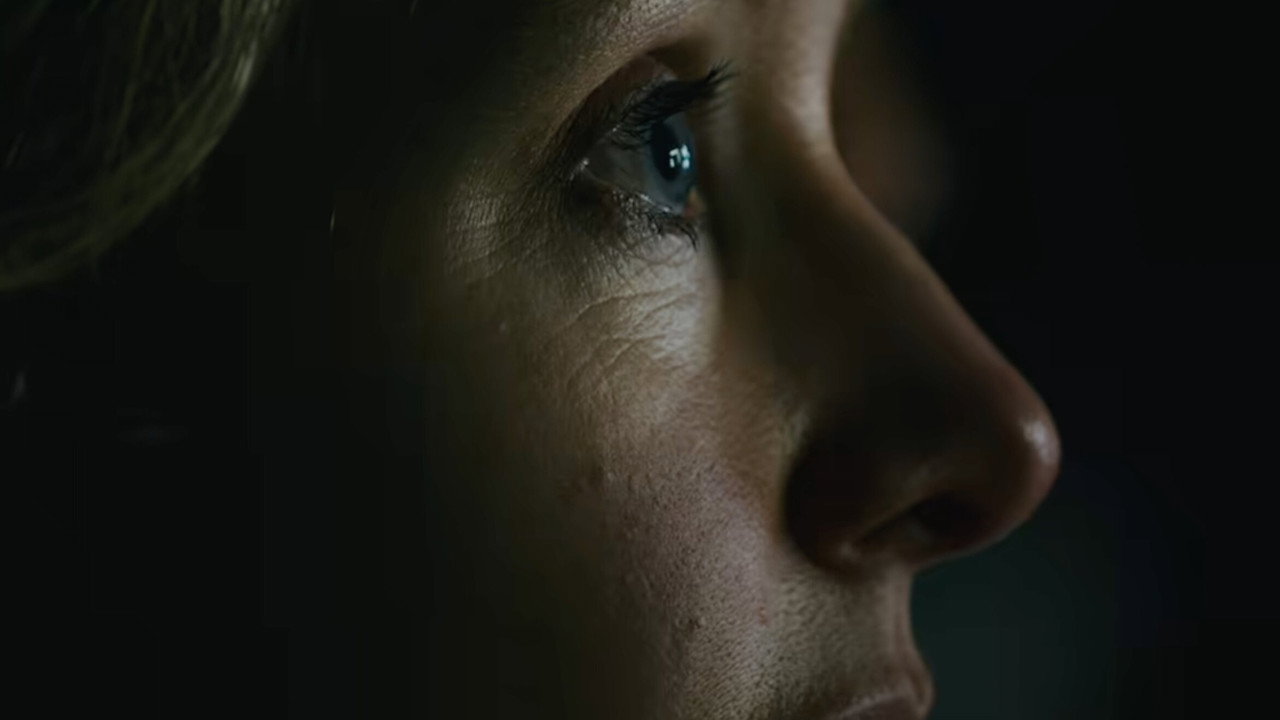
This doubling becomes particularly apparent near the film's conclusion, when Nathan alters a line in the script. Nathan the subject appears to have become compromised, while Nathan the director deliberately exposes that compromise. Yet this revelation only deepens the ambiguity. Is he revealing a genuine loss of objectivity, or staging that loss for our benefit? Perhaps both. His apparent self-awareness may be authentic without being entirely conscious of its own motivations.
Amanda offers a counterpoint to Nathan's growing uncertainty. Having studied Liz through media coverage, legal testimony, and her own performance of the character, she remains convinced that Liz is a fraud. When Nathan begins to waver, Amanda attempts to return him to what she understands as reality. From her perspective, he has become compromised by proximity to a woman whose manipulations she believes she understands.
But what is the basis of Amanda's certainty? She has studied Liz extensively without spending comparable time knowing her. In preparing to portray her, Amanda has constructed an internal representation of Liz, one that may feel psychologically coherent, even intimate. Yet knowing one's internal representation of another person is not the same as knowing the person herself. Nathan, by contrast, has lived with Liz for an extended period. One might assume he therefore knows her better, but intimacy does not necessarily produce clarity. Proximity can deepen understanding while also making us susceptible to another person's influence. Distance can preserve critical judgment while allowing our projections to harden into convictions.
Amanda may be right about Liz, just as Nathan may have been manipulated. But neither is free from the psychological processes through which we construct our understanding of others. Both encounter Liz through internal representations shaped by their experiences, expectations, and emotional investments. The question is not simply which of them knows Liz better, but how much of the Liz each believes they know belongs to Liz herself.
The documentary medium makes these difficulties especially visible. A camera promises access to reality, but its presence inevitably participates in shaping what it records. The person being filmed responds, consciously or otherwise, to being observed, while the filmmaker decides which moments to preserve and how they will be arranged into a coherent story. What appears to be an unmediated encounter with another person's reality is always, to some extent, a construction.
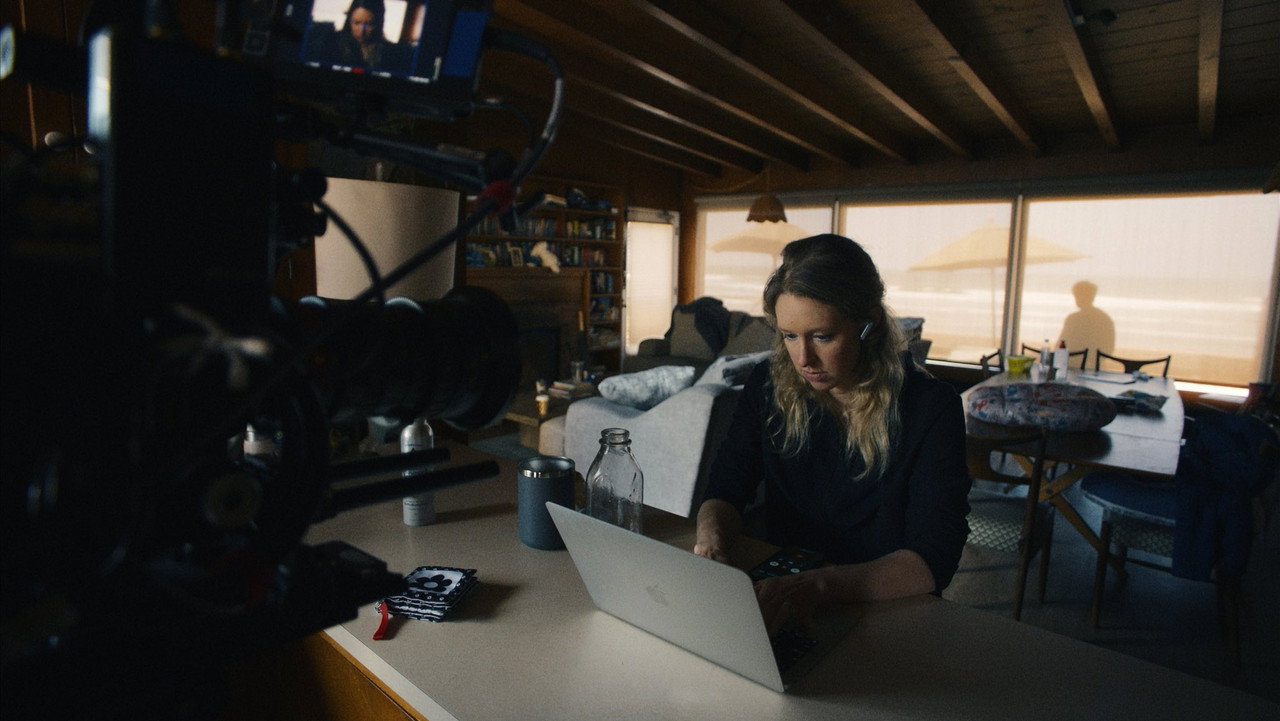
Yet the presence of a camera merely makes visible a problem inherent in all human relationships. We are never quite the same with everyone we encounter. Different relationships call forth different aspects of ourselves, and the person we come to know is never entirely independent of the relationship through which we know them. Nathan's Liz is not Amanda's Liz, and neither may be wholly false. Each may have encountered something genuine while mistaking a partial understanding for something more complete.

The same is true of the audience. We bring our own experiences, anxieties, prejudices, and unconscious fantasies to the film. For some, Liz may evoke the familiar figure of the manipulator, someone whose apparent innocence conceals calculated exploitation. For others, she may resemble someone whose vulnerability has been mistaken for deceit. Through projection, we may attribute meanings to Liz that tell us as much about our own internal worlds as they do about hers. She becomes a screen upon which we project familiar fears, desires, and experiences, even as we convince ourselves that we are simply seeing what is there.
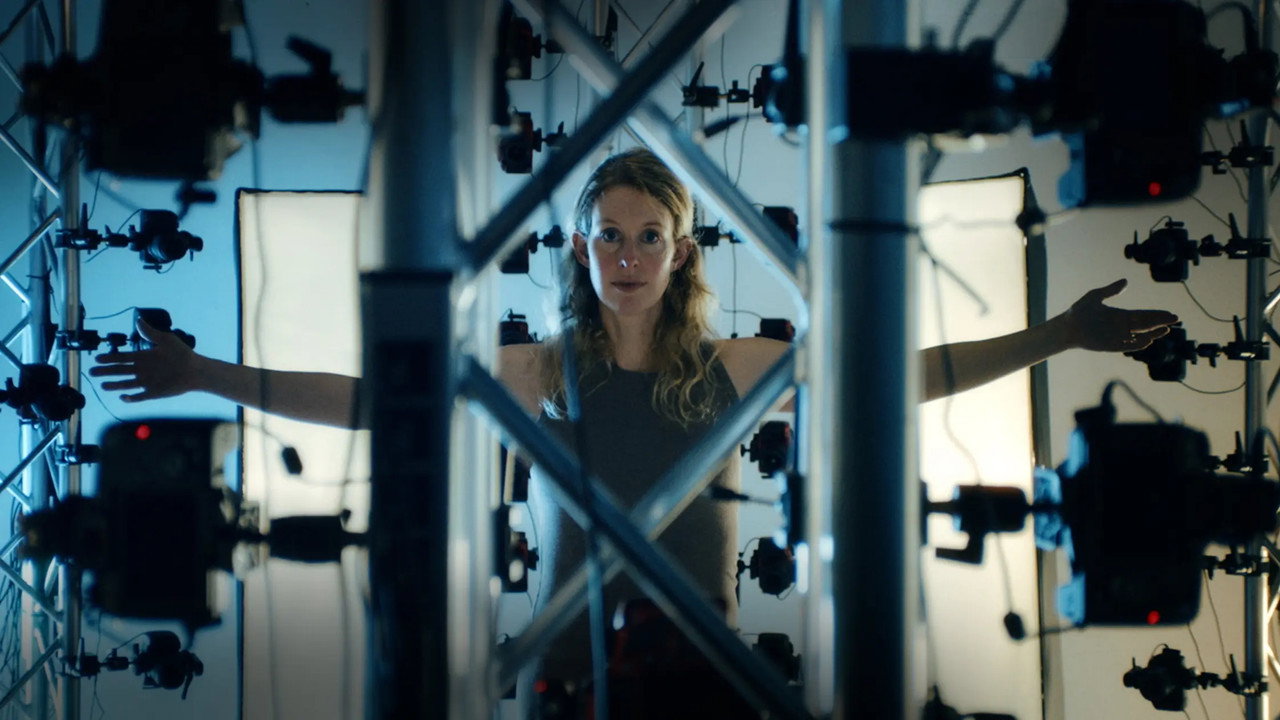
But Liz is hardly unique in this respect. Every person we encounter exists for us partly as an independent subject and partly as an internal object shaped by our own psychological histories. We may recognize something real in another person while remaining unaware of how much of ourselves we have contributed to that recognition.

This does not mean that truth is merely subjective, or that all interpretations are equally valid. Liz's actions have consequences independent of what anyone believes about her. But the existence of an objective reality does not guarantee our capacity to apprehend it objectively. We may be permitted to see everything. Whether we are capable of understanding what we see is another matter entirely.
We may be permitted to see everything. Whether we are capable of understanding what we see is another matter entirely.
The credibility layer for what to watch
One scored, argued editorial a month, plus the next TVI Essential. No paid placements. No spam.
Common questions
What is You Can See Everything about?
Nathan Fielder and Lance Oppenheim's 2026 A24 documentary follows Elizabeth Holmes, the Theranos founder convicted of defrauding investors, and her partner Billy Evans in the weeks before she reports to federal prison, and Fielder's attempts over the following years to work out whether she is telling the truth. Amanda Seyfried, who played Holmes in The Dropout, takes part in reenactments.
What is the uncanny?
In Freud's account, the uncanny is the unsettling return of something familiar that has become strange. The essay uses it for Fielder's encounter with Holmes: in trying to expose how she shapes reality, he meets something familiar about his own relationship to performance.
Is this essay a review with a score?
No. You Can See Everything has a title record in the TVI catalog with its score, dimensions, and where to watch. This essay is an interpretation of the film and does not set or change that score.
Who is Alex Gigler?
Alex Gigler writes The Inner Life, TV Intelligentsia's psychology and film column, and holds a doctorate in clinical psychology (PsyD). His essays read films through psychoanalytic and developmental ideas. They are interpretations of the work, not clinical assessments of any person, and they do not set or change a title's TVI score.
Film: You Can See Everything (2026), directed by Nathan Fielder and Lance Oppenheim. A24. Essay by Alex Gigler for The Inner Life, TV Intelligentsia's psychology and film column.