The Fiction of Being: A Psychoanalytic Reading of Ingmar Bergman's Persona
Alex Gigler on a mute actress, a nurse who cannot stop talking, and the life that forms between them: Bergman's film as a study of how a self is borrowed.
Contains spoilers, including the ending.
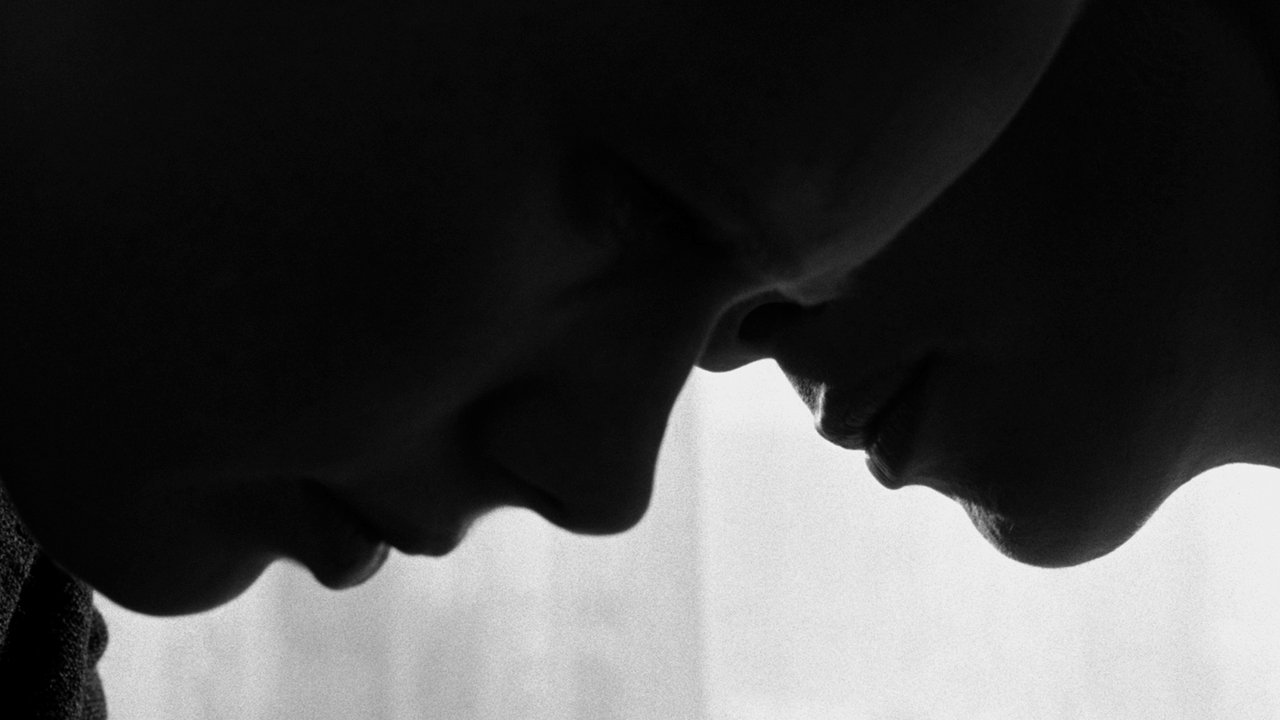
Alex Gigler reads Bergman's Persona as a study in how a self is borrowed. Elisabet's silence is both symptom and refusal; Alma's talk is an attempt to become knowable to herself; between them forms a third psychological life that belongs to neither, which the essay names with Thomas Ogden's term, the analytic third. The letter, the rage, and the merged face follow from the discovery that the person who seemed to receive everything was separate all along.
The impossibility of self-definition, and the profundity and banality of its pursuit: the architecture of the film is laid bare before a word of dialogue is spoken. Persona begins with two women situated in a striking asymmetry: a mute woman and a woman who cannot stop talking. Bergman brings them together as patient and nurse, but also as analysand and analyst. One compelled to speak, and one trained to receive.
It is not incidental that Elisabet Vogler is an actress. Her profession is the donning of personas, the manufacture of selfhood for an audience. Her silence, arriving mid-performance (as Electra, no less) is understood by those around her as a symptom to be cured. And perhaps it is. But it is also a refusal, a withdrawal from the ordinary demand that one continually produce an "I" for others to recognize and receive. And yet, the silence solves nothing. Because while Elisabet may stop speaking, she cannot stop others from making meaning of her silence. Others interpret it, fear it, admire it, resent it. Alma fills it with fantasies of who Elisabet is and what Elisabet thinks of her. In the end, the refusal to perform becomes a performance in and of itself, for an audience of one. And this introduces a terribly frightening possibility. Beneath the persona there may not be a truer face waiting to be uncovered, only another mask.
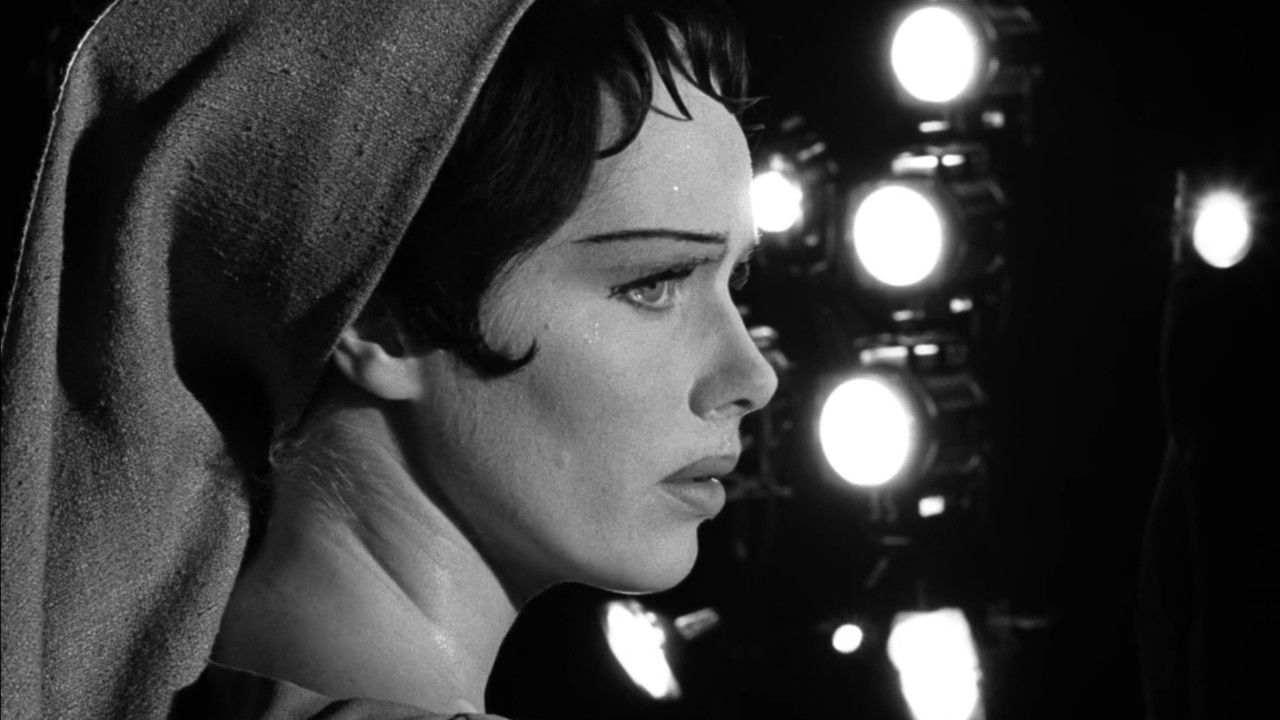
Beneath the persona there may not be a truer face waiting to be uncovered, only another mask.
Alma (whose name means "soul") is her apparent opposite. Where Elisabet withdraws from language, Alma rushes into it. She speaks as though conjuring enough words might finally make her knowable, most importantly to herself. But the more she speaks, the less stable she becomes. As in any effective analysis, her memories transform from things that happened to her, becoming experiences she is having again, differently, in the room. The self she describes and the self doing the describing begin to separate.

Bergman therefore puts more than two women in the room. There is Elisabet, there is Alma, and there is the psychological life that comes into being between them, a life belonging completely to neither and nevertheless made from both (what psychoanalyst Thomas Ogden termed "the analytic third"). Their intimacy becomes a kind of dream dreamed by two people and before long it becomes difficult to know who is imagining whom.

The rage and terror arrive when the fantasy of being received collapses into reality, as Alma discovers Elisabet's letter. Superficially, Alma experiences the letter as a betrayal. She has not simply been listened to and taken in as she wished to be. She has been observed, analyzed, and described by the silent woman. The silent woman whom Alma had made into a container for her psychic life, who is revealed to possess a psychic life of her own. And within Elisabet's psyche lives an Alma who is not quite the Alma she knows herself to be. The injury is not simply that Elisabet has violated her confidence. It is that Elisabet has remained separate all along.
What follows has the quality of Melanie Klein's paranoid-schizoid position, in which love and hate, safety and persecution, cannot yet be borne as aspects of a relationship with the same whole person. To Alma, Elisabet was an other seemingly capable of receiving everything. Now, she becomes an other from whom she must protect herself. Tenderness gives way to persecution. Dependence becomes humiliation. The wish to be known becomes the terror of having been seen. Alma retaliates against the very separateness she had previously been able not to know. She cannot relinquish the fantasy that being understood means being joined, and therefore cannot discover that another person can know us intimately and still remain a separate other.
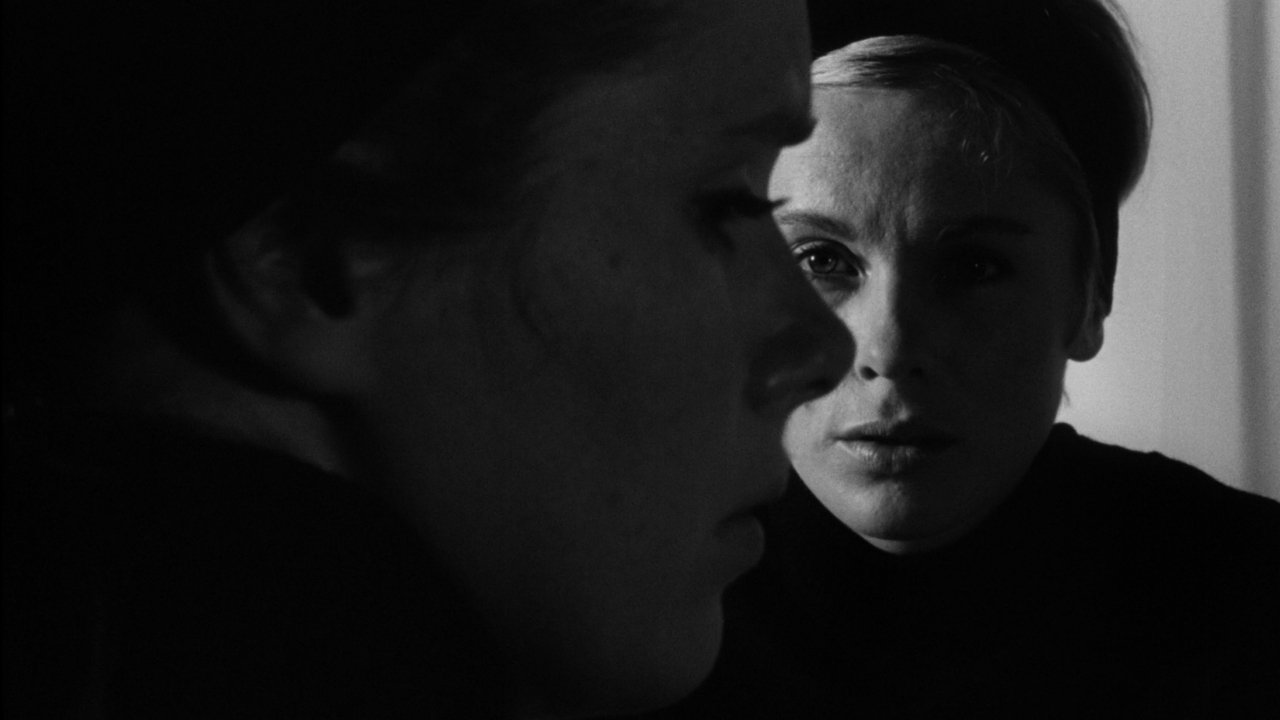
And then…the face.

Bergman gives this confusion of self and other a face of which neither woman can claim ownership. Alma and Elisabet appear together as an impossible composite, at once two people and neither of them. Analyst and analysand, actress and role, self and other cease to be useful distinctions. Perhaps this is less the annihilation of two selves than the appearance of something that has been forming between them all along: the analytic third, a psychological life made from both women but belonging completely to neither.
The image is disorienting and unsettling because it allows us to see something ordinarily kept out of sight: the self is never entirely one's own. It is made partly from identifications, projections, fantasies, memories of being seen, and imagined versions of oneself living in the minds of other people. Alma has entered Elisabet, and Elisabet has entered Alma, and neither can take herself back. The merged face forces us to consider the possibility that identity is always this borrowed, this porous, this dependent upon another person's participation in the experience of being oneself.
The self is never entirely one's own.
What follows can only resemble a return. Elisabet, we are left to assume, returns to acting, and Alma returns to nursing. They put their professions back on, assuming the names and functions that make them recognizable to themselves and to others. There is something both necessary and absurd about this restoration: act as though everything can go back to what it was, so long as everyone remembers her part. But the selves returning to those roles cannot be the selves who left them. Not really. Whatever occurred between the women cannot be undone simply by ending the treatment.

Bergman refuses the fantasy that the roles can ever be inhabited quite as they were before, as the illusion has been revealed. So he exposes the machinery that made the illusion possible: the camera, the crew, the projector, the strip of celluloid itself. It's as if the film awakens from its own dream and discovers that it, too, has been performing.

When the boy reaches toward the enormous, ambiguous face, I wondered if his gesture might be Bergman's thesis distilled: we attempt to find, behind the image, the person who must surely be there. We reach the person, we encounter another image, another form through which a self has learned to exist.

In life, a fiction may be exposed, but exposure does not free us from it. We return to our names, our faces, and the stories by which we recognize ourselves. Not because we have mistaken them for some ultimate truth, but because a person may have no other way of becoming real.
The credibility layer for what to watch
One scored, argued editorial a month, plus the next TVI Essential. No paid placements. No spam.
Common questions
What is Persona about?
Ingmar Bergman's 1966 film follows Elisabet Vogler, a stage actress who stops speaking in the middle of a performance of Electra, and Alma, the nurse assigned to her, who takes her to a cottage by the sea. Alma talks, Elisabet listens, and the boundary between them gives way. Liv Ullmann plays Elisabet and Bibi Andersson plays Alma.
What is the analytic third?
A term from the psychoanalyst Thomas Ogden for the psychological life that comes into being between an analyst and an analysand, made from both people and belonging fully to neither. The essay uses it to describe what forms between Alma and Elisabet, and to read the film's famous merged face.
What does the ending of Persona mean?
Alex Gigler reads the ending as a return that cannot be complete. Alma puts her uniform back on and leaves, and the film turns to its own machinery, the camera and the projector, as if it too had been performing. The released film leaves what becomes of either woman open; the essay's claim is that the selves returning to their roles cannot be the selves who left them.
Is this essay a review with a score?
No. Persona has a title record in the TVI catalog with its score, dimensions, and where to watch. This essay is an interpretation of the film and does not set or change that score.
Who is Alex Gigler?
Alex Gigler writes The Inner Life, TV Intelligentsia's psychology and film column, and holds a doctorate in clinical psychology (PsyD). His essays read films through psychoanalytic and developmental ideas. They are interpretations of the work, not clinical assessments of any person, and they do not set or change a title's TVI score.
Film: Persona (1966), written and directed by Ingmar Bergman. AB Svensk Filmindustri. Essay by Alex Gigler for The Inner Life, TV Intelligentsia's psychology and film column.