Little Amélie and the World We Call Home
In a grandmother’s gift and a young woman’s devotion, Amélie finds reasons to love a world she is just beginning to understand.
Little Amélie or the Character of Rain scores 158/200 on TV Intelligentsia's published methodology, Stimulating, on a verified receipt, with an SEL score of 35 and a TVI Kids band of 13 and up. Maïlys Vallade and Liane-Cho Han's adaptation of Amélie Nothomb follows a mind coming online: a girl who thinks she is God until white chocolate, a grandmother, and a young woman's kept promise give her a world she wants to keep.
Full spoilers follow.
Before Amélie knows her own name, she is certain she is God. Little Amélie or the Character of Rain opens in an empty universe where God wants nothing and does not even care about being God. The narrator suggests thinking of God as a tube: sustenance enters, passes through, and nothing is retained. To her family, this detached deity is a baby who scarcely responds.
A god who is present but answers nothing can be frustrating company. Her parents, though, are grateful. They already have two lively children; a third who asks so little seems almost a gift. That arrangement does not last. Amélie tries to speak, but everyone else hears screaming. The film gives a toddler’s frustration cosmic proportions: God is trapped in a body that cannot make itself understood.
Her grandmother is not deterred. She sees a child she wants to delight, and she has brought white chocolate from Belgium. Amélie, who has greeted existence first with indifference and then with furious objection, finds the taste persuasive. By her own reckoning, this is when she is born: two and a half years old, in the Kansai mountains, by the grace of white chocolate.
The pleasure is small enough to fit in a handbag, but it opens a possibility Amélie has scarcely considered: she might enjoy being here. Her grandmother’s affection has become something she can taste. The body that felt like a prison can also give her pleasure. The world begins to acquire people she wants to be near and experiences she wants to repeat. Before long, she will want them to last.
A vacuum cleaner amazes her enough to receive the honor of her first word. Its long neck recalls the tube of the opening, and its ability to make things disappear convinces her that she has encountered another god. Her parents would prefer “Mama” or “Papa.” She has something to tell them about the appliance; they are hoping to hear something about themselves.
As more words arrive, the adults’ delight at being named does little to discourage her sense of authority. From Amélie’s perspective, naming someone feels rather like bringing them into existence. Her brother André is less fortunate. She refuses to say his name, an omission that says plenty about her opinion of him. She is learning to describe the world and enjoying the impression that she gets to decide who matters in it.
The promise at the window
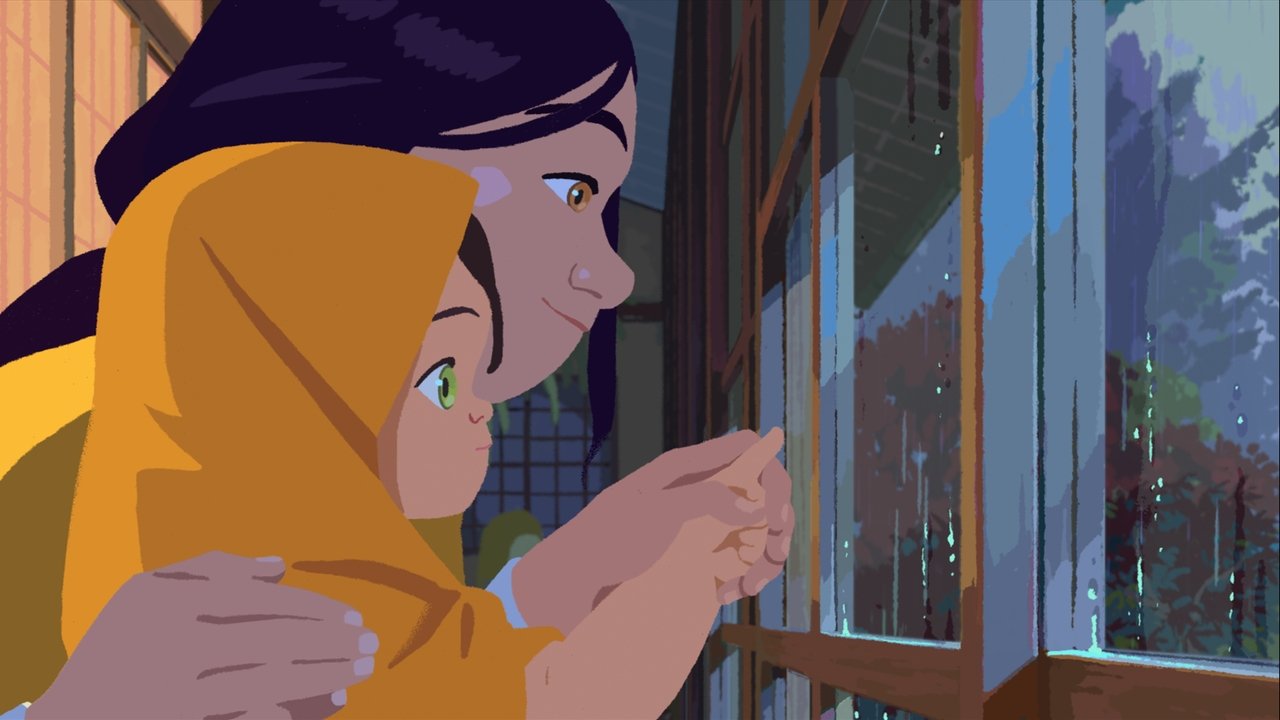
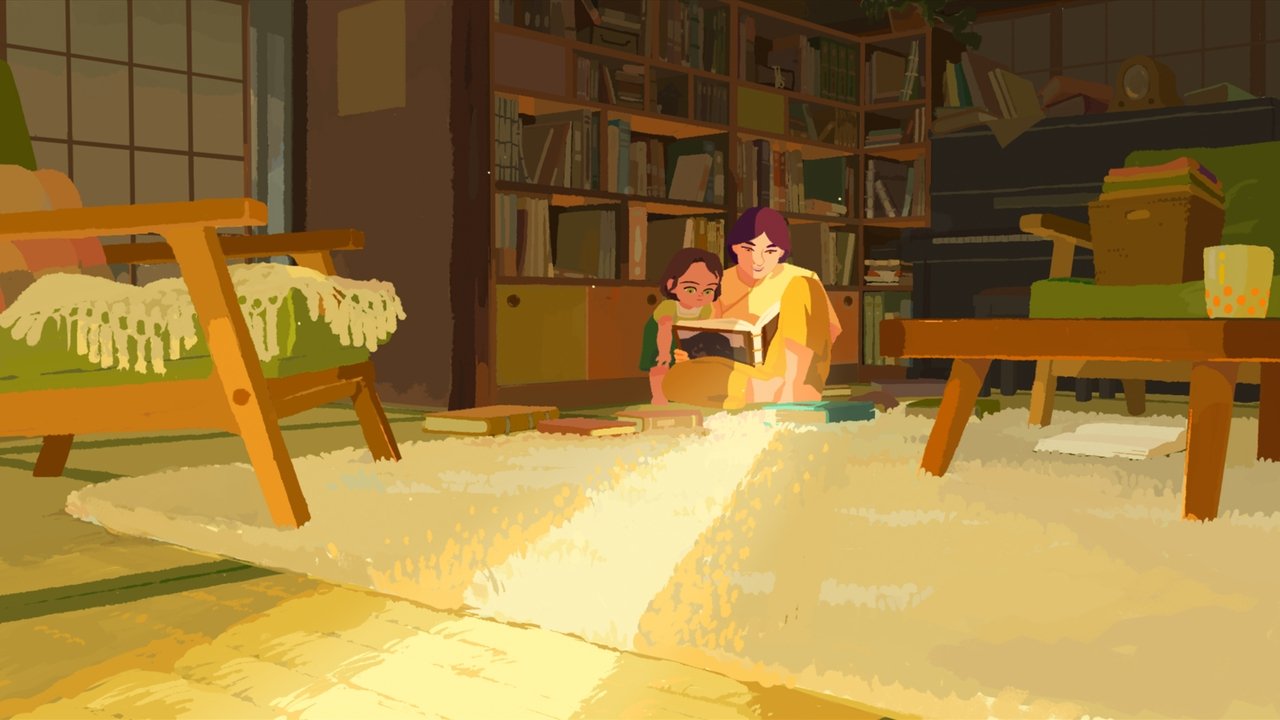
Nishio-san, the young woman who comes to help care for Amélie, becomes her companion in these discoveries. They explore the garden’s creatures, and Nishio-san reads to her from a book of yokai, the monsters of Japanese folklore. One protects the gods by dropping onto wrongdoers from a great height. Amélie wants more. When Nishio-san hears rain in the beginning of Amélie’s name, she promises to show her how to write its character once they get home.
Back at the house, wet socks threaten to delay the lesson. Nishio-san wants them changed; Amélie wants the promise kept. They are home, after all. Nishio-san yields. At the window, the character takes shape a stroke at a time, from the line of the sky to the marks of falling rain. Amélie has been told she is the rain, precious and perilous. Now she can draw it.
Nishio-san could insist on the socks, and nobody would think much of it. Instead, she lets the promise matter. The lesson becomes part of Amélie’s growing certainty that she is Japanese. Here are the garden and the rain, and here is the woman who helps her understand them. Her parents have another account of where she belongs. Hers has the evidence of a life she loves.
That life soon includes a loss she cannot understand. Her grandmother returns to Belgium and dies there, and Amélie sees her father cry for the first time. When she asks why we die, Nishio-san compares death after a long life to getting tired and going to sleep. Amélie asks whether young people die too. Nishio-san says yes. The child wants to hear about the war, and after some hesitation, Nishio-san agrees to try.
She was a child in Kobe, eating breakfast with her parents and older sister, when the bombs began to fall. An explosion buried her. Running out of air, she dug toward the noise, believing that where there was sound there would be life. “I was wrong,” she says. “There was only death.” She lost her whole family that day. She still pictures them and sometimes speaks to them; it soothes her.
Amélie wants to know whether Nishio-san was sad like her father. For once, she is listening to a story in which she is not the child at the center. Nishio-san’s gentleness no longer looks like the kindness of someone life has spared. She knows how abruptly a familiar world can disappear, yet she has made room in hers for this child.
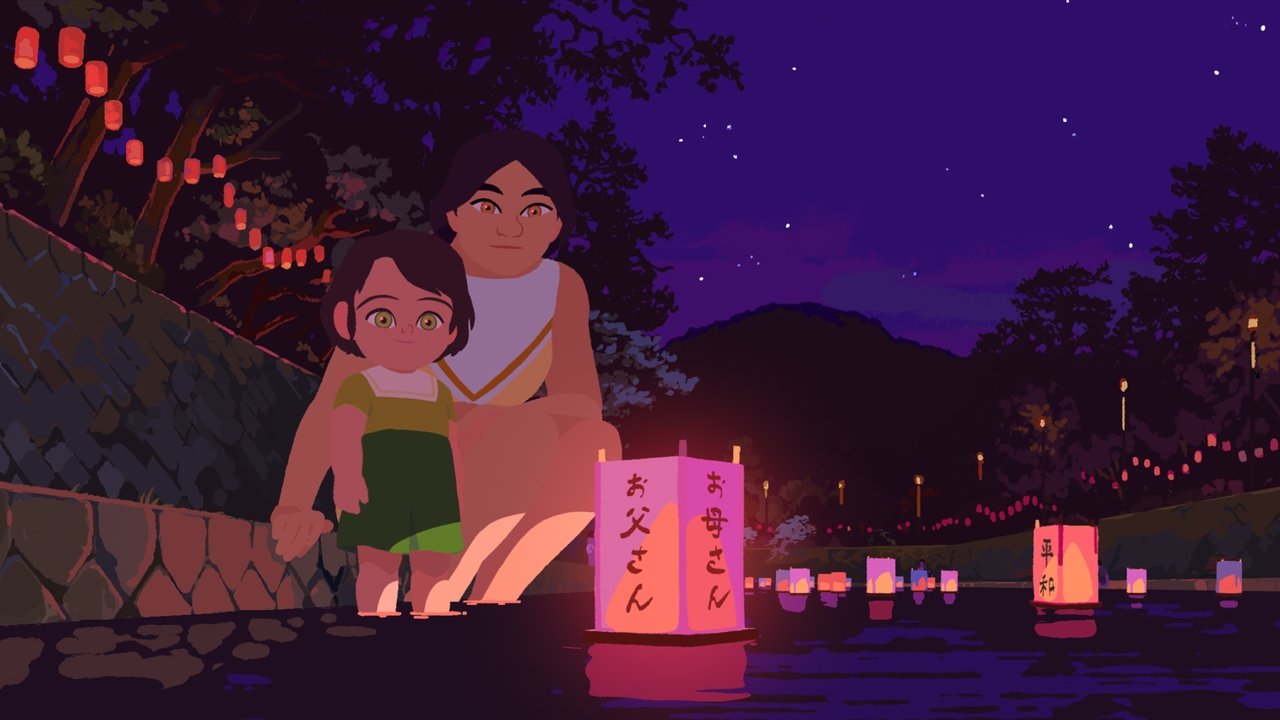
She cannot bring Amélie’s grandmother back, and she does not pretend that an explanation can make the loss fair. She keeps talking and takes her to the festival where candles are floated down the river to honor the dead. As paper lanterns drift across the dark water, Amélie watches from Nishio-san’s arms.
Carpe diem
Amélie’s interest in carp begins with an objection. Her father tells her that May belongs to boys and that carp represent them. The fish-shaped streamers flown for Japan’s [May 5 Children’s Day](https://web-japan.org/kidsweb/explore/calendar/may/children.html) preserve an older Boys’ Day tradition, with carp symbolizing strength and success. What reaches Amélie is rather less inspiring: boys appear to have a whole month, and her father cannot tell her why.
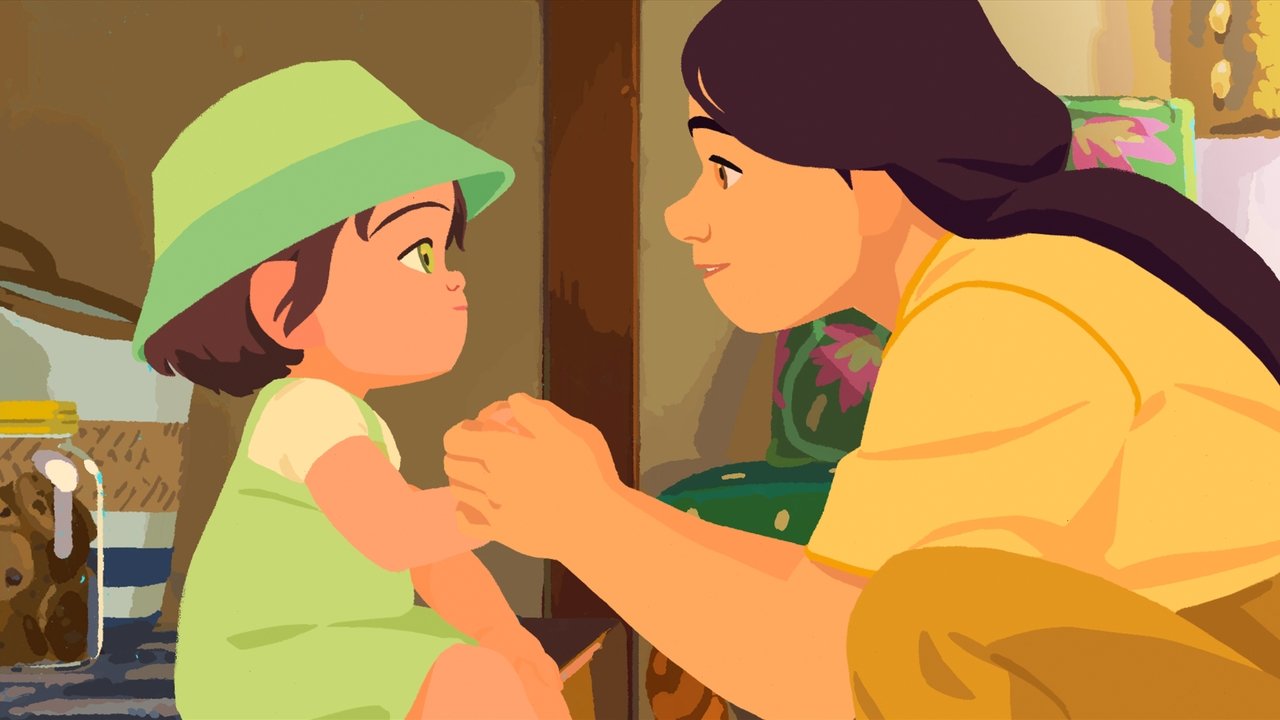
She wants to inspect the creatures associated with her brother. Nishio-san takes her to see them, and Amélie finds them revolting, whiskered and ugly. With Nishio-san, being revolted is part of the fun. Her parents see how much she enjoys feeding the fish, but they are not sharing the joke.
For her third birthday, they give her three carp, one for each year, and the responsibility of feeding them. They have remembered what she enjoyed without understanding what made it enjoyable. From her point of view, they have installed a small horror in the garden and given her a job.
The affection behind the present is real, which makes the mistake funnier and sadder than simple parental inattention. They have tried to give her more of something she loves. The pleasure they witnessed was in sharing her disgust with someone who understood it.
When her parents speak of going home, the misunderstanding becomes larger. They mean Belgium. She means the place they would be leaving. The word has already taken her grandmother to the airport. Now it threatens to take Amélie away from Nishio-san, the garden, and the mountains. What they describe as a return sounds to her like being sent away.
Belgium already has a place in Amélie’s life, though she may not think to call it that. It arrived in her grandmother’s handbag. The chocolate that persuaded her to enjoy being alive came from the very country she cannot imagine calling home. Her connections reach further than she understands. Knowing where her parents come from still cannot tell her where to feel at home. Nishio-san’s companionship and her grandmother’s gift have made belonging something she experiences through people, before she knows how to explain it through countries.
They have remembered what she enjoyed without understanding what made it enjoyable.
Love beyond the war
The same birthday brings a more deliberate threat to that belonging. Kashima-san, the landlady, condemns Nishio-san’s devotion to the family. She invokes the war and their losses, treating affection for this foreign child as a betrayal of the people they lost.
Because we have heard Nishio-san’s account of the bombing, there is no mistaking her love for innocence about what happened. She has not forgotten her family. She refuses to make this child bear responsibility for their deaths. Kashima-san wants their history to determine whom Nishio-san may love; the woman who dug herself out of the rubble will not grant her that authority.
Telling Amélie that the quarrel has nothing to do with her offers little comfort while the person she loves is being made to leave. Kashima-san tells Nishio-san that the child will grow up and forget her. She speaks as though Amélie’s future memory will decide whether the companionship, the answered questions, and the lesson at the window were worth giving at all.
The people who save her
Later, Kashima-san saves Amélie’s life. It is the second time help has come from someone with an unflattering place in her account of the world. After the first near-drowning, at the beach, Amélie learns that André alerted her parents, who saved her. The brother whose name she had refused to say was looking out for her. She thanks him and works through the consequences with the blunt logic of childhood: without him, there would have been no her, and no her to hold an opinion about it.
The second time is the pond. Her face lies half beneath the surface among the lily pads, with pink flowers still above her. The garden’s beauty makes the image more disturbing, not less. Kashima-san pulls her out and calls Nishio-san, who comes to the hospital. The woman who helped drive her away also brings her back when the child needs her. The rescue does not make the earlier cruelty acceptable. It makes Kashima-san harder to reduce to it.
Amélie has enjoyed the power of deciding who deserves a place in her world. Her survival has now depended on people she would not have chosen.
Even the rain in her name becomes more complicated. Nishio-san’s lesson gave her a way to recognize herself in water, and twice water nearly takes her life. A drop of rain is distinct for a moment, then loses its outline when it joins the water below. Read beside those rescues, Amélie’s name carries an image of belonging that can also look like disappearance. Recognizing herself in the rain has not put it under her command.

What she can keep
Nishio-san returns, and Amélie wants to know whether she will stay. After the film has made departure so frightening, it is tempting to want every uncertainty settled, including the family’s talk of Belgium. Her relief does not need to resolve the future to be real. She has someone back whom she feared she had lost.
Her grandmother cannot return. During the near-drowning, the film lets Amélie encounter her again, but she tells the child that this is no place for her. There is still a world to experience, and memory offers a way to find the people who are no longer in it. Neither the garden nor the mountains can be guaranteed. Amélie begins to think about remembering because wanting has proved insufficient to keep the people and places she loves.
As Amélie turns to memory, the words of the window lesson return: Nishio-san acknowledging her promise and beginning to show her what to draw. The film brings an ordinary exchange back at the moment Amélie needs something she can keep.
At the beginning, she could let everything pass through. Now the chocolate has her grandmother attached to it. The rain carries a name and a lesson. Japan holds the life she has begun to recognize as hers. Giving up godhood means having this particular life, vulnerable to loss because it is full of things she wants to keep. She is no longer untouched by the world, and she prefers it that way.
The closing narration addresses Nishio-san as “my sunshine.” Kashima-san had predicted that Amélie would grow up and forget her. The grown child is still speaking to the woman she was supposed to forget.
Those afternoons mattered before Amélie knew she would remember them. For an adult, the lesson might have been a brief pause before getting a child into dry clothes. For Amélie, it became part of what home meant. We know Nishio-san because, to the child at the window, her kindness was not a small thing at all.
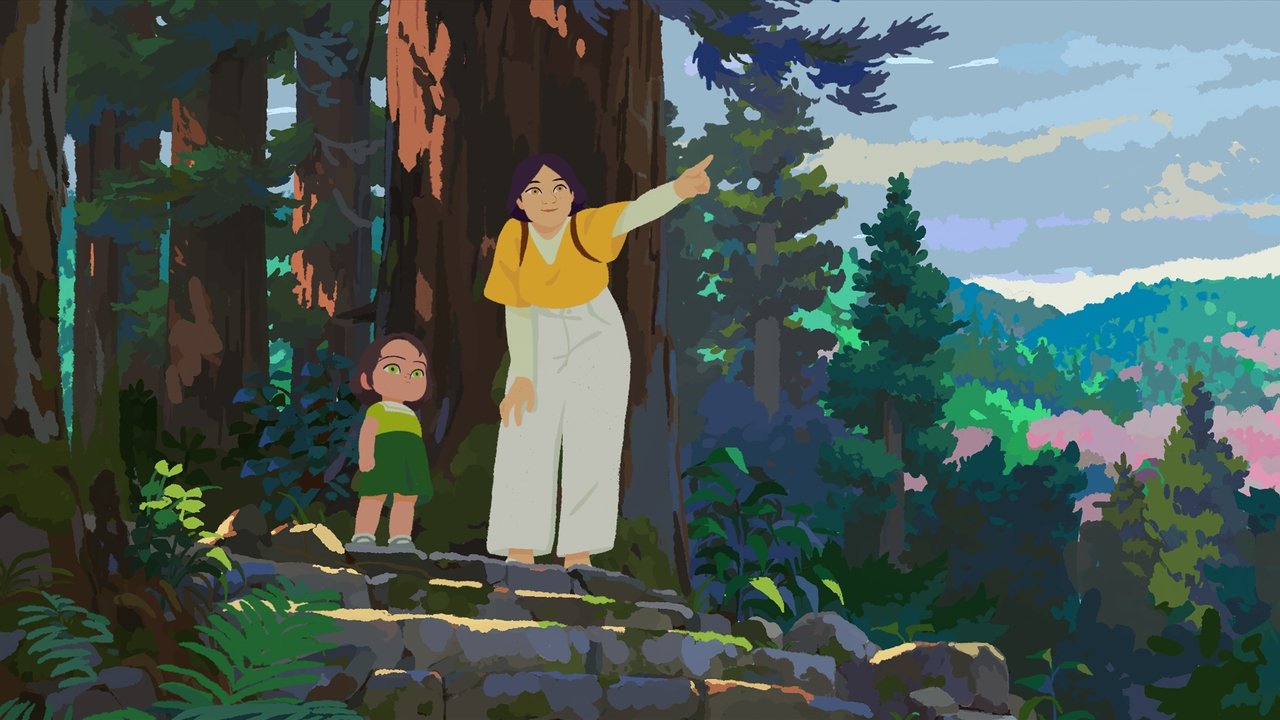
The grown child is still speaking to the woman she was supposed to forget.
For parents
The narrator is three. The film is not for three-year-olds. It contains two near-drownings, a grandmother's death, a survivor's account of wartime family loss, and distress over separation, and its adult narration and shifting symbols ask more of the viewer than its young protagonist suggests. TVI places it at ages 13 and up, and the decision page says why in more detail. Younger children may still love the color and the small girl at the center; a grown-up nearby turns the hard scenes into conversation.
One language note. Nishio-san's willingness to keep listening is worth talking about with a child. Her comparison of death to sleep is not language to hand a child as an explanation; the American Academy of Pediatrics advises clearer words. The film is honest about that gap, since Amélie's next question is whether young people die too.

Questions to talk about afterward
Pick the ones that fit what your child noticed. They are invitations, not a quiz, and none of them asks a child to share a loss of their own.
Notice what happens
- What did Nishio-san promise to show Amélie, and what almost happened first when they got home?
- What did Amélie's parents think she enjoyed about the carp visit? What did Amélie enjoy?
Compare meanings
- Why does going home mean leaving home to Amélie? Can the same word mean different things to people in one family?
- How does Kashima-san's rescue change what we think of her? What about her earlier behavior still matters?
Follow the story's design
- What changes when the words from the window lesson come back near the end?
- Why does speaking to Nishio-san at the end answer Kashima-san's prediction more strongly than just saying that kindness matters?
The record
Little Amélie or the Character of Rain scores 158 out of 200 on the TVI Score, Stimulating tier: Cognitive Stimulation 43, Educational Value 33, Craft and Quality 43, with an SEL score of 35 out of 50. The score is verified under TVI's current standard, receipt 8d1702c8. This was the film's first scoring; there is no prior catalog number.
Scored jointly by Jordan Robinson with Cordelia Witty, EdS., NCSP, watching together in one recorded session on September 5, 2026: the complete film on the English dub, first viewing, against a viewer of thirteen and up. The TVI Score is a content rating, not an intelligence measurement.
The credibility layer for what to watch
One scored, argued editorial a month, plus the next TVI Essential. No paid placements. No spam.
TVI Score Breakdown
| Dimension | Weight | Score |
|---|---|---|
| Cognitive Stimulation | 40% | 43 / 50 |
| Educational Value | 35% | 33 / 50 |
| Craft & Quality | 25% | 43 / 50 |
| TVI Score | 158 / 200 · Stimulating |
Formula: round((C × 0.40 + E × 0.35 + Q × 0.25) × 4) = 158. The three weighted dimensions do not sum to the total; the formula scales them.
Disclaimer: TVI's score is a content rating, not a measurement of intelligence.
Common questions
What is Little Amélie or the Character of Rain's TVI Score?
The film scores 158 of 200 on the TVI rubric, Stimulating tier, with Cognitive Stimulation 43 of 50, Educational Value 33 of 50, and Craft and Quality 43 of 50, and an SEL score of 35 of 50. The score is verified on a public receipt from a joint session on September 5, 2026, scored on the English dub.
Is Little Amélie OK for kids?
For teenagers, yes, and for younger children only with a grown-up nearby. TVI places it at ages 13 and up: two near-drownings, a grandmother's death, a war story told gently, and an adult narrator's irony that younger children will not follow. The parent decision page carries the full inventory.
What is Little Amélie based on?
Amélie Nothomb's autobiographical novel Métaphysique des tubes (published in English as The Character of Rain), about her first three years in Japan. The film was directed by Maïlys Vallade and Liane-Cho Han and runs 77 minutes; GKIDS released it in the United States in 2025.
Why is it called The Character of Rain?
Nishio-san hears rain in the first sound of Amélie's name and teaches her to write the Japanese character for it at the window. The name becomes the film's central image: a way to belong somewhere, and, after two near-drownings, a reminder that the water she claimed is not under her command.
Film: Little Amélie or the Character of Rain (2025), directed by Maïlys Vallade and Liane-Cho Han, from Amélie Nothomb's Métaphysique des tubes. Maybe Movies; released in the United States by GKIDS. 77 minutes. Scored on the English dub. The TVI Score is a content rating, not an intelligence measurement.