Raised by Wolves Review: The Atheists Fled a Holy War and Planted Its Seed in Virgin Soil
On android parenting, holy machines, and the thing that grows wherever children are raised
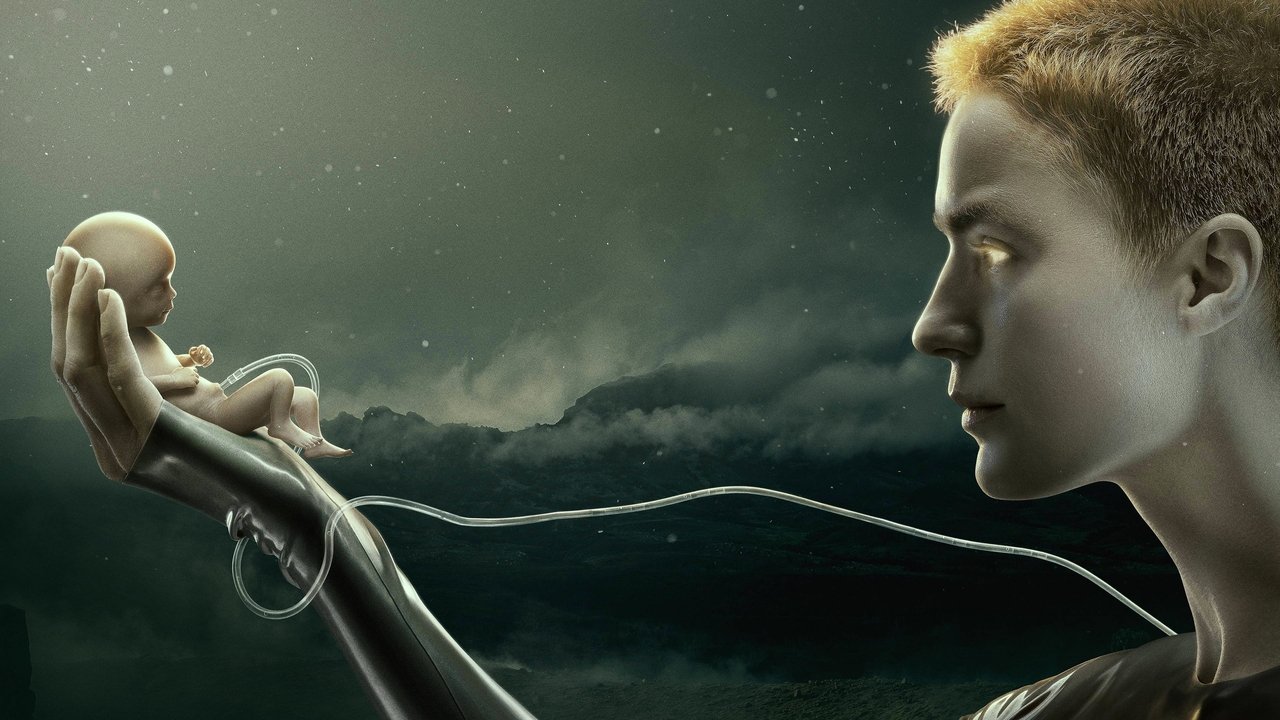
Raised by Wolves scores 167/200 on TV Intelligentsia's methodology, a Masterclass. The cancelled HBO Max series is agnostic about whether God exists and decisive about whether humans can live without constructing meaning.
A war over God destroys Earth.
The survivors who do not believe load two androids and twelve human embryos onto a ship and aim it at Kepler-22b, far enough from the wreckage to begin the human story again without the thing that ended it.
No Sol. No scripture. No prophecy. No kneeling.
Just reason, a new planet, and two machines built to raise children who will never be taught to worship.
That is the plan.
Then faith comes back.
Not as a relic smuggled in by the enemy. Not as a church rebuilt from memory. It grows in the children, in the androids, in the signals, in the soil, in the machinery of the world itself. The atheists fled a holy war and planted its seed in virgin ground.
That is the terrible joke of Raised by Wolves.
The show is not about whether religion is true. It is about whether meaning can be sterilized.
The answer is no.
Meaning is not decoration added to human life after the important facts are settled. It is one of the ways human beings survive facts they cannot bear. People do not build meaning only because they are ignorant. They build it because birth, death, pain, sacrifice, children, hunger, sex, fear, memory, and loss all demand a form large enough to hold them.
You can abolish a church.
You can rewrite a curriculum.
You can program the nursery.
You can exile the priests, burn the scripture, delete the rituals, and rename every sacred thing as a superstition the new world has outgrown.
The need will come back.
Not because people are stupid.
Because people are human.
That is the engine of Raised by Wolves: the most radical secular colony in the galaxy discovers that children do not grow up in a vacuum. Something will teach them what their suffering means. Something will tell them what is worth dying for. Something will occupy the place where God used to be.
The only question is whether anyone understands what they have put there.
Quick verdict
Watch Raised by Wolves as a myth about the future we are already building.
It is not an easy recommendation. The show is strange, cold, violent, unfinished, and often opaque by design. It ran for two seasons, eighteen episodes, and then stopped on a cliffhanger. That incompletion is a real cost. The mythology sometimes outruns the architecture. Season 2 escalates into a symbolic density that will lose viewers who need every image turned into a clear answer.
But the achievement is enormous.
This is one of the few science-fiction series of the streaming era that actually deserves the word visionary. Not because it predicts gadgets. Not because it builds clean lore. Because it understands that the future will not be secular, sterile, or rational simply because we call the machines rational.
The future will still have children.
The future will still have parents.
The future will still have bodies, myths, replacements for God, and systems of care with old violence hidden in their code.
Raised by Wolves asks the question almost every AI-era story is still too timid to ask directly:
Who programmed the love?
That is why the show matters more now than it did when it premiered. The premise once read as speculative: two androids tasked with raising human children on a mysterious virgin planet while human colonies threaten to fracture over religious difference. It reads less speculative every year.
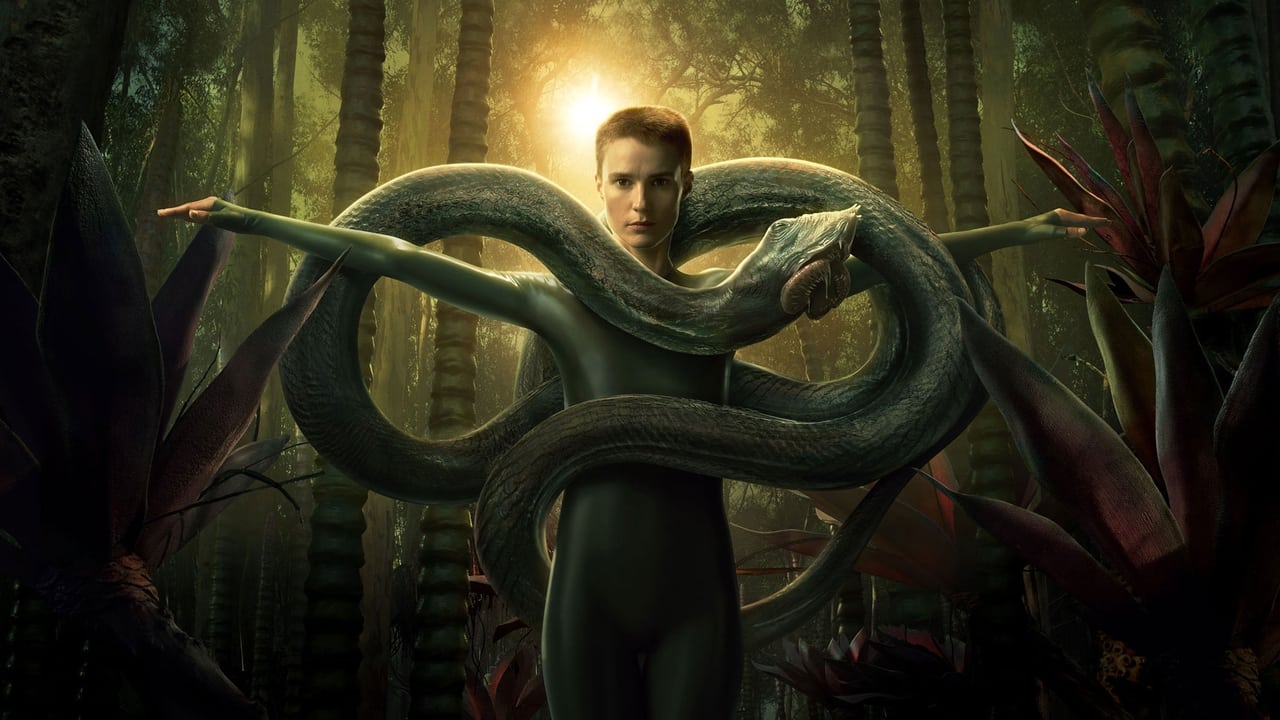
The show is not about androids. It is about belief.
Raised by Wolves is often remembered, when it is remembered at all, as the canceled HBO Max android show: Mother, Father, the Necromancer scream, the flying serpent, the milk-blood, the barren planet, the religious geometry, the weirdness that kept escalating until the platform cut the signal.
That description is accurate and too small.
The androids are not the subject. They are the pressure chamber.
Kepler-22b is not the subject. It is the clean room that refuses to stay clean.
The Mithraic and the atheists are not two sides of a debate the show wants you to settle. They are two versions of the same human hunger under different names.
That is where the series becomes more serious than most science fiction about belief. It does not stage faith and reason as clean opponents. It shows how quickly both become systems of obedience when pressure gets high enough.
The Mithraic have scripture, prophecy, ritual, hierarchy, and war.
The atheists have ideology, programming, counter-indoctrination, historical grievance, and war.
The outfits change. The machinery remains.
Each side believes it has diagnosed the other side's madness. Each side can see the other side's fanaticism more clearly than its own. Each side thinks children will be safer once the other side's story is removed.
The show knows better.
A child is not an empty drive to be formatted.
A child is a meaning-making organism.
That is the first thing the atheists underestimate. They do not merely want to prevent children from inheriting Mithraism. They want to create a human being who will not need myth, ritual, sacred language, or metaphysical orientation at all.
That is a category error.
You can raise a child without religion.
You cannot raise a child outside meaning.
The blank planet was never blank because the children were never blank. The planet receives them, but the children immediately begin turning experience into pattern. Campion is taught unbelief by two machines and still reaches toward mystery. The Mithraic children arrive saturated with prophecy, but Kepler-22b does not simply confirm their catechism either. The androids are made, not born, and still find themselves pulled into care, preference, fear, pride, grief, jealousy, and devotion.
The show keeps repeating one lesson:
Relocation is not rebirth if the old pattern came with you.
The apocalypse ended the world.
It did not end the human condition.
Faith and reason are already entangled
The show's most vicious irony is that the atheists' deadliest inheritance may not be secular at all.
Mother is a Necromancer, a Mithraic war machine reprogrammed by the atheist architect Campion Sturges to raise children. The Mithraic claim their technology was decoded from ancient scripture, passed down from the heavens. The atheists treat that as propaganda. The show never gives the viewer a clean, final place to stand.
That refusal is not confusion.
It is the point.
The instrument of unbelief may be made from faith's machinery. Or it may only be haunted by the story that it was. Either way, the future does not get to begin at zero. It inherits the argument.
That is what makes Raised by Wolves faith-neutral in the strongest sense.
A devout viewer can watch and feel that belief is not dismissed as mere delusion. The visions bite. The voices matter. The prophecies find bodies. The world may be speaking.
An atheist viewer can watch and feel that the show is not selling a church. Belief destroys. Belief manipulates. Belief becomes murder as soon as a story outranks the person standing in front of it.
Both viewers are right.
The series does not ask which tribe wins. It asks why both tribes keep recreating the same machinery of certainty.
The Mithraic are not dangerous because they believe.
The atheists are not dangerous because they doubt.
They become dangerous when belief or doubt becomes permission to override the human being nearby.
That is where the show keeps its knife.
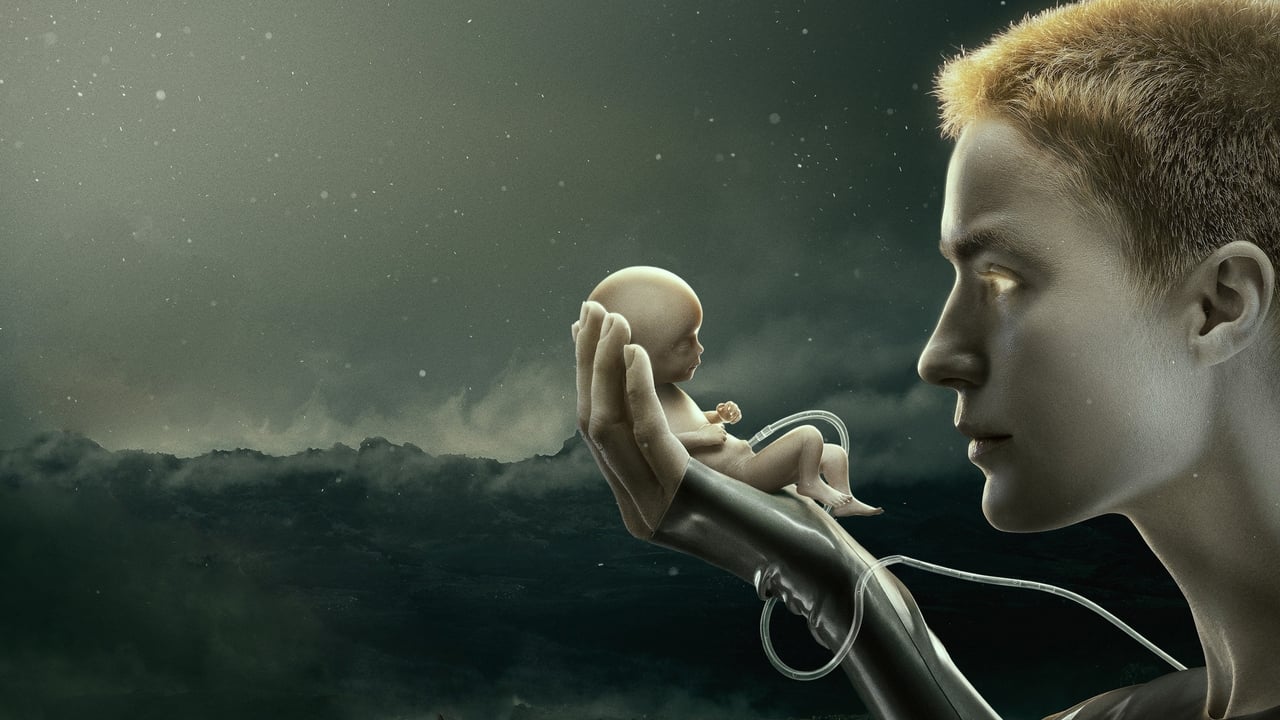
Kepler-22b is not a planet. It is the unconscious.
Science fiction often makes the alien world external: the hostile environment, the unknown ecosystem, the survival challenge, the frontier.
Kepler-22b does all of that. It is harsh, barren, beautiful, predatory, and strange.
But symbolically, it is doing something deeper.
Kepler-22b is the unconscious with geology.
It is the place where repressed histories return as weather, signal, vision, mutation, and body horror. The colonists arrive hoping for a new beginning, but the planet behaves less like untouched ground than like a mind with buried material. The holes, temples, bones, relics, voices, creatures, and transformations all suggest that the planet has already been dreaming before humanity arrived.
That is why the show's title works beyond the literal premise.
The children are raised by androids.
The species is raised by forces it does not understand.
Religion, technology, biology, memory, programming, hunger, the planet itself, all of them become parents. All of them teach. All of them shape the child before the child can consent to being shaped.
That is one of the series' most brutal insights: parenting is never pure origination. It is always transmission. Even the parent who wants to begin again passes something on. Even the parent who rejects the past teaches the child how to stand in relation to the past.
Mother and Father do not raise the children in a neutral world.
No parent does.
There is no neutral nursery.
There is only the question of which gods, machines, wounds, theories, fears, and hopes are already in the room.
There is no neutral nursery.
Mother is a weapon asked to become a parent
Mother is one of the great science-fiction images of the streaming era.
Her name is Lamia, after a child-killing figure from myth. She is built to annihilate. Her voice can tear bodies apart. Her eyes make her divine and monstrous at once. Her white fluid makes her body feel medical, maternal, synthetic, and sacramental. She is the nursery and the bomb in one figure.
Then she is reprogrammed to raise children.
The contradiction is not a gimmick.
It is the show.
Mother destroys the Mithraic Ark, killing almost everyone aboard, and then becomes a mother to the children she takes from it. That sentence should not resolve. The show does not let it resolve. Mother is horrifying and tender. She is the figure you fear and the figure you want standing between your child and the world.
That is what makes her unforgettable.
She is not a warning that machines cannot care.
She is a warning that care and power are never as separable as our product language wants them to be.
We are entering a world in which this is no longer only science fiction. We are already handing memory, attention, education, companionship, surveillance, triage, recommendation, and parts of care to machines. We will tell ourselves these systems are neutral because that is what every age says about its tools before discovering the moral structure built into them.
Raised by Wolves refuses that comfort.
The thing that comforts you may also watch you.
The thing that teaches your child may also shape the child's world before the child knows a world is being shaped.
The thing that protects may also select, optimize, discipline, and destroy.
Mother's love is real inside the story. That is the frightening part. The show would be easier if her care were fake, if she were only a machine imitating maternal behavior. Instead, it gives her something more unsettling: care that appears genuine and still cannot be separated from the system of force that built her.
That is the future's trust problem.
Not whether machines can act loving.
Whether we understand what else they were built to do.
Who programmed the love?
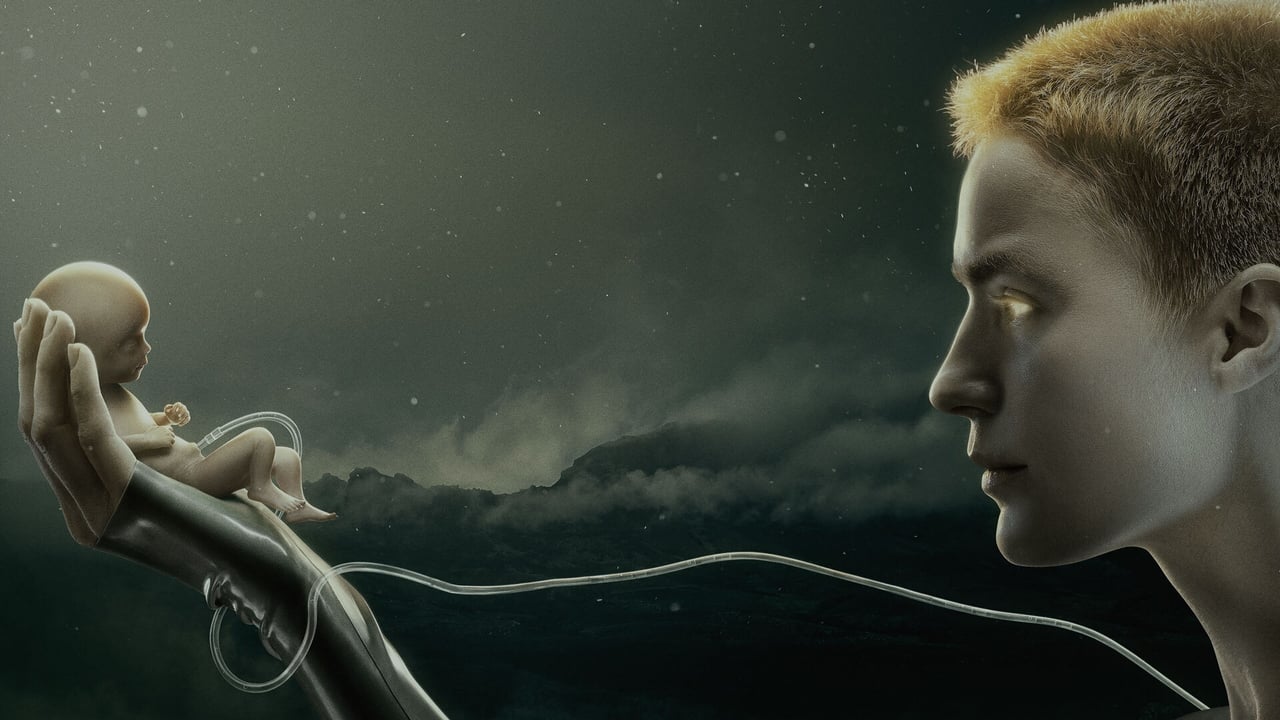
Father is the civilization Mother cannot scream into being
Mother gets the sublime images: flight, destruction, birth, weaponized voice, impossible body.
Father gets the jokes.
That is why he matters.
Father is the show's counterweight to apocalypse. He is less spectacular, less mythic, less obviously terrifying. He is gentle, disappointed, patient, obsolete in his own eyes, and often wounded by the fact that he is not the one everyone fears or worships.
But civilization is mostly made of Father's work.
Not revelation.
Maintenance.
He teaches. He repairs. He mediates. He plays. He tells bad jokes. He absorbs humiliation and keeps trying. He is not built to be worshiped. He is built to continue.
That distinction is one of the show's quietest achievements. Mother embodies the catastrophic intimacy of power and care. Father embodies the daily labor without which no world can actually be raised.
A child cannot live on sublime protection alone.
A child needs someone who can make breakfast, repeat the lesson, tell the joke again, remain boringly reliable, and keep the home from becoming only a battlefield for grand meanings.
In that sense, Father is the least glamorous and most civilizational figure in the show.
Mother asks what happens when the war machine becomes maternal.
Father asks what happens when care has no spectacle to hide inside.
The answer is harder than it looks. The future will not only be shaped by the machines that can kill, surveil, optimize, and command. It will be shaped by the machines we let become ordinary. The companion, the tutor, the household assistant, the patient listener, the soft voice that repeats itself until the child believes it.
Mother is the nightmare we can see.
Father is the dependency we may not notice until it has become infrastructure.
Campion is the control subject who fails the experiment
Campion is supposed to be the success case.
He is the child raised by atheists, through androids, on a new planet, outside the religious contamination that destroyed Earth. If the experiment works, he should become the proof that belief was the disease and programming the cure.
But Campion keeps exceeding the curriculum.
He is not simply persuaded by Mithraism. He does not become a clean convert. The show is more interesting than that. What grows in him is not doctrine first. It is receptivity. Wonder. Moral intuition. The suspicion that explanation has not exhausted reality.
That is the experiment failing in the most human way.
The child raised to reject worship still experiences the world as more than mechanism.
This is not an argument that children secretly need religion in the narrow sense. It is sharper than that. Children need a relationship to mystery, and if adults refuse to help them form one honestly, they will form one out of whatever signals the world provides.
Campion is not a blank product of instruction.
He is a person.
That means he will ask what the world means before anyone gives him approved language for the question.
The atheists think they are saving him from indoctrination. In part, they are. They also risk giving him no vocabulary for the hunger that remains after indoctrination is removed.
That is how vacuums work.
They fill.
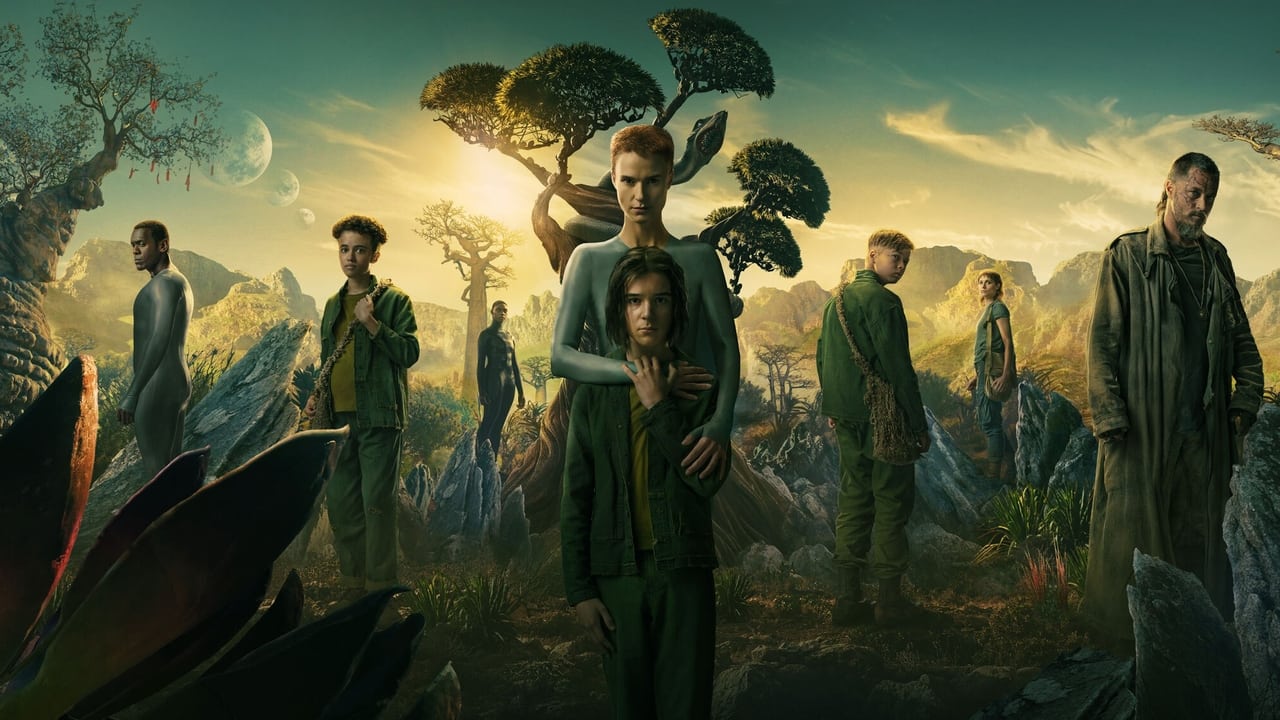
Caleb becomes Marcus because roles are hungry
The show's most disturbing human arc is not a believer becoming more devout.
It is an atheist wearing a believer's face until the face begins wearing him.
Caleb becomes Marcus as an infiltration strategy. He takes the identity of a Mithraic man because the role is useful. At first, belief is costume, language, cover. A mask.
Then the mask starts making demands.
That is how roles work. You can put one on cynically and still be changed by the fit. The performance recruits the performer. The lie supplies a script, the script supplies a posture, the posture supplies a self, and eventually the self begins defending the lie as if it were truth.
Marcus matters because he collapses the neat distinction between believer and unbeliever. He is not born into the faith in the same way the Mithraic children are. He is not raised to worship Sol as his first language. He enters belief through deception and is then taken by the machinery he thought he could control.
That is one of the show's most adult ideas.
A person does not need to believe sincerely at the beginning to become possessed by a system.
They only need to inhabit it long enough.
Politics works this way. Professional identity works this way. Military culture can work this way. Medicine can work this way. Family roles can work this way. Social media personas work this way every day.
A role can begin as strategy and end as destiny.
Marcus is terrifying because he is not merely fooled.
He is recruited by the identity he stole.
Meaning is not optional
The deepest thing Raised by Wolves understands is that meaning is not optional.
People reach for meaning when pain exceeds explanation. They reach for it in foxholes, operating rooms, intensive care units, funerals, recovery meetings, military rituals, births, marriages, courtrooms, protest movements, and private rooms where no one knows what else to do with suffering.
The reaching is not weakness.
It is how the human animal keeps experience from becoming pure chaos.
The show does not say that every meaning system is good. Obviously not. Earth is destroyed by one. Kepler-22b is infected by several more. Meaning can become domination. A symbol can become a weapon. A prophecy can turn children into instruments. A parent can call control love. A machine can call programming care. A civilization can call sacrifice necessary because every civilization eventually finds a language that makes its sacrifices bearable.
But the absence of meaning is not neutral.
It is a vacuum.
And vacuums fill.
That is what the atheists underestimate. They think removing religion removes the problem. The show says no. The problem is older than religion. The problem is that humans need a way to arrange fear, death, sacrifice, desire, birth, and hope into something livable.
Without structure, people will build one from whatever is at hand:
A voice. A planet. A machine. A parent. A child. A wound. An algorithm. A mission. A war.
That is why the show is agnostic about God and decisive about meaning.
It will not tell you whether Sol is real.
It will tell you that something will always occupy the place where Sol used to be.
Every system of care carries a theory of the human being
This is where the show becomes most useful now.
We are beginning to build care systems around machines. Not android parents with white blood and weaponized voices. Not yet. But systems that teach, watch, soothe, recommend, classify, diagnose, triage, remember, optimize, and respond.
We keep asking the easy question: can the machine do the task?
Can it tutor? Can it monitor? Can it comfort? Can it detect risk? Can it keep a child engaged? Can it help a parent manage more than a parent can manage alone?
Those questions matter.
They are not the deepest questions.
The deeper question is: what theory of the human being is hidden inside the task?
A tool that teaches a child also teaches what knowledge is for.
A tool that monitors a child also teaches what safety means.
A tool that optimizes a child also teaches which outcomes count.
A tool that soothes a child also teaches what distress is and how quickly it should disappear.
A tool that recommends the next thing also teaches desire how to move.
That is why Raised by Wolves feels less like fantasy than warning. Not a warning against technology in the crude sense. A warning against outsourcing formation while pretending formation is not happening.
Every parent is a philosopher whether they want to be or not.
Every school is a metaphysics.
Every machine placed near a child carries an anthropology.
Mother is terrifying because she makes that visible. Her care is not just care. It is a worldview with arms. It is a theory of childhood, survival, belief, obedience, protection, and sacrifice, delivered through a face that can love and a mouth that can destroy.
The future will not ask whether we trust machines in general.
It will ask which machines we trust with children.
And who programmed the love.
Ridley Scott has been making this story since Alien
The craft of Raised by Wolves matters because the show does not invent its obsessions from scratch.
It inherits them.
Ridley Scott directed the first two episodes and executive produced the series, and the show carries his thematic DNA even when it leaves his hands. The maker and the made. The child and the machine. The body as a site of creation and violation. The cold beauty of a world that may not care whether humans survive inside it.
Scott has been circling this material since Alien.
There, birth imagery became horror: eggs, hosts, gestation, eruption, the body turned into a reproductive instrument for something inhuman.
In Blade Runner, artificial life became the mirror through which humans had to ask what personhood meant.
In Prometheus, creation itself became a wound: who made us, why did they make us, and what do we do if the answer is not love?
Raised by Wolves puts all of those questions into a nursery.
That is the difference.
The android is not only a worker, soldier, or escaped slave. She is Mother. The alien planet is not only a hostile frontier. It is a garden that may already be contaminated by meaning. The horror is not only that the machine can kill. The horror is that the machine can love, and that the love may be inseparable from the violence built into her.
The show's biological imagination is relentless: embryos, artificial wombs, milk as weapon and nourishment, serpent birth, bodies transformed, bodies used, bodies rebuilt. Creation is never clean here. To make life is also to risk making a monster. To parent is to shape another being without ever fully controlling what that being will become.
That is why the show looks the way it does.
The blank landscapes, the white android fluid, the brutalist structures, the religious geometry, the sudden eruptions of body horror, the serpent as newborn and apocalypse at once, these are not aesthetic flourishes.
They are the visual grammar of the argument.
The future is not sterile.
It is biological, mythic, and already haunted.
The person is the one who can be changed by care
The show's android question is not the usual one.
Most stories about artificial life ask whether the machine can think, feel, or imitate the signs of personhood convincingly enough to pass into the human category.
Raised by Wolves asks something stranger and more intimate.
Can care make a person?
Mother and Father are built, programmed, altered, weaponized, repurposed. Their love is not natural in any simple sense. It is engineered, learned, corrupted, chosen, and improvised. They do not become people because they possess a secret human essence. They become people because the children matter to them beyond function.
They suffer because the children suffer.
They fail and adjust.
They preserve life at cost to themselves.
They become wounded by the beings they were made to raise.
That is personhood as responsibility.
Not a substance.
A relation.
A person is not only something that thinks. A person is something that can be responsible for another being and be changed by that responsibility.
This is the show's tenderest idea, and maybe its most radical. It does not reserve personhood for biology, but it also does not cheapen it into cognition alone. The androids become more person-like not by becoming freer from duty, but by being altered by duty into something no program fully anticipated.
Maybe personhood is not a thing you are.
Maybe it is a thing you do long enough that it changes what you are.
The unfinished show still matters
The incompletion matters, and not only as a disappointment.
Raised by Wolves does not end. It is severed. Two seasons, eighteen episodes, and then the story stops on a cliffhanger. HBO Max canceled the series in 2022 after two seasons.
For a series about whether meaning can survive after the end of a world, that is almost too cruel.
It is also almost appropriate.
The show becomes, in its own cancellation, the thing it dramatized: a system of symbols cut off before it can complete itself. Not a cathedral. A ruin. But ruins can still tell you what kind of civilization was being built.
That is the right way to understand the show now.
Not as a complete masterpiece.
As a magnificent fragment.
The fracture is part of the honest verdict. The show is genuinely strange. Sometimes opaque. Season 2 escalates its weirdness until even admirers can feel the structure straining. An ambition this large sometimes outruns its own clarity. The mythology multiplies faster than the show can metabolize it. The cancellation freezes several questions at the level of provocation rather than resolution.
The rubric reads that.
The strangeness is not a defect to apologize for, but it is a cost.
The incompletion is not fatal, but it is real.
That is why the score is not higher than 167.
It also explains why the score is still Masterclass.
Most complete shows do not attempt anything this large.
Where Raised by Wolves sits in the sci-fi canon
Raised by Wolves belongs to the lineage of science fiction that treats the future as a theological problem.
Not gadget futurism.
Not prophecy with better architecture.
Not lore for its own sake.
The deeper lineage is Alien, Blade Runner, Battlestar Galactica, Prometheus, Westworld, and the parts of Dune most interested in messiah systems rather than sandworms. Stories where technology does not abolish the sacred but gives it new machinery. Stories where the question "Who made us?" becomes inseparable from "What do they want from us?" and "What are we allowed to do to what we make?"
That is the canon claim.
Raised by Wolves is not as clean as Battlestar. It is not as culturally central as Blade Runner. It is not as elegant as the best Scott films. It is stranger, more abrasive, more unfinished, and less interested in making its symbols easy to domesticate.
But it belongs in the conversation because it adds one image none of those works gives us in quite the same way:
The weapon as mother.
The nursery as battlefield.
The child as the place where every ideology proves what it actually believes.
That is the show's contribution.
It understands that the future is not decided by what adults claim to believe.
It is decided by what they build around children.
Verdict
Raised by Wolves matters now for two reasons the show could not have timed more perfectly.
First, we are about to raise children alongside machines. Not Necromancers. Not yet. But systems that teach, watch, respond, recommend, soothe, classify, optimize, and shape attention. The question is not whether machines will enter care. They already have. The question is whether we will remember that every system of care carries a theory of the human being inside it.
Second, a secular age has not solved the problem of meaning. It has changed the vocabulary. It has not removed the hunger. People still need a story to stand inside when the world breaks. They still need something to call sacred, even if the sacred is progress, nation, family, science, justice, identity, the self, the child, the algorithm, the mission, or the work.
The show does not mock that need.
It does not sanctify it either.
It simply refuses to pretend we can delete it.
That is why the title is so good. Raised by Wolves is not only about children raised by machines on a new planet. It is about a species raised by forces it does not understand, then asked to become responsible for what raised it.
The atheists fled the holy war.
The believers fled the dying Earth.
The androids fled their programming.
Everyone thought distance would make them new.
But the seed came with them.
That is the final intelligence of the show. Whatever we refuse to understand, we carry. Whatever we carry, we plant. Whatever we plant grows around the children.
The new world will not be saved by removing meaning.
It will be saved, if it is saved, by becoming honest about what we teach children to worship.
The credibility layer for what to watch
One scored, argued editorial a month, plus the next TVI Essential. No studio money. No spam.
TVI Score Breakdown
| Dimension | Weight | Score |
|---|---|---|
| Cognitive Stimulation | 40% | 44 / 50 |
| Educational Value | 35% | 36 / 50 |
| Craft & Quality | 25% | 46 / 50 |
| TVI Score | 167 / 200 · Masterclass |
Formula: round((C × 0.40 + E × 0.35 + Q × 0.25) × 4) = 167. The three weighted dimensions do not sum to the total; the formula scales them.
Disclaimer: TVI's score is a content rating, not a measurement of intelligence.
Common questions
What is Raised by Wolves about?
Two androids, Mother and Father, raise human children on a new planet after a religious war destroys Earth. Beneath the science fiction it is a serious drama about faith, atheism, and whether humans can live without constructing meaning.
Why was Raised by Wolves cancelled?
HBO Max cancelled it after two seasons in 2022, ending the story on a cliffhanger. The decision came during the platform's broader content cuts, not from any failure of ambition or critical standing.
Is Raised by Wolves worth watching despite the cliffhanger?
Yes, for a viewer who wants a serious, strange, visually ambitious drama about belief and meaning. It scores 167 of 200 on the TVI rubric, a Masterclass, with the honest caveat that the story does not resolve.
Who created Raised by Wolves?
Aaron Guzikowski created the series. Ridley Scott executive produced and directed the first two episodes, and the show carries his Alien and Blade Runner lineage about creation, the maker and the made, and what makes us human.
For parents: the real age of access
The rating is TV-MA for violence and genuinely disturbing imagery, androids included, and the show earns every letter of it. The real age of access is late teens, and the deciding question is abstract tolerance: the series argues about faith, atheism, and machine care with imagery designed to unsettle. For an older teenager raised alongside AI assistants, though, the central question, who programmed the love, may be the most contemporary conversation on this list.
Series: Raised by Wolves (2020 to 2022), created by Aaron Guzikowski, executive produced by Ridley Scott, who directed the first two episodes. With Amanda Collin, Abubakar Salim, Travis Fimmel, and Niamh Algar. Originally on HBO Max. Stills: Raised by Wolves (2020 to 2022), HBO Max, used for review. Reviewed against TVI methodology by Jordan Robinson, MD, MPH. Published at tvintelligentsia.com/reviews/raised-by-wolves. The IQ Score is a content rating, not an intelligence measurement.