The Knick Review: Modern Surgery Was Founded by Addiction and Exclusion
On Halsted's gloves, Williams's hospital, Edwards's basement, and the inheritance modern surgery still wears

The Knick scores 162/200 on TV Intelligentsia's methodology, a Masterclass. It is the only medical drama to put the two founding wounds of modern surgery, the celebrated addiction of the men who built it and the brilliance it excluded, in the same hospital.
Every time I put on sterile gloves, I am touching an inheritance.
That sounds too large for something so ordinary. Gloves are just gloves now: the most basic barrier between a surgeon and a wound. You put them on before the work begins and forget them as soon as the work matters.
But surgery is full of objects like that. Things so familiar they no longer announce their history.
The gloves. The residency. The operating-room hierarchy. The radical operation. The belief that a surgeon is made through pressure, deprivation, repetition, and obedience to the person at the head of the table.
Much of that inheritance passes through William Stewart Halsted.
Halsted is one of the fathers of modern American surgery. He helped formalize a surgical culture built around aseptic discipline, technical precision, graded training, and total identification with the work. He was central to the development of regional anesthesia, introduced the rubber glove into the operating room, advanced the radical mastectomy, and helped build the surgical residency model that shaped American training for generations.
He was also addicted to cocaine and later dependent on morphine.
That is not a gothic footnote to a cleaner story. It is the founding contradiction.
The same appetite that made Halsted experiment on himself, push past ordinary limits, and treat the body as a frontier also injured him, shaped the culture he built, and helped create a training system that still struggles to distinguish devotion from self-erasure.
The Knick understands that contradiction better than any medical drama I have seen.
It understands that surgery did not become modern by floating upward into enlightenment. It became modern through brilliance, violence, obsession, exclusion, hierarchy, self-destruction, and the bodies of patients who paid for the learning curve.
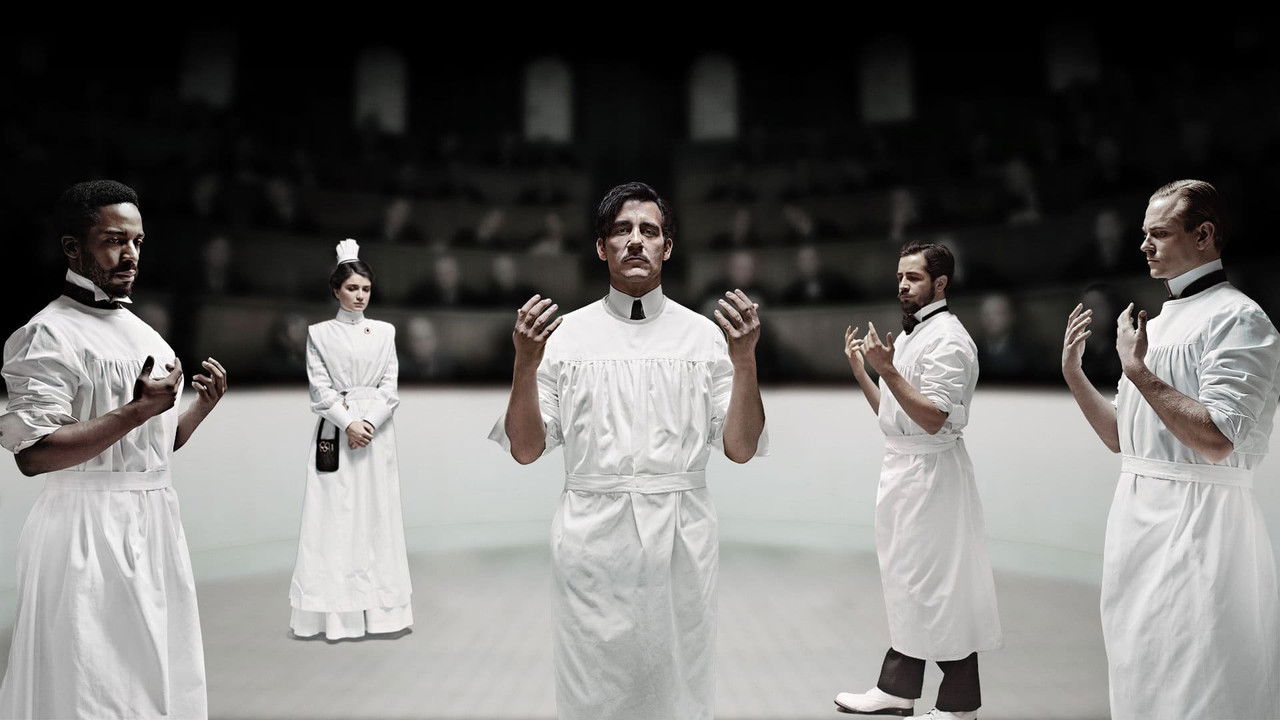
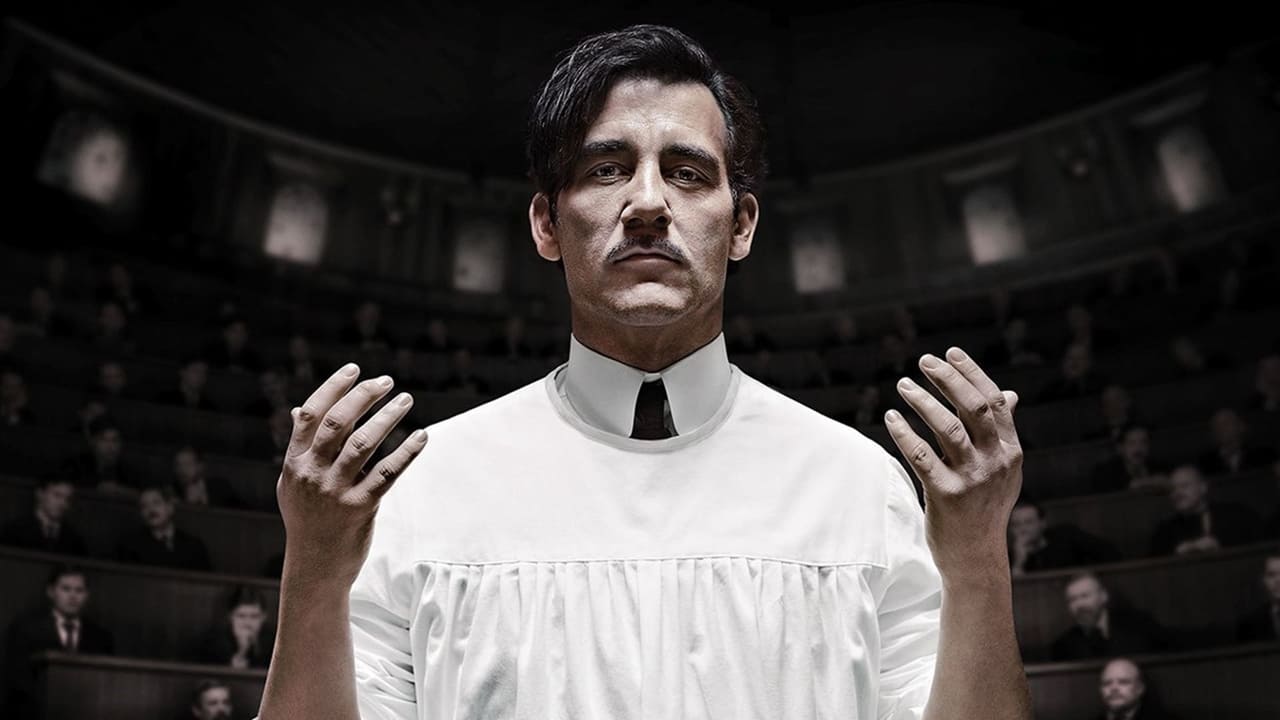
The show is set in 1900, at a fictionalized version of the Knickerbocker Hospital in New York. Clive Owen plays Dr. John Thackery, the brilliant chief of surgery who injects cocaine between cases and disappears into an opium den at night. André Holland plays Dr. Algernon Edwards, a Black surgeon with elite training and a Harvard pedigree, hired onto the staff and then made unwelcome on it, who ends up building a secret clinic in the hospital basement for the patients the front of the building refuses to serve. The series frames the hospital as a place of astonishingly high mortality, before antibiotics, where surgery is pushed forward at the boundary of medicine, morality, and race.
Those two men are not invented out of nothing. Thackery is the Halsted lineage. Edwards carries the spirit of Daniel Hale Williams and the credentialed barrier-breaking of Louis T. Wright.
The show places them inside the same building and lets the building become an argument.
That is the genius of The Knick.
It is not a costume drama about old medicine.
It is an origin story for the room I work in.
Quick verdict
Watch The Knick if you want the rare medical drama that understands medicine as an institution, not merely a stage for genius.
It is not warm, easy, or broadly comforting. It is graphic, uneven at the edges, and sometimes pulled toward the shock instincts of the premium-cable era that produced it. It is also the only medical series I know that places the two true founding wounds of modern surgery in the same frame: the celebrated self-destruction of the gifted men who built the discipline, and the excluded brilliance the discipline forced underground.
That is why the score is 162 / 200, Masterclass tier.
Not because the show is flawless.
Because its central insight is that strong.
Most medical dramas ask whether the great doctor can save the patient.
The Knick asks who was allowed to become the great doctor, who paid for the experiment, and what kind of room the profession built around the answer.
Two prices
Here is the argument.
Modern surgery was founded at a price, and The Knick pays attention to two prices at once.
One is the price the discipline is willing to remember: the addiction, suffering, obsession, and self-destruction of the brilliant men who built it. That story flatters us because it turns damage into tragedy. The great man suffered. The great man produced. The great man paid with himself.
The other price is the one the discipline prefers to forget: the brilliance it locked out, the surgery it refused to see, the surgeons it sent to the basement.
Thackery is the first price.
Edwards is the second.
The show is not subtle about this, and it does not need to be. The white addict operates upstairs in the theater, in front of the institution, forgiven because his genius is useful. The Black master operates downstairs in secret, serving the people the same institution has decided are not part of its moral public.
The addict is protected.
The excluded surgeon is hidden.
That is not a subplot.
That is the floor plan.
And the floor plan is the thesis.
Thackery is Halsted, and the addiction is not separate from the genius
Dr. John Thackery is largely William Stewart Halsted, and the resemblance goes deeper than cocaine.
Halsted's work with cocaine helped establish regional anesthesia. He and others experimented with cocaine as a local anesthetic, including through self-experimentation and peer experimentation; the tool that could block pain also entered the bodies of the doctors testing it. In Halsted's case, cocaine dependence was followed by morphine dependence.
A weaker show would treat that addiction as a tragic flaw attached to the genius, as if the two lived in separate rooms.
The Knick is smarter.
It understands that Thackery's addiction and Thackery's brilliance are expressions of the same nervous system. The appetite that makes him push the operation one step farther is the appetite that makes him put the needle into his own body. The same refusal of ordinary limits produces the breakthrough and the wreckage.
That is why the show feels different from ordinary antihero television. It is not merely asking whether a damaged man can do good work. It is asking whether a profession can inherit the work without inheriting the damage that produced it.
Surgery has been trying to answer that question for more than a century.
Halsted also gave us the rubber glove. The story is almost too strange to be symbolic, which is usually how you know something is true. Caroline Hampton, a scrub nurse at Johns Hopkins, developed dermatitis from the chemicals used in surgical antisepsis. Halsted had thin rubber gloves made to protect her hands; he later married her. The aseptic benefit, the reason gloves became unthinkable to operate without, followed the original protective gesture. Rubber gloves became standard in surgery in the years after, once Joseph Bloodgood and others began routinely wearing them for aseptic purposes.
The ordinary object on my hands began as protection for one woman's skin and became one of the central instruments of sterile technique.
That is how surgical history often works.
A personal problem becomes a standard. An accident becomes doctrine. A gesture becomes a system.
Halsted's radical mastectomy became another doctrine. For much of the twentieth century, it defined the surgical response to breast cancer: wider, deeper, more aggressive, until decades of evidence forced surgery to unlearn what surgical confidence had made too large. His training model became another doctrine: the resident as a person remade by proximity to exhaustion, hierarchy, repetition, and the operating room.
That last inheritance is the one I know in my body.
The residency he built is still in my bones
The Halstedian residency is not dead history.
It is the water American surgeons still swim in.
The long hours. The total identification with the work. The idea that a life must be narrowed around the hospital before the hands can be trusted. The expectation that the resident absorbs humiliation, sleep loss, uncertainty, fear, and moral pressure without letting the room see any of it.
The hierarchy that can educate and deform in the same motion.
I trained inside a version of that inheritance.
Every surgeon I know did.
The language has changed. Duty-hour rules exist now. Wellness exists as a word administrators can say without irony. Programs talk about supervision, graduated autonomy, burnout, professionalism, feedback, and psychological safety. Some of that is real progress. Some of it is theater. Most of it sits on bones that are still Halsted's.
Surgical training still asks a person to become competent by living inside the pressure long enough that the pressure becomes part of the person.
That is why The Knick is uncomfortable to watch as a surgeon. The show does not have to exaggerate the cruelty of apprenticeship. It only has to film the dynamic clearly: the young surgeon's hunger for approval, the attending's ability to grant or withhold identity, the way a whole self can shrink around one man's judgment at the table.
The operating room is not only a workplace.
It is a social order.
The Knick understands that the scalpel is never the only instrument in the room.
So is hierarchy. So is shame. So is admiration. So is fear. So is the desperate wish to be the kind of person who belongs there.
That is why the show's best medical insight is not about anatomy.
It is about inheritance.
Edwards is Williams and Wright, and exclusion is the other founding wound
If Thackery carries Halsted, Edwards carries two histories.
The credential profile belongs partly to Louis T. Wright. Wright graduated from Harvard Medical School and went on to serve at Harlem Hospital from 1919 to 1952, becoming a major surgeon and civil-rights figure; the American College of Surgeons describes him as a trailblazer for the rights of African American medical personnel.
But the deeper spirit is Daniel Hale Williams.
Williams graduated from Chicago Medical College in 1883, the institution that became part of Northwestern's medical lineage. He founded Provident Hospital in Chicago in 1891, widely recognized as the first interracial hospital in the United States, and in 1893 performed the famous pericardial repair on James Cornish after a stab wound to the chest.
That history matters to me more than I can make objective.
Williams came through the same institutional lineage that trained me. A Black surgeon who helped open the future of cardiac surgery had to build a place to stand before the profession would let him fully stand inside it.
The history is sometimes told too simply, so the precision matters. Williams should not be flattened into a slogan about "firsts." The history of early cardiac and pericardial surgery is more complicated than that. But the point for The Knick is not who gets the cleanest historical trophy.
The point is where Williams had to operate.
The man whose surgery became central to American medical memory performed it in a hospital he had to help found because the hospitals that already existed would not admit Black physicians and Black nurses on equal terms.
That is Edwards's basement.
The basement clinic is fictional.
The truth underneath it is not.
The brilliance was real. The exclusion was real. The basement is what happens when the profession wants the work but not the worker, the result but not the person, the genius but not the equality that genius demands.
The hospital is the moral architecture
Put Thackery and Edwards in the same building and the show becomes legible.
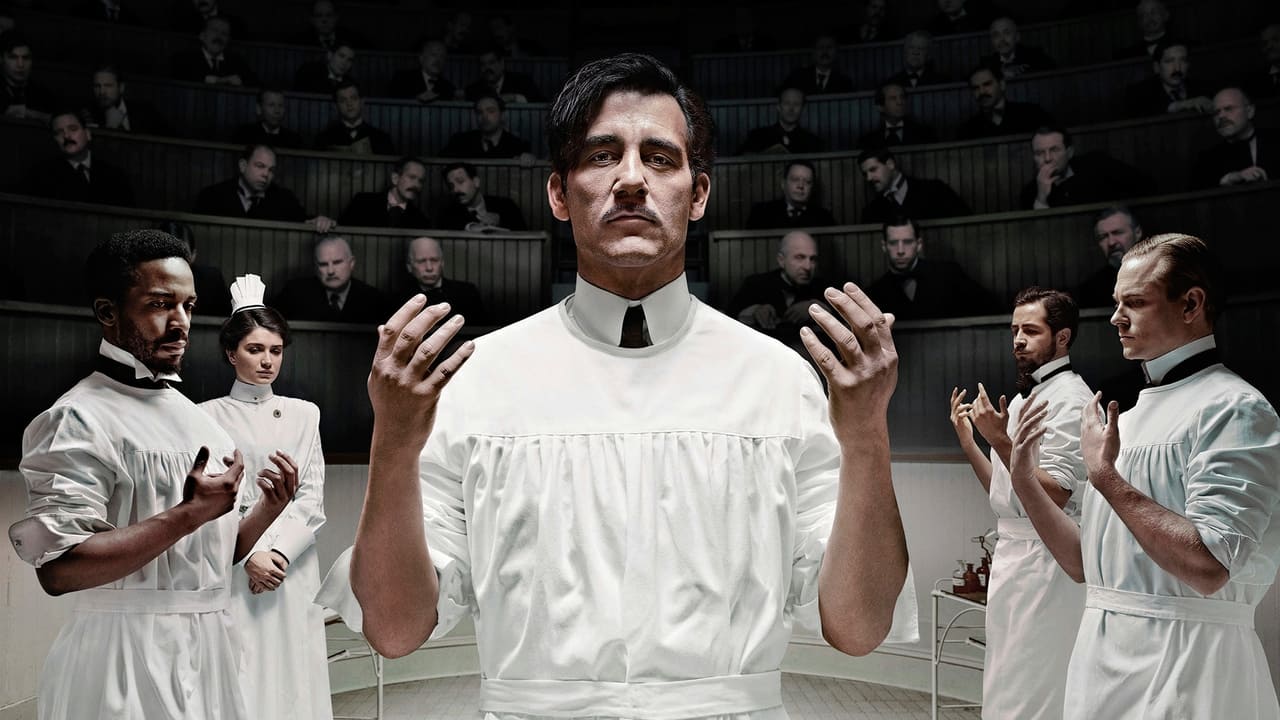
The addict operates upstairs. The operating theater is literal theater: raked seats, observers, applause, reputation, performance, the public manufacture of surgical authority. He is watched because the institution believes his genius belongs in public.
The Black surgeon operates downstairs. No gallery. No sanctioned audience. No institutional blessing. He cuts because patients need him and because the room upstairs will not let him be fully seen.
The architecture is the argument.
The Knick does not need a speech explaining the racism of medicine in 1900. It assigns racism a floor plan. It puts celebrated addiction in the light and punished excellence in the dark, then lets you notice how efficiently the building protects the arrangement.
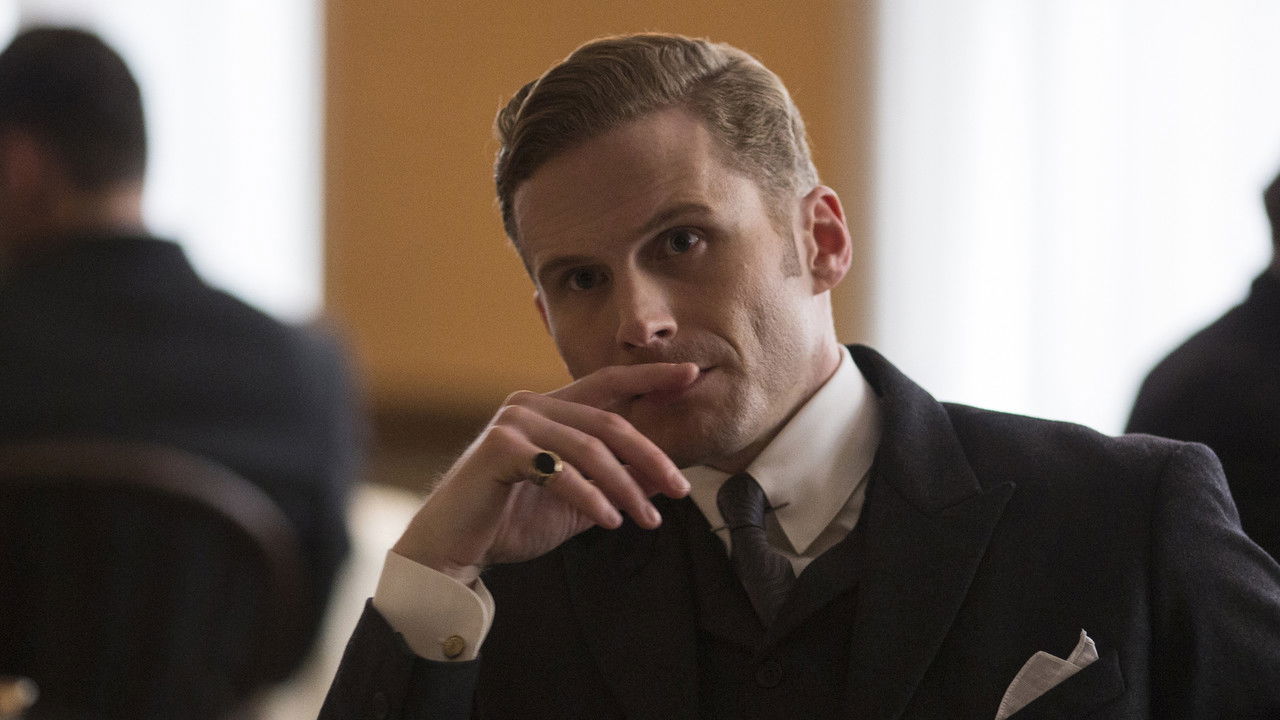
Neither man is simplified. Thackery is not merely a villain. His appetite produces real advances and real harm. Edwards is not merely a symbol of virtue. He is proud, guarded, brilliant, wounded, sexual, angry, sometimes self-defeating, and fully alive as a character. The show is strongest because it refuses purity.
Its moral clarity comes from structure, not from flattening the people inside it.
That is how institutions work in real life. They rarely announce themselves as villains. They organize rooms, titles, permissions, access, credentialing, credit, and punishment. They decide who gets to operate in the theater and who has to build a clinic below it.
Then everyone calls the arrangement natural.
Prestige television often mistakes moral seriousness for speech. The Knick knows better.
It lets the building talk.
The floor plan is the thesis.
The surgery is real, which is rarer than it sounds
I watch medical television the way pilots watch aviation films.
Some part of me is always auditing the procedure.
Most medical dramas fail that audit almost immediately. The anatomy is wrong, the hands are wrong, the urgency is wrong, the conversation is wrong, or the patient becomes a prop for a speech the disease would never allow.
The Knick mostly passes.
Its failures are usually failures of melodrama, not medicine.
The procedures are period-appropriate and appropriately horrifying. The series opens with a failed operation for placenta previa, a catastrophe of hemorrhage that surgeons of 1900 could not reliably solve. The show stages early blood transfusion before blood typing made transfusion safe, hernia repair in the Halsted lineage, infection before antibiotics, anesthesia as an evolving and dangerous tool, and the slow, bloody process by which an operation moves from impossible to survivable.
It is honest about the central horror of surgical progress:
Surgery got better by failing on patients until it failed less.
That sentence is brutal because it is true. The learning curve was not abstract. It was paid in human bodies, often by people who had little power to refuse being part of it. The show does not congratulate itself for knowing that. It simply builds the fact into the room.
The operating theater is filmed as spectacle because it was spectacle. Surgery was performance, research, ego, risk, violence, and public proof of competence all at once. The gallery is gone now, at least in that form, but the audience never really left.
In modern training, the audience is the attending, the resident, the consultant, the nurse who knows whether your hands are calm, the silent internal witness asking whether you are the person you claim to be.
The Knick knows that feeling.
It knows that surgery is not only what happens to the patient.
It is also what happens to everyone watching the person holding the knife.
It does not deny medical progress. It denies medical innocence.
Soderbergh makes the past feel unfinished
The craft is not decoration.
The craft is part of the thesis.
Steven Soderbergh directed the series. He also functioned with the kind of single-author control more common to film than to television, handling much of the cinematography and editing himself under his usual pseudonyms. The series was created by Jack Amiel and Michael Begler, with Cliff Martinez composing the score.
You can feel one nervous system behind the camera.
The images are handheld, available-light, restless, clinical. The camera prowls the operating room like another person in the hierarchy. It does not turn the past into sepia. It makes 1900 feel immediate, sweaty, electric, contaminated by the present.
Then Cliff Martinez's score does the rest.
The synthesizers should not work over gaslight, horse carriages, and starched collars.
They work because they refuse museum distance.
The music tells you this is not safely over. The addiction, the hierarchy, the excluded brilliance, the basement and the theater, the beauty and the brutality are not antique. They are the past still vibrating under the floor.
That is why the anachronism is right.
A period-appropriate score would have let the viewer file the show away as history.
Martinez will not let you do that.
The music keeps insisting that the room is still connected to ours.
The Knick is anti-nostalgia
Most period dramas offer the viewer a bargain: look how beautifully different the past was.
The Knick refuses.
Its past is not beautiful because it is distant. It is frightening because it is near. The show does not ask us to congratulate ourselves for having antibiotics, blood typing, imaging, duty-hour rules, formal credentialing, and modern antisepsis. It asks what those advances did and did not cure.
Antibiotics did not abolish hierarchy.
Blood typing did not abolish arrogance.
Sterile technique did not abolish exclusion.
Residency reform did not abolish the old romance of exhaustion.
Modern medicine is better. Of course it is. I would rather be operated on now than in 1900. That is not the argument.
The argument is that progress can be real and incomplete at the same time.
A profession can save more patients and still preserve old permissions. It can become cleaner without becoming innocent. It can wash its hands and still carry what those hands were trained to do, what they were allowed to do, and who was kept from learning to do it.
That is why The Knick has such unusual force.
It does not deny medical progress.
It denies medical innocence.
The honest limits
I love this show, and a credible review has to name what it is not.
It is not broadly educational in the way a viewer might expect from its density. It teaches one subject deeply: the birth of modern surgery, the social history of American medicine, and the moral architecture of the hospital. That is real educational value, but it is narrow. It is not a broad medical curriculum, not a transferable clinical primer, and not a general history of health care.
The melodrama also wobbles. At its best, The Knick is as sharp as anything in prestige television. At its weakest, it reaches for shock with the instincts of the premium-cable era that produced it. Some subplots feel less like necessary extensions of the thesis than like attempts to keep the edges hot. The second season is more uneven than the first.
Those flaws matter.
They are why the Craft and Quality score is high but not elite.
They are also not the reason to remember the show.
The reason to remember it is that no other medical drama has understood this founding contradiction so cleanly: the room was built by people we mythologize, people we excused, people we excluded, people we harmed, people we still quote, people we still owe, and people we still have not fully admitted into the story.
Where The Knick sits in the medical-drama canon
Against TVI's catalog, The Knick sits beside The Pitt as the other indispensable modern medical drama.
The Pitt shows emergency medicine as it feels now: simultaneous story management inside a room that is always too full, with attention as the scarcest resource in the building.
The Knick shows surgery at the violent, brilliant, shameful moment of becoming.
One is the exhausted present.
The other is the contaminated origin.
That is why they belong next to each other. They are not doing the same job. The Pitt is procedural reality under system strain. The Knick is historical consciousness under anesthesia that keeps wearing off.
House is the smarter diagnostic puzzle. ER is the genre parent. The Pitt is the truer room. The Knick is the origin wound.
That is its canon claim.
It is not the best medical drama because it is the most accurate in every moment.
It is essential because it understands that medicine is not only knowledge, compassion, and technique. It is also permission, exclusion, apprenticeship, hierarchy, and memory.
Prestige television is at its best when it makes an institution legible as a soul.
The Knick does that for surgery.
Why a surgeon should say this out loud
The credential matters here, but not because a surgeon's opinion is worth more than a critic's.
A critic may see things a surgeon misses. Craft criticism matters. Television is not a board exam.
But the thing being depicted is a thing I have stood inside, and the gap between depiction and room is a gap I can measure.
When The Knick shows the hunger of the young surgeon, I recognize it.
When it shows the attending's power to confer identity, I recognize it.
When it shows the operating room as theater, I recognize it.
When it shows a patient becoming the cost of knowledge, I recognize the part of surgical history we would rather rename as progress and move past.
And when Edwards builds a clinic in the basement because the sanctioned room will not fully admit him, I recognize something medicine still has not finished answering.
Who gets access to the room?
Who gets credit for the work?
Who gets forgiven for damage because the institution finds them useful?
Who gets called difficult for demanding the dignity genius should have made undeniable?
Those are not antique questions.
They are still in the walls.
That is why The Knick feels less like a period drama than a séance.
It calls the dead into the operating room and asks the living what we have actually inherited.
Verdict: what a surgeon sees
When I watch The Knick, I do not see a costume drama about old medicine.
I see the origin of the room I work in.
The gloves came through Halsted. The residency came through Halsted. The radical operation came through Halsted. The belief that surgery makes surgeons through pressure came through Halsted too.
And across the same historical field, Daniel Hale Williams had to help build a hospital in order to do the kind of work the profession should have been proud to claim.
The show matters because it puts those histories in one building.
It puts the addict upstairs and the excluded surgeon downstairs. It puts genius in the light and genius in the dark. It lets us see that both are part of the same founding, and that modern surgery inherits both whether it wants to or not.
That is the part I cannot watch from a distance.
The history is not metaphor to me. It is not costume. It is not atmosphere.
It is my address.
The Knick is the only medical drama that has made me feel that clearly. It understands that the operating room is not only where surgery happens.
It is where surgery remembers what it came from.
The credibility layer for what to watch
One scored, argued editorial a month, plus the next TVI Essential. No studio money. No spam.
TVI Score Breakdown
| Dimension | Weight | Score |
|---|---|---|
| Cognitive Stimulation | 40% | 44 / 50 |
| Educational Value | 35% | 35 / 50 |
| Craft & Quality | 25% | 43 / 50 |
| TVI Score | 162 / 200 · Masterclass |
Formula: round((C × 0.40 + E × 0.35 + Q × 0.25) × 4) = 162. The three weighted dimensions do not sum to the total; the formula scales them.
Disclaimer: TVI's score is a content rating, not a measurement of intelligence.
Common questions
What is The Knick's IQ Score?
The Knick scores 162 of 200 on the TVI rubric, Masterclass tier, with Cognitive Stimulation 44 of 50, Educational Value 35 of 50, and Craft and Quality 43 of 50.
Who are the characters in The Knick based on?
Dr. John Thackery is largely based on William Stewart Halsted, the cocaine-addicted pioneer of American surgery. Dr. Algernon Edwards is a composite: the surgical-pioneer spirit of Daniel Hale Williams and the Harvard credential profile of Louis T. Wright.
Is The Knick medically accurate?
Unusually so. As judged by a surgeon, the period procedures, the operating-theater culture, and the brutal honesty about surgery's learning curve hold up. Its weaker moments are melodrama, not medicine.
For parents: the real age of access
The rating is TV-MA, and the operating theater is the reason: period surgery without modern anesthesia or asepsis, shown with archival frankness, alongside addiction and the racism of the era depicted without softening. The real age of access is later teens. For a student drawn to medicine or history it rewards co-viewing, because the show's hardest scenes are also its most truthful ones, and the conversation it hands you is about where progress actually comes from and who paid for it.
Series: The Knick (2014 to 2015), created by Jack Amiel and Michael Begler. All twenty episodes directed by Steven Soderbergh, who shot the series as Peter Andrews and edited it as Mary Ann Bernard. With Clive Owen, Andre Holland, and a score by Cliff Martinez. Originally aired on Cinemax. Stills: The Knick (2014 to 2015), Cinemax, used for review. Reviewed against TVI methodology by Jordan Robinson, MD, MPH, a board-certified general surgeon. Published at tvintelligentsia.com/reviews/the-knick. The IQ Score is a content rating, not an intelligence measurement.