True IMAX 70mm
Best presentation
Choose it with a centered seat far enough back to hold the whole frame. Sound is the largest gain.
Every format the film is playing in, what each one actually shows you, and the two-screening verdict
True IMAX 70mm gives The Odyssey its full frame, physical sound, and greatest scale. But it does not contain a more complete story. If the only IMAX seats are poor, choose a centered standard seat. Do not skip the film because 70mm sold out.
Choose it with a centered seat far enough back to hold the whole frame. Sound is the largest gain.
You keep the full 1.43:1 image. Standard digital IMAX still gives you more height than a scope screen.
A good seat beats a bad premium one. The structure, performances, and meaning survive every format.
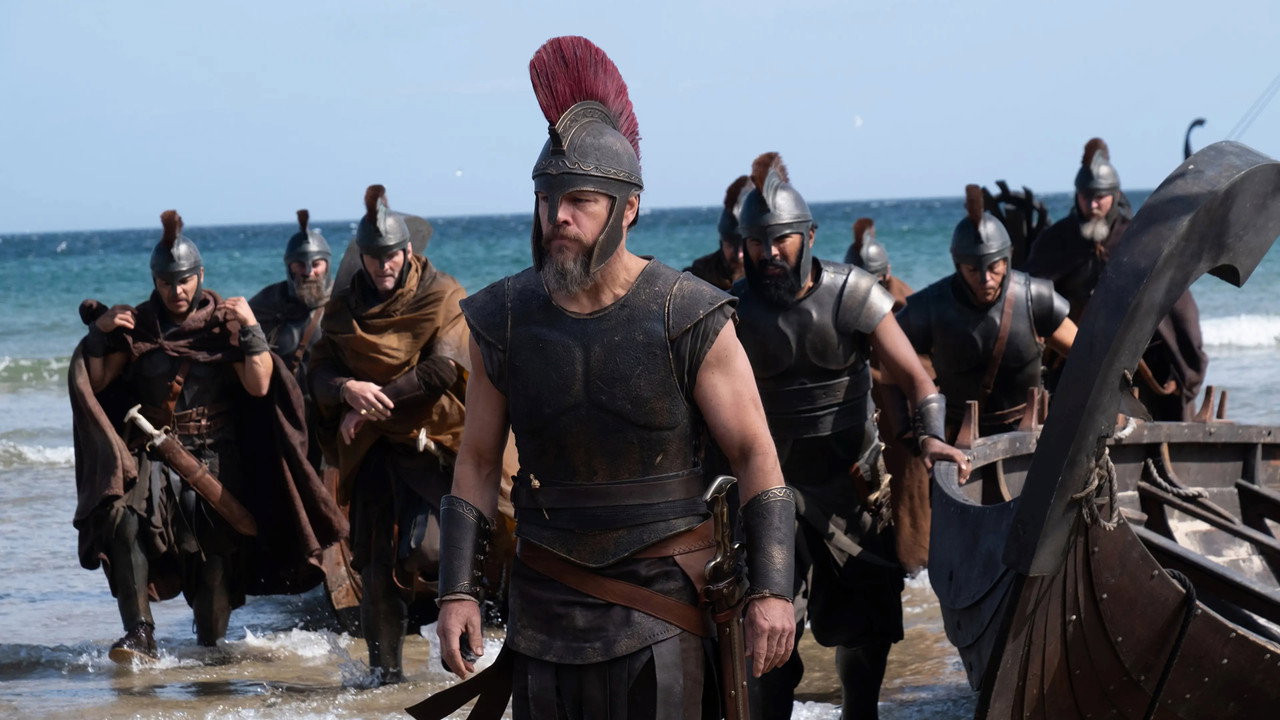
Every article about The Odyssey tells you to see it in IMAX. Almost none of them can tell you why, because almost nobody writing about the formats has watched the film in more than one of them.
We did it the slow way. We watched The Odyssey in a standard theater on opening week, on purpose, to set a baseline before the format changed. The second screening, on IMAX 70mm film, came two days later, with the same seven questions in hand. This page holds what a ticket buyer needs: what the formats actually are, what each one shows you, how to avoid paying IMAX prices for a screen that is not the thing, and what changed when we saw the same film in both rooms.
Universal's own format guide states it plainly: every frame of The Odyssey was shot with IMAX film cameras. No feature has ever been made that way before. The production ran roughly two million feet of 70mm film through its cameras, per Nolan's interview in Empire, and it debuted a new camera to do it: the Keighley, IMAX's carbon-fiber 15-perf film camera, built quieter than any IMAX camera before it so Nolan could shoot dialogue scenes on it. Panavision built custom large-format lenses for cinematographer Hoyte van Hoytema.
Nolan has been direct about the intended room. In an Associated Press interview on his favorite formats, republished for this release, he called IMAX 70mm film the best possible presentation, describing the format's depth as "a feeling of 3D without the glasses," and he offered seating advice for both screen shapes. He also said the framing was composed to the center of the tall frame, which matters for every other format on this page: narrower presentations crop the top and bottom of the image, never the story-critical action.
| Format | Ratio | What it is |
|---|---|---|
| IMAX 70mm film | 1.43:1 | The full frame, projected from 15-perf film. 41 theaters worldwide at release. The version the film was composed for. |
| IMAX dual laser | 1.43:1 | Digital, but the full-height frame. The closest match when film is out of reach. |
| IMAX digital | 1.90:1 | The common multiplex IMAX. Still taller than any scope screen; crops the full frame's top and bottom. |
| 70mm film (5-perf) | 2.20:1 | Classic wide-gauge film at repertory houses. Film texture, wide frame, no tall image. |
| Dolby Cinema | 2.39:1 or 1.85:1 | Exceptional contrast and sound. The ratio depends on the auditorium's native screen shape, so ask before you book. |
| 35mm film | 2.39:1 | The classic scope print, at rep houses that still project it. |
| Standard digital | 2.39:1 | Every other screen. The story survives here by design. |
One number worth understanding: Nolan has put the resolving power of the 15-perf film frame at roughly 18K, and IMAX itself rates each frame of this film at 14K to 16K per color record, against the 4K of an IMAX laser projector. You will not consciously count pixels either way. What the film frame buys, by every account including Nolan's, is depth and density rather than sharpness you can point at.

Most screens labeled IMAX are digital. For this release the real thing is easy to confirm if you know the tells.
It may well be. IMAX says some 70mm houses are sold out weeks into the run, flagship city theaters have been selling out shows within minutes, and exhibitors have added early-morning and late-night screenings to keep up. Resale listings have climbed into the hundreds of dollars, and ticket scams are circulating. Buy from the theater or a real ticketing platform, never from a stranger with a screenshot.
If film is out of reach, work down the ladder rather than across it:
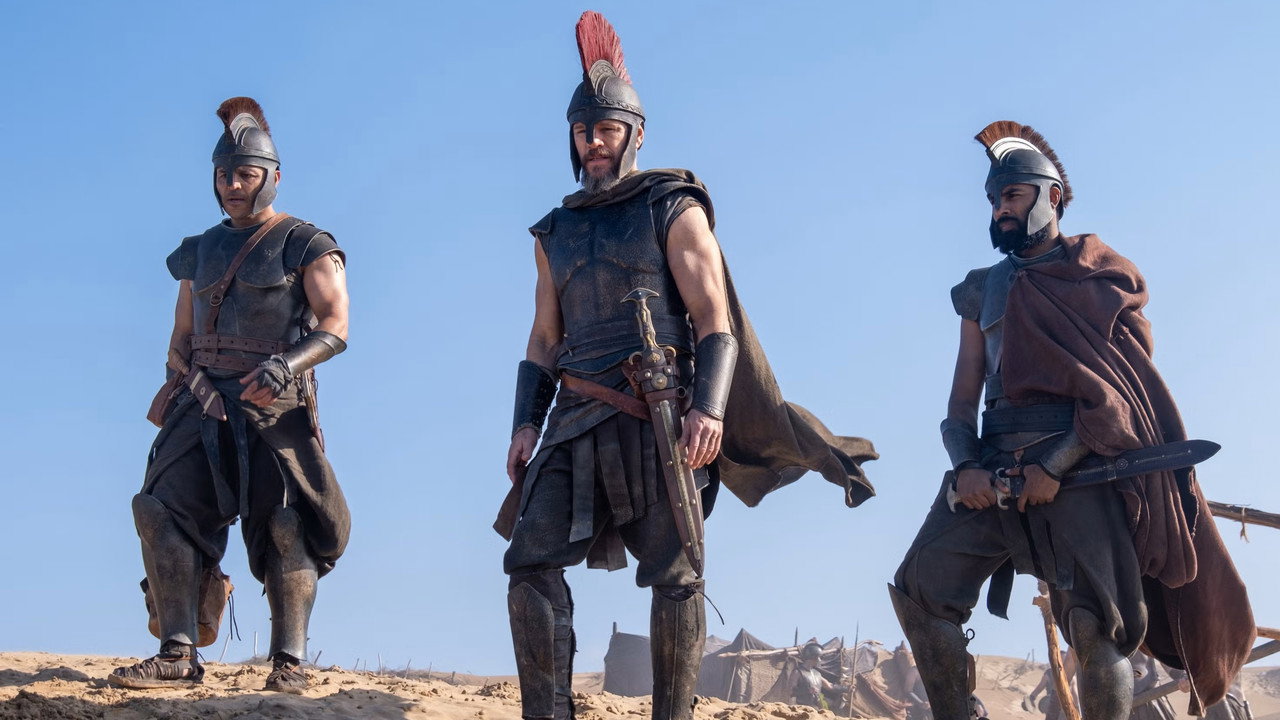
Nashville has one of the 25 American theaters with the real thing. Regal Opry Mills is showing The Odyssey on IMAX 70mm film, in the same room that ran Oppenheimer on film in 2023. The Belcourt is running a 35mm print, which is its own kind of right answer. And if Opry Mills is sold out, the Tennessee Aquarium's IMAX theater in Chattanooga, which reinstalled its film projector for this release, is running the full 1.43:1 presentation through August 13.

We watched The Odyssey first in a standard digital theater on July 16, deliberately, and recorded the reaction before the format comparison existed. Two things survived the smaller room and will not depend on your screen.
The immersion is real at any size. The film put us inside the story on an ordinary scope screen, and the Cyclops read as genuine terror without the tall frame doing any of the work. And the sound design rewards attention anywhere: there is a moment late in the film where a rising musical phrase resolves onto an action on screen with a precision you will hear in any room with a competent mix.
Just as telling is what we did not record: no legibility problems, no dark-scene mush, no lost faces. What a standard screen delivers is most of the film. What it cannot deliver is the frame the film was composed in. The second screening settled the difference: mostly magnitude, with sound as the real premium.
Here was the method, recorded before the second viewing so the result could not be retrofitted. Same film, same week, two rooms. The baseline was recorded first. We entered the IMAX 70mm screening with seven questions in hand:
That last question is the control. Whatever lands the same in both rooms belongs to the film, not the format, and you will get it on any screen. A format guide that cannot name what you do not need IMAX for is an advertisement.
What the film frame buys is depth and density, not a sharpness you can point at.
The verdict, from the July 18 IMAX 70mm screening. The honest finding is the one we said we would print if we found it: the standard presentation carries most of what this film does. Watched in both rooms in the same week, The Odyssey was a masterpiece twice, and the film, not the format, is what carried both nights.
Against the seven questions. The moments that gain from the format are the ones built on sound; the hall makes the sea, the bow, and the score physically enormous, and that is the real premium. But most of that low-end weight was already present in the standard room. Faces do not become more legible at scale; from a middling seat they become harder to hold, because at IMAX size a poorly placed seat means you are no longer seeing the whole frame at once. Scale immerses from the right seat and creates distance from the wrong one. Nothing in the film reads morally different at life size. And the control question decided it: the structure, the performances, and the meaning landed identically in both rooms. Those belong to the film, and you will get them on any screen.
The practical guidance follows directly. Seat position governs this experience more than format does, which is backwards from what the premium promises; a center seat far enough back to hold the full frame matters more than the projection badge on the door. If you can pair true IMAX 70mm with a good seat, the sound alone justifies it once. If the choice is a bad IMAX seat or a good standard one, take the good seat. And do not skip this film because the format run sold out. One caveat we owe you: our IMAX viewing was also our second viewing, and a second pass always sits differently; we have weighed that, and the finding holds.
The film was composed for the IMAX frame: it is the first feature shot entirely with IMAX film cameras, and Nolan has called the 15-perf film presentation the best way to see it. We watched it in a standard theater and in IMAX 70mm in the same week. The honest verdict: the film itself carries in both rooms; sound is the real IMAX gain, and seat position matters more than format. Full verdict on this page.
IMAX 70mm is 15-perf film projection showing the full 1.43:1 frame, and IMAX rates the film frame's resolving power far above any digital projector. Most multiplex IMAX screens are digital and show a 1.90:1 image, which crops the top and bottom of the full frame. Dual-laser digital IMAX screens can show the full 1.43:1 ratio and are the closest digital match.
At release, 41 theaters worldwide are showing The Odyssey on IMAX 70mm film, 25 of them in the United States and 9 in Canada, per IMAX's participating-theater list. Real 70mm shows are ticketed under labels like The IMAX 70mm Experience; a plain IMAX listing at a multiplex is digital.
IMAX 70mm film and dual-laser IMAX show the full 1.43:1 frame. Standard digital IMAX shows 1.90:1. Five-perf 70mm shows 2.20:1. 35mm and standard digital show 2.39:1. Dolby Cinema shows either 2.39:1 or 1.85:1 depending on the auditorium's native screen. Nolan has said the framing is composed to the center, so no format loses story-critical action.
A dual-laser IMAX screen showing 1.43:1 is the closest match to the film version. Standard 1.90:1 digital IMAX still gives you a taller frame than any scope screen. The story survives every format by design. Our two-screening comparison found that the structure, performances, and meaning carry in standard presentation; sound and physical scale are the real IMAX gains.
IMAX 15-perf film projectors have not been manufactured at scale in decades, so the footprint cannot simply be expanded. IMAX retrofitted and rebuilt projectors to reach 41 theaters for this release, more than Oppenheimer had, per IMAX statements reported by Variety.
The film runs just under three hours and is rated R for violence and some language. It opened in theaters July 17, 2026.
Format facts on this page were checked July 18, 2026 against Universal's official format guide, IMAX's participating-theater materials, Christopher Nolan's interview with the Associated Press, and reporting in Variety, Forbes, Deadline, and CBS News. The comparison reflects the author's standard-format viewing on July 16 and IMAX 70mm viewing on July 18. TVI has no relationship with IMAX, Universal, or any theater chain.
We watched The Odyssey in both formats and scored it 183 / 200 on the published methodology. Future scored decisions and deep reads go to the list first.
Jordan Robinson, MD, MPH is the founder of TV Intelligentsia. He is a plastic surgery fellow at Vanderbilt University Medical Center and a U.S. Navy officer in the Individual Ready Reserve. He writes about film and television through the lens of medicine, military service, and decision-making under uncertainty. Views expressed are his own and do not reflect the official position of the U.S. Navy or the Department of Defense.
TV Intelligentsia is an independent credibility layer for what to watch. We score films and television on a public methodology grounded in cognitive science, developmental psychology, and media-effects research. Editorial scores are not for sale. Find us at tvintelligentsia.com.
Film: The Odyssey (2026), directed by Christopher Nolan, distributed by Universal Pictures, in theaters from July 17, 2026. Stills from The Odyssey (2026), Universal Pictures, used for commentary. This is a format guide, updated as the run changes; the two-screening comparison above was completed with the July 18 IMAX 70mm viewing, and the scored review is published separately at tvintelligentsia.com/reviews/the-odyssey. Published July 18, 2026 at tvintelligentsia.com/reviews/the-odyssey-imax.