The Slumber Party Massacre Knows You Are Watching
Becca Meshinsky on Amy Holden Jones's 1982 slasher, where the killer dresses like the Marlboro Man, the girls dress like athletes, and the movie keeps scrambling the signals that tell you who is supposed to be looking.
Contains spoilers, including the ending.
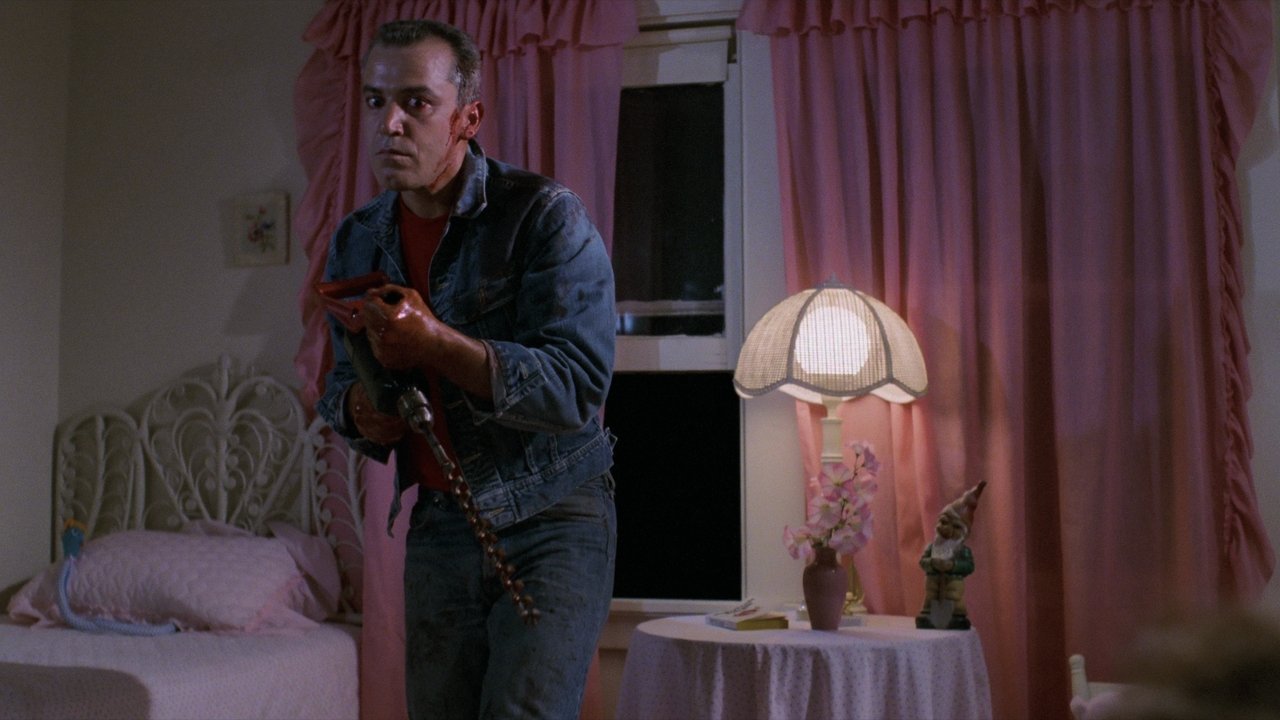
Becca Meshinsky reads Amy Holden Jones's 1982 slasher through its wardrobe. The killer, Russ Thorn, is the only man dressed in conventionally masculine clothes, workwear and denim and cowboy boots, an ordinary American masculinity rather than a monster's costume. The girls are dressed as athletes in jerseys and sportswear, the two teenage boys read as comparatively soft and preppy, and the first woman the boys lust after is a telephone repair worker in men's work clothes. The film keeps scrambling the visual signals that say who occupies the masculine position, and it puts the audience in the same seat as the man at the window.
Teenage girls stripping down at a sleepover, boys spying through windows, gratuitous nudity, and a killer whose weapon, a giant power drill, is so obviously phallic that it barely qualifies as subtext. The Slumber Party Massacre looks exactly like the kind of slasher film you would expect it to be. But there are moments when the movie seems aware of what it is doing, and that awareness makes it far more interesting than just another 80's B-movie slasher.
What stood out most was the film's treatment of the male gaze. Early on, two boys are seen spying on the girls through the window at a no-boys-allowed slumber party, essentially occupying the same position that the killer does when he stalks the girls. The parallel creates an uncomfortable equivalence between supposedly harmless adolescent voyeurism and the killer's predatory leering. The girls are reduced to bodies for watching without their knowledge. Whether the film intends this sophisticated critique of the male gaze is debatable, but it feels as though it is deliberately confronting the audience with its own voyeurism. Amy Holden Jones seems to say, if you want to look at these girls this way, then here you go, perverts!
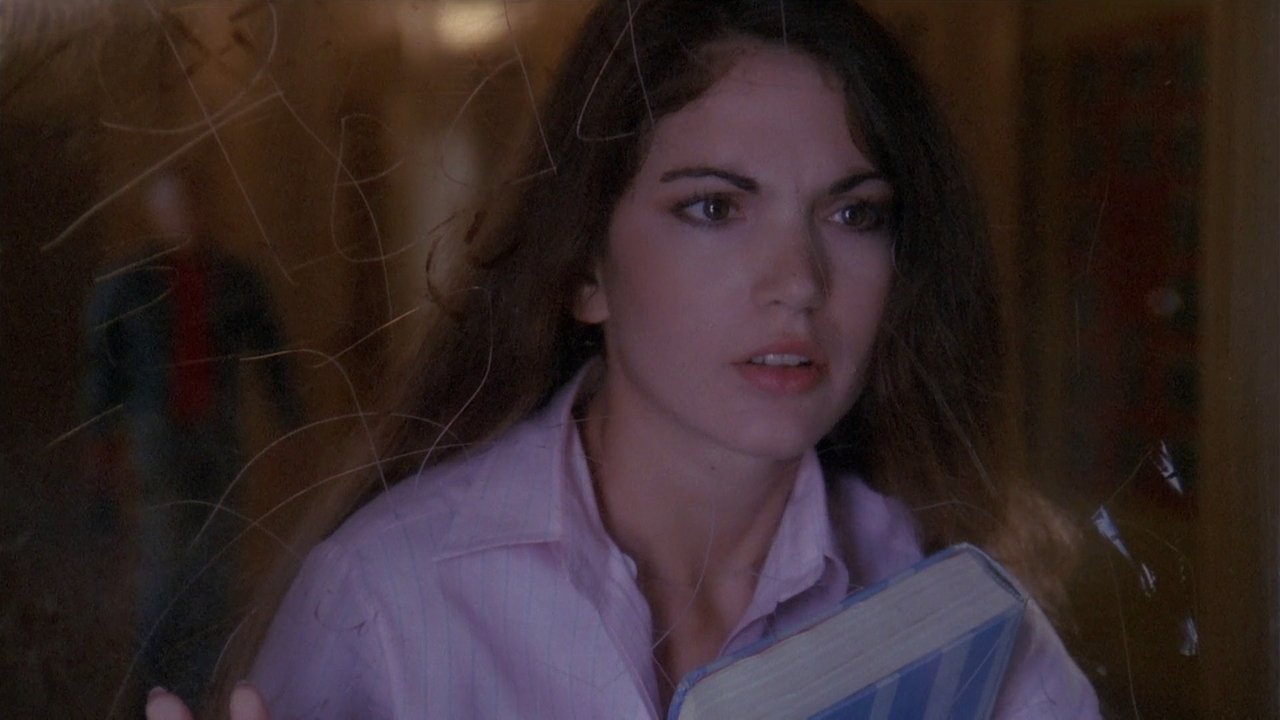
The discomfort is heightened by Jones' insistence that these girls are high-school girls. Rather than allowing the sexualization to operate as uncomplicated exploitation, their supposed age makes the viewer unusually conscious of the creepiness involved. It is difficult to tell whether this is intentional commentary or simply a particularly uncomfortable artifact of the exploitation genre, but the ambiguity itself becomes part of the experience of watching the film.
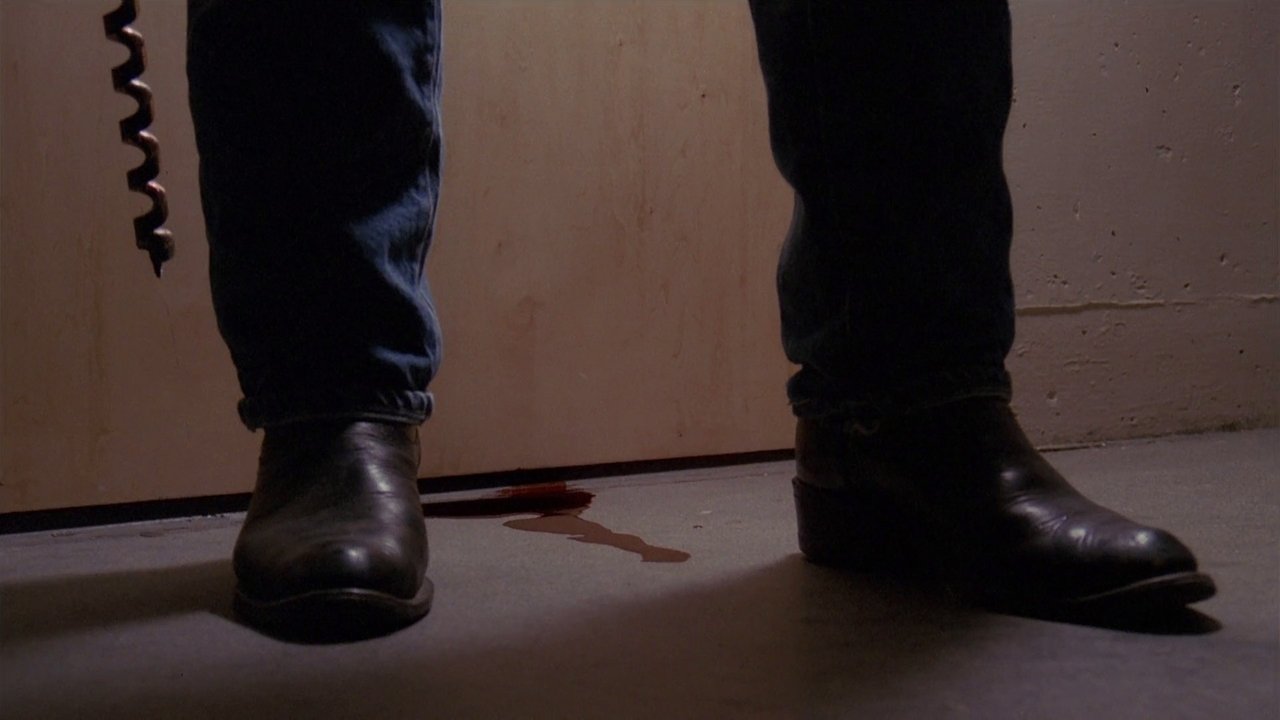
At the center of this film is Jones' treatment of gender and sexuality, which is fascinatingly communicated through wardrobe. The killer is one of the few men dressed in conventionally masculine clothing: workwear, denim, and cowboy boots. There is something almost archetypal about it, evoking the American masculinity of the Marlboro Man or John Wayne. And yet he doesn't look like a horror-movie monster. When he first appears, it is almost surprising that this fairly ordinary looking man is the killer. Aside from his unsettling expression, there is nothing outwardly monstrous about his appearance. His masculinity is recognizable and familiar rather than aberrant, which makes the fact that he becomes the movie's embodiment of violent male sexuality more interesting.
The two younger men, meanwhile, are presented very differently. Their clothing may simply have been fashionable in 1982, but to a contemporary eye there is something comparatively preppy and even effeminate about them. At times they seem more delicate than the girls. The girls are depicted as athletes and spend much of the movie dressed in sportswear (even their pajamas include an oversized basketball jersey and a Dodger's tee). This becomes especially noticeable when the film begins sorting out who is actually capable of protecting whom. The girls initially send the boys outside to investigate the danger, momentarily restoring a conventional gender arrangement. But the boys prove completely incapable of saving them. When they encounter danger themselves, they are arguably more squeamish and panicked than the girls. They are among the first to go, and ultimately, the women have to take matters into their own hands.
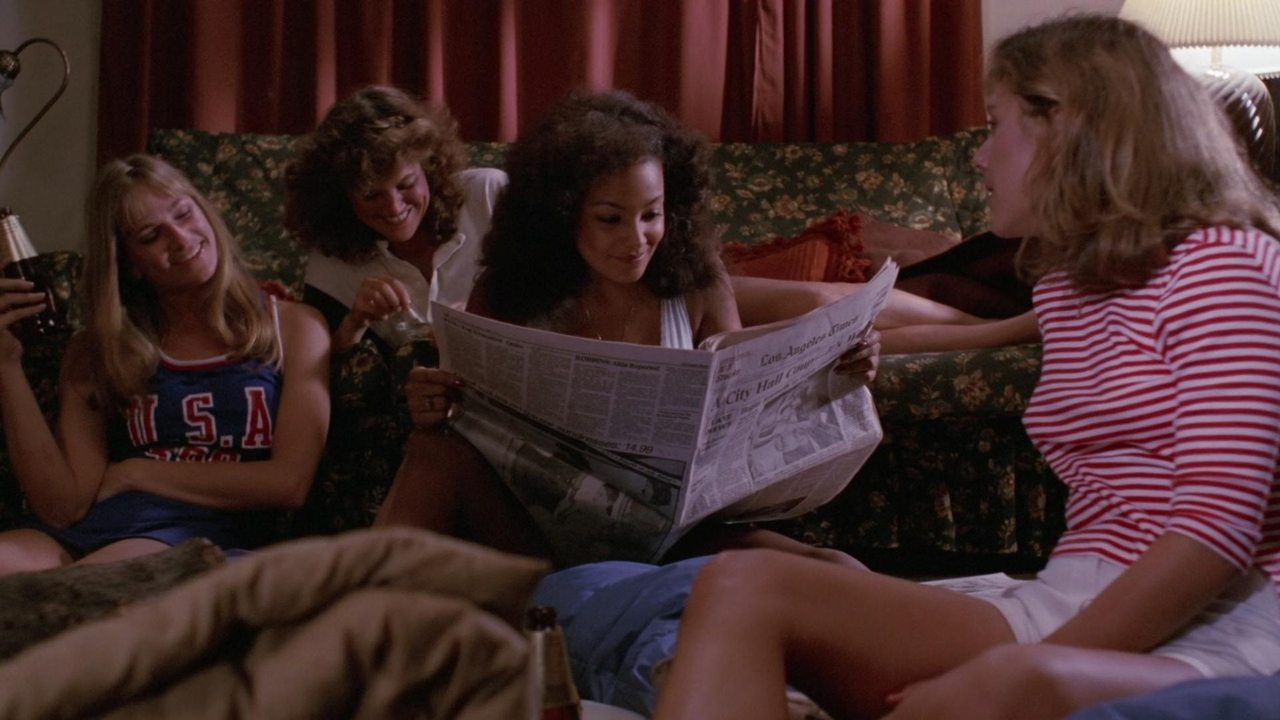
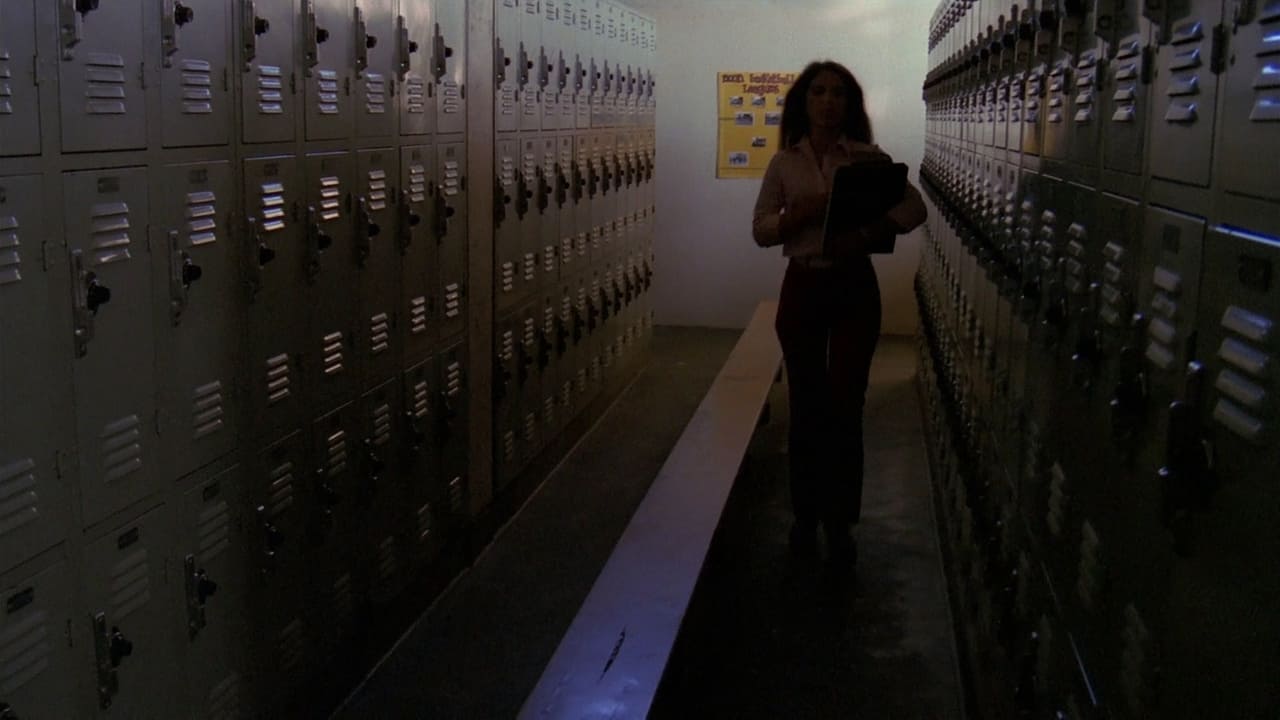
That reversal is first established at the beginning of the film when the boys are lusting after the telephone repair worker, a woman dressed in traditionally masculine work clothes and performing a traditionally masculine job. Later, when the boys lust after the girls through the window, the girls themselves are adorned in their aforementioned athleticwear. The movie therefore keeps scrambling the visual signals that are supposed to tell us who occupies the masculine or feminine position. The women are objects of heterosexual desire, but they are also athletes, workers, and ultimately their own protectors.
The women are objects of heterosexual desire, but they are also athletes, workers, and ultimately their own protectors.
Against all of this sits the killer and his drill. The phallic symbolism is impossible to miss, from the way the weapon is positioned in the movie's poster to the killer's explicitly sexual language (telling his victim that he loves her and that he knows she wants his drill). Whatever ambiguity remained disappears. His violence is framed as a grotesque version of heterosexual male desire: the drill becomes a phallus, penetration becomes murder, and his assertion that the woman secretly "wants it" turns sexual entitlement into literal violence, the most horrifying exaggeration of our ordinary heterosexual world.

The film's colors may contribute to this symbolism. The repeated use of primary colors, particularly red and blue, is conspicuous, although its meaning is less clear. It seems that the characters who are more sexually active or act more reckless are seen wearing red or they are dressed in a more exposed costume. I also can't help but notice those are the characters that go first. Might be nothing but I couldn't discount it.
The killer's red shirt beneath his denim particularly stands out. Whether the colors form a deliberate symbolic system or simply belong to the movie's visual vocabulary is difficult to say, but the starkness of the red against his blue workwear reinforces the almost cartoonishly masculine construction of his appearance.
Courtney, the younger sister of Valerie, complicates the movie's sexual imagery in another way. She is constantly suspended between being presented as a little girl and as someone trying to enter the sexual world of the older teenagers. She gets dressed up to impress them, tries to act older and braver than she is, and is surrounded by oddly sexual props and jokes. The Playgirl and the banana (what exactly was she doing with that?) juxtaposed against an enormous pinwheel lollipop, an almost comically obvious signifier of childhood. The contrast makes it difficult to know how we are supposed to see her. Is she a child playing at adulthood, or a young woman being sexualized by the film? Again, Slumber Party Massacre puts the viewer in an uncomfortable position where the categories refuse to stay cleanly separated.
There is also an unexpected amount of homoeroticism running underneath the movie's heterosexual voyeurism. The two boys in particular have moments of physical intimacy that almost seem to undermine their exaggerated enthusiasm for spying on the girls. Taken alongside the masculine presentation of many of the women and the comparative softness of the younger men, it contributes to a movie in which gender and sexuality are much less stable than the basic slasher setup would suggest.
Men look at women, but women look back.
Ultimately, Slumber Party Massacre is more compelling than it has any obvious right to be. And perhaps I'm not alone in thinking this. There is a particularly memorable scene in which Valerie cycles through an assortment of possible weapons on a basement toolbench before settling on a machete to dispatch the killer. The sequence immediately recalls Bruce Willis choosing among a bat, chainsaw, and ultimately a katana in Pulp Fiction. Given Quentin Tarantino's tendency to remix imagery from exploitation and genre cinema, it is difficult not to wonder whether he may also have been compelled and ultimately inspired by Jones' work.

It is cheap, sleazy, uneven, and frequently ridiculous, but there are enough peculiar choices lurking beneath the surface to make Slumber Party Massacre worth watching and thinking about. Maybe all of its commentary on voyeurism, masculinity, gender, and sexual violence is intentional. Maybe some of it is accidental. That uncertainty is part of what makes the movie interesting. It simultaneously indulges in the conventions of the slasher film and destabilizes them. Men look at women, but women look back. Women appear as sexual objects, but also occupy traditionally masculine roles. Men are supposed to protect them, but cannot. The ultimate symbol of aggressive masculinity is not their salvation but the thing they have to defeat themselves. The movie participates in the very fantasies it seems to be criticizing, and at its best makes those fantasies just uncomfortable enough that you start wondering what, exactly, you are being asked to enjoy.
The credibility layer for what to watch
One scored, argued editorial a month, plus the next TVI Essential. No paid placements. No spam.
Common questions
What is The Slumber Party Massacre about?
Amy Holden Jones's 1982 film, produced by Roger Corman's New World Pictures, follows a high-school slumber party interrupted by Russ Thorn, an escaped killer who attacks with a portable power drill.
Who wrote The Slumber Party Massacre?
The screenplay is credited to the novelist Rita Mae Brown, who wrote it as a send-up of the slasher form under earlier titles. Amy Holden Jones found that script, rewrote it substantially, and directed it. Jones has said the result is “a fundamentally feminist film, written by women, directed by a woman,” whose jokes and fears carry a woman’s sensibility. A common account holds that Brown wrote a parody and the production played it straight; Jones’s own account of her rewrite complicates that. How much of the satire survives into the film New World released is a live critical argument, and this essay is one position in it.
Does The Slumber Party Massacre have a TVI score?
Not yet. The film is not currently in the TV Intelligentsia catalog, so this essay carries no score. TVI does not publish a number before a rater has watched and scored the work under the current standard.
Is this essay a review with a score?
No. It is a design and craft essay about how the film uses costume, color, and point of view. It is an interpretation of the work, not a scored review.
Who is Becca Meshinsky?
Becca Meshinsky writes The Made World, TV Intelligentsia's design and craft column, and is an editorial and product stylist and art director based in Los Angeles. Her essays read films through costume, silhouette, color, and the built world of a production. They are interpretations of the work, not scored reviews, and they do not set or change a title's TVI score.
Film: The Slumber Party Massacre (1982), directed by Amy Holden Jones, written by Rita Mae Brown. New World Pictures. Essay by Becca Meshinsky for The Made World, TV Intelligentsia's design and craft column.