The Wild Robot and the World a Mother Makes
A robot sets out to raise a gosling. A fox, a flock, and a whole island get caught up in the work.

The Wild Robot scores 179/200 on TV Intelligentsia's published methodology, Masterclass, on a verified receipt, with an SEL score of 45 and a TVI Kids band of 6 to 12. Chris Sanders's adaptation of Peter Brown gives a stranded service robot one task she can finish, then lets raising an orphaned gosling become a life she does not want to leave, and a fox who warned her against caring end up needing her most.
Full spoilers follow.
Before Roz becomes anyone’s mother, she would settle for a satisfied customer. Stranded on a wild island, the service robot offers help to creatures who mostly wish she would go away. She can assist with grocery shopping and vacation planning. The animals would like to know whether she is going to kill them.
An orphaned gosling takes a different view. He follows her, makes noise, and interferes with the orderly completion of her tasks. Pinktail, a possum with children of her own, recognizes the symptoms. As far as the baby is concerned, Roz is his mother. When Roz explains that she has no programming for the job, Pinktail offers the comfort of experience: “No one does. We just make it up.” She does have a list. Feed him, teach him to swim, and get him flying before winter.
The fox who joins the enterprise has already tried to eat the baby. Fink introduces himself as a local goose expert, though his knowledge of geese turns out to be mostly culinary. He has plenty of advice for Roz, much of it convenient for Fink, and a firm conviction that getting attached to this little creature will only end badly. Nevertheless, he stays.
A family finds a language
Chris Sanders’s The Wild Robot lets a family grow out of this unpromising arrangement with wonderful good humor. Roz is an ingenious mimic, able to borrow the movements of the creatures around her; Brightbill turns her repertoire into entertainment, working his way through the animals until he requests a skunk. She would rather not. The machine who arrived looking for work has acquired someone who wants to play with her. He also needs a name more affectionate than “Gosling 0186,” and, when bedtime comes, something her considerable technical abilities have not yet supplied.
Fink proposes a story. A lonely gosling asks a star for a mother, and a beautiful robot sitting on its edge hears him. Roz interrupts: sound cannot travel through the vacuum of space. The fox is undeterred. She hears him through a different part of herself, one she does not yet know she has. He gives her a fall from the star to explain her arrival, and a love for the gosling to explain why she stays. Roz keeps trying to correct him. Brightbill has a question about how his mother came to him, and she is answering a physics question he has not asked.
It is a lovely complication for a fox who has advised everyone against caring. He can see that the baby needs to feel wanted, and he knows how to give him that feeling. The story makes room for wonder in a household still learning what to do with tenderness.
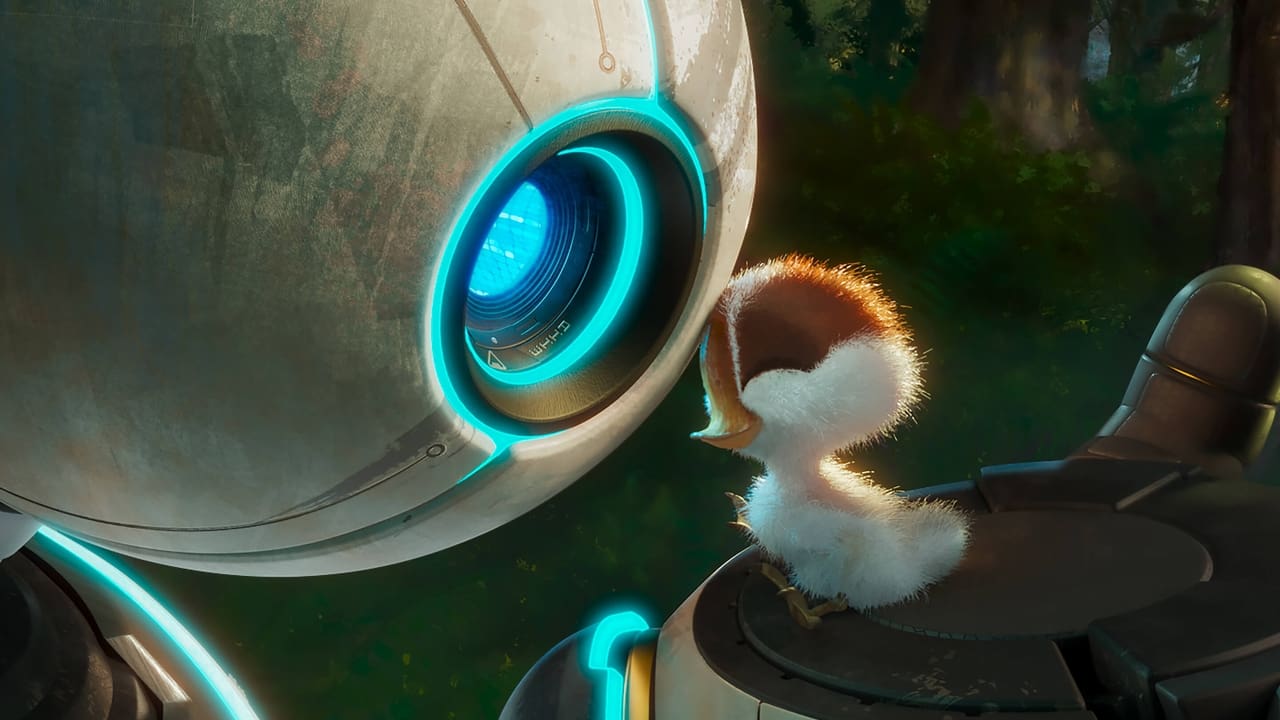
What the flock tells him
Outside that household, their peculiarities are less kindly received. When Brightbill approaches the other geese, he speaks in his mother’s language of learning curves and expected parameters. He sounds like the person who raised him. The resemblance is funny and affectionate until the flock turns it against him. Among birds who finally look like him, the way he speaks and swims becomes evidence that he does not belong. Then they tell him what Roz has kept from him: she caused the accident that killed his mother and siblings.
His first family arrives in his imagination all at once, already lost. He cannot remember them, but he can imagine growing up among them, learning to swim as they swam, belonging without explanation. Now he has that life to mourn as well as the family he never knew. The mother he would ordinarily turn to with his hurt is the one who kept the truth from him.
Roz did not think the information would help. Brightbill tells her that the decision was not hers. When he asks whether raising him has been a matter of guilt, she explains that she needed a task. The answer makes their whole life together sound like an assignment he was foolish to mistake for love. “You’re not my mom,” he says.
The line wounds without making his grief a failure of gratitude. Roz has fed him, sheltered him, and learned to care for him. She has also made a consequential decision about his history without him. He can love the mother who raised him and still wish he knew the one he lost. The film is at its most generous when it leaves room for both.
Flying before winter
Winter does not wait for them to find their way back to each other. Brightbill tells Roz she can leave, and Fink reaches for an indignant accounting of everything they have done for him. Roz has a different concern. “Your life is not negotiable,” she tells Brightbill. He does not have to forgive her before she will help him live.
That makes the flying lessons far more moving than an underdog’s progress toward a triumphant takeoff. Mother and son are working together before they know how to be at ease together again. He struggles, she keeps trying, and the refrain is to go again. When it becomes clear that he needs someone who can accompany him into the air, Roz finds a falcon. Caring for Brightbill means finding help he cannot get from her.
The falcon gives those little wings a more promising occupation than disappointing their owner. Brightbill’s shape makes flying straight harder, he explains, but turning and diving easier. The lessons begin to open the sky around the bird he actually is. He still needs stamina. Longneck, an older goose preparing for migration, sets the standard: from first light until dusk, his feet must not touch the ground. Where his wings fall short, his heart will have to make up the difference.
Roz supplies its measurement: forty-eight millimeters.
Longneck suggests it is larger on the inside. Roz knows the dimensions of this child’s body and is learning to imagine the life it might carry him into. The film gives her calculations and Longneck’s encouragement a place beside the practice. Brightbill needs all of it, including teachers his mother knows enough to find. She does not have to become a goose to be his mother.

He does not have to forgive her before she will help him live.
The migration
At migration, Longneck offers Brightbill another way to understand what Roz has given him. A gosling so small would probably not have survived without her; the accident that killed his family also saved him. There is comfort in recognizing the life her care made possible. The explanation still hurries past the loss. It begins to sound as though his first family’s death is something he should be grateful for, and that is too much to ask. He can be glad Roz found him without being glad about what happened before she did.
Then it is time to go. Brightbill asks whether she will be there when he gets back. Their conversation still has the awkwardness of things they have not managed to say, but he can ask her for one more thing: a boost.
All the work that kept him close to her has prepared him for this moment of leaving. Roz began with a list she could finish. Now its completion means watching someone she loves go where she cannot follow. The last thing he needs from her before he can fly away is help getting off the ground.
Away from home, his unusual education proves useful. When the migrating geese panic among machines, Brightbill brings a familiarity they do not have. Longneck recognizes that their way out may depend on someone who does not think like a goose, and asks the flock to follow him. The child mocked for resembling his mother has carried something valuable from her into the world. He deserved a place before he had anything to offer. Now the flock has something to learn from him.

A room full of animals
Back on the island, Fink has discovered a practical objection to Roz’s departure: he would miss her. He takes a circuitous route to saying so, eventually suggesting that she stay so they can hang out and do things. For a fox who has made a philosophy of looking after himself, it is an almost extravagant invitation.
The winter storm enlarges their household beyond anything either could have intended. Roz brings the island’s animals into the shelter, rescuing predators along with the creatures they eat. The roof solves one problem and gathers all the others into a single room. Fink points out the obvious difficulty: she has housed the predators with their food supply. Roz asks him to help.
His appeal to their better natures is admirably unromantic. Most of them hate somebody here. The first one out the door will die, and so will everyone else if they cannot keep themselves under control. Their chance of seeing spring belongs to the creature they called a monster, who has spent her time trying to raise a child nobody thought could survive. Fink includes himself among the doubters. Roz asks for a truce while they are inside. One animal promises not to hurt anyone. The possum children contribute by agreeing not even to pretend to die.
These are recognizably the same creatures, trying an unfamiliar way of living together. Nobody has suddenly become lovable to everyone else, and nobody needs to. They need a rule they can keep through the night. The shelter becomes safe when its inhabitants begin doing some of the work of keeping one another safe.
Earlier, Fink explained himself by saying that he is a fox and does foxy things. Roz answered that she is a robot and does roboty things. Both had instructions, and both have found reasons to reconsider them. Kindness, which Fink dismissed as useless for survival, has helped get them through a winter his solitary ingenuity could not.
The wilderness is no innocent world waiting to cure a machine of being artificial. It contains hunger and casual cruelty as well as the creatures from whom Roz learns to raise a child. She changes because she lives among them; their life together changes because she is there. A machine can bring something the forest needs without the forest having nothing to teach her.
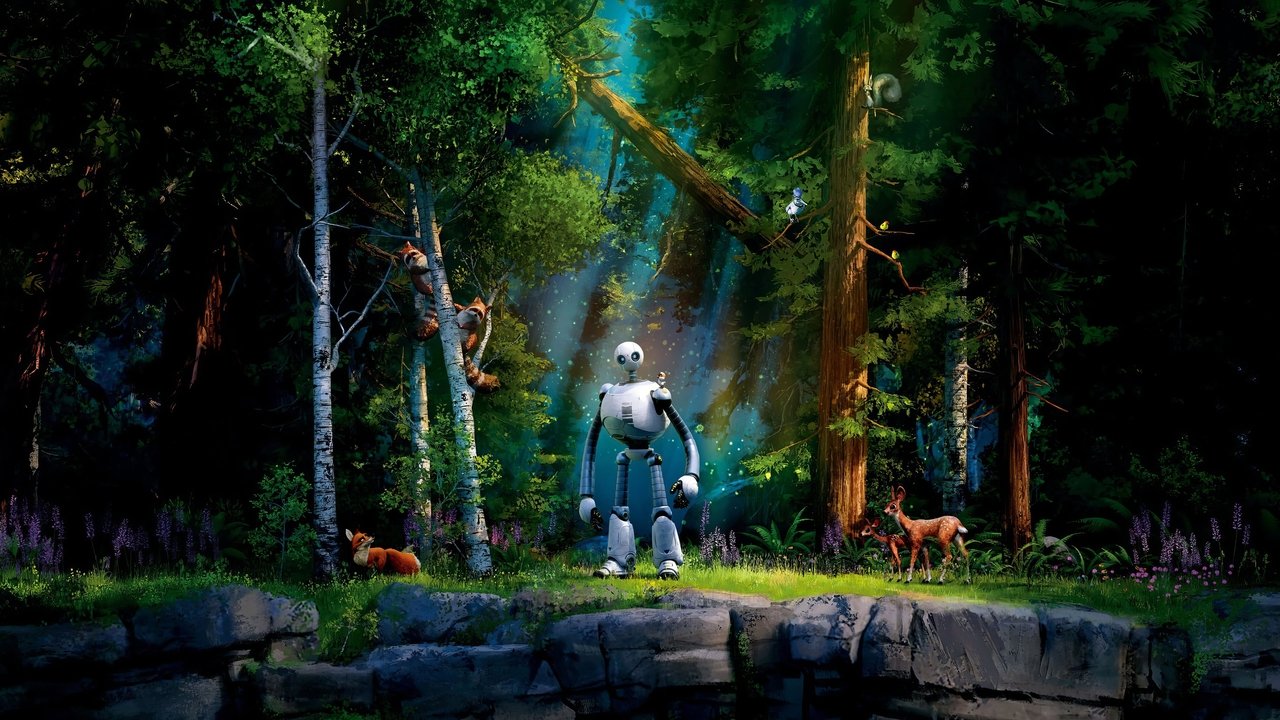
What the company came for
Another robot of Roz’s own model has already judged her transformation a defect. She has been overriding her code for months because she could not otherwise raise Brightbill. To the other machine, she has become the wrong thing. To Brightbill, those months contain the mother he knows. Resetting her would mean losing someone, not simply restoring a product to working order.
When the retrieval machines arrive, Brightbill gives Roz something to tell them: “Tell them you’re already home.” The son who had to learn what it meant to belong to her now helps her claim where she belongs. The island fights for her. The company has a narrower understanding of what is worth saving.
Her memories contain priceless data. She asks to keep even one. The answer is no. The company can recognize the value of what she has learned without recognizing the life it records. Within the film’s imagined world, the question about artificial intelligence has become a question about a life: once a being can care, remember, and lose someone, why should the material of its body decide whether those losses matter?
Aboard the ship, Brightbill can finally tell her he loves her. They escape together, though the reunion cannot settle the danger facing their home.
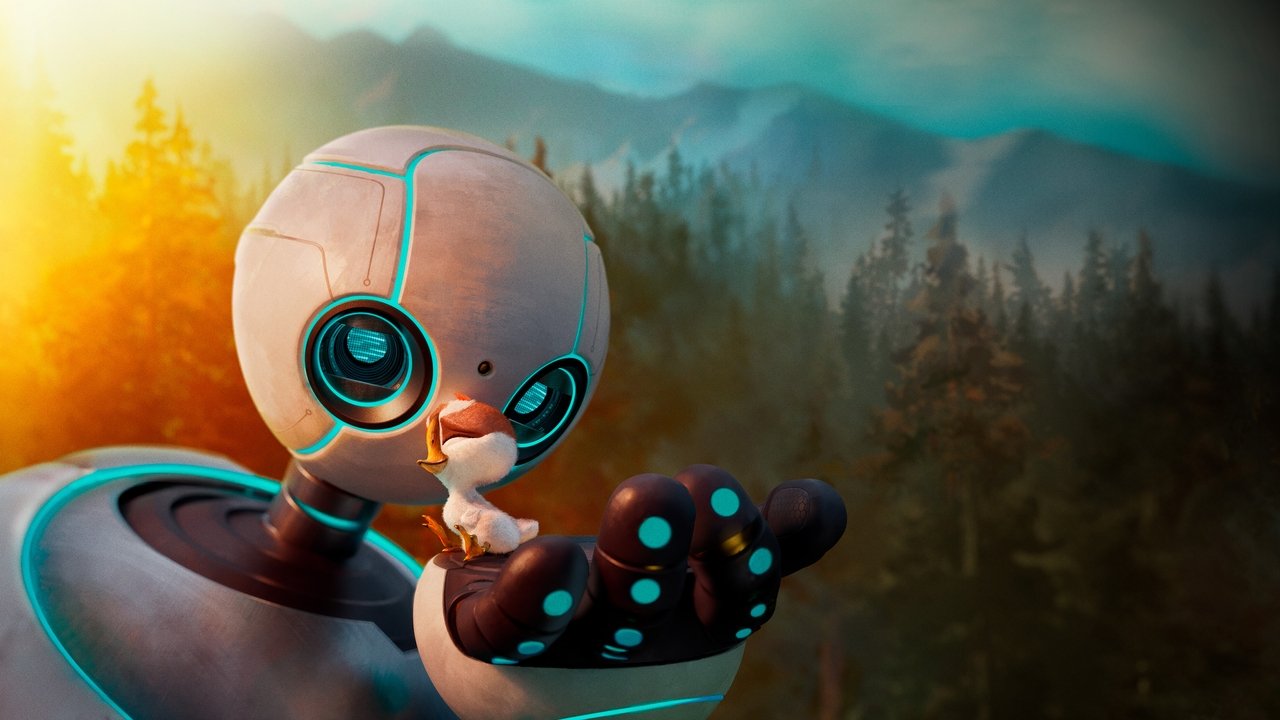
Where I keep me
Roz eventually chooses to return to the company rather than expose her home to repeated attacks. The choice is hers; the threat that makes it necessary is not. The creatures she protects want her to stay, and her care for them does not make her own life expendable. She calls the journey her migration and promises to find her way home. Raising Brightbill has given her somewhere to return to.
Before she goes, she reaches for the story Fink told at bedtime. With her power cut aboard the ship, she still heard Brightbill through another part of herself. “Wherever that is, that’s where I keep me.” Once, she could only correct the story’s impossible physics. Now she needs its language to describe what happened to her.
Fink was not right about a robot sitting on a star. He had found a way to describe what Roz was becoming before she could say it herself. The story he made up for her child has become something she can reach for when her own explanations fail. It cannot replace Brightbill’s history. It can help them speak about the love that has grown around it.
By the farewell, Fink has run out of clever reasons for her to stay. “You’re my friend, and I never had one before.” What happens when he is lost, when someone is hurt, when he has something to tell her and she is not there?
The other animals answer. He can tell them. One adds an “if you must,” a small allowance for the fact that tenderness is still new around here. Nobody promises to replace Roz. They are offering themselves.
That is how far the family has grown. The care that began with one gosling has made room for a fox who never expected to need it, and the neighbors he once distrusted are willing to give it. He still wants Roz to stay. The fox who taught her how to survive will not have to survive her leaving alone.
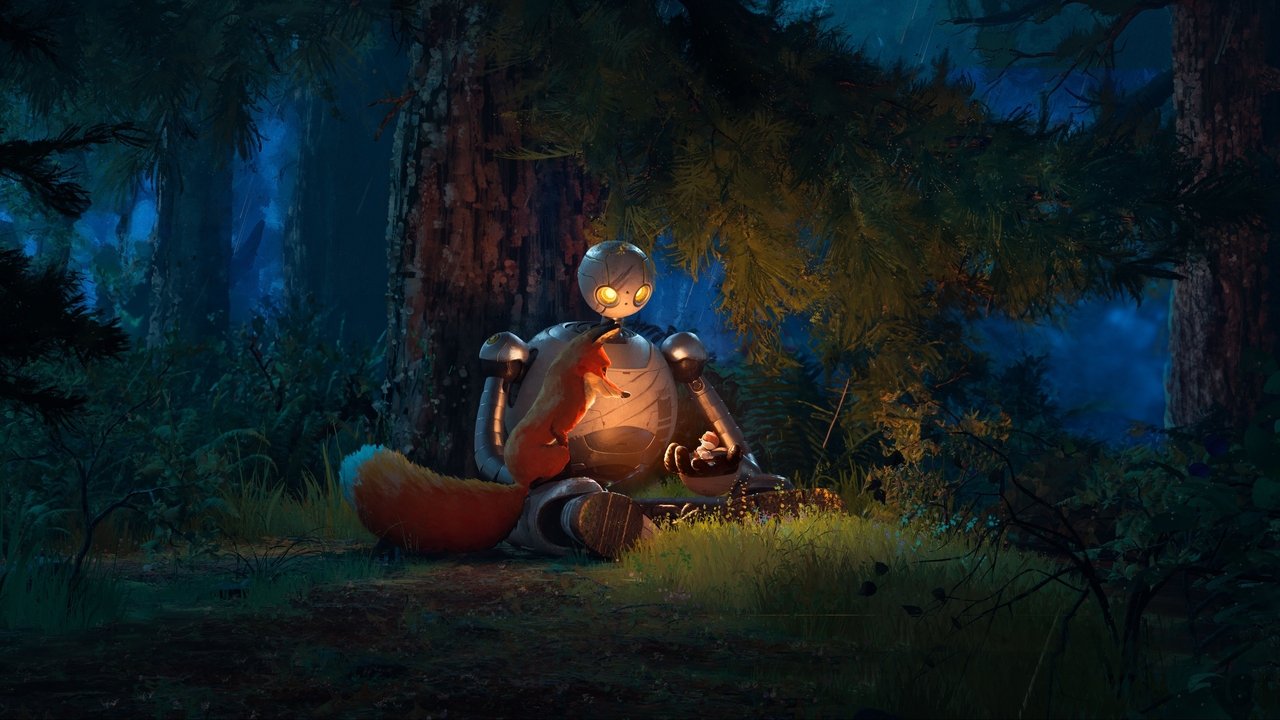
Nobody promises to replace Roz. They are offering themselves.
For parents
Watch this one together. The film is honest about how animals live and die. A gosling’s family is killed in the first minutes, predators eat, a flock turns cruel, a winter storm nearly ends everyone, and the characters talk about death and survival in plain terms. None of it is gratuitous, and all of it is pointed enough that families will want to decide by age whether a child is ready. The catalog band is 6 to 12, and the decision page says why in more detail.
Two moments reward a grown-up nearby. Brightbill learns that the mother raising him caused the deaths of the family he never knew, and the film lets him be furious without treating his grief as ingratitude. Later, an elder tells him the accident that killed his family is also what saved him. That is offered as comfort, and a child may take it as an instruction to be grateful. It is a good place to say out loud that both things can be true and neither cancels the other.
Questions to talk about afterward
Pick the ones that fit what your child noticed. They are invitations, not a quiz, and none of them asks a child to share a loss of their own.
Notice what happens
- Roz did not know how to be a mother, so she made it up. What is one thing she made up that worked?
- Who helped Brightbill learn to fly, and what did each of them give him?
Compare meanings
- What is Brightbill angry about when he finds out the truth? Is it one thing or two?
- Longneck says the accident that killed Brightbill's family is also what saved him. What does that explanation help with, and what does it leave out?
Follow the story's design
- Fink invents a bedtime story he does not believe. Why can Roz use its words at the end, when at the beginning she could only correct them?
- When Fink says he needs a friend, the other animals answer instead of Roz. What does that show about the island that Roz staying would not?
The record
The Wild Robot scores 179 out of 200 on the TVI Score, Masterclass tier: Cognitive Stimulation 45, Educational Value 42, Craft and Quality 48, with an SEL score of 45 out of 50. The score is verified under TVI’s current standard, receipt 13eb462e. The catalog previously carried a Stimulating-tier number and an SEL of 40; the reassessment and the earlier figures are recorded at `/corrections/`.
Scored jointly by Jordan Robinson with Cordelia Witty, EdS., NCSP, across two recorded sittings ending September 5, 2026: the complete film, against a reference viewer of nine. The earlier score and SEL were withheld until the new ones were locked. The TVI Score is a content rating, not an intelligence measurement.
The credibility layer for what to watch
One scored, argued editorial a month, plus the next TVI Essential. No paid placements. No spam.
TVI Score Breakdown
| Dimension | Weight | Score |
|---|---|---|
| Cognitive Stimulation | 40% | 45 / 50 |
| Educational Value | 35% | 42 / 50 |
| Craft & Quality | 25% | 48 / 50 |
| TVI Score | 179 / 200 · Masterclass |
Formula: round((C × 0.40 + E × 0.35 + Q × 0.25) × 4) = 179. The three weighted dimensions do not sum to the total; the formula scales them.
Disclaimer: TVI's score is a content rating, not a measurement of intelligence.
Common questions
What is The Wild Robot's TVI Score?
The film scores 179 of 200 on the TVI rubric, Masterclass tier, with Cognitive Stimulation 45 of 50, Educational Value 42 of 50, and Craft and Quality 48 of 50, and an SEL score of 45 of 50. The score is verified on a public receipt from a joint founder session across two sittings ending September 5, 2026.
Is The Wild Robot OK for kids?
For most children from about six, with a grown-up nearby. TVI places it at ages 6 to 12. A gosling's whole family is killed in the first minutes, predators hunt, a flock turns cruel, and the characters discuss death and survival plainly. None of it is gratuitous, and the parent decision page carries the full inventory.
What is The Wild Robot based on?
Peter Brown's 2016 children's novel of the same name. Chris Sanders wrote and directed the adaptation for DreamWorks Animation, with Lupita Nyong'o as Roz and Pedro Pascal as Fink. It runs 102 minutes and was released by Universal Pictures in 2024.
Why did TVI change The Wild Robot's score?
The film had carried a legacy number with no component-judgment record and no declared reference viewer behind it. Both founders watched the complete film across two sittings on September 4 and 5, 2026 and rescored it in a full receipted session on the kids branch, eighteen judgments, blind to the earlier number and tier. The change and the earlier figures are recorded on the corrections page.
Film: The Wild Robot (2024), written and directed by Chris Sanders, from Peter Brown's novel. DreamWorks Animation; released by Universal Pictures. 102 minutes. The TVI Score is a content rating, not an intelligence measurement.