After watching: this article discusses the plot.
Before and after Wild Horse Nine
Choose a resource for where you are in the viewing. Content details are labeled.
Before watching1 resource
- Score & viewing detailsWild Horse Nine: score and viewing details
The catalog record, score status and viewing options.
Content details may appear in the rationale
After watching2 resources
- ReviewFilm reviewWild Horse Nine and A Matter of Choice
The critical argument, for reading after you have watched.
Plot details; may discuss the ending - Rewatch focusFilm reviewHe forgets the code word and tells the truth, finally
Return to this published craft or story-structure section on a second watch.
Plot details; may discuss the ending
Wild Horse Nine and A Matter of Choice
Martin McDonagh's black comedy sends a dying CIA man to Easter Island to plan his own death, and watches the plan come apart.
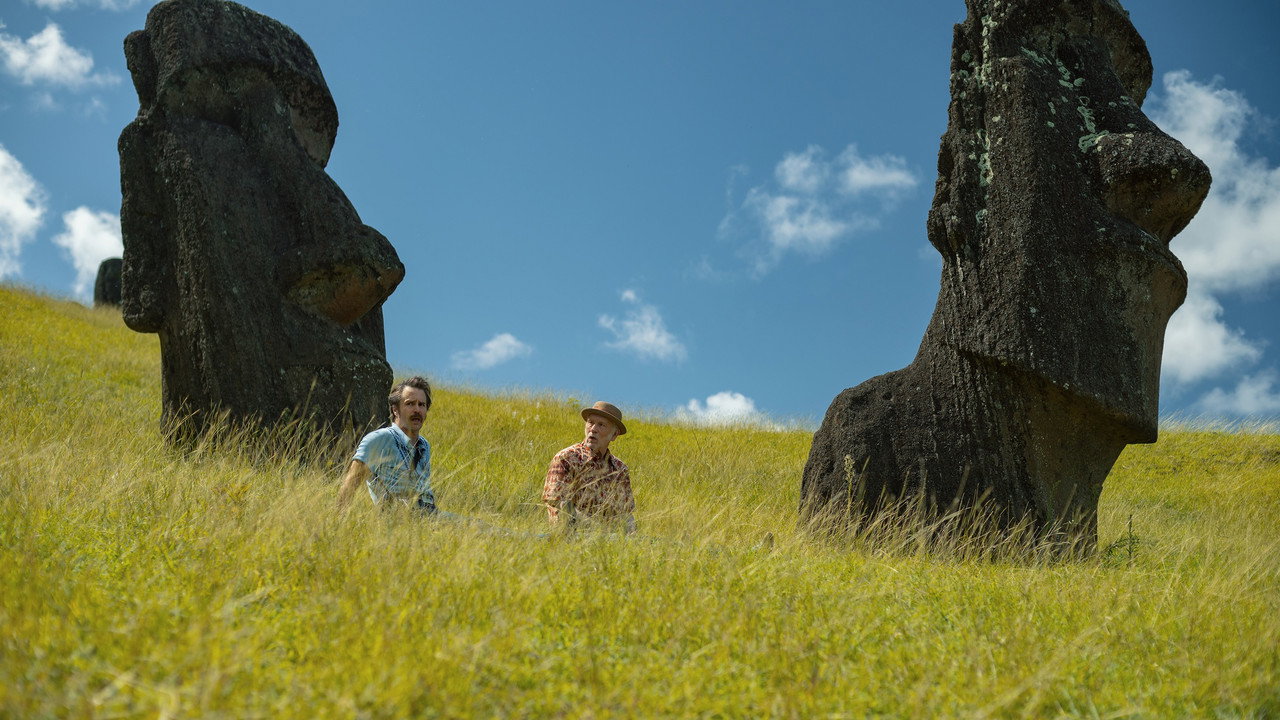
Wild Horse Nine (2026) scores 142/200 on TV Intelligentsia's published methodology, Stimulating. Jordan Robinson's review of Martin McDonagh's black comedy follows John Malkovich as Chris, a dying CIA man who flies to Easter Island to stage his own death, and loses his grip on nearly every part of the plan.
This review contains spoilers, including the ending.
Wild Horse Nine opens in Santiago, Chile, in 1973, on the kind of home-movie camera that filmed Kennedy's assassination in Dallas. Lee Chesterfield films Chris Carlisle listing where he's a veteran of: Guatemala in 1954, the Congo, the Bay of Pigs and, in the film's telling, "Dallas, sixty-three." Then: "The less said about that on camera, the better." Chris carries moths to a window rather than kill them, and feels bad when it's raining outside. "Sometimes I feel like I care more about the moths than I do about the people in Chile."

At every stop on that list, Chris helped decide how other people died. Now he's dying, on morphine, his memory going. So he plans his own. He asks Lee to shoot him on Easter Island on a code word, because "You know I'm a Catholic." He'd rather go "in the hands of someone I care about and someone professional." He picks the place, the word and the man. One by one, each choice slips out of his hands.
He wanted Venice. He got Easter Island.
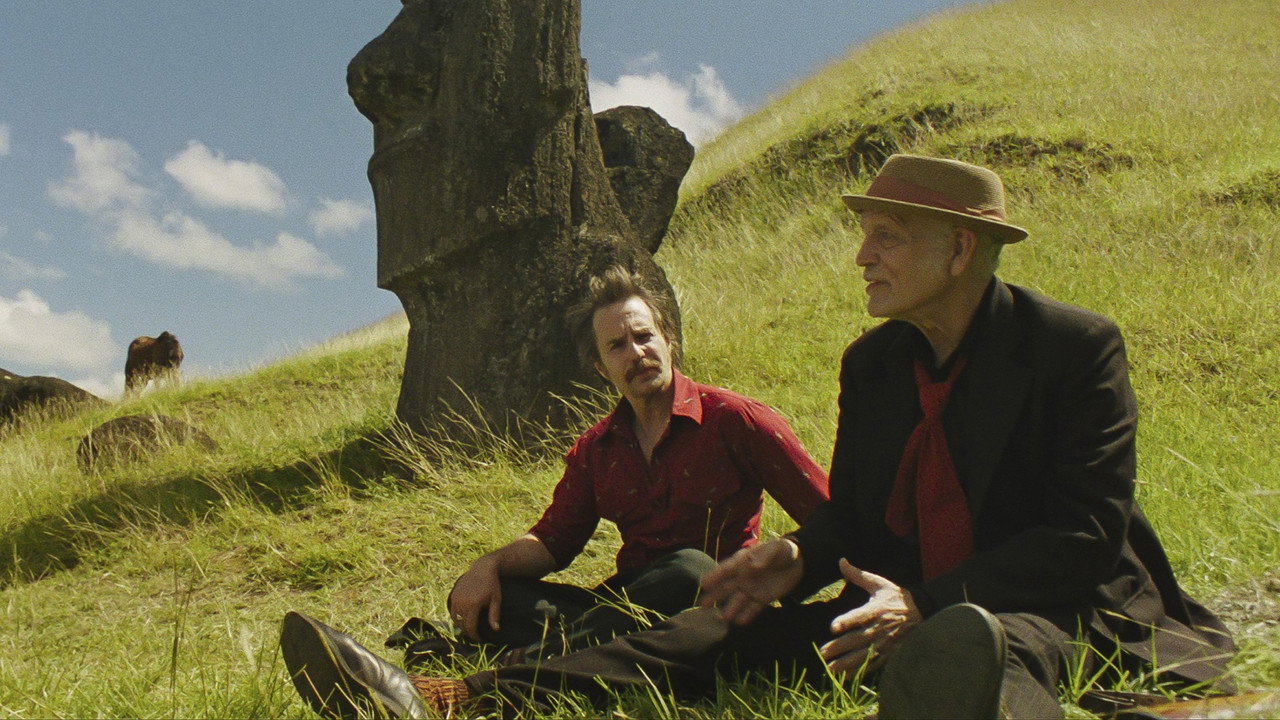
He always wanted to die in Venice, he tells Lee, in a gondola. Now he's on Easter Island and can't remember choosing it. A man who planned every detail of his own death has forgotten where he planned it. When he complains that this is a lonely place to die, Lee has the answer ready: "It's lonely everywhere. If you're gonna die."
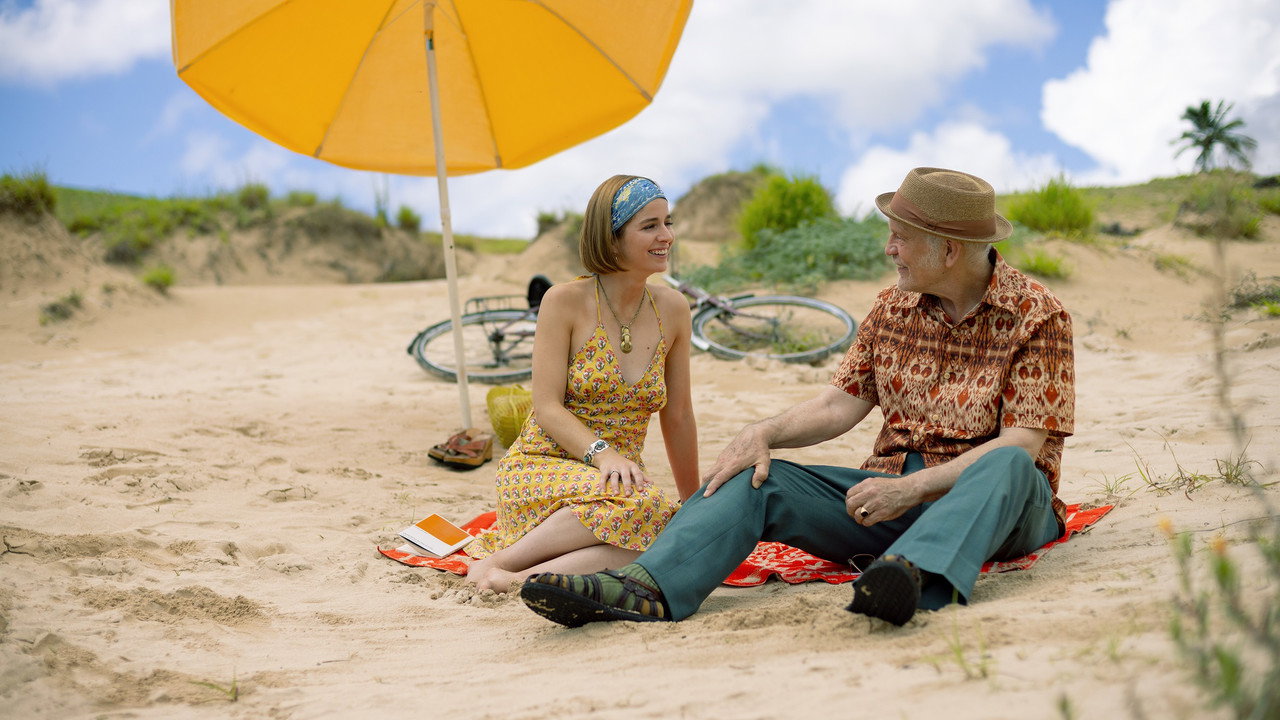
He isn't alone for long. On the beach, Chris tells a young woman that the man he's traveling with is his son, autistic and dying. She sees through it at once and asks why he bothers lying when there's nothing to gain. Once he admits he's the one dying, she lets him off with a request to lie less. Later he tells Lee, "She's life, and I'm leaving it." He didn't pick her. She was just there.
Then the choice is taken from him. MJ, who runs the agency's South American operation, wants Chris's memoir, his tapes and the rifle from Dallas, and has no patience for Venice. "You think he should get to choose where he dies? Jack Kennedy didn't." The line lands on Chris's whole career. By the end he has let the canals go: "Easter Island kind of grew on me."

He forgets the code word and tells the truth, finally
The code word slips next. It's the signal for Lee to shoot, so it has to be a word Chris would never say by accident. They settle on Arkansas, "because nobody ever accidentally says it or ever thinks about it or would ever want to go there." A month later, Chris has forgotten it. They made sure he could never say it by mistake. It never occurred to them he might forget it.
They made sure he could never say it by mistake. It never occurred to them he might forget it.
What Chris doesn't forget is the young woman's question about lying. At a concert in town, while a folk singer plays "Gracias a la vida," a song thanking life, he tells her and her student friends what's coming: Allende dead by September 11, the army in power, and students, journalists, union members and folk singers rounded up in the Santiago soccer stadium, where many of them will be tortured and killed. Asked why, he says, "You asked me to stop lying, so I stopped lying." She tells him she hopes he dies. "I will." The stadium is real history. Lying comes with the job for a man like Chris, but it's also how he keeps things light and his past at arm's length. When he finally tells the truth, it lands like a blow.
The people in that stadium never got a say in how they would die, and neither did Patrice Lumumba, the Congo's newly elected leader, killed in 1961. Chris remembers "how light the bag was that they carried him away in." Lumumba warned that killing him would kill democracy in Africa for fifty years. Chris answered, "Patrice, what do you think we're trying to do?" Years later: "I regret saying that because he got sad then."
Chris was always gentler with moths. Near the end he tells one of the students that moths "always seem so doomed." They fly at the light that will kill them, and a man with Chris's record, keeping the rifle from Dallas, was never headed for a gentle ending either. Asked about the students themselves, all he offers is "Good luck with the democracy." He can carry a moth to the window. He can't save these kids from what's coming, and he helped bring it.
Who he trusts with the trigger
The last choice left to Chris is the man who will do it, and MJ takes that one too, holding Lee's wife and kids so Lee will carry out the killing. Lee is Chris's only friend, the one person he trusted with his death. Now Lee has orders, and Chris can no longer tell where his loyalty lies. "I'll never know whether you're killing me because I asked you to. Or because they asked you to." Then, smaller: "I just wish I could die knowing I could trust you." Lee: "You can. You've just forgotten that you can."
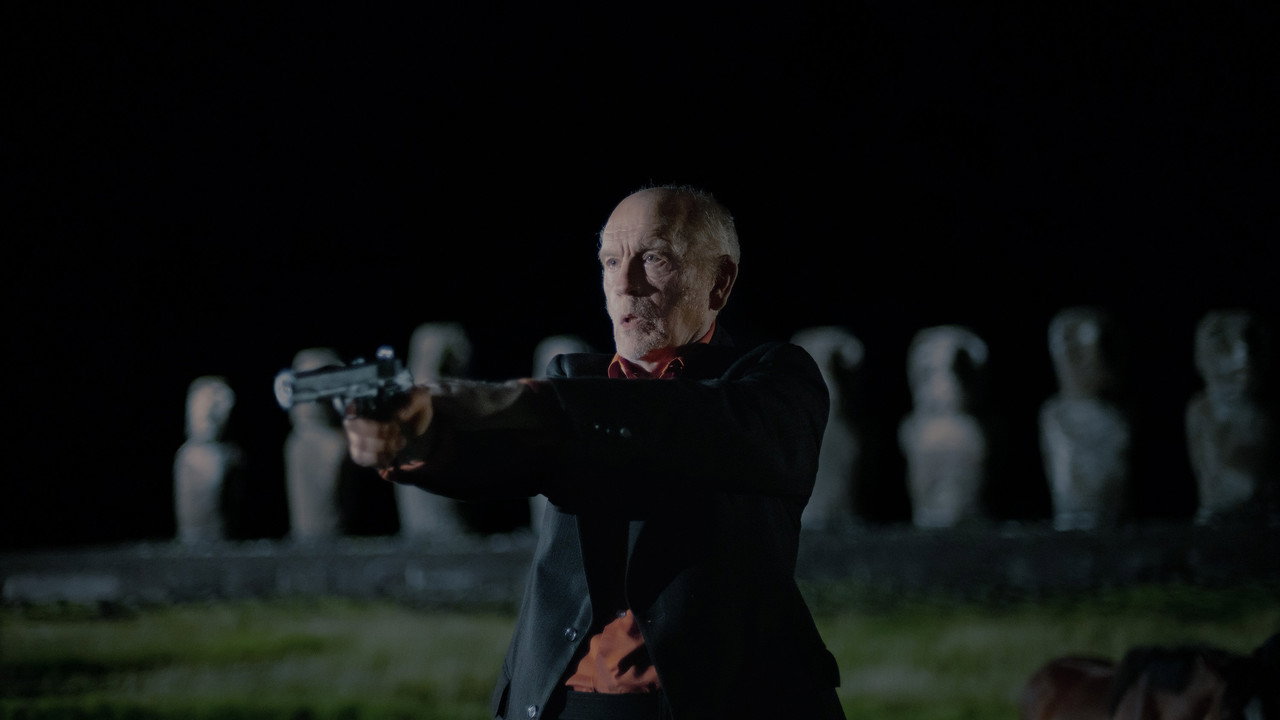
Forgetting is also how the film plays its puzzle. Chris leaves himself notes, and McDonagh hands us pieces the same way. Early on, Chris jokes about IRA bombs hidden in a tin with a photo of a dwarf carrying a basketball, so a soldier stops to wonder. Late in the film, his briefcase carries that photo. Lee tells MJ there's a bomb inside, and MJ works out, "That'll be where the rifle is": in the film's telling, the gun from Dallas. Nearly every odd piece pays off like this, and it all looks good, Easter Island beautifully shot and the early seventies true to life.

The trouble is the stretch between setup and payoff. A lot of the jokes don't land, and when they don't, the film feels empty. The delay that makes the puzzle work is what drains the middle. It also keeps you asking what's in the briefcase, when the real question is what a man like Chris is owed at the end, and by whom.
What he's owed turns out to be small. Arkansas comes back too. Lucid at last, Chris asks Lee to do it, and when he wonders aloud whether the word was West Virginia, he lands on Arkansas himself. It's proof he means it. He gets what he asked for: his death, in the hands of someone he cares about. It's moving. He writes his first poem, about the horses he saw on the island: "It was a very nice horse. He made me a lot less scared about dying." He wants a western told from the horse's side: "You start out fighting with the cavalry, you end up dying with the Indians." Chris started out with the cavalry too. He spent his career doing the agency's killing, and he ends it as the agency's target. It's the same pull as the moths: Chris keeps seeing himself in creatures that don't get to choose how they go.
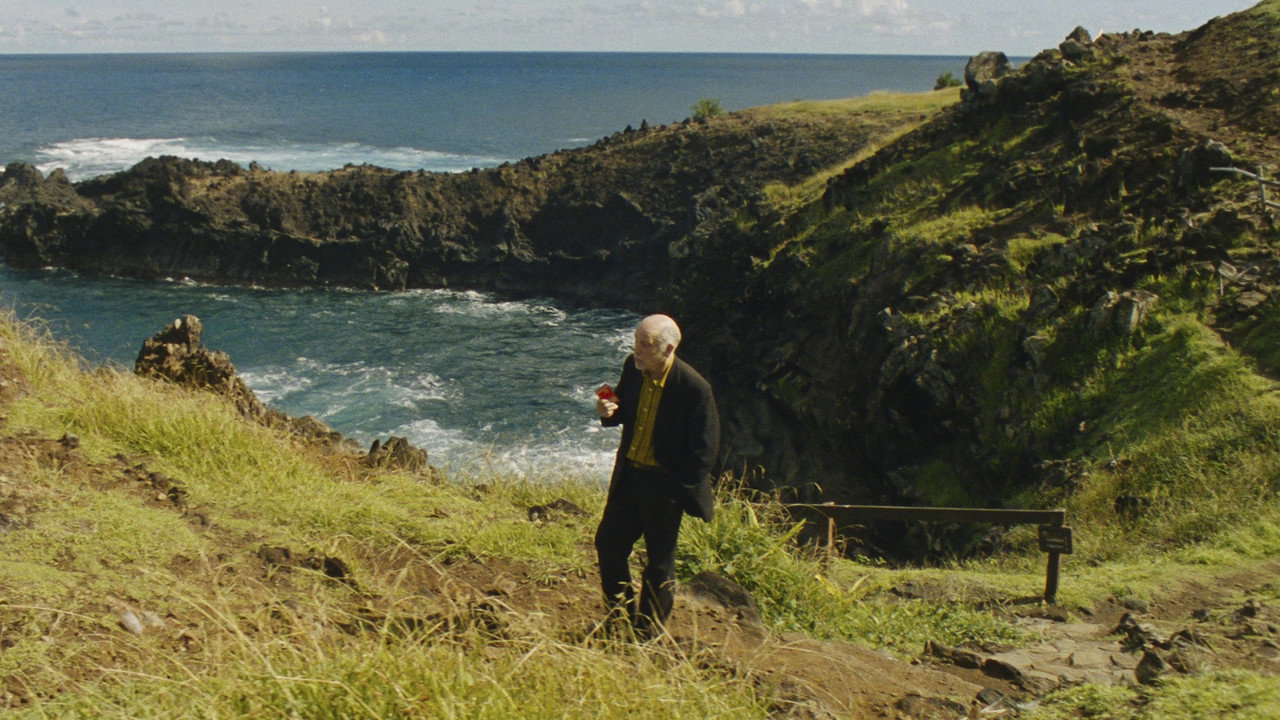
The island he never really chose turns out to hold most of what he needed. A dead horse lies by the only road between the airport and where they stay, so every trip passes it, and it's hard not to see Chris in it. He came for the big heads and keeps finding horses instead. Venice was the place he imagined, the better somewhere else, and wanting it looks a lot like running from what he came to do. Easter Island gives him the horses, a young student who stands for the life he's leaving, a friend in Lee who keeps showing up, and an afternoon with the big heads. When he says the island grew on him, he means he's ready to die there.
His suicide note opens, "I will keep my suicide note brief. The reviewers will complain," and ends, "I could have killed a few less people. And I should have hung out with a lot more horses." I'm mixed on that line. It's true, but basic, and tidier than everything before it. Still, the sentiment fits the film, and it fits Chris, a man who worried about moths in the rain while whole countries went under. He chose the island, the word and the man. Nobody chose the horse.
He chose the island, the word and the man. Nobody chose the horse.
Worth the wait: What the TVI score says
Wild Horse Nine is a puzzle box, and nearly every piece finds its place by the end: the briefcase, the notes Chris writes to himself, the rifle with a past. The period craft is handsome and assured. John Malkovich won Best Actor at Venice for it, in a cast with Sam Rockwell, Steve Buscemi and Tom Waits, which is about as close to Venice as Chris gets. Jokes that don't always land and a long middle stretch without much pull keep it out of the top tier. But I paid attention the whole way, and by the end it had earned that patience.
TVI's score is a content rating, not a measurement of intelligence.
The Intelligentsia Report
Film and television criticism, watch guides, and updates from TV Intelligentsia. Free. Unsubscribe anytime.
TVI Score Breakdown
| Dimension | Weight | Score |
|---|---|---|
| Cognitive Stimulation | 40% | 37 / 50 |
| Educational Value | 35% | 33 / 50 |
| Craft & Quality | 25% | 37 / 50 |
| TVI Score | 142 / 200 · Stimulating |
Formula: round((C × 0.40 + E × 0.35 + Q × 0.25) × 4) = 142. The three weighted dimensions do not sum to the total; the formula scales them.
Disclaimer: TVI's score is a content rating, not a measurement of intelligence.
Common questions
What is Wild Horse Nine's IQ Score?
Wild Horse Nine (2026) scores 142 of 200 on the TVI rubric, Stimulating tier, with Cognitive Stimulation 37 of 50, Educational Value 33 of 50, and Craft and Quality 37 of 50. It is the film's first TVI score.
What is Wild Horse Nine about?
Martin McDonagh's 2026 film stars John Malkovich as Chris, a veteran CIA operative who is dying, and Sam Rockwell as Lee, the man he asks to end his life on Easter Island. Steve Buscemi, Tom Waits and Parker Posey co-star. Searchlight Pictures released it in United States theaters on November 6, 2026.
Film: Wild Horse Nine (2026), written and directed by Martin McDonagh. Searchlight Pictures. With John Malkovich, Sam Rockwell, Steve Buscemi and Tom Waits. The IQ Score is a content rating, not an intelligence measurement.