After watching: this article discusses the plot.
Before and after Wildwood
Choose a resource for where you are in the viewing. Content details are labeled.
Before watching3 resources
- Score & viewing detailsWildwood: score and viewing details
The catalog record, score status and viewing options.
Content details may appear in the rationale - Before watchingViewing guideWhat to Know Before You Watch Wildwood
Background and context for the viewing decision.
Premise and context - Parent guideParent guideIs Wildwood OK for Kids?
Suitability and content details for a parent making the decision.
Specific content details for parents
After watching1 resource
- ReviewKids reviewTwo Paths Diverge in a Wildwood
The critical argument, for reading after you have watched.
Plot details; may discuss the ending
Two Paths Diverge in a Wildwood
One girl risks herself to bring her brother home. One mother would spend a forest to get her son back. LAIKA's astonishing fantasy asks where love ends and possession begins.

Wildwood scores 152/200 on TV Intelligentsia's published methodology, Stimulating, on a verified receipt, with an SEL score of 38 and TVI age guidance of 13 and up. Travis Knight's stop-motion adaptation of Colin Meloy and Carson Ellis's novel sets a girl risking herself to bring her baby brother home against a grieving mother who would spend a forest to get her son back.
Contains major spoilers and discussion of a child's suicide.
Curtis Mehlberg is the kind of kid who corrects your grammar in a crisis. Prue McKeel's baby brother has just been carried off by crows, and when she says this can't be fixed by rolling a dice, he points out it's a die. Her flock of crows? A murder. His vocabulary is impeccable. His timing could be better.
That mixture of menace and awkward comedy gives Wildwood much of its character. The forest Prue enters is full of creatures with grievances and ambitions, including a kingdom of birds whose sense of being above everyone else extends beyond the obvious. Even a mail carrier who has driven the same forest road for forty years has to show paperwork at their border. It feels worth getting lost in, even when getting lost is a terrible idea.
A familiar story in a new, wild setting
Directed by Travis Knight from a screenplay by Chris Butler, the film adapts the novel written by Colin Meloy and illustrated by Carson Ellis. LAIKA's stop-motion craft is extraordinary. The adventure spreads across rival factions and parallel journeys, then gathers them into a battle for the forest itself. The feat includes the acting inside the action: the figures keep panicking, joking, pleading, and reacting while everything around them accelerates. The final stretch is exhilarating, and it thrills twice: once as action, and again when you remember every frame was moved by hand.
Its story travels more familiar paths. A child crosses into a strange world, discovers its dangers, and returns with a changed understanding of home. The route recalls Coraline and Narnia, with some of The Wild Robot's tenderness toward a child alone in the wild. Wildwood's world is more astonishing than its underlying ideas are new, but the resemblance between its heroine and villain gives that familiar journey something worth carrying home.

It starts with belief
Prue is trying to recover her abducted brother, Mac. Alexandra, the dowager governess, wants her dead son, Alexei, back. One wants a rescue, the other a resurrection. Both call it love; the difference is who they're willing to hurt to get it.
Help comes to Prue. Curtis doesn't think of himself as brave, yet he keeps stepping in for her without being asked. Alexandra has to take what she needs. Her coyotes fight her war, and she means to force the Ivy itself to serve her grief.
The film arranges the mirror with care. Alexei's death was not Alexandra's fault, but she is unable to let it go. Prue believes Mac's disappearance is hers: she was supposed to keep him inside, and she took him out. The truth, she learns later, lies in a bargain her parents made. But it is what each of them believes that steers the film. The one who carries no blame makes others pay for her loss. The one who thinks she carries it puts herself at risk, and worries that people will die because of her.
The others who join the fight have their own reasons. Alexandra threatens their homes. When Prue asks the divided factions to stand together, she appeals to a danger they share and a struggle none can win alone. Her rescue becomes their defense of a world that is theirs too.
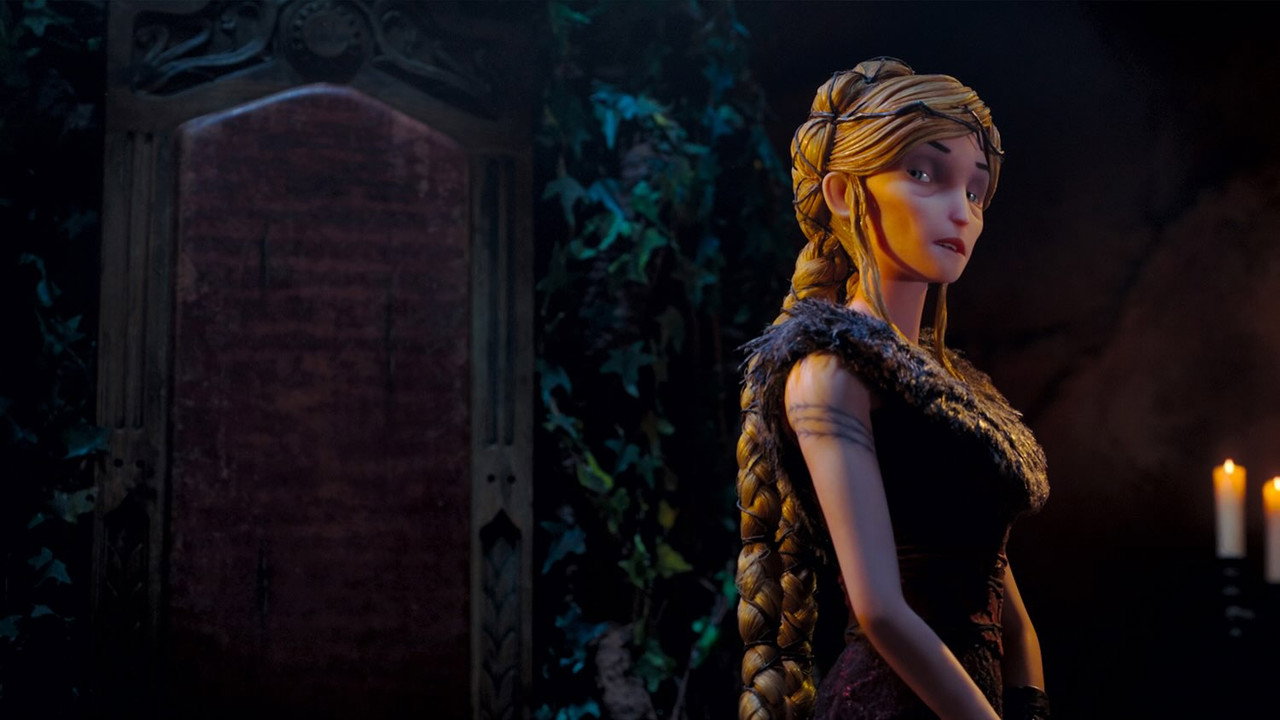
A mother's guiding hand
Alexandra can't stop playing mother. She orders Curtis to take his place beside her as if he were her son, and he has to point out she has him confused with someone else. Her coyotes, she explains, simply need a mother's guiding hand. With Mac, the contradiction becomes a vicious little joke. She soothes the baby, then warns him away from "mommy's sacrificial knife," as if she were protecting him from an ordinary household hazard. She can sound protective while preparing to sacrifice him.
Playing mother lets her give orders that sound like care, and those in her care get no say in where it leads.
Her attempt to restore Alexei carries that failure into the film's darkest material. Using his last baby tooth, she binds his soul into a mechanical replica of the son she lost. Its nature is initially hidden from him. When he discovers what has happened, he rejects the existence she has arranged and takes his own life. Like Prue, he pays for a choice a parent made. Alexandra's insistence on having him back has left little room for what being back means to him.
The question applies at a hospital bedside as much as in a fairy tale: how much of our insistence is for the person we love, and how much of it is for ourselves? Usually it's some of both. What matters is whether we still let the other person's wishes change our answer.
She can sound protective while preparing to sacrifice him.
Good advice, bad faith
Alexandra can describe the danger of her own grief with remarkable clarity. She uses that understanding against Prue.
At first, she tries the gracious queen's performance, and Prue recognizes it. She knows the routine of soothing words and temptations. Alexandra turns to grief, explaining that she could not let her son go and warning Prue against the same mistake. Prue still refuses to leave without Mac. Then Alexandra supplies apparent evidence of his death and urges her to go home so her parents can grieve. Prue goes home.
Mac is alive the whole time, awaiting the sacrifice Alexandra intends. Advice about accepting loss has become a way to make someone else's loss possible.
The second child
The parents' confession breaks that deception and changes the meaning of the home Prue has returned to. Earlier, the McKeels' precautions play as comedy. Mac must never leave the house. He can be schooled at home. When he marries, his spouse can move in. Her father tells bedtime stories meant to keep her out of the woods, and when he raises the warning again at breakfast, Prue tells him to let it go.
Then they explain the bargain. Years earlier, unable to have children, they followed a strange advertisement to a stall in the market. What they could have, they were told, depended on how far they would go. "Whatever it takes," they said. Alexandra named her price: their first child would be theirs to keep, and the second would be hers. They recoiled, then agreed, sure they could make certain a second child never came. They were promising away someone else's future on a bet that the bill would never come due.
Then Mac was born. Suddenly the absurd precautions look less like comedy and more like parents hiding from a debt.
The children inherit it. Prue has been trying to repair a disaster that began before she was born. Her parents cannot wholly regret a bargain that gave them the daughter they love, and that same bargain is the claim Alexandra now makes on Mac. The children must act inside a contradiction the adults have never resolved.
The confession also gives Prue something more useful than her parents' reassurance: a reason to doubt Alexandra's account of Mac's death. The governess wanted him from the beginning. Prue concludes that he is still alive.
Her return to the woods follows new information. That matters in a story about the danger of refusing a loss. Prue can revise what she believes. Alexandra demands that the world revise itself.
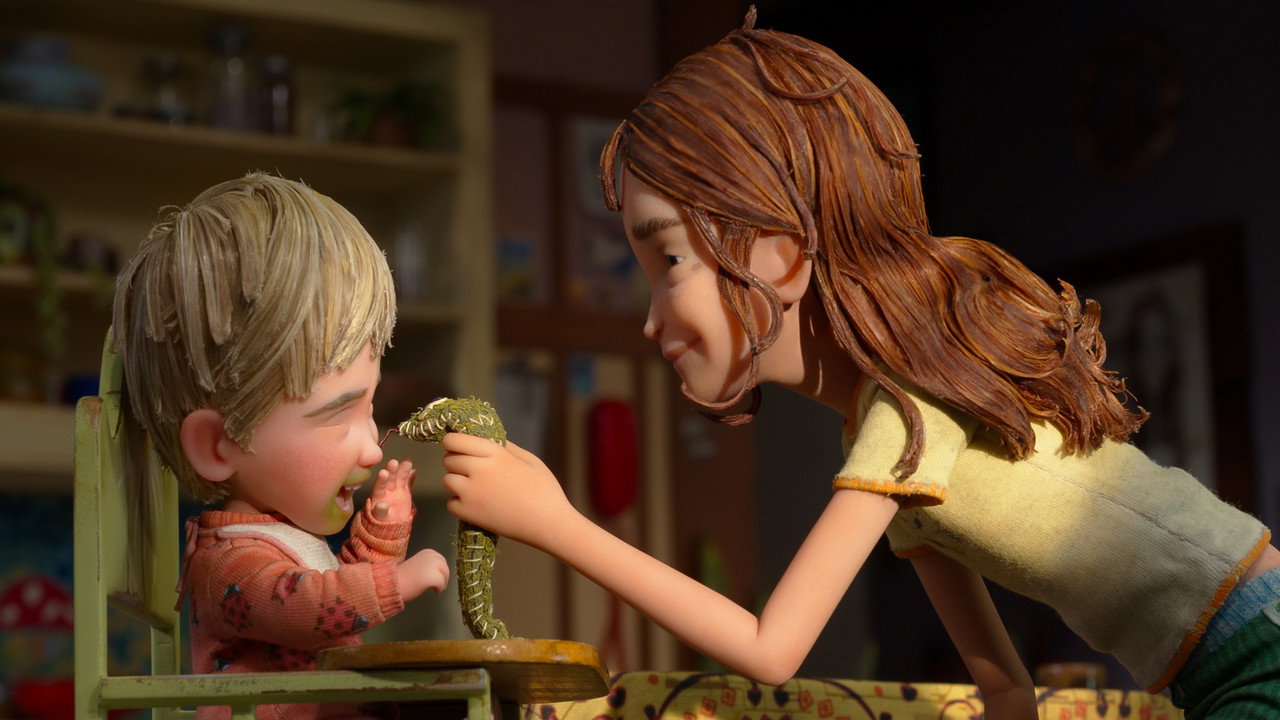
Curtis draws a line
Curtis offers a different kind of courage. He has already risked himself for Prue by drawing the coyotes away, and Alexandra turns that act into a flattering story: he could be a warrior, a hero. The war game he once begged Prue to play now has real stakes. Then she orders him to kill a captured bandit king, and he refuses.
The refusal costs him. He's locked up as a turncoat and ends up helping the bandits escape. But it shows where his line is. He'll face danger and stay loyal without obeying every order dressed up as bravery.
Prue has to rethink him too. When they reunite, she apologizes for writing him off as a loser. By the time she sees him as a hero, like the one in his game but better, she understands what her impatience had hidden. The boy whose games she thought she had outgrown has become someone she needed. Their friendship gives the adventure a warmth its larger arguments could not supply alone.
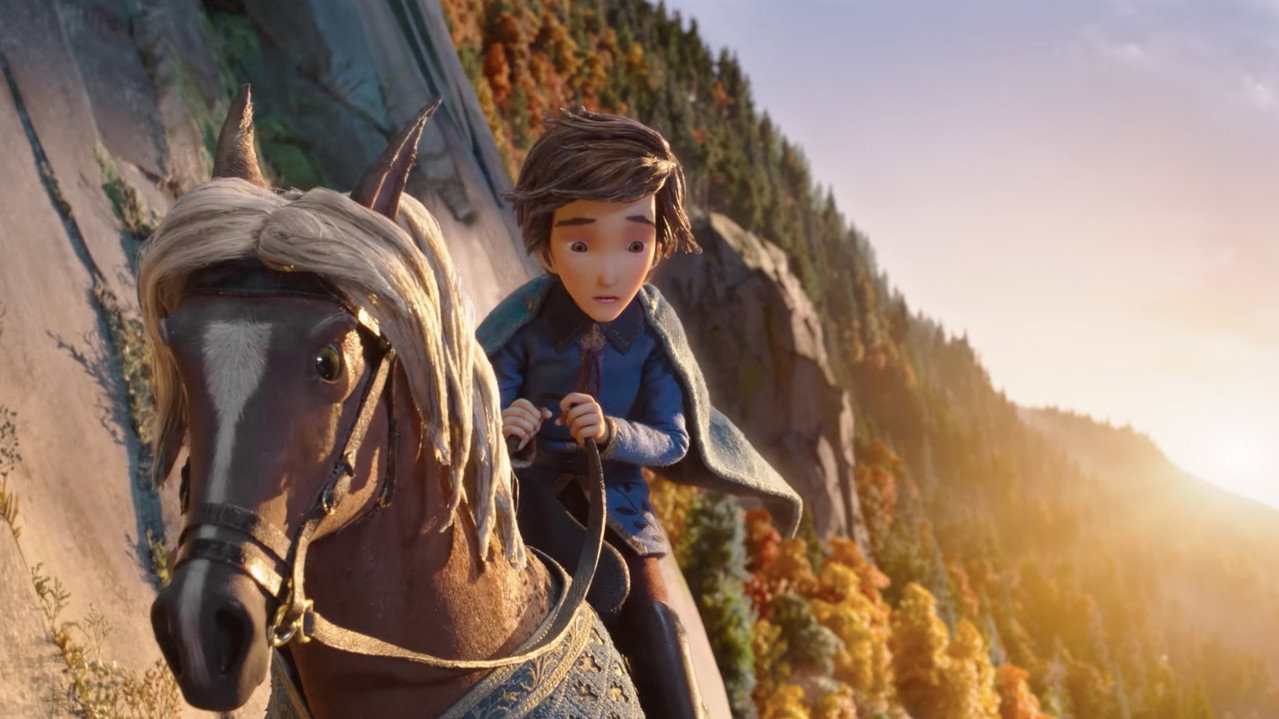
Given, not taken
Near the climax, Alexandra insists this isn't revenge. She wants her son, and she would trade a thousand lives for one more breath from Alexei. Then she calls in the debt. Mac is hers, she says, because his parents made a promise. She kept her side, and now they must keep theirs. Her claim on a child isn't rage. It's a contract, and she reads it out like a clerk.
Prue answers with the same advice that was once used against her, and this time she means it: Alexei is gone, and Alexandra has to let him go. Alexandra can't. Her rite needs the blood of a child conceived in magic and born in nature, a child made by her bargain. That describes Mac. It also describes Prue.
Reaching for her brother, Prue cuts her hand. When she grabs the Ivy, her blood runs into it, and she becomes the sacrifice in his place. The Ivy wakes, and it answers her. Then it starts to answer no one, tearing at everything and everyone around it. Guided by an old mystic, Prue doesn't command it. She asks it to stop. And it does. The forest goes still.
The film has been preparing this moment all along. Prue's room at home is full of plants she talks to grudgingly. In the north, the blackberry bushes part for her because, she says, she asked. Plants don't usually do what people tell them, the mystic observes. It depends on the people. Alexandra wanted the Ivy to obey her, the way the ancients believed they could control it. Prue asks.
Alexandra spends everyone else to make the world give back what it took. Prue spends herself.
Frost's traveler admits that the two roads in his yellow wood were worn "really about the same," and that only later, telling it with a sigh, will he say his choice made all the difference. Wildwood's two roads are not the same, and the film follows both to the end. Prue's road costs her: a cut hand, her own blood, the risk of becoming the sacrifice. It brings her brother home and leaves the forest whole. Alexandra's road costs everyone else: a son bound into a machine, a baby set aside for a knife, a forest nearly torn apart. It leaves her with nothing she wanted. Both set out for someone they loved.

Alexandra spends everyone else to make the world give back what it took. Prue spends herself.
Explained out loud: What the TVI score says
By the climax, the parents' bargain, Alexandra's grief and the children's choices have all come due, so the ending settles far more than a fight for the forest.
The catch is that these threads land harder in the head than in the heart. Alexandra's past is told to us, the parents spell out their bargain, and character after character warns against refusing to let go. All that explaining keeps a crowded story easy to follow, but it also hands over connections the audience might have enjoyed finding on its own. The middle sags a little before the last act pulls the adventure back together.
That is the balance behind Wildwood's TVI Score of 152, Stimulating: extraordinary craft, character arcs that pay off, and serious moral reasoning within a familiar fantasy. Its SEL score of 38 is strongest in responsible decision-making, where choices repeatedly have consequences for someone beyond the person making them. The film's visual achievement remains its most immediate claim on our attention.
No guarantees
The advice to let go runs through the film four times, and it means something different each time. In the opening scene, Prue offers it to her father. Midway through, Alexandra offers it to Prue as a lie. At the climax, Prue turns it back on Alexandra as the truth. And at the end, it returns to Prue from her father, the man whose bargain started everything: sometimes a person has to let go. But Mac is home only because Prue refused to. The same words were right for Alexandra and wrong for Prue. What they mean depends on who says them, what they know and whose life hangs on the answer. The words can't make the choice for her.
Her parents once tried to buy a happy ending. What the family has now is smaller and truer: happiness for today, with no promise that it will last. For a film so full of impossible things, that is a modest place to land, and a brave one. Alexandra would sacrifice a forest rather than accept those terms. Prue accepts them and goes home.

For parents
TVI recommends Wildwood for ages 13 and up. Its official PG-13 classification cites strong fantasy violence/bloody images, thematic material, suicide-related material, brief partial nudity and language.
The most consequential material for a family's decision is the threat to a baby, the planned child sacrifice, and Alexei's death by suicide. The parental bargain also raises questions about trust, responsibility, and choices adults make for children. Consider your kid's response to these subjects when deciding whether to watch together.
The film offers substantial material for discussing judgment and loyalty. Curtis keeps helping after refusing an order; Prue changes her mind when she learns more; Alexandra can speak the language of acceptance while manipulating someone else.
Questions to talk about afterward
Pick the ones that fit what your kid noticed. They are invitations, not a quiz, and none of them asks anyone to share a loss of their own.
Notice what happens
- Who chooses to help Prue, and what does each of them have at stake in the fight?
- What does Curtis's refusal tell you about courage? How does he keep helping after he refuses?
- Prue blames herself for Mac, but the trouble started with her parents' bargain. How would the story change if she had known that from the start?
Compare meanings
- Alexandra and Prue both refuse to give someone up. What is the most important difference between them?
- When Alexandra urges Prue to accept a loss, what does she know that Prue does not?
- Alexandra calls what she feels love. Is it? Where does caring for someone turn into owning them?
- Prue and Alexei both pay for choices their parents made. What do children owe, if anything, for their parents' mistakes?
Follow the story's design
- What changes when you learn why Prue's parents were so protective of Mac?
- Alexandra wants to command the Ivy, and Prue asks it to stop. Where does the film prepare that difference earlier?
The record
Wildwood scores 152 out of 200 on the TVI Score, Stimulating tier: Cognitive Stimulation 40, Educational Value 31, Craft and Quality 45, with an SEL score of 38 out of 50. SEL is reported alongside the composite, not inside it.
Scored jointly by Jordan Robinson, MD, MPH, with Cordelia Witty, EdS., NCSP, on November 7, 2026, after a complete theatrical viewing on November 6, against a reference viewer of fifteen. TVI's published age guidance is 13 and up. This is the film's first TVI score. The TVI Score is a content rating, not an intelligence measurement.
The Intelligentsia Report
Film and television criticism, watch guides, and updates from TV Intelligentsia. Free. Unsubscribe anytime.
TVI Score Breakdown
| Dimension | Weight | Score |
|---|---|---|
| Cognitive Stimulation | 40% | 40 / 50 |
| Educational Value | 35% | 31 / 50 |
| Craft & Quality | 25% | 45 / 50 |
| TVI Score | 152 / 200 · Stimulating |
Formula: round((C × 0.40 + E × 0.35 + Q × 0.25) × 4) = 152. The three weighted dimensions do not sum to the total; the formula scales them.
Disclaimer: TVI's score is a content rating, not a measurement of intelligence.
Common questions
What is Wildwood's TVI Score?
Wildwood scores 152 of 200 on the TVI rubric, Stimulating tier, with Cognitive Stimulation 40 of 50, Educational Value 31 of 50, and Craft and Quality 45 of 50, and an SEL score of 38 of 50. The score is verified under TVI's current standard, receipt 7c34bf44.
Is Wildwood OK for kids?
TVI's published age guidance is 13 and up. The film is rated PG-13 for strong fantasy violence/bloody images, thematic material, suicide-related material, brief partial nudity and language. The threat to a baby, a planned child sacrifice, and a character's death by suicide are the material most families will weigh, and the parent decision page carries the full guide.
What is Wildwood based on?
The novel Wildwood, written by Colin Meloy and illustrated by Carson Ellis. Travis Knight directed the adaptation for LAIKA from a screenplay by Chris Butler, with a voice cast that includes Peyton Elizabeth Lee, Jacob Tremblay, Carey Mulligan, Angela Bassett and Mahershala Ali. Fathom Entertainment released it in US theaters in 2026.
Who scored Wildwood?
Jordan Robinson, MD, MPH, jointly with Cordelia Witty, EdS., NCSP, on November 7, 2026, after a complete theatrical viewing on November 6, against a reference viewer of fifteen. It is the film's first TVI score.
Film: Wildwood (2026), directed by Travis Knight, screenplay by Chris Butler, based on the novel by Colin Meloy, illustrated by Carson Ellis. LAIKA; released in US theaters by Fathom Entertainment. The TVI Score is a content rating, not an intelligence measurement.