TVI Kids · Parent Decision Guide
Is Colourblocks Good for Learning Colours?What the Work Contains, and What It Leaves Out
Yes, with the same boundary as its siblings. It makes colour theory legible to a four-year-old better than anything else we have scored. It also spends almost no time on feelings, friendship, or getting something wrong.
Jordan Robinson, MD, MPH
Accountable editor · Built on the published TVI methodology; editorial guidance, not individualized advice
Accountable editor · Built on the published TVI methodology; editorial guidance, not individualized advice
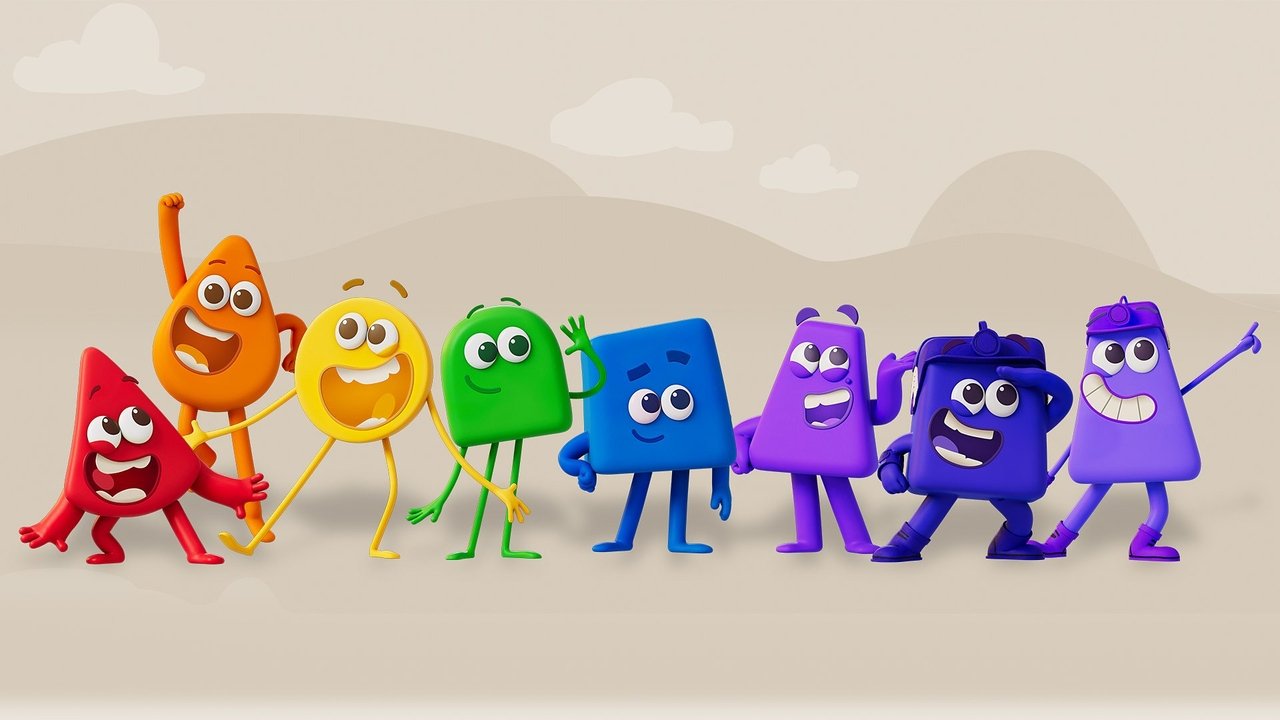
Short answer: yes. Colourblocks scores 142 out of 200 on the TVI rubric, Stimulating, with an Educational Value of 33 out of 50 and a Cognitive Stimulation of 36, and we list it at ages 2 to 6. The design is the Blocks method applied to colour: each colour is a character, primaries combine on screen into secondaries, and later episodes build shades and tints by adding black and white. Every five-minute episode invites a prediction before the reveal, then completes its own arc. The honest other half is the SEL score of 17 out of 50. Characters rarely want something they cannot have, disagree, or repair anything, and the predictions never miss, so a child does not see anyone get it wrong and recover. It is a specialist. Use it as one.
The next decision
Make the next yes-or-wait call faster
Get new TVI Kids parent guides as they publish, with the age fit, the scenes that matter, and what co-viewing changes. Free.
142 / 200
Stimulating
Cognitive
36 / 50
Educational
33 / 50
Craft
38 / 50
SEL
17 / 50
Ages 2 to 6. SEL Score reflects alignment with the CASEL framework. It is reported alongside the TVI Score for kids titles and does not change the composite. This is a verified score, produced under the current standard with a component receipt on file.
What the work makes visible, in plain terms
- Colours have bodies. Red, Yellow and Blue are characters, and when two of them hold hands the secondary colour appears between them. Mixing is shown rather than named.
- Shades and tints. Adding Black darkens a colour into a shade and adding White lightens it into a tint, and the show treats those as discoveries the characters make about themselves. For a four-year-old that is genuinely new information, and the series builds it in order: primaries, then secondaries, then combinations.
- Prediction before the reveal. Almost every episode asks what will happen when two colours combine, then shows it. That pause is where the learning lives, and it is the reason the cognitive score is respectable for a show this short.
- The ceiling is real and the show is honest about it. Colour theory for preschoolers is a finite subject, which is why the series does not reach the numbers Numberblocks does at 176: number keeps opening upward, colour does not.
What it does not depict, and why that is fine
- Its SEL score is 17 out of 50. Numberblocks sits at 16 and Alphablocks at 18, so this is the family's shape rather than a flaw in one show. The characters are cheerful, cooperative, and almost never in conflict.
- The predictions never miss. That is the one thing we would change. A child never watches a character guess wrong about what brown is made of and then work it out, so the show demonstrates knowing more than it demonstrates learning.
- This is a legitimate design choice. A five-minute show that tried to do feelings and colour theory would do neither well. The mistake is letting a specialist stand in for the whole rotation.
What to pair it with
- For the feelings half, in the same age band: Bluey scores 184 with an SEL of 46, and Daniel Tiger's Neighborhood scores 170 with an SEL of 48.
- For the rest of the Blocks family: Numberblocks at 176 for number, Alphablocks at 152 for phonics, and Wonderblocks at 155 for sequences and instructions, which is also the sibling with the most feeling in it.
- A workable week: Colourblocks for the concept, something high-SEL for the person. You are not replacing anything, you are keeping the rotation from being single-nutrient.
Take it off the screen
Colourblocks makes several ideas easy to extend at home, without treating viewing as a guaranteed learning intervention:
- Mix it. Two paints, or two food colourings in water. Ask what will happen before you stir, the way the show does, and let the child be wrong once.
- Find the shade. Hold something red up to something dark red and ask which is the shade. The word does more work once the child has seen the difference.
- Catch it in the wild. A green traffic light, a purple flower, an orange in the fruit bowl: naming which two colours made it turns the show into a shared vocabulary.
Common questions
- Is Colourblocks good for learning colours?
- Colourblocks is good for learning colours. It scores 142 out of 200 on the TVI rubric with an Educational Value of 33 out of 50, and we list it at ages 2 to 6. It presents colour mixing accurately and in order, primaries into secondaries and then shades and tints, and asks the child to predict before each reveal. Its SEL score is 17, so pair it with a title that models feelings and conflict.
- What age is Colourblocks for?
- We list it at ages 2 to 6. The early episodes name and combine the primaries, and the later ones reach shades, tints, and colour combinations. A two-year-old gets the characters and the mixing; a five-year-old gets the system.
- Is Colourblocks the same as Numberblocks?
- Same studio, same method, different subject. Colourblocks scores 142 and Numberblocks 176 on the same rubric, and most of the gap is subject breadth: number theory keeps opening upward for years while colour theory for preschoolers is a bounded topic. Neither fact makes Colourblocks weaker at the job it was built for.
- What did TVI score Colourblocks?
- 142 out of 200, Stimulating, with an SEL score of 17. The dimensions are 36 cognitive, 33 educational, and 38 craft. It was scored in a receipted session in August 2026 on a sample of Series 1 episodes, with the SEL score reviewed by a school psychologist, and the receipt is public.
Decide with confidence, every time
Founding Parents get Cordelia's quarterly SEL Digest, co-viewing guides, and the full kids methodology. Pay once. Founding Circle and Founding Parents share 50 memberships in total.
Join Founding Parents