The 20 kids shows I
recommend above all others
After reviewing over 227 children's shows through the lens of cognitive development, SEL, and long-term well-being, these are the 20 I'd put in front of any child without hesitation. Ranked. With my notes on exactly why each one earns its place.
School Psychologist · @cordelias.garden

Fred Rogers spoke to children with emotional honesty and respect that no show in 50 years has matched. Every episode models healthy emotional communication. This is not nostalgia, it is the most emotionally sophisticated children's show ever made.

The most studied children's show in history was built through decades of formative research. Its short, varied segments carry explicit literacy, numeracy, and social-emotional curriculum goals without relying on one long narrative.
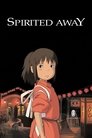
Miyazaki's masterpiece frames strange, frightening places as navigable through courage and care for others. Its child protagonist works to save her parents, and the film demands close engagement while sustaining themes of agency and identity.
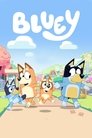
The best children's show currently airing. Every episode models perspective-taking, emotional regulation, and complex family negotiation in exactly seven minutes. The parents are as developed as the children, the whole family is watching something genuinely sophisticated.

Ms. Frizzle doesn't just present science facts; each episode models the scientific method itself: hypothesis, observation, experimentation, and conclusion. The cognitive demands are real, and revision is built into the plot rather than added as a lesson.
See all 20, free
Get the complete list with Cordelia's personal notes on every show, plus her picks in your inbox as new shows get scored. No spam. Unsubscribe anytime.
Joining Cordelia's picks newsletter · Free forever
You're in. Here are the rest of Cordelia's top 20.

The show my educator colleagues are obsessed with. Genuine mathematical thinking, not just rote counting, but number relationships, decomposition, and early algebraic reasoning, presented through visual comedy and song. A remarkable achievement.

Answers the "but why?" questions children actually ask: why is the sky blue, why do we sleep, what are germs? Each answer is accurate, engaging, and ends by opening another line of inquiry. A model for science communication at this age.

Still holds up completely. Nye performs scientific enthusiasm while making complex physics accessible without dumbing it down. The experiments are reproducible. The science is sound. Classic for a reason.

Every episode centers one specific emotional regulation strategy drawn from child development research, shows it in context, and repeats it in a short song designed as a retrieval cue. I recommend it more than almost anything else for ages 2–4.

Genuinely hard math problems disguised as spy missions. The cognitive demands are real: episodes present multi-step problems that would challenge many adults outside the familiar context. One of the most underrated shows in the entire database.

LeVar Burton's contribution to children's literacy is incalculable. The show doesn't just share books; it models the relationship between a curious adult and the written word, framing reading as a way to explore the world.

Marine biology for young children, presented with genuine scientific accuracy. The creature reports name real species, habitats, and behaviors, while the rescue plots keep the science inside the story. One of the best nature education shows made for this age group.

The film organizes emotion into a shared visual vocabulary for children and parents. Its concrete scenes of sadness, anger, fear, and memory give co-viewers unusually specific material to discuss. Pixar at its most emotionally precise.

A long-form narrative that explores trauma, consent, and healthy relationships with more sophistication than most adult television. The emotional maturity modeled here is exceptional. One of the most important shows of the last decade for older children.

Brothers Chris and Martin Kratt bring high-energy curiosity to real wildlife facts. The blend of live action and animation keeps the adventure moving while accurately presenting animal behavior, adaptations, and ecosystems.

The animated series, not the films. Genuine moral complexity, heroes who make mistakes, villains with coherent worldviews, ethical dilemmas without easy answers. The highest-IQ superhero content made for children, and it's not particularly close.

One of the most sophisticated treatments of systemic bias ever put on screen, for any audience. The film asks children to think about how prejudice works at an institutional level, not just an individual one. Remarkably courageous for a mainstream animated film.

Codes hidden in every episode. Mysteries that reward careful attention across entire seasons. The show assumes its audience can handle genuine complexity and makes that complexity part of the comedy. The most cognitively demanding animated comedy made for this age group.

The most educationally rigorous portrayal of the American Revolution made for children. Multiple perspectives, including loyalists and enslaved people, are given real weight. Rare among historical children's programming for its intellectual honesty.

National Geographic's answer to "but why?", each episode dissects a single question from multiple angles with real production ambition. Recommended for curious 8–12 year olds who want their questions taken seriously. Criminally underrated.
Explore the full database
227 kids shows scored on the public TVI Kids methodology, filtered by age, category, and SEL score.