After watching: this article discusses the plot.
Before and after Let the Fire Burn
Choose a resource for where you are in the viewing. Content details are labeled.
Before watching1 resource
- Score & viewing detailsLet the Fire Burn: score and viewing details
The catalog record, score status and viewing options.
Content details may appear in the rationale
After watching1 resource
- ReviewFilm reviewLet the Fire Burn: Unassigned Order
The critical argument, for reading after you have watched.
Plot details; may discuss the ending
Let the Fire Burn: Unassigned Order
Jason Osder rebuilds the 1985 MOVE bombing from the record alone. Every account of the decision to let the fire burn leaves out the person who made it.
Let the Fire Burn (2013) scores 173/200 on TV Intelligentsia's published methodology, Masterclass. Jordan Robinson's review follows Jason Osder's documentary, built only from the 1985 hearings, a child survivor's deposition and local news, and looks for the person in Mayor Wilson Goode's phrase "a decision to let the fire burn." The film is streaming on OVID.
Let the Fire Burn (2013). Directed by Jason Osder. Edited by Nels Bangerter. Zeitgeist Films. 95 minutes, not rated.
The film opens on a boy in a chair. A man off camera tells him the camera can't hear him shake his head, so he has to say yes out loud. Then he asks the boy if he knows what it means to tell the truth. "Don't lie," the boy says. And what happens to people who lie? "They get hurt."
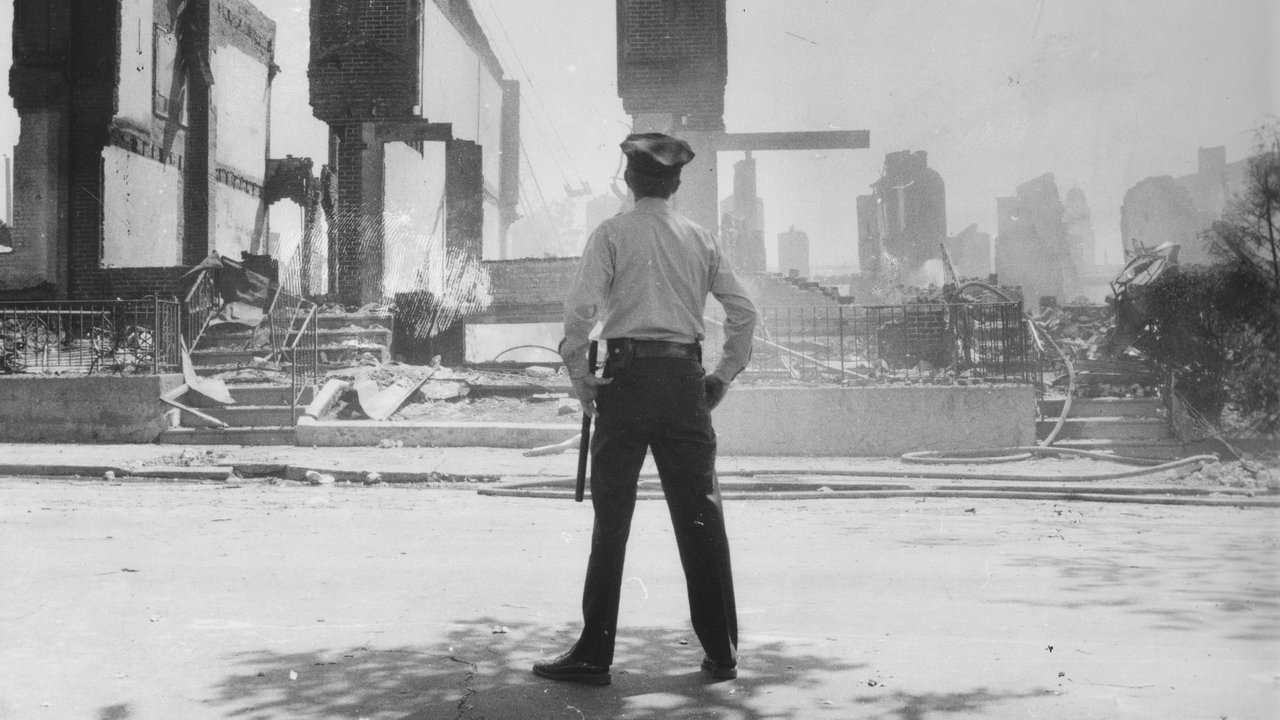
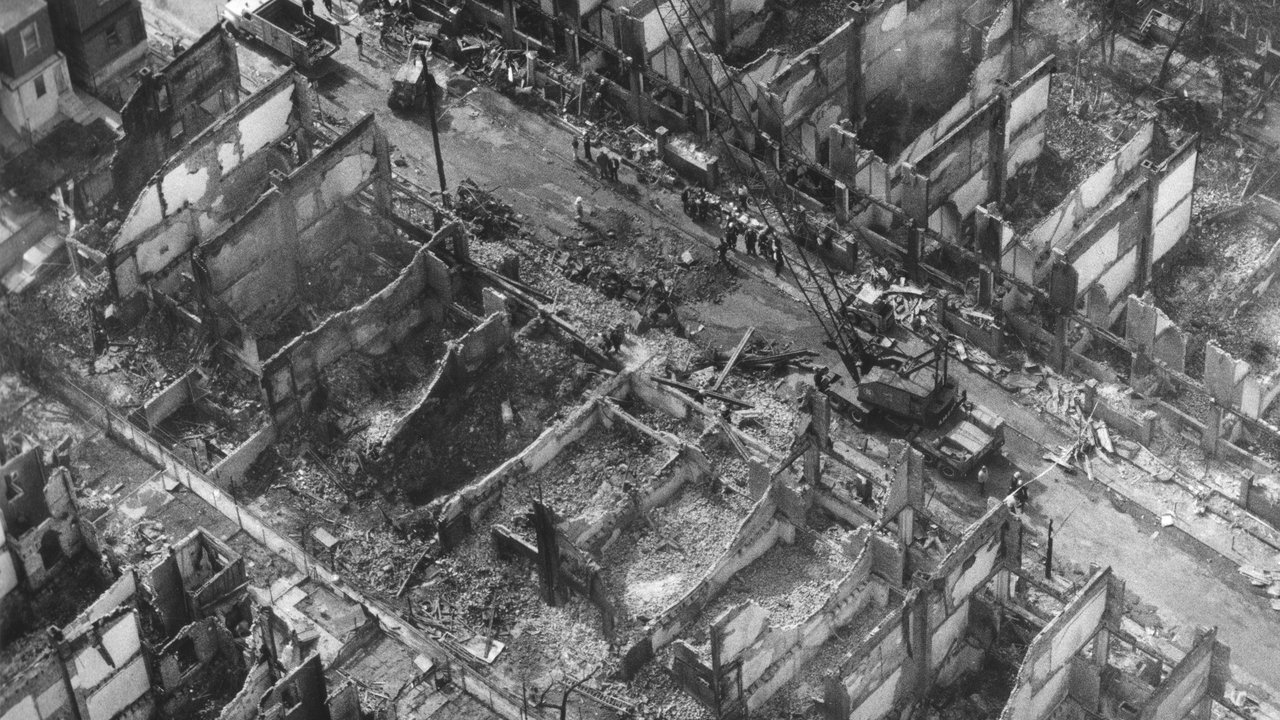
The boy is Michael Moses Ward. As a child he was called Birdie Africa. It is October 1985. Five months earlier, Philadelphia police moved on a rowhouse on Osage Avenue where a group called MOVE lived, and by evening a bomb had been dropped on its roof. Eleven people inside died, five of them children. Sixty-one homes burned.
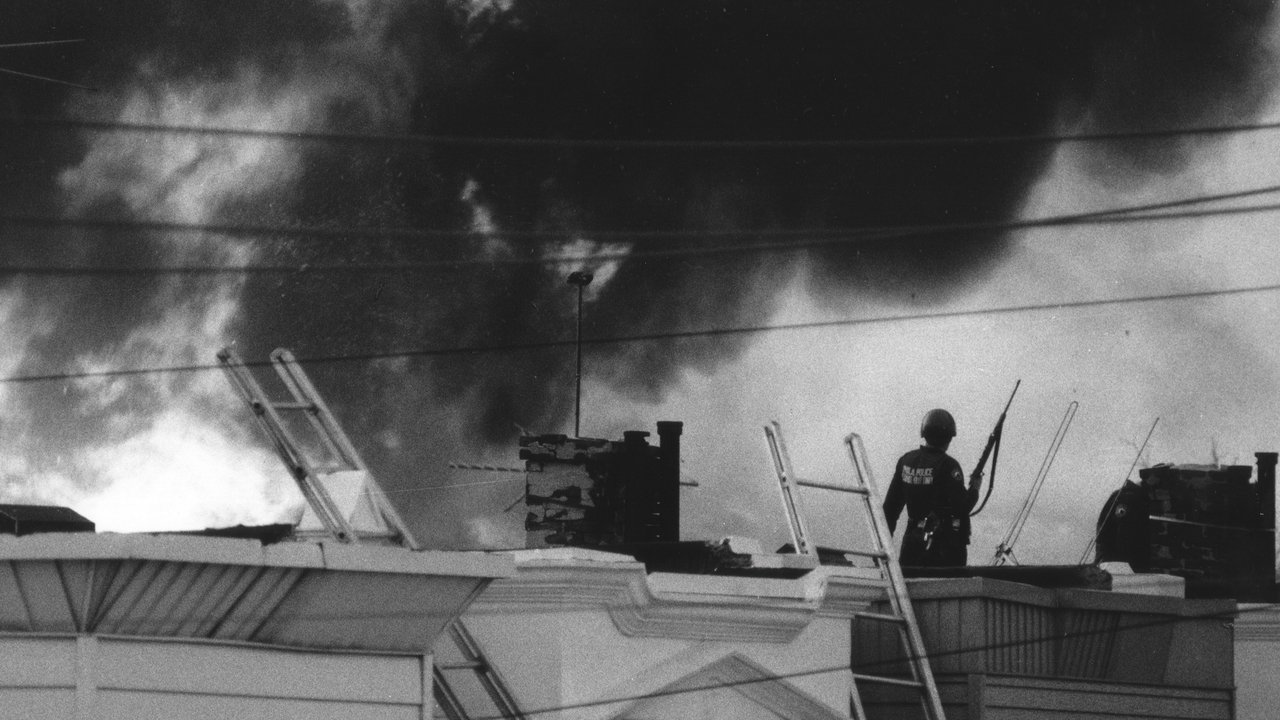
Jason Osder's Let the Fire Burn tells that story without a narrator and without a single new interview. Everything you see comes from the time: the city's hearings that fall, Birdie's deposition, and local news footage. When the archive can't carry a fact, plain text on the screen does. Nobody tells you what to think. You sit with the record, the way the commission did, and you try to work out who decided.
The Order Nobody Owns
A little past the hour mark, the film puts a chapter title on screen. It is Mayor Wilson Goode's phrase: "a decision to let the fire burn."
Look for the person in that sentence. There isn't one.
The hearings keep asking who decided to let it burn, and every witness points somewhere else. Fire Commissioner William Richmond testifies that Police Commissioner Gregore Sambor said to him, "Let's let the bunker burn." Sambor says, "It was not an order." Goode says he watched from City Hall on television, where what looked like water on the roof turned out to be snow on his screen. After about five minutes of that, he says, he gave "my first order of the day, which was put the fire out." Sambor says he passed that order on. Richmond says, "I had no knowledge of an order to extinguish that fire."
Osder sets those accounts next to each other and walks away. Between them, the film counts the minutes on screen. Five. Fifteen. Twenty-five. The fire does not wait for anyone to finish testifying. It takes the block. On the live news, a neighbor named Janice Walker says, "it's just not fair. We've been there over 20 years." Afterward the city rebuilt the block, and by 2000 those homes were condemned.
Look for the person in that sentence. There isn't one.
Because I Was There
Here is what I think the film does best, and this is my reading of it. It keeps telling you what it can't show you. Early on, a news scene from 1976 looks like a standoff, and text on the screen tells you it was a reenactment staged by MOVE members for a documentary. The mayor of the city watched the fire through static. Even the record admits where it is blind.
Watch what testimony is worth. During the shootout that morning, a reporter on live television says they don't know whether the guns they're hearing are police guns, MOVE guns or other guns. At the hearing, an officer is asked who shot first.
"They did." "How do you know?" "Because I was there." "Did you see muzzle fire?" "No, sir."
He was there. He did not see it. He says another team reported incoming fire, and that it sounded automatic. Text on the screen says four guns were later found in the house, and none could fire automatically. Police fired about 10,000 rounds that day.
I'm not saying MOVE was harmless. MOVE had guns, and the film gives the neighbors' complaints their time. What I'm saying is what the screen shows: the threat keeps shrinking, the force keeps growing, and no one's name ever attaches to the choice.
1978 Walked Into 1985
None of this started that morning. In 1978, an earlier standoff with MOVE ended with Officer James Ramp dead. Nine MOVE members were sentenced to 30 to 100 years. Three of the officers who were filmed beating Delbert Africa were charged and acquitted. Asked whether revenge could have played a part in 1985, a witness admits there was "residual anger" toward MOVE among some police. "No question about that." Ramona Africa, one of the two people who made it out of the fire alive, takes it further. She says the system had one intention "in both confrontations." That is her view, and the film lets her say it without taking her side.
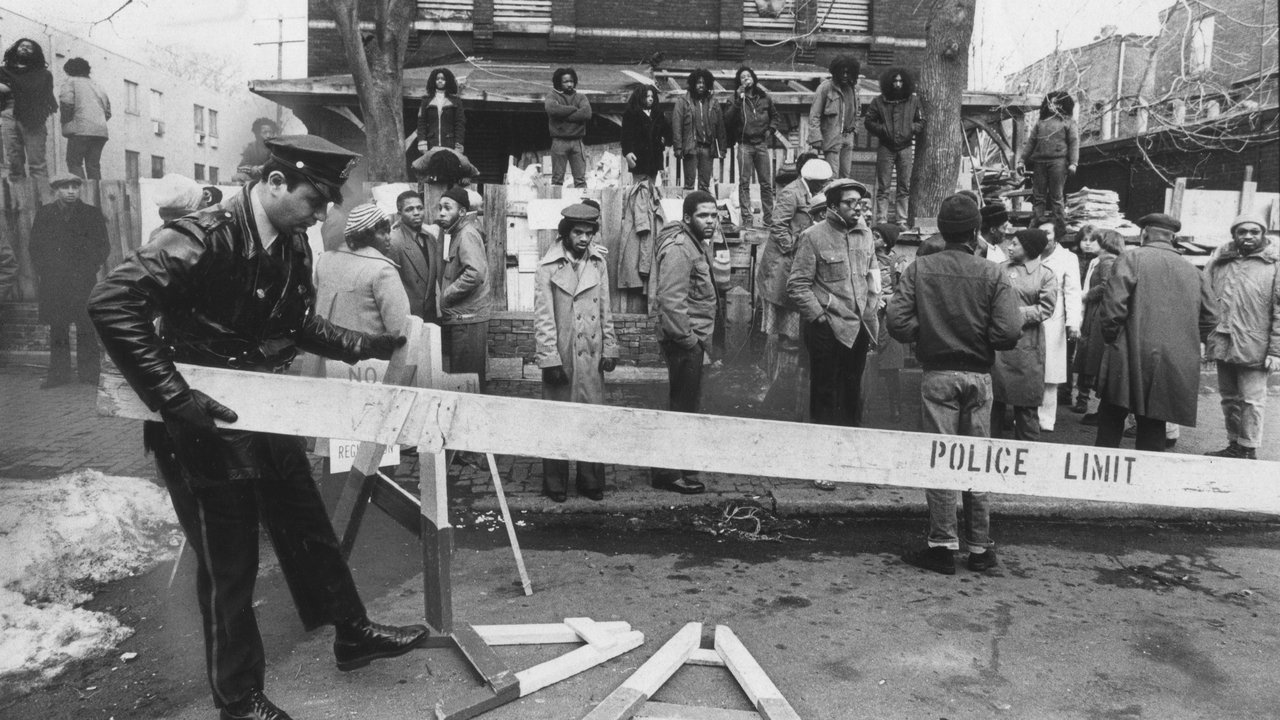
The film is fair to the city, too. Neighbors talk about the harassment and the loudspeaker they lived next to. Then Louise James, a former MOVE member whose house it was, is asked about a report that her son beat her. She turns the question back around: is she supposed to believe the bomb was dropped "because Frank beat his mother?" By then you understand why the city felt it had to act. What she wants to know is how that ended in a bomb.
No Camera in the Alley
Then comes the text on screen that matters most. No camera had a direct view of the back alley, where people tried to get out of the burning house. From there on, testimony is all there is.
Rev. Paul Washington, one of the commissioners, asks the officers what could make a person turn back and run into a fire. He tries to imagine it from inside that fear. Then he tells them, "I knew many of them by name, as human beings."
Watch the officers' faces when he says it. I can't know what they felt, because I'm not them. To me, they look a little guilty. It is easy to say MOVE and stop there, because a label keeps the people inside it at a distance. Washington won't let them keep that distance. He knew these people by name. Once you see them as people, the whole exchange looks different.
That is where I came down. I can't tell you who did what in that alley. A lot of it is one account against another. But you don't treat people like animals, and that responsibility belonged to the police. If MOVE was provoking them, that makes the account harder to settle. It doesn't take the duty away. Whatever the adults had done, the children were inside the house.
I'll be honest about one thing that went through my head in that stretch. I wondered whether police fired at the people coming out. That is my question, not the film's. No text on the screen says it and no footage shows it, because no camera was there.
Berghaier Goes After the Boy
This is the part of the film that moved me most. It is also the only act in the whole record that has a person's name on it.
Officer James Berghaier sees Birdie lying near the fence, not moving. He hands off his shotgun. "I'm gonna go get the kid." Officer Michael Tursi grabs his shoulder and tells him it's a trap.
Think about that for a second, because this is my reading and not the film's. A kid gets out of a burning house, in the middle of gunfire, and falls down. And a trained officer looks at him and sees a decoy. If that doesn't tell you the mindset on that block that day, I don't know what does.
When Birdie goes down again, Berghaier goes after him anyway. At the hearing he says, "I was scared to death. I just didn't want to let that kid lay there like that." Later: "I thought about the kids in the house. I thought about my kids."
A commissioner thanks him: "if there's any hope in this whole sorry situation, it's because of that officer." Then the screen goes to text. After Berghaier testified, someone wrote a slur on his locker. He was diagnosed with post-traumatic stress disorder and left the force in 1987.
In a story where every decision lost its subject, the one man who acted under his own name paid for it.
TVI Score: 173 out of 200
TVI scores Let the Fire Burn 173 out of 200, Masterclass. It earns that with Nels Bangerter's edit, which won the documentary editing award at Tribeca, and with its refusal to narrate. The sources argue with each other, and the weighing is left to you. I came out of it unable to tell you who did what, and I think that is the film working.
The commission found the city negligent and singled out Sambor and Richmond for the decision to let the fire burn. No city official was criminally charged.
The film ends on a name anyway. Michael Moses Ward, 1971 to 2013. He was the only child who came out of that house alive.
Let the Fire Burn is streaming on OVID. This review is part of a series TV Intelligentsia is writing with OVID on films from its catalog.
The Intelligentsia Report
Film and television criticism, watch guides, and updates from TV Intelligentsia. Free. Unsubscribe anytime.
TVI Score Breakdown
| Dimension | Weight | Score |
|---|---|---|
| Cognitive Stimulation | 40% | 44 / 50 |
| Educational Value | 35% | 41 / 50 |
| Craft & Quality | 25% | 45 / 50 |
| TVI Score | 173 / 200 · Masterclass |
Formula: round((C × 0.40 + E × 0.35 + Q × 0.25) × 4) = 173. The three weighted dimensions do not sum to the total; the formula scales them.
Disclaimer: TVI's score is a content rating, not a measurement of intelligence.
Common questions
What is Let the Fire Burn's IQ Score?
Let the Fire Burn (2013) scores 173 of 200 on the TVI rubric, Masterclass tier, with Cognitive Stimulation 44 of 50, Educational Value 41 of 50, and Craft and Quality 45 of 50. It is the film's first TVI score.
What is Let the Fire Burn about?
Jason Osder's 2013 documentary tells the story of May 13, 1985, when Philadelphia police dropped a bomb on a rowhouse on Osage Avenue where the group MOVE lived. Eleven people died, five of them children, and sixty-one homes burned. The film uses no narrator and no new interviews: only the city's commission hearings, the deposition of the surviving child, Michael Moses Ward, and local news footage.
Did anyone face charges for the MOVE bombing?
The Philadelphia Special Investigation Commission found the city negligent. No criminal charges followed against city officials. Ramona Africa, one of the two survivors, was tried and convicted.
Film: Let the Fire Burn (2013), directed by Jason Osder, edited by Nels Bangerter, distributed by Zeitgeist Films. Stills are the film's own, used for review. The IQ Score is a content rating, not an intelligence measurement.