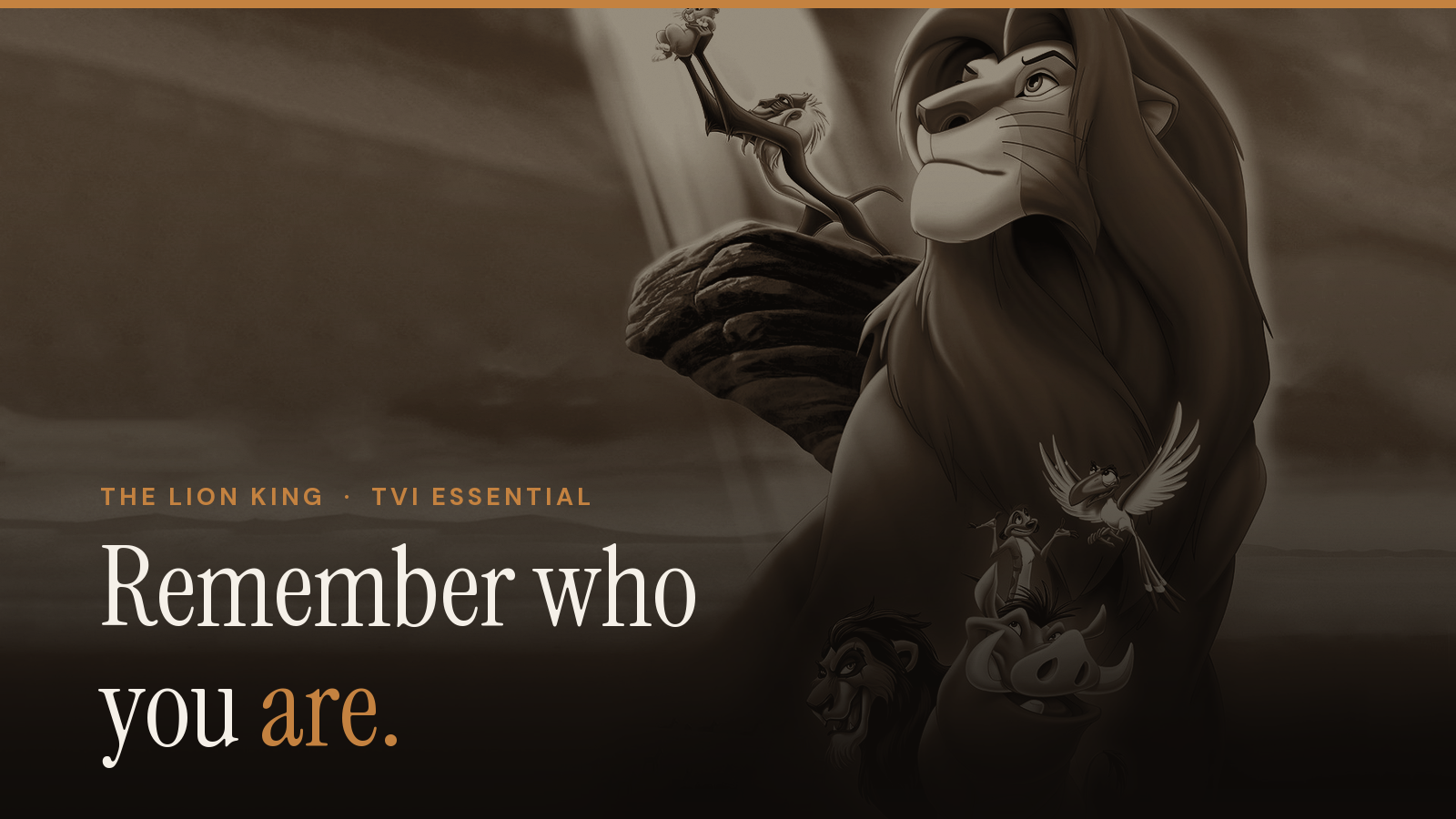
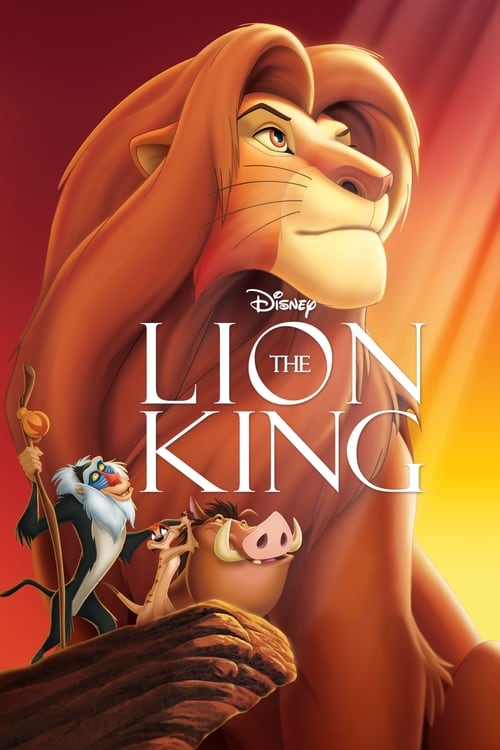
Before The Lion King is a story, it is a sound.
A voice rises out of darkness. The sun breaks over the horizon. Animals begin moving toward Pride Rock as if their bodies remember where to go before their minds do. For many adults, the film does not begin on a screen anymore. It begins somewhere older than that: in the nervous system. The first notes arrive, and suddenly you are not only watching a movie. You are being returned to the version of yourself who first saw it.
That is not incidental to the film's power. It is the point.
Nostalgia is often treated as a soft thing, a haze that makes childhood movies seem better than they were. The Lion King survives that treatment because the nostalgia around it is not merely sentimental. It is diagnostic. The film stayed with us because it gave children images for experiences they could feel before they could explain: the terror of losing a parent, the burden of being chosen, the pleasure of running away, the shame of staying away too long, and the strange force of a voice calling you back to yourself.
I rewatched The Lion King recently with Cordelia. The score held up. The songs held up. The Shakespearean architecture still felt sturdy. But nostalgia had preserved the surface and hidden the depth. As a child, I remembered the stampede, the songs, the jokes, the glow of Pride Rock at sunrise. As an adult, I could finally see the machinery underneath the feeling.
The film had not simply made me emotional when I was young. It had taught me an emotional grammar.
I will put it plainly. The Lion King is one of the most psychologically precise films about recovery I have ever seen. It is also a children's movie. Those two facts are usually held in contradiction. Here they are not.
The film portrays identity, grief, avoidance, inheritance, and integration with unusual clarity. Cordelia, watching beside me, kept naming the developmental mechanisms the film was showing without the film ever needing to explain them.
Remember who you are has always been a line about everyone, dressed as a line about a lion.
I have watched The Lion King more times than I can count: first as a child, then as a school psychologist, and most recently beside Jordan with a developmental eye. What earns it the first TVI Kids Essential designation is not nostalgia. It is the precision with which the film renders loss, guilt, and return through images and action rather than abstract explanation.
Simba's arc shows a child moving through loss: the shock, the misplaced guilt, the wish to run away from pain, and the slow return to himself. The film does not lecture. It stages those experiences through image, rhythm, repetition, relationship, and feeling.
That is why the film's SEL value is so high. It touches self-awareness, self-management, social awareness, relationship skills, and responsible decision-making without turning any of them into a lesson. It earns a 48 out of 50 on the TVI Kids SEL scale because the social-emotional modeling is unusually complete.
Mufasa's death is not hidden or merely suggested. It happens on screen, and for many children it may be one of the first deaths they witness in a story. That is not a flaw. It is why the film rewards a parent in the room. Watch it together, remember not to rush to explain everything, and let your child tell you what they noticed.
Cordelia Witty, EdS., NCSP
The oldest story in Disney clothes
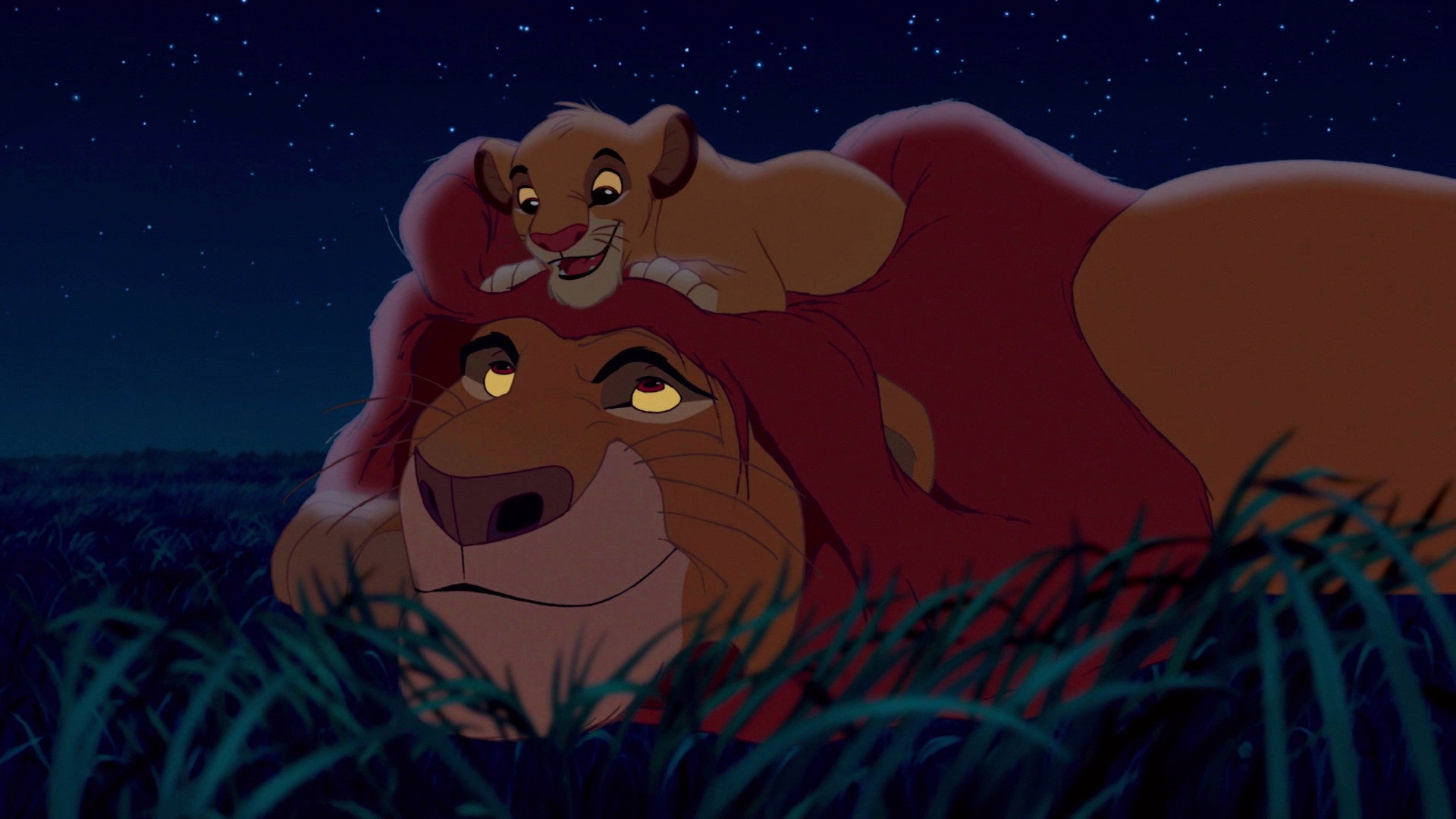
A child is claimed by a future they did not choose. They lose a parent in trauma. They flee and take on a philosophy of avoidance, living in suspended development for years. A guide finds them and produces a vision. Their dead parent speaks: remember who you are. The child becomes capable of growing into the adult they were always being asked to become. They return and reckon, completing the circle their parent started.
That is the Hero's Journey in nine sentences. Joseph Campbell named the pattern in 1949. Christopher Vogler distilled it for Disney in a 1985 memo that became the studio's working template. Thirty-one years later, The Lion King remains one of the most impressive applications of that template ever finished. It also embodies a recovery arc: rupture, avoidance, recognition, integration, return.
What makes the film special is that both readings, the mythic and the developmental, are simultaneously true. The film operates at archetypal pitch in almost every scene. A particular incident is true literally in the story. The same incident is true universally as a depiction of a recognizable human experience. When Nala sings "why won't he be the king I know he is, the king I see inside?" she is asking a literal question about an animated lion. She is also asking the question every partner in a committed relationship has asked, at some point, about someone they love who has stopped trying to become who they could be.
Both readings are correct in the same moment, and the film does not have to pick.
This is what archetypal storytelling does at its best: it creates specific scenes that operate clearly at two registers at once, without one undercutting the other.
Being chosen is also a burden
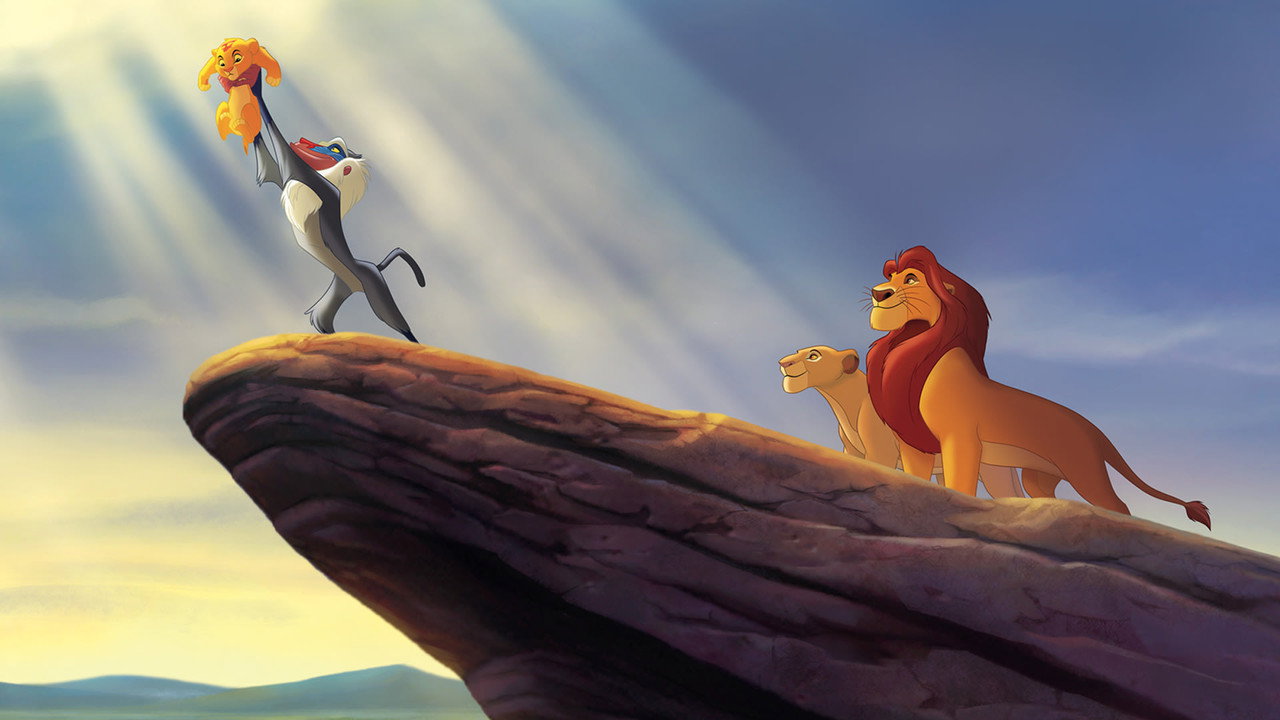
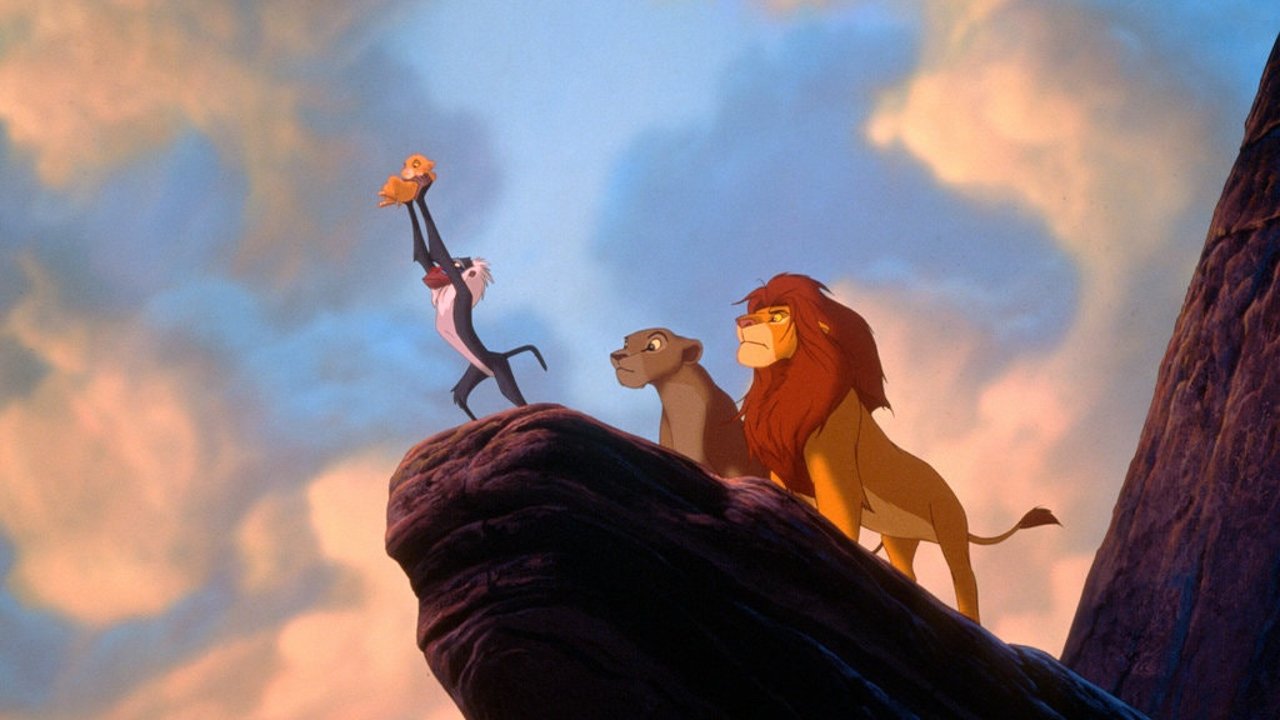
The film's first major sequence after the opening Circle of Life is the public presentation of Simba at Pride Rock. Rafiki marks him. The animals gather. The cub is lifted. Before Simba can understand anything about kingship, the world has already been told who he is supposed to become.
That matters.
The child does not choose the designation. The impact of being chosen arrives before the child has the maturity to understand it. Later, when Mufasa walks Simba through the Pride Lands and says, "Everything the light touches is our kingdom," he is not anointing him again. He is beginning the quieter work that follows the public moment: mentorship, inheritance, responsibility.
This experience is not uncommon, even when it looks nothing like Pride Rock. A child may be named special by a parent, noticed by a teacher, praised by a coach, or quietly recognized by an adult who sees something forming before the child can see it. Some children receive that kind of recognition early and carry it for years. Some do not, and that absence can shape them too. The film stages the most dramatic version of something ordinary human beings often live in quieter form: being seen, being named, and then having to grow into what that naming implies.
Watch what the film does with the body, not only the word. Rafiki does not just mark Simba. He raises him, holds him up at the edge of the rock, above every animal gathered below, so the whole kingdom has to look up. The elevation is literal, and the metaphor is the oldest one we have. To be chosen is to be lifted: set above, set apart, raised into view.
Being elevated by others has a more profound effect than elevating yourself. Private belief matters, but recognition from outside the self carries a different kind of evidence. The film opens with this distinction and treats it as one of the central events of Simba's life.
It also understands the danger around the chosen child. The world does not respond to recognition neutrally. Admiration gathers. Expectation gathers. Jealousy gathers too, especially in those who believe the thing given to someone else should have been theirs. Scar is not jealous of Simba because Simba did anything to him. Scar is jealous because Simba received the future Scar wanted. The film is honest about that. Being chosen gives Simba an inheritance, but it also places him inside other people's wounds.
Scar was never going to be king
There is a quiet scene early in the film where Mufasa and Simba sit on a ridge as the sun rises. Mufasa tries to teach his son what kingship actually means.
"There's more to being king than getting your way all the time."
Simba, missing the point completely: "There's more?"
The child hears the word more and assumes it refers to additional benefits. The father is talking about additional responsibility. The film places wisdom and ignorance side by side in two lines of dialogue and lets the viewer see the distance between them. Few children's films stage this distinction with such clarity.
The whole film is the story of Simba arriving at his father's understanding of kingship, which is responsibility, not privilege. He gets there by losing his father, fleeing what he was meant to become, hiding inside a philosophy that makes responsibility feel unnecessary, and finally being guided home by a figure who refuses to lecture him. There is no shortcut. Some lessons cannot be fully received from a parent in advance. They must be lived.
Mufasa understands something Scar does not: his time as king will end. He says so quietly to Simba on the ridge. He knows the sun will set on his reign and that Simba will take over. He does not white-knuckle the role. He carries it with the awareness that the carrying is temporary. That awareness is the substance of mature leadership in any domain.
Scar refuses the cycle. He believes he is bigger than the natural order. He kills his brother to keep the role for himself, and the moment he succeeds, the kingdom withers. Skies gray. Resources recede. The animals depart and hyenas begin to crowd a domain that once felt abundant.
There is an apt clinical analogy here. A cell in the body has instructions that orient it toward the function of the body as a whole. When those instructions break and the cell begins to behave as though it is bigger than the organism that sustains it, the cell becomes a cancer. It hoards resources. It refuses to die when it should. It distorts the architecture around it. Eventually, it kills the thing that kept it alive in the first place, and in killing the host, it kills itself.
That is Scar. He believes he is the point. He destroys the ecosystem that sustains the kingship he wanted.
It is worth naming what the film assumes and never argues. Mufasa is king because he is a lion, the same way Simba will be. Simba is Swahili for lion. The power is not earned. It comes with the body you were born into. Humans live inside the same fact, holding an outsized power over everything smaller for no reason we chose. The film is not interested in whether that power is fair. It is interested in the only question that survives the unfairness: what you do with it. Mufasa and Scar are the two answers. One holds it as stewardship, inside a circle he knows he depends on. The other holds it as ownership, and the kingdom dies to feed him.
There is also his name. The film calls its villain Scar and marks him with one, a line through the eye you cannot stop seeing. We are never told how he got it, and the film is right not to tell us. The point is not the injury. It is what the injury became. Scar is the brother who was not chosen, and somewhere the wound stopped being something that happened to him and became the thing he is. Hurt, left long enough, looks for somewhere to go. His goes toward Simba.
The wisdom of Mufasa
The strongest line in the film is not in any of the trailers or on any of the merchandise. It is delivered late at night by Mufasa to his son after the elephant graveyard episode.
"I'm only brave when I have to be. Simba, being brave doesn't mean you go looking for trouble."
Simba's earlier view of bravery, as he charged toward the graveyard with Nala, is the child's view. I laugh in the face of danger. Ha ha ha ha. Bravery as posture. Bravery as the act of looking unafraid. The film knows this is wrong and stages it as the recklessness that almost gets him killed. Mufasa's correction is the mature view. Bravery is what you do when the situation requires it, not what you perform to make a situation arrive.
Both military and surgical training have a great deal to say about courage, and almost everything serious they say converges on Mufasa's formulation. Courage requires the presence of fear. If there is nothing to overcome, there is nothing to call brave. Mufasa admits in the same scene that he was scared too. The fear is permitted. The bravery is reserved for the moments that earn it.
The film's whole architecture is Simba arriving at the bravery his father described, by way of every shortcut failing. Children's films rarely make the distinction between performed bravery and real bravery. The Lion King makes it under a starlit sky in a single line of dialogue and lets the audience carry it.
Hakuna Matata highlights the allure of avoidance
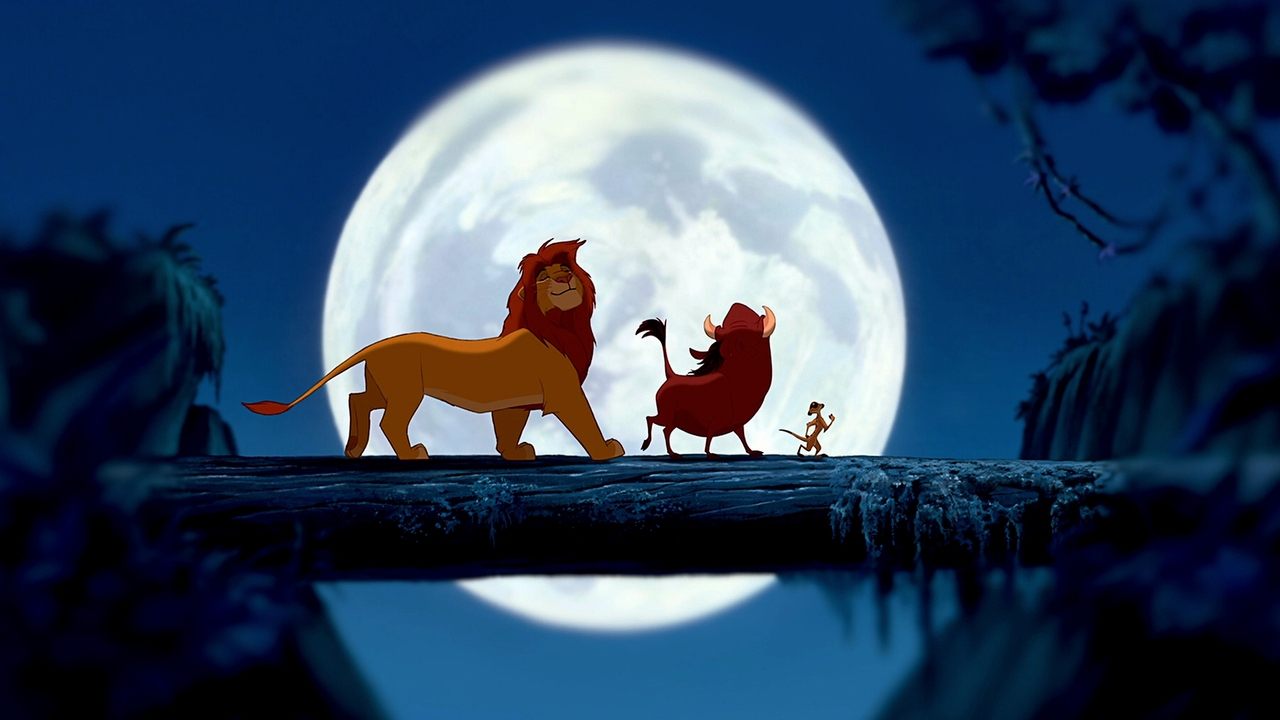
Part of the genius of Hakuna Matata is that it still feels good. Many adults do not remember the song as avoidance. They remember it as relief. The colors brighten. The tempo lifts. Timon and Pumbaa appear after the gorge like the first breath Simba has been allowed to take since the stampede. For a child watching, and for the adult remembering the child who watched, the song feels like rescue.
That is why the scene is so psychologically exact.
After Mufasa's death and the false guilt Scar plants in his head, Simba flees. He meets Timon and Pumbaa, two outcasts who have made an identity out of not caring. They teach him a song.
"It means no worries, for the rest of your days."
In the moment, that avoidance is freeing and blissful. It is one of the strongest representations of experiential avoidance in children's film: the refusal to feel uncomfortable feelings, which works in the short term and compounds in the long term. Relief is appealing. That is why people choose it.
The film lets the relief be real. That is important. Hakuna Matata is not wrong because rest is wrong or because joy after trauma is wrong. Simba needs a place where he can breathe. The problem is that he stays there. He turns relief into identity, and the entire back half of the film exists to undo the philosophy the song represents.
Simba grows up under it. He becomes physically larger and psychologically stalled. He is not at peace. He is hiding: bigger lion, smaller life. When Nala finds him in the jungle, the contradiction is palpable. Nala is from his past, and his past has caught up to him in the middle of the life he built to avoid it. He cannot square the two.
The same structural move runs through Pinocchio's Pleasure Island and Peter Pan's Neverland. A protagonist escapes responsibility into a beautiful suspended world. The world is real. The escape is real. The damage of staying there is also real. The Lion King stages the same archetype with a song catchy enough that audiences forgive the diagnosis embedded inside it. The appeal of avoidance is not argued. It is experienced directly, by the audience, alongside Simba. Then the film lets that pleasure transform into recognition.
Rafiki does not lecture. He shows Simba the mirror.
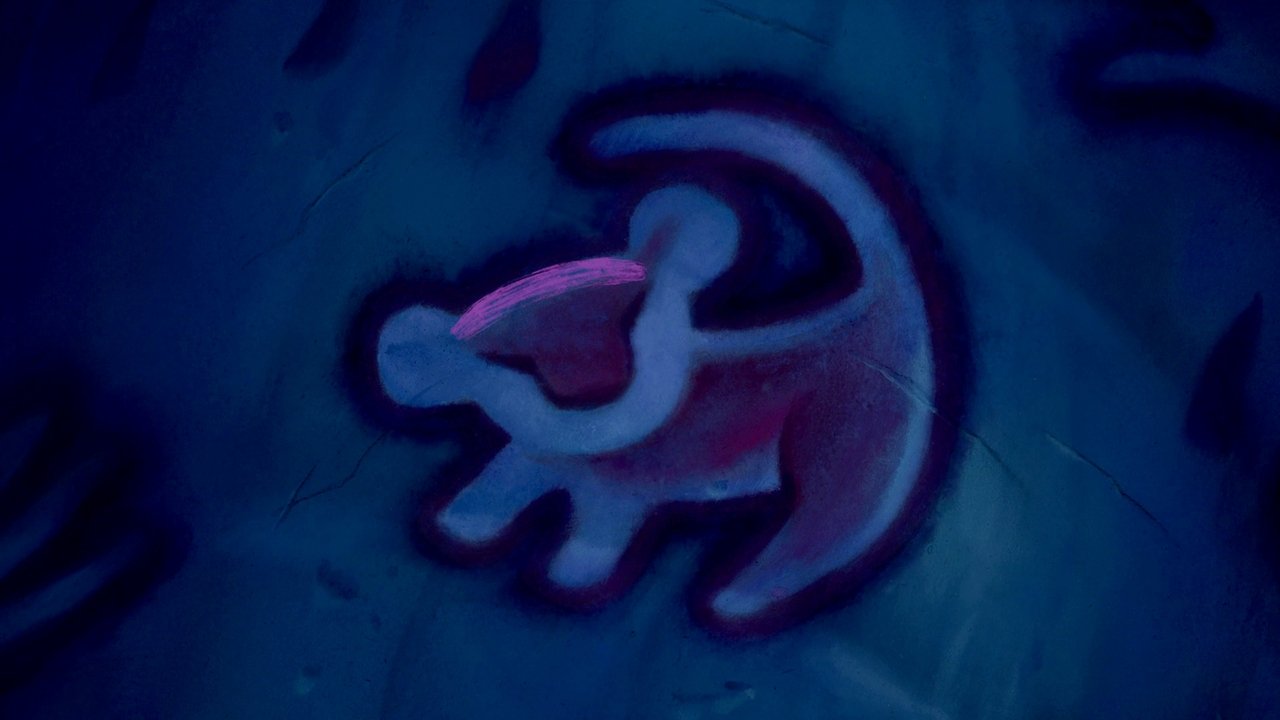
The film's central intervention is delivered by Rafiki, a mandrill-shaman figure with a stick and better timing than almost anyone else in the movie.
In the mythic frame, Rafiki is the Shaman archetype. Every Hero's Journey has one. The guide who arrives in the wilderness after the hero has refused the call, who knows the hero from the beginning, who carries knowledge the hero does not yet possess, who can see what the hero has forgotten. He is Yoda. He is Obi-Wan. He is Monk Gyatso to Aang. He is Gandalf to Frodo. He is every old, half-cracked, knowing figure who arrives when the hero is most lost.
Rafiki is also one of the most successful multi-tradition spiritual figures in mainstream film. The mark on Simba's forehead echoes both the Ash Wednesday cross and the Hindu tilaka without committing to either. The vision in the clouds reads as Christian, as ancestral African, as Jungian, as straightforwardly mystical. The film does not pick. It lets the archetype work in several registers at once.
Watch what he does in the jungle. Rafiki tells Simba his father is alive. Simba protests. Rafiki insists. Simba follows Rafiki to a pool, deep in the bush. The walk is staged as ritual, not as travel. Rafiki shushes him before they arrive. When Simba looks into the water, he first sees only himself. Then the reflection resolves into Mufasa's face. He looks up and sees Mufasa in the clouds. The dead father speaks:
"You have forgotten who you are, and so have forgotten me. You are more than what you have become. Remember who you are."
The film stages the journey into the subconscious as a quiet walk to a pool and a reflection that resolves into the father. The mentor does not lecture. He arranges a meeting between Simba and the part of himself he has been avoiding.
Then the lesson, with a stick to the head. Simba complains, and Rafiki answers: "It doesn't matter. It is in the past." And then the line that has lived in the culture for three decades:
"Oh yes, the past can hurt. But the way I see it, you can either run from it, or learn from it."
The line is therapeutic doctrine compressed into one sentence and delivered with a literal blow to the head. The bonk is the point. The past does not stop hurting. It stops being in charge.
Remember who you are is also a line that operates on two registers at once. Inside the story, it is Mufasa's instruction to his son. Outside the story, it is an instruction to the viewer. Most people watching the film have, at some point, forgotten who they are. The line lands because it has always been a line about everyone, dressed as a line about a lion.
The fight is not with Scar
On the surface, the climb up Pride Rock in the rain is the climax: the confrontation with Scar, the fight, the storm. But the obstacle the film actually cares about is not Scar. The external confrontation is the resolution, not the cause, of Simba's recovery. He does not have to be finished to face it. Nala does not wait for him to be ready, and he is not ready, and the encounter still moves him forward. The work does not have to be perfect, but it cannot be skipped.
There is a beat in the fight worth naming. Late in it, Scar holds Simba over the fire on the cliff edge, in the exact same position his father was in at the moment Scar killed him. The film is showing you a possible repetition of the wound. What happens next is the interruption. Scar, cocky, leans in and admits to the murder. The admission activates a rage in Simba large enough to save his life. Simba ends up in the position his father died in, and does something different. The film stages it as an action sequence. It is also an observation about the moment a person stops repeating an inherited pattern.
Simba's last block is not Scar. It is the false guilt he has carried since the stampede: the belief that his father's death was his fault. He cannot reclaim the throne until he can stop living under that lie. The climb up the rock in the rain is, on the literal level, a fight scene. On the universal level, it is a person walking back toward the thing they have spent half their life unable to look at, because they have finally decided they are allowed to.
What "remember who you are" is actually asking
Mufasa's first major teaching to Simba is the circle. "When we die, our bodies become the grass, and the antelope eat the grass. And so we are all connected in the great circle of life." This is one thing becoming another. It is the oldest kind of teaching about death: given plainly to a child in broad daylight, without hiding the body from the world of the living.
The film closes the circle visually at the end. Simba and Nala have a cub. Rafiki lifts the cub on Pride Rock. The animals bow. The opening sequence repeats with the next generation. The film does not merely describe the circle. It becomes one.
The film is also grounded geographically in a way that matters more than viewers tend to notice. The setting is Africa, the cradle of life. The deepest human story begins in it. That does not mean every viewer experiences the film in the same cultural register, and the film's own relationship to African imagery is not uncomplicated. But the choice still carries weight. The story of remembrance is staged against the symbolic geography of origin. If this film were set in the Canadian Rockies, it could still be beautiful, but it would not mean the same thing.
The Circle of Life works as an opening sequence because the geography it sings over feels older than the idea of story itself. It gives the film's nostalgia a scale larger than personal childhood. The viewer is not only being asked to remember a movie. Simba is not only being asked to remember his father. The film is asking everyone, in its broad mythic register, to remember a common origin and the lines of inheritance that made them.
Remember who you are operates on the same logic. Personally, Simba is remembering his father and his line. Universally, every viewer is being asked to remember theirs. Lineage works at the family level, the cultural level, and the species level all at once. The film does not need to name every lineage it is invoking. The images do that work.
The music is how the film remembers
The songs are Elton John and Tim Rice. The score is Hans Zimmer. The vocal arrangements, including the iconic Zulu opening of Circle of Life, are Lebo M. The film won the Academy Awards for Best Original Score and Best Original Song for Can You Feel the Love Tonight in 1995, and three of the five Best Song nominees that year were from this film.
The songs have entered the cultural water table. Children who have never seen the film know Hakuna Matata. Adults who have not watched the movie in years can still feel the opening vocal before they can name the first image. That is what great film music does. It does not merely accompany memory. It stores it.
This is part of why the nostalgia around The Lion King is unusually durable. The music does not sit beside the archetypes. It carries them. Circle of Life makes inheritance feel cosmic before the story has begun. I Just Can't Wait to Be King turns immaturity into melody. Hakuna Matata makes avoidance pleasurable enough to understand. Can You Feel the Love Tonight lets suspended development begin to soften into adult attachment. By the time Mufasa says, remember who you are, the score has already prepared the viewer to receive the line as memory, command, and homecoming at once.
That is enough to earn the music its own place in the argument.
The honest limit of what this film can do
The Lion King is not a treatment plan, and viewing it does not establish any child's grief outcome. The film depicts grief as survivable, avoidance as temporary, and adult guidance as part of a return. Those properties can open a co-viewing conversation. They do not guarantee what a particular child will understand, retain, or do.
The film has its harshnesses. Mufasa's death scene in the gorge, with Simba nudging his father's body and asking him to get up, is one of the most affecting depictions of loss in any animated film. Children remember it. The depiction is honest, which is part of why the film works, but that honesty can be too much for the youngest viewers.
The film handles death, fear, guilt, and leadership with care. It does not avoid difficult material, but it also does not linger past what the story can hold. For younger or more sensitive children, this is best watched with an adult in the room, not handed over as background entertainment.
Why we made this the first TVI Kids Essential
By the time Hamlet confronts Claudius, he is broken: half-mad, ambivalent, fatally wounded. By the time Simba confronts Scar, he has done enough internal work to return. He comes back not as a vengeful son, but as someone finally ready to assume the responsibility he inherited.
Hamlet is the tragedy of a man who could not integrate his grief in time. The Lion King is the homecoming of a son who could. The children's version may be the more useful one.
That is why the film still works three decades later. It requires no concessions to be viewed as a children's movie, but it is amplified because of the imprint it left on those same adults during childhood. We were the right age to take in the images before we were old enough to understand them. The meaning arrived later.
There is one more reading, and it is the one that matters most if you are watching with a child. The anointing is not only Simba's. Every child is chosen, in the most literal sense the circle of life allows: each generation is selected by the plain fact of arriving, to carry forward what the one before it could not keep. A child does not need a kingdom to inherit one. The kingdom is the specific potential that is theirs and no one else's. Rafiki lifts Simba over a cliff because the film needs the gesture to be visible. Most parents make the same designation a thousand quieter times, every time they look at their child and see who that child could become.
The film begins with a child lifted toward a future he cannot yet understand. It gives him a father whose wisdom survives death, a song about no worries that turns out not to be enough, a guide who shows him the mirror, and a voice saying the thing every lost person eventually needs to hear.
Remember who you are.
The Lion King is a children's story about coming home to yourself. Many of us have spent our adult lives discovering that it understood the journey before we did.
Bottom line for parents
The Lion King is appropriate for most children ages 5 to 8 and rewards repeat viewing well into adulthood. Mufasa's death is intense and remembered. Younger or more sensitive children benefit from an adult in the room rather than watching alone.
The film handles death, fear, guilt, and leadership with care, and the prompts below give you natural ways to extend the conversation after the movie. Conversation, not homework.
Conversation, not homework
The film rewards conversation. These are not comprehension questions. They are conversation starters. Pick one or two. Do not turn the movie into homework.
For viewers of any age (alone, with a partner, or with a child)
- Mufasa tells Simba he is only brave when he has to be. Tell me about a time you had to be brave. What made it different from a time you only wanted to feel brave?
- Rafiki tells Simba he can either run from his past or learn from it. Is there a part of your own past you have been running from? What would learning from it look like instead?
- Remember who you are. Who might say this line to you, and why would their saying it matter?
For parents watching with children, especially ages 5 to 8, with the questions aimed toward the upper end of that range
- What do you think Simba felt after his dad died?
- Why do you think Simba blamed himself? Was it really his fault?
- Hakuna Matata sounds like a fun way to live. When did it help Simba, and when did it stop helping him?
- When Rafiki shows Simba his reflection in the pool, who does Simba see? Why does that matter?
- Mufasa and Scar are very different leaders. What makes them different?
- The film says we are all part of a great circle of life. What do you think that means?
Children pick up far more than they can articulate. The prompts exist to give them a chance to show you what they noticed.
TVI Score Breakdown
| Dimension | Score | Weight |
|---|---|---|
| Cognitive Stimulation | 38 / 50 | 0.40 |
| Educational Value | 38 / 50 | 0.35 |
| Craft & Quality | 48 / 50 | 0.25 |
| Composite (TVI Score) | 162 / 200 | Masterclass tier |
| SEL Score (CASEL framework) | 48 / 50 | n/a |
Formula: round((38 × 0.40 + 38 × 0.35 + 48 × 0.25) × 4) = round(162.0) = 162
Methodology note: The score reflects TVI methodology v1.2, using three weighted dimensions across a 0-to-200 scale. The Educational Value sub-score reflects the film's emotional-intelligence modeling, Hero's Journey architecture, social-emotional teaching, and multi-register archetypal structure. The Craft & Quality sub-score reflects Hans Zimmer's Oscar-winning score, Elton John and Tim Rice's songs, Lebo M's choral arrangements, and the opening Circle of Life sequence as one of the strongest four-minute openings in animated filmmaking. The SEL score reflects exceptional alignment with the CASEL framework across self-awareness, self-management, social awareness, relationship skills, and responsible decision-making. SEL does not contribute to the composite TVI Score but is reported alongside it for kids titles. Full methodology at tvintelligentsia.com/methodology.
Disclaimer: TVI's score is a content rating, not a measurement of a child's intelligence or a viewer's intelligence.
Designation: TVI Kids Essential #1.
Two free guides built on the same lens, and the work behind the number.
Free guideThe Substance ListTwenty-four films and shows, grouped by the formal and cultural value the score cannot capture. Free guideKinds of MindHow fiction imagines intelligence, read across twenty-one characters. Essential #2Avatar: The Last AirbenderThe second TVI Kids Essential. A four-element architecture that doubles as a map of growing up. MethodologyHow the TVI Score worksThree weighted dimensions. One published rubric. Every score citable.About the authors
About TV Intelligentsia. TV Intelligentsia is an independent credibility layer for what to watch. We score films and television on a public methodology grounded in cognitive science, developmental psychology, and media-effects research. TVI Kids Essential is our highest designation for children's content; The Lion King (1994) is Essential #1, the inaugural ratification. Editorial scores are not for sale. Find us at tvintelligentsia.com.
Film: The Lion King (1994), directed by Roger Allers and Rob Minkoff. Songs by Elton John and Tim Rice. Score by Hans Zimmer. Vocal arrangements by Lebo M. Distributed by Walt Disney Pictures. Released June 15, 1994. Academy Awards for Best Original Score and Best Original Song ("Can You Feel the Love Tonight"). Reviewed against TVI methodology v1.2 by Jordan Robinson, MD, MPH (Founder, TV Intelligentsia) and Cordelia Witty, EdS., NCSP (Co-founder, TVI Kids). Score locked 2026-05-17. TVI Kids Essential #1 ratified 2026-05-17. Published May 31, 2026 at tvintelligentsia.com/reviews/lion-king.