After watching: this article discusses the plot.
Before and after Primetime
Choose a resource for where you are in the viewing. Content details are labeled.
Before watching1 resource
- Score & viewing detailsPrimetime: score and viewing details
The catalog record, score status and viewing options.
Content details may appear in the rationale
After watching4 resources
- ReviewFilm reviewPrimetime: Have a Seat
The critical argument, for reading after you have watched.
Plot details; may discuss the ending - Rewatch focusFilm reviewBright Colors. Fading Light.
Return to this published craft or story-structure section on a second watch.
Plot details; may discuss the ending - EssayThe Inner LifeIdentification with the Aggressor
Another reading of the work, with plot details.
Plot details; may discuss the ending - Before watchingDecision guideIs Primetime Based on a True Story?
Background and context for the viewing decision.
Discusses plot outcomes and a death by suicide
Primetime: Have a Seat
Robert Pattinson's Chris Hansen hunts monsters so he never has to look at his own. Then Lance Oppenheim turns the hidden cameras around, first on him, then on us.

Primetime (2026) scores 137/200 on TV Intelligentsia's published methodology, Stimulating. Jordan Robinson's review of Lance Oppenheim's film follows Robert Pattinson's Chris Hansen, the host of To Catch a Predator, as the hidden cameras turn first on him and then on the audience: pointing at someone worse is the easiest way to feel like a better person, and it does not make you one.
This review contains spoilers, including the ending.
The phone rings minutes before the next man is due at the house. It's the National Enquirer, the story is about a married television host and a young woman, and the reporter wants to know what NBC will make of it. Chris Hansen, as Robert Pattinson plays him, hangs up and calls home. He tells his wife he just wanted to talk to her, and to the boys.
Then he goes to work. The house is wired with hidden cameras, and the man who walks in believes he is meeting a thirteen-year-old he found online. The decoy, a twenty-three-year-old actor, says he spilled soda on his shirt and slips out to change. Hansen walks in and tells the man to sit down.
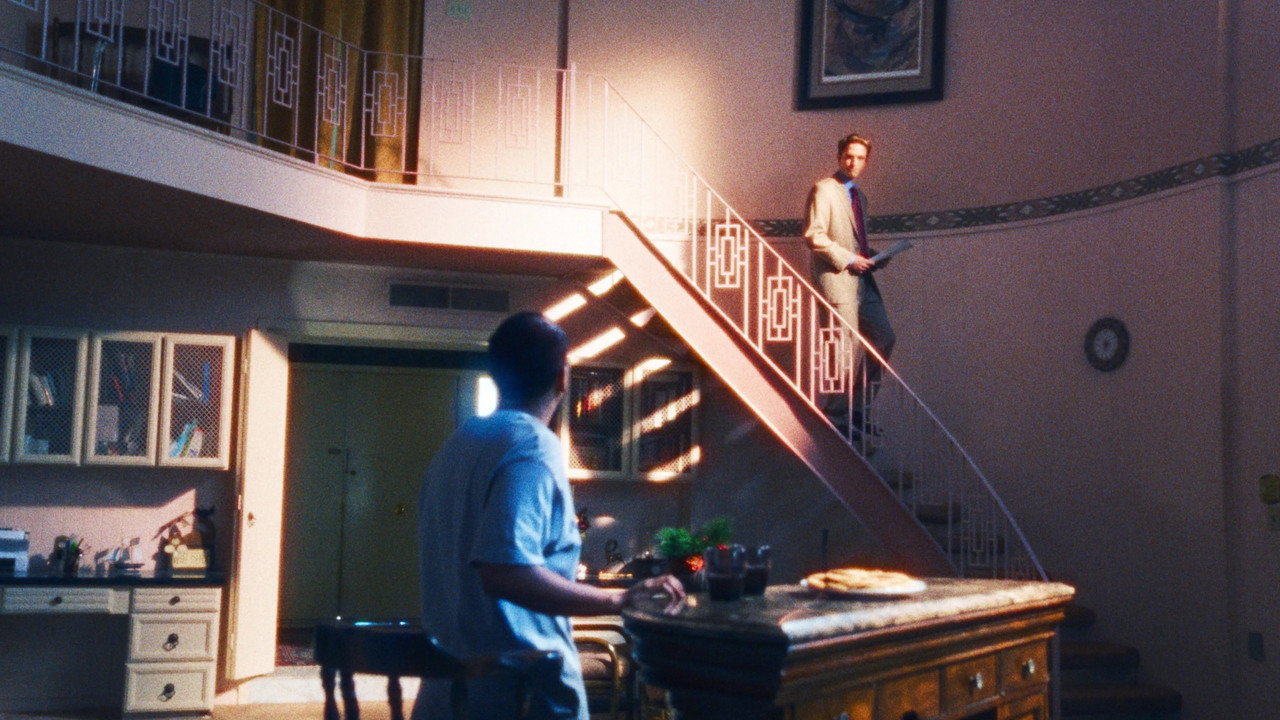
He has run this scene more times than he can count, and it always goes the same way. What are you doing here? What do you do for a living? The man says he is a rabbi, which is the kind of answer the show lives for. But tonight Hansen is slow, a beat late on lines he could say in his sleep, and the rabbi can feel it. He gets in Hansen's face and starts asking the questions himself. You're being very harsh. Who gave you permission to do this? Who do you think you are?
"I'm Chris Hansen," he says, "with Dateline NBC." That line usually ends the conversation. The rabbi hears it and asks whether he is doing all this for television.
The camera flips. For a few seconds the man who built a career on inspecting other men under hot light is the one being inspected, sized up for what he wants out of this: attention, fame, money. He knows what the Enquirer knows. He looks like every man he has ever told to have a seat.
That scene is one of the best in Primetime, and the rest of the film grows out of it. For anyone who never watched the original: To Catch a Predator was a hidden-camera segment on Dateline NBC in the mid-2000s. Adults posing online as young teenagers arranged to meet men at a house, a decoy let them in, and then Hansen appeared with his famous invitation. Why don't you have a seat right there? The men were real and so was what they came to do. Lance Oppenheim's film never suggests otherwise, and neither will I.
What the film asks is what the hunt was doing for the hunter. Its Hansen is an ambitious man with a dark side of his own, and he has found a way to live with it: root the darkness out in other men, on camera, where everyone can see how far apart they are. The film never lets him off the hook for that. But the show only worked because millions of people at home were doing a gentler version of the same thing from the couch, watching a man worse than them and feeling a little better for it. Primetime follows that habit through a host, a decoy, a prosecutor, a network and an audience, and everyone it touches gets pressed into a part.
Grading on a Curve
A part needs a villain to play against, and the film's Hansen wears his on his wrist. At a hotel bar, his new decoy, Dan, notices a bracelet and asks if it's an acting totem. "Nothing I do is acting, Dan," Hansen says. He got it in India in 1996, he explains, on a story about child slave labor that won him an Emmy. Predator has never won one, and he expects that to change.
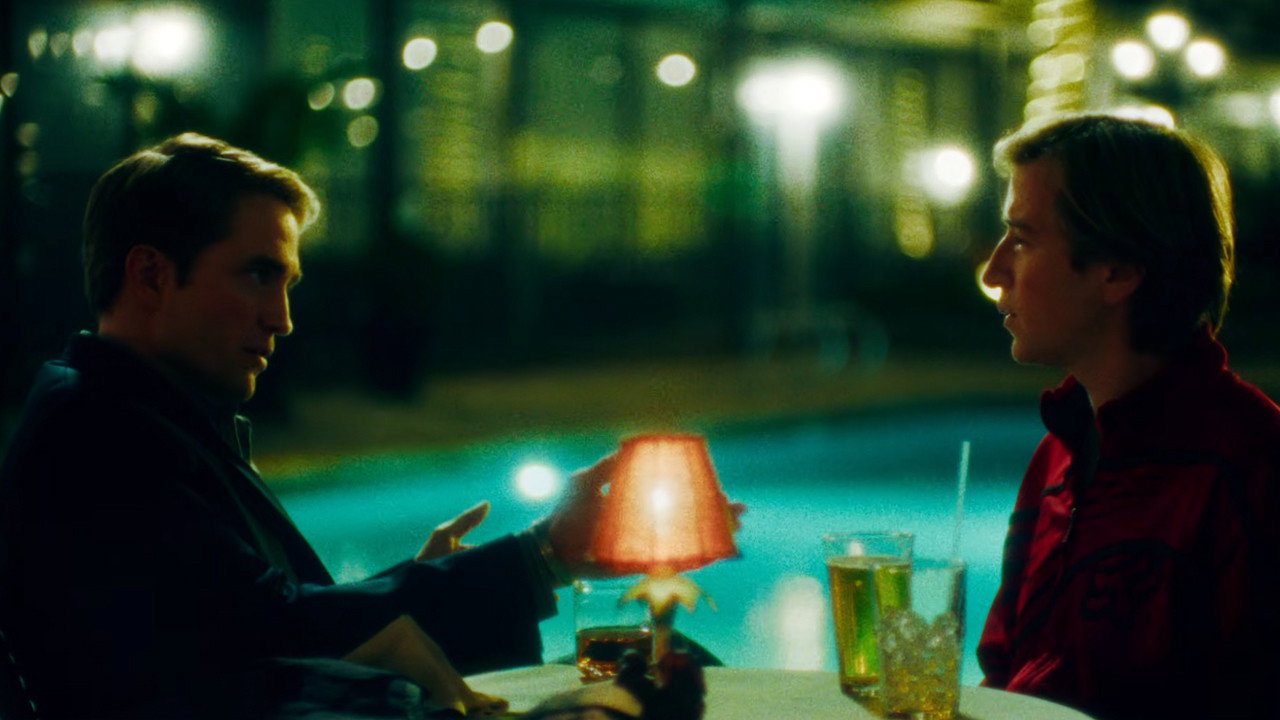
Later he tells Dan the rest, and makes him close his eyes for it. Children were disappearing from villages at night. The villagers turned on each other, the authorities blamed wolves, and one young girl told him what she had really seen and gave him the bracelet. "Not a man. A monster." Dan asks if he can open his eyes yet. Not yet. That evil, Hansen tells him, is what the show is cleansing from the world, and it is waiting for them now. The whale.
Dan opens his eyes and asks whether that means the whale is an Indian guy.
It lets the air out of the biggest speech in the film, and it tells you who is listening. Hansen has built a mythology. His newest hire hears a suspect description.
Hansen has built a mythology. His newest hire hears a suspect description.
The film invents that monster, and I'll come back to what it invents. It is there to show how this man keeps score. If the thing you chase is the darkest evil there is, chasing it feels like unassailable good, and nothing you do along the way looks very bad beside it. My TVI colleague Alex Gigler argues in his essay on the film that Hansen needs the monster in order to stay good. I'd go one step further. He needs it as a measuring stick, and held up against it, the affair, the ambition and the show itself all look small. A stick like that only works while there is always something worse, and by the time the show moves to prime time, he needs something bigger.
He's Not a Monster. He's a Man.
NBC wants bigger catches for the bigger time slot, and the word everyone uses is whales. Hansen needs one most. A whale would keep the show on the air, the network happy and the people around him off his back. With a tabloid circling his marriage, it might even prove the whole enterprise was worth what it is costing him.
The whale turns out to be a voice on the decoy's phone, but the film has us meet him somewhere else first. He is in a courtroom, a prosecutor played by Alex Winter, asking a jury to put away a man who endangered a child and to make an example of him for the rest of the county. He is persuasive. The defendant, he tells them, is not a monster. He is a man, and he has brought a disease into the community.
Hansen says not a man, a monster. The prosecutor says not a monster, a man, and he is the one in a position to know. He is the film's most convincing voice against predators, and he is pursuing a child himself.
Then the film does what Hansen's show never did. It stays with him. He is home alone, lonely, visibly at war with himself. On the phone, asked what he would like to do, he says he likes musicals, and maybe they could watch one and hang out.
Both things are true at once, and the film won't let you choose. He is doing something wrong, and nothing here softens it. He is also a lonely man in pain. The show was built to see only the first, and the film makes you look at both. Seeing the pain doesn't make him less predatory. It makes him harder to reduce to one word.
The film's Hansen can't wait for him to come to the sting house, so he brings the police and the cameras to his. He wants the interview, and he wants Dan to get the man outside. Dan doesn't want to. "You're either with me or you're with him," Hansen says. Dan says he doesn't want to be a bad person. "Your definition of bad and my definition of bad are vastly different." He says it while a tabloid closes in on his affair and his wife asks what to tell the reporters. His work lets him keep the most damning definition of bad for someone else.

So Dan stays in the car and calls him. He says he knows the man is in there, and that it will be safer if he comes outside. Then the call turns to musicals, the thing the man said he liked the first time they spoke. They talk about Rent, which one of them thinks is better as a movie than on stage, and "Seasons of Love" begins. How do you measure a year? For those few minutes the voice on the other end is not a whale or a monster or a defendant. It is a lonely man talking to a kid about musicals.
Then the police go in, and he takes his own life. There is no interview. By then the film has shown us enough of the man to understand how small Hansen's disappointment ought to be.

That disappointment doesn't stay inside the film. There is a kind of coverage now that exists to bury someone and forgets there is a person on the other end. You can hold a man to account for what he did and still see what he is going through. Lately we are worse at the second half of that sentence, and what we get for losing it is a steady supply of people to look down on.
Speaking Part
It takes a crew to give the public someone to look down on, and the newest hire on this one is the decoy. Dan Plum, played by Skyler Gisondo, arrives non-union and unrepresented. His background role in a Toys R Us commercial was recently upgraded to a line, and he wants to know whether playing a decoy counts as a speaking part too, because a speaking credit is what gets him closer to a union card.
Through Dan you can see the machinery. He is told who he is playing, a thirteen-year-old named Peter, and to get the man to the kitchen island, where Hansen will come in and he will go out. The work never lets up. Every sting is a stranger walking in expecting a child, and the crew stays braced for whoever comes through the door next. Dan's first one shakes him badly, and since the last decoy walked off the show, Hansen is sent to the hotel bar to keep this one. Your credit on this show, he tells Dan, is superhero. You're here saving children. It is harder to quit once you've been called a hero. Hansen renames him on the spot, and from then on the young man is Decoy Dan, a person called by his function.

It works because the film's Hansen will say whatever he needs to. His own success, and the show's, come first, and Dan is a pawn in that. For a man who says nothing he does is acting, he spends a long time on the performance. We watch him record one line of narration, the one about the parade of men, take after take after being told he had it, and ask the camera to push in closer on a man's pores.
This is how other people get caught up in a thing like this, by way of someone else's ambition. The only honest review Dan gets comes from a friend back home, who points out that he is on screen for a tenth of a second looking scared, and that nobody watching will ever give him a thought.
Bright Colors. Fading Light.
The person watching is the one the film never stops thinking about, so it keeps changing the camera we look through, and it never stops to explain why. The sting houses were shot on standard-definition mini-DV cameras, as many as eight at a time, the cinematographer David Bolen has said, so they look the way the show looked on air. The rest was shot digitally and printed to 16mm film for real grain. Inside Hansen's head, Bolen switched to a 1980s broadcast camera whose color tubes wear out as they are used. "These RGB tubes have a lifespan," he said, "so they rot away as you film." A man coming apart behind a public face is filmed by a camera coming apart too.
The color works the same way, quietly. The film is saturated in reds, blues and candy brights, as if seen through a child's eyes, which is also how every sting house is dressed for bait: cookies in the oven, sweet tea on the table. To my eye, red light tends to fall on whoever is being examined. Nobody points it out, but by the third time a man is lit that way, you can usually tell who is in the chair.

And the light goes. The sting houses are lit like stages, bright and even, built so that nothing can hide. As the story closes around Hansen, the film stops lighting him that way. The picture itself grows darker as it goes, until the man who made a career of putting other people under hot light is the one we can barely see.
In the middle of all that watching is Pattinson, and within a few minutes I stopped seeing a movie star at all. What was left was a man whose private trouble keeps leaking into his work, a hunter getting worse at the hunt because of what he knows about himself.
The One Man It Flattens
The film itself knows less about him than it should. It refuses to flatten the prosecutor, giving him a courtroom, a lonely house and two phone calls, the second of them his last. Its Hansen gets the ambition, the affair and the lines, and not much underneath them. I wanted that depth early, while he is still just the man with the catchphrase, and the first thirty to forty minutes drag partly for want of it. The comedy is uneven in the same way. Much of it is funny, but Dan's reply to the monster speech arrives as a joke just when the film most needed its weight. I can't decide whether the imbalance is a flaw or a confession. A film about a man who reduces other people to a single role comes close to doing it to him.
Some of this comes with the form. A drama like this can't be the honest record of Chris Hansen's life. It is inference, a way of exploring ideas, and the mode for accuracy is documentary. So here is what I know the film changes. The real India reporting aired in 2002, not 1996, and the monster story is the film's own. Dan draws chiefly on one real decoy, Dan Schrack, and the producer is a composite. The night setting of the Texas sting is invented. The death is not. On the afternoon of Sunday, November 5, 2006, Bill Conradt, a Rockwall County prosecutor and a former Kaufman County district attorney, took his own life as police entered his home in Terrell to serve warrants. The allegations against him never went to trial. His family sued NBC, and the suit was later settled.
There has to be some embellishment in a film like this, and my test is whether it enhances the themes. Here it mostly does. With the Enquirer calling while the stings are still running, the film puts the hunter and the hunted in the same week, and the monster hands Hansen his measuring stick. The cost is that the inventions all lean one way, and it is never his.
Once it finds its speed, the film is engaging the rest of the way, with a few stretches so tense I caught myself thinking, oh my goodness, is this even real.
The score: 137 out of 200. Cognitive Stimulation 38, Educational Value 28, Craft and Quality 37. Primetime is a psychological study that rewards attention: its threads, an ambitious host, a failing marriage, a decoy actor and a DA with a secret, keep changing how each other land. Pattinson and a camera that turns the hunt on the hunter carry it. A slow first 40 minutes and a narrow emotional range keep it out of the top tier. TVI's score is a content rating, not a measurement of intelligence.
A Pillory in Every Home
Those tense stretches deserve a second look, because of what I was doing during them. I was leaning forward to see a man get caught.
The film's Hansen knows what that appetite is worth. Midway through, Dan stops slipping out of the room. He stays, tells a man that he is twenty-three, that he is a professionally trained actor and that the man is on TV, and says he hopes his face is remembered as the one the man saw when everything changed. The pawn has learned the host's part. Hansen answers with a history lesson. In the old days, he says, a man who acted that depraved was dragged to the town square, tied to a post and whipped for all to see. "There used to be a pillory in every civilized town. Now there's television in every home. I'm blind. So are you, Dan."
Everyone around him knows it too. The network executive who moves the show to prime time tells Hansen he doesn't like it, doesn't understand it and doesn't believe in it. But America loves it. A fan says he would beat those men with his bare hands and asks if Hansen is ever tempted, and Hansen says what he does might be a little worse. A police officer in Texas writes that what this world needs is a good hard look in the mirror, and what is the show if not that?
The show worked because it was never a mirror. Nobody watching a man plead with a camera crew was looking at himself. We were looking at somebody worse and enjoying the distance, and the film counts us in.
This is what the film gets right about people. Pointing at someone else's wrong is the easiest way to feel like a better person, and the one way that doesn't make you better. The film's Hansen spends years exposing other men and ends no better. He is tied to a death and gets no interview. His television moment and his marriage fall apart, and inside the wreckage he is still saying his lines, with one question hanging over him: what the hell was all this for?
If all we take from Primetime is the pleasure of feeling better than Chris Hansen, he has given us exactly what he always did.
So the film flips the script and puts him in the chair, and for a while that feels like justice. Then I notice where I am sitting. I leaned forward to watch him get caught, and I have just listed the film's flaws and put a number on them. The flip runs the hunt again with a new target, and this time the hunter's seat is mine. If all we take from Primetime is the pleasure of feeling better than Chris Hansen, he has given us exactly what he always did.

The last thing the film hands out is Dan's SAG card. It comes in the mail, and the kid who asked whether this counted as a speaking part is a union actor at last. Look at what it took to get him there: a man is dead and a marriage is over. A neighbor asks if he's an actor, and he says no. It gets a laugh, and the longer I thought about it, the less sure I was who the laugh is on. Hansen, who thought he was the hero of this. The show, which built a pillory and called it saving children. Or the rest of us, who watched those men get caught for years and then came back to watch the man who caught them. The film doesn't say. I only know the line that comes next.
Why don't you have a seat right there.
The Intelligentsia Report
Film and television criticism, watch guides, and updates from TV Intelligentsia. Free. Unsubscribe anytime.
TVI Score Breakdown
| Dimension | Weight | Score |
|---|---|---|
| Cognitive Stimulation | 40% | 38 / 50 |
| Educational Value | 35% | 28 / 50 |
| Craft & Quality | 25% | 37 / 50 |
| TVI Score | 137 / 200 · Stimulating |
Formula: round((C × 0.40 + E × 0.35 + Q × 0.25) × 4) = 137. The three weighted dimensions do not sum to the total; the formula scales them.
Disclaimer: TVI's score is a content rating, not a measurement of intelligence.
Common questions
What is Primetime's IQ Score?
Primetime (2026) scores 137 of 200 on the TVI rubric, Stimulating tier, with Cognitive Stimulation 38 of 50, Educational Value 28 of 50, and Craft and Quality 37 of 50. It is the film's first TVI score.
What is Primetime (2026) about?
Lance Oppenheim's film, written by Ajon Singh, stars Robert Pattinson as Chris Hansen, host of To Catch a Predator, in 2006, as he sets out to make television history and a sting in Texas goes fatally wrong. Skyler Gisondo plays the decoy Dan, Merritt Wever the producer Andie Bender, and Alex Winter the prosecutor Bill Conradt. A24 released it in United States theaters on September 25, 2026.
Is Primetime a true story?
It is based on real events and changes many of them. The Murphy, Texas sting and Bill Conradt's death on November 5, 2006 are real; the film moves the police entry to night, invents the India monster story, and combines or renames several people, including the decoy and the producer. The review's closing note lists what the film changes.
Is there another TVI essay on Primetime?
Yes. Alex Gigler's psychology essay, Primetime: Identification with the Aggressor, reads the film through the defense in which a frightened person takes on the power of what frightens him. It is an interpretation, not a scored review.
Film: Primetime (2026), directed by Lance Oppenheim, written by Ajon Singh. A24. With Robert Pattinson, Skyler Gisondo, Merritt Wever and Alex Winter. The IQ Score is a content rating, not an intelligence measurement.