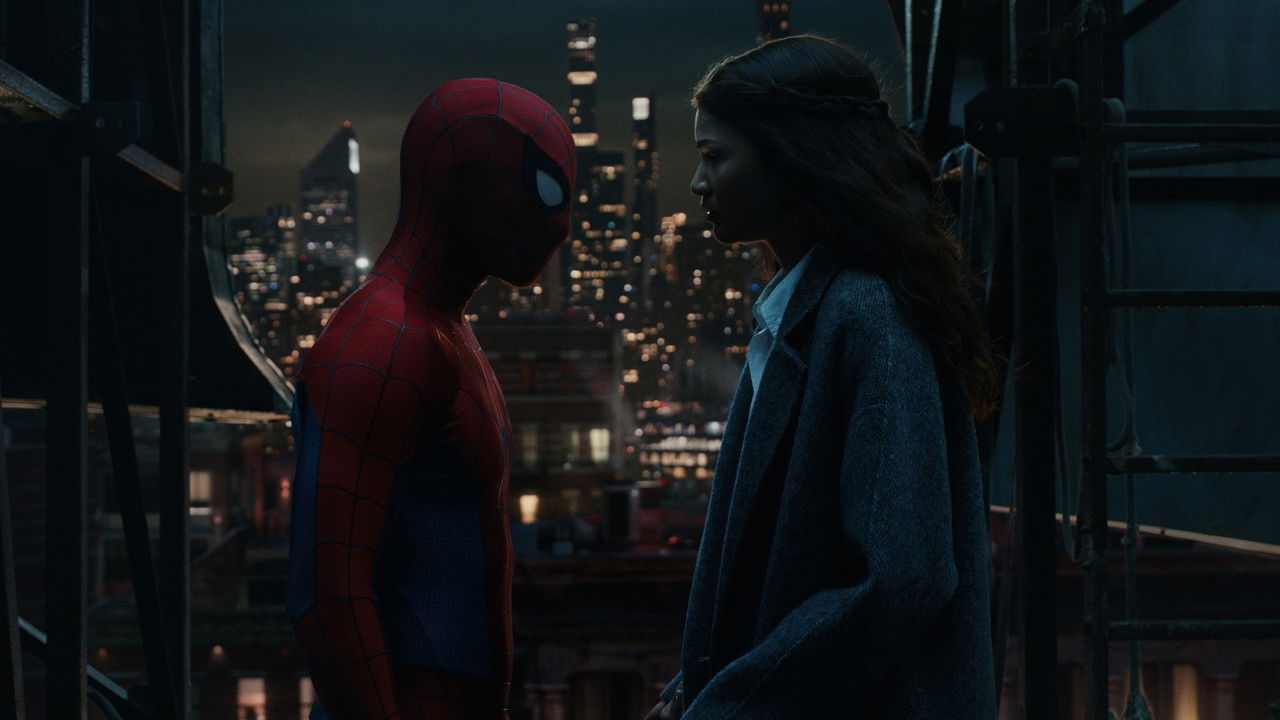
The most important object in Spider-Man: Brand New Day is not a mask or a weapon. It is the inhibitor, a device Peter builds to force his altered biology back toward baseline. The machine quiets his senses and suppresses the changes in his body. It can control what appears. It cannot resolve the grief and isolation the film identifies as possible contributors to those changes. That gap, between controlling an expression and understanding its source, becomes the film's central idea. Then Damage Control turns Peter's private coping device into a universal tool for suppressing anyone with powers.
Superhero films often turn psychology into action. Fear becomes a monster. Trauma becomes a villain. Healing becomes a fight.
Brand New Day makes its psychology literal, then lets the metaphor drive the story. Peter's pain produces the inhibitor. The inhibitor helps Damage Control capture Jean Grey. A device built to control one part of Peter becomes an institution's power over anyone whose difference it fears.
The theme does not decorate the plot. It drives it.

Peter treats grief as an engineering problem
Four years after the world forgot Peter Parker, he has converted sacrifice into a way of life.
He lives alone. He watches MJ and Ned from a distance. He writes MJ a letter explaining everything and never delivers it. He has decided that loving people means protecting them from his presence.
Then his body begins to change.
His arachnid hormones surge. Organic webbing replaces the synthetic version he once used. His senses begin taking in more than he can process. Evie, the artificial intelligence Peter built, reads his body scan and offers a possible cause: prolonged isolation or emotional trauma may be contributing to the change.
Peter says he is fine. Evie tells him he does not seem fine.
That exchange contains the entire film. Peter has just been told that his isolation may be expressing itself through his body. His first response is not to ask what the change means. It is to ask how to make the change stop.
So he builds the inhibitor.
The device suppresses selected arachnid hormones and returns his body toward baseline. His senses quiet. The new webbing recedes. For a moment, it works.
Then it begins to overheat.
Peter fixes it, tests it, and watches it fail again. Suppression is not a state he reaches. It is a system he must keep running, and the system runs hot.

Self-control becomes self-erasure
What Peter is doing is suppression, not repression. He is not unconsciously excluding grief from awareness. He knows what he has lost, whom he misses, and what he wants. He is deliberately organizing his life so none of it has to be expressed.
Suppression is not always unhealthy. A surgeon during a crisis, a parent steadying a frightened child, or anyone waiting for a safer moment may need to contain an emotion rather than express it immediately. Healthy regulation does not mean discharging every feeling as soon as it arrives. It means having more than one strategy and being able to change strategies when the first one no longer fits the situation (Bonanno and Burton).
Peter's problem is not that he controls himself. His problem is that control has become his only strategy.
Experimental research on expressive suppression has found that people can reduce the visible expression of emotion while their internal physiological activation remains elevated (Gross). Hiding the expression and resolving the experience are different operations. The film does not need the crude pressure-cooker idea that every feeling builds until it explodes. It shows something more precise: what Peter refuses to acknowledge still organizes his life.
His grief determines where he goes, whom he watches, what he withholds, what he builds, and what he believes love requires. The feeling does not disappear. It becomes architecture.
The film eventually gives that architecture a physical consequence. During a sensory overload, Peter beats a possessed man far beyond what the situation requires and nearly injures a police officer. The strain he has been trying to contain appears as dangerous loss of control.
The inhibitor has quieted his symptoms, but it has not made him well.

Who decides what should be suppressed?
The film's intellectual center is a classroom.
Peter poses as a graduate student and seeks out Bruce Banner, another man who also lives through an inhibitor. Peter asks whether a device could suppress only the dangerous expressions of a changed biology while preserving the desirable ones.
Keep the good parts. Silence the bad ones.
Banner recognizes the endpoint before Peter does. A device capable of adjusting itself to any mutation would not remain Peter's private regulator. It would become a universal inhibitor capable of controlling anyone with powers.
That possibility exposes the question beneath the entire film:
Who decides which parts of a person are good, dangerous, useful, or unacceptable?
Every inhibitor makes a judgment: this part may remain; this part must be silenced.
The judgment did not originate with superheroes, and it does not stay inside the film. Socialization gives everyone a version of the list: which feelings may be shown, which ambitions are acceptable, which parts of the self are too much for the room. Online, we repeat the operation ourselves: keep what is presentable, hide what is not, then maintain the distance between the person who appears and the person having the experience. That distance does not close on its own.
When Peter makes that judgment about himself, it is already distorted. A grieving and isolated person is not a neutral judge of which parts of himself deserve a place in his life. When an institution makes the judgment for someone else, coping becomes power.
Every inhibitor makes a judgment. This part may remain. This part must be silenced.
Damage Control turns the device into a system
Director Metzger explains Damage Control's philosophy in reassuring language. Where other people see threats, he sees opportunity. The institution's purpose is to redirect destructive energy into something useful.
Behind the language is a simple operation. Damage Control captures what it fears, separates the power from the person, and decides who should control it. Confiscated weapons become research material. Enhanced people become specimens, assets, or problems to be managed.
Peter's private logic has become an institutional system:
- Separate the trait from the whole person.
- Define the trait as dangerous.
- Control its expression.
- Call the resulting silence safety.
Sara Grey is the film's proof.
Damage Control detained Jean Grey's telepathic sister for what its files describe as study and observation. The institution repeatedly recorded Sara's mind during telepathic jumps so that her pathways could be replicated in people of its choosing. She died in the same room where the experiments were conducted (EW).
When Jean comes looking for her sister, Metzger repeats the institution's justification. A power like Jean's is too dangerous in the hands of a young person. Imagine what it could accomplish in the hands of people who know how to use it.
This is the inhibitor with authority, funding, and locked doors.
The logic that begins as this part of me must not appear becomes, at scale, people like you must not appear as yourselves.
Peter becomes complicit before he understands what he has helped build. He captures Jean and delivers her to Damage Control. His own universal inhibitor holds her powerless while the institution resumes its experiments.
A private coping device does not need to be stolen to become a weapon. It only needs to be handed to the wrong system.

Four ways pain becomes control
Jean is not simply Peter's antagonist. She is his darker counterpart. Peter turns pain inward, becoming smaller and less present so nobody else can be hurt by him. Jean turns pain outward, possessing other people and forcing the world to experience her grief. Metzger turns pain into a system of classification, detention, experimentation, and control. Frank Castle fortifies, responding to loss by arming himself permanently against vulnerability.
Peter disappears. Jean possesses. Metzger dominates. Frank fortifies.
These are four architectures of pain, each converting vulnerability into control. None is integration.
The film is least rigorous with Jean. Her sister was abducted, exploited, and killed, and that history explains her violence. It does not undo the harm she causes. The problem is not the film's sympathy but its sequence: it moves from understanding Jean to rehabilitating her before accountability receives equal weight.
The film understands the distinction more clearly with Peter. While controlling MJ's body, Jean kisses Peter. Peter could conceal what happened; MJ would have no independent way to know. He tells her anyway. He does not use confusion, possession, or his own lack of intent as reasons to withhold information that belongs to her.
Accountability freely offered is the opposite of suppression. Here, the film asks more of its hero than it asks of Jean.
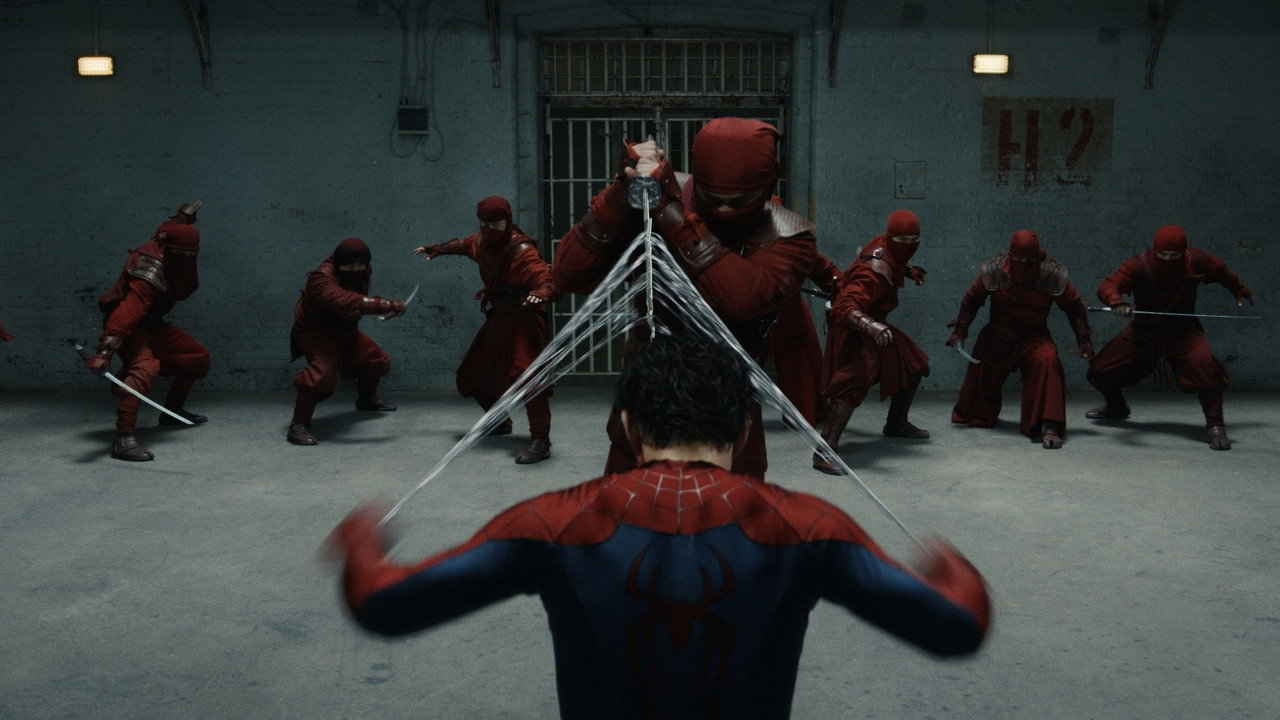
The opposite of suppression is contact
The inhibitor's mechanical repair contains the film's emotional answer.
The prototype keeps overheating, and Peter cannot determine why. MJ notices that his goggles create a small magnetic field. Because Peter wears the goggles directly beside the inhibitor, the field interferes with the machine.
The device he uses to suppress his altered body is disrupted by the equipment he uses to perceive the world. The metaphor is already present in the engineering: Peter cannot mute part of himself without interfering with how he receives the world.
More important, MJ sees what Peter cannot. The person he has spent four years protecting from his presence is the person whose presence reveals the flaw. The repair is relational before it is mechanical.
The climax completes the idea. Throughout the film, Peter is the one mind Jean cannot enter. She tries repeatedly; he forces her out. His emotional defenses and his psychic defenses are the same structure.
At the end, when fighting has failed and Jean is holding other people hostage, Peter does the one thing his entire system of control was designed to prevent.
He lets her in.
The opposite of suppression is not indiscriminate expression, emotional discharge, or loss of control. It is contact: with the feeling, with reality, and with another person.
Inside Peter's memory, Jean encounters May telling a younger Peter that the people who love him do not love him because he is special. They love him because he is himself.
The memory reaches Jean at the exact point of her wound: her family was destroyed because an institution decided her sister's specialness belonged to it. Peter acknowledges Sara; Jean acknowledges May.
Peter finally says what his entire life has been refusing: losing someone does not mean carrying the loss alone. He has tried. It does not work.
Force has only given Jean another person to resist. Peter offers vulnerability without conquest. By opening himself first, he makes reciprocity possible. The climax is not won when one mind overpowers the other. It is won when forced entry gives way to chosen access.
The counter-device to the inhibitor is an opened door.
This is also the sequence strong children's stories often stage: notice the feeling, name what is happening, choose a response, see what it does, and repair what remains. Research on affect labeling suggests that putting emotional experience into words can reduce some aspects of emotional reactivity, although naming is a hinge rather than a cure (Lieberman et al.). Its value is that it can turn one automatic response into several possible ones.
Peter cannot respond flexibly to an experience he is committed to pretending is not there.
The counter-device to the inhibitor is an opened door.
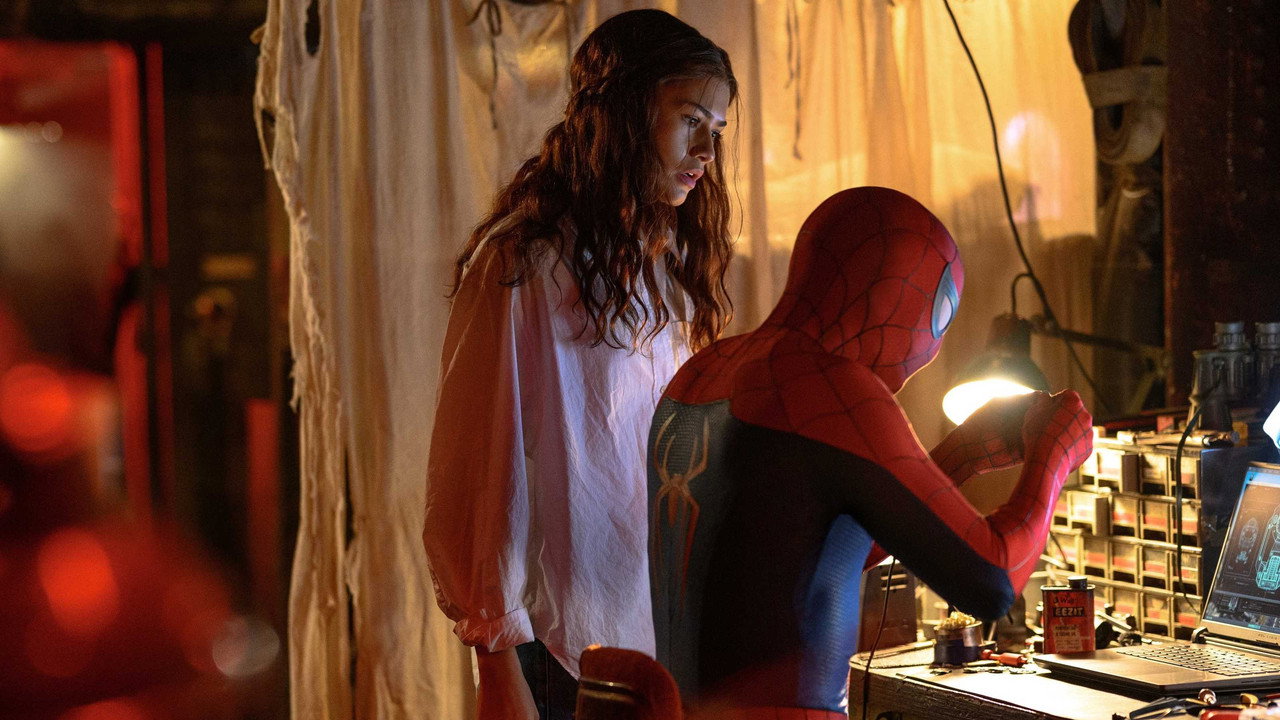
What a new day costs
The film's final act understands that integration is not a refund.
Peter finally gives MJ the letter. She reads the history of a relationship she no longer remembers. She can understand why the woman described in the letter loved him, but she is not that woman anymore. She does not know him.
Four years of self-erasure cannot be reversed by one act of honesty, and the film lets the cost remain.
Peter is shot before the night ends and nearly dies. The city holds a vigil for Spider-Man, but the people gathered there still do not know Peter Parker.
Jean has asked whether he is Peter or Spider-Man. His answer is that he is both. The words are easy; living as both is the work.
From his hospital bed, Peter tells the people around him that he has decided he will not do this alone anymore. In the final scene, he approaches MJ without the mask, without the letter as leverage, and without demanding the return of a relationship she no longer remembers.
He introduces himself as Peter, the flower guy from the party.
Not a restoration. A beginning.
Integration does not restore the life that suppression cost you. It changes the life you can build next.
A brand-new day is not a day without the old pain. It is a day no longer governed by the machinery built to hide it.