Little Hollywood, Tennessee: A Runway to Fail
School psychologist and TVI Kidz co-founder Cordelia Witty talks with director Christian Whittemore about creative risk, self-doubt, and adults helping young people without taking over.
Interview, not a score. Any TVI score for this work follows its general release under the published methodology. Scores are not for sale.
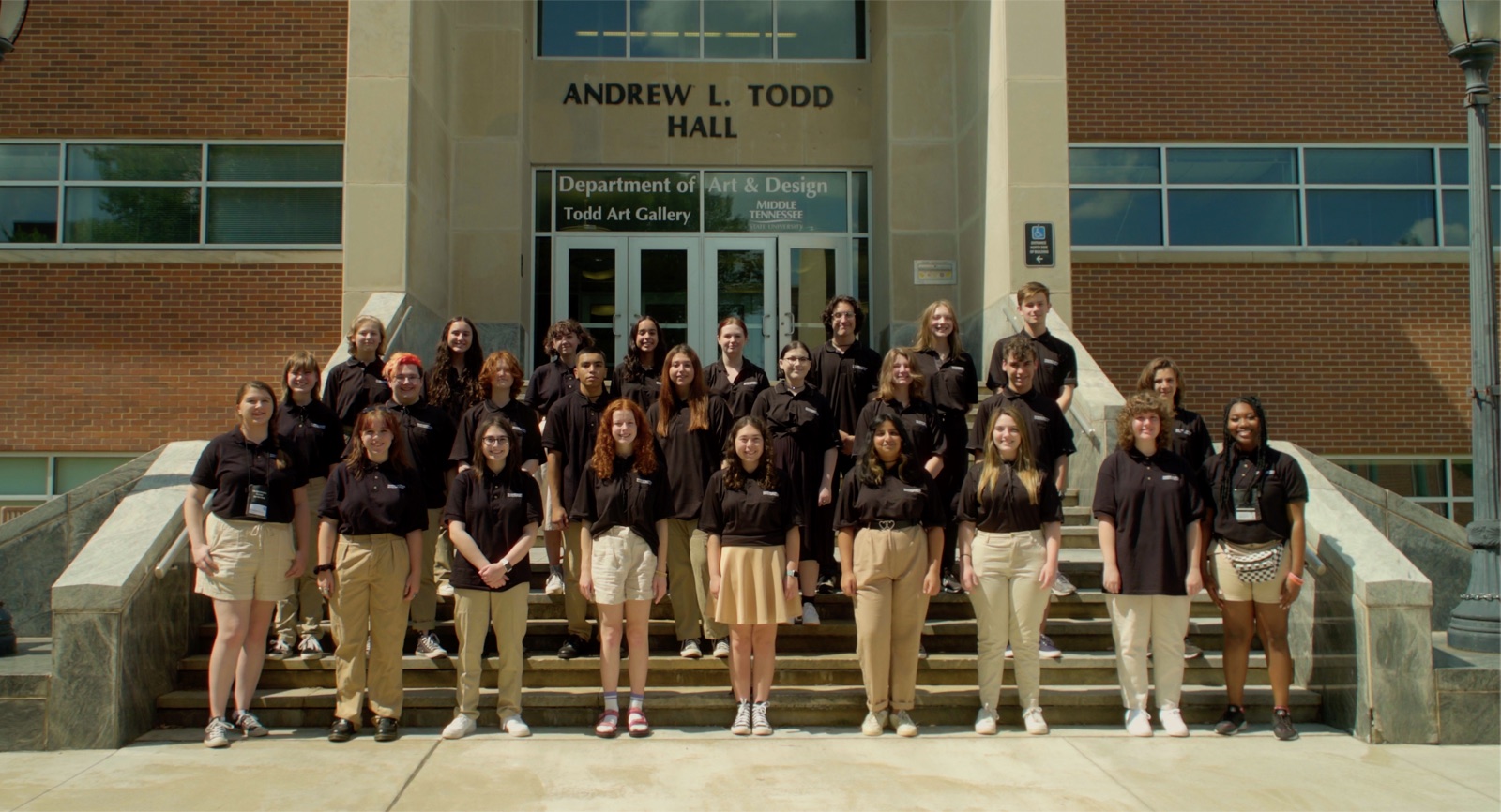
Neither Christian Whittemore nor I got into Governor's School on our first try. He applied to the Tennessee Governor's School for the Arts as a rising junior and heard no. I applied to Kentucky's program at the same point in high school and landed on the waitlist. We both tried again as rising seniors, got in, and spent three summer weeks that somehow rearranged the rest of our lives. He studied filmmaking. I studied drama. Years later, he went back to his program with a camera. The result is Little Hollywood, Tennessee, a documentary following 24 filmmaking students through the three-week program on Middle Tennessee State University's campus. As a school psychologist, a Governor's School alumna, and co-founder of TVI Kidz, I wanted to hear how Christian understood the experience from the other side of the camera. We talked for over an hour about the students, the adults around them, and how much each was still learning.
A counselor who wished he'd brought a camera
The idea didn't come from Christian's own summer as a student in 2015. It came in 2019, when he returned as a counselor, mostly because he needed a summer job.
"I began seeing students get stuck in similar situations that I had gone through," he told me. "It was kind of like an out-of-body experience, watching them problem-solve, or overcoming bouts of impostor syndrome or anxiety."
As a teenager, a summer like that feels like it belongs only to you. Watching it happen to someone else broke that spell for him, in a good way. "My feelings are unique, but my experiences are not necessarily," he said. "They are cyclical. They are happening routinely every year." On the last day, with every kid crying and hugging goodbye, he remembers thinking he wished he'd had a camera with him the whole time.
The seed took root after he watched Boys State, the Sundance-winning documentary about Texas teenagers building a mock government. He saw the same kind of pressure cooker, and a chance to explore creative identity and impostor syndrome instead of politics. He filmed in 2022 and has spent the years since shaping hundreds of hours of footage into a story. In between, he works in Los Angeles as a documentary and commercial editor, including recent work on Honda's Winter Olympics campaign and editorial teams for Super Bowl spots.
The runway to fail
Early in our conversation, Christian described the program as giving students "the runway to fail."
The clearest example in the film is a scene built around a dolly zoom, the disorienting shot made famous by Vertigo, where the camera moves while the lens zooms so the background seems to stretch or collapse behind a subject. The students attempt it for the first time in the middle of the night with limited equipment, and it goes about as well as you'd expect for a first try. Spenser Fritz, a professional filmmaker and one of the program's instructors, could have stepped in and fixed it. He didn't.
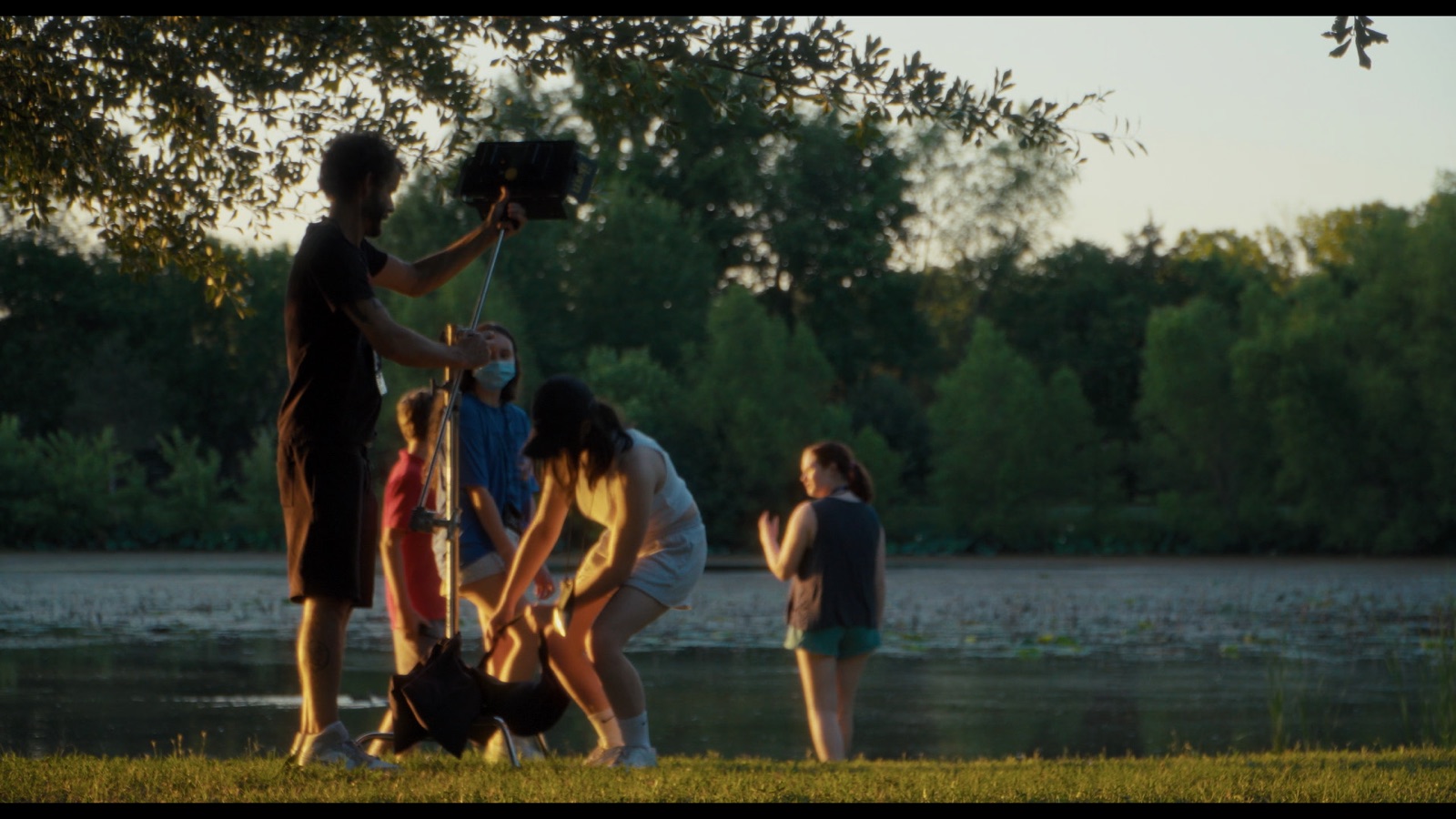
Christian admitted that as a counselor, he used to do the opposite. He would nudge students to simplify their scenes and lock off their shots so they could finish on time. Spenser pulled him aside and told him to stop. "Spenser will push for anything just because the kids ask for it," Christian said. "I'm trying to learn from that, looking at him doing that every year as a teacher."
What do students get from struggling like that all night? "They remember how painful it was when they tried to get that shot and couldn't pull it off," he said. "They're all going to leave here and be like, OK, I'm going to pull off a dolly zoom, but I'm going to do it right this time. And I know what it takes."
He still carries lessons like that from his own summer. Thanks to a disaster back then, he jokes that he still auto-saves every six minutes to this day.
From where I sit as a school psychologist, this is exactly what secure parenting looks like. A good parent gives a child a solid foundation, pushes them to grow, and then lets them fail, because a kid who has survived failure knows how to adjust and try again. Governor's School adds one more element to that mix. Students live in the dorms for three weeks, so there's no running home to their bedroom when a shoot falls apart. Christian and I agreed that losing that safety net is part of why kids change so quickly there, socially and creatively.
The moment a kid realizes "I can do this"
Christian pointed me to Henry, one of the first students audiences get to know. Henry loved movies but hadn't had much access to cameras or equipment. He was humble and came in ready to be a supportive team player. Then his classmates chose his original idea to become one of the class's main films.
"Seeing that his own ideas could actually go the distance, even when he's surrounded by kids who know what they're doing in Adobe Premiere," Christian said, "it all doesn't matter because there's this level playing field that is so great about experiences like this."
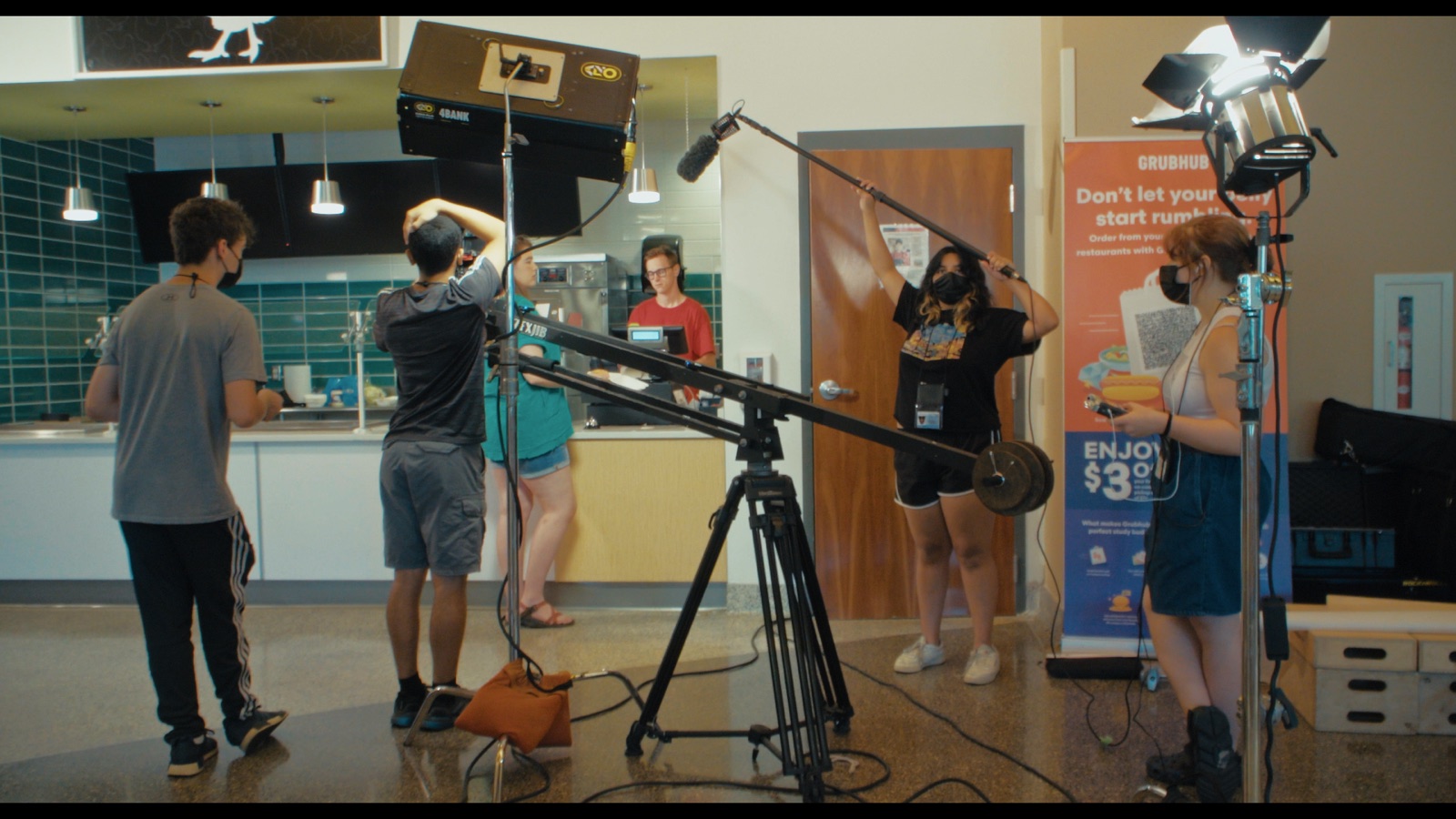
Henry also shows up in one of my favorite stretches of the film, when his crew loses most of its access to a kitchen location his script centered itself around and has to make it work from a fraction of the space they thought they had. He stays calm and rolls with it. That kind of adaptability and groundedness is a skill that transfers to every area of life, far beyond a film set.
How to film teenagers honestly
The students in this film share things that are deeply personal. As someone who works with kids for a living, I wanted to know how Christian decided what was fair to include.
His answer came down to trust and restraint. The crew was tiny, just a few recent college grads with lightweight gear, filming as handheld and scrappy as the students were. They accepted pizza when it was offered. They answered technical questions. The kids figured out quickly that this wasn't a big scary film crew. "Our only shot of getting a movie here is if we make that connection," he said.
Kennedy, one of the film's central students, was open with everyone around her, and she chose to let the crew into what she was working through. Christian's rule was simple: "Listening to the kids who wanted to be heard, and not trying to create something out of nothing." Wherever a moment felt especially personal, the team went back to the student and asked whether it represented them in a way they were comfortable with. Some footage was cut as a result, and Christian believes the film is better for it.
There was an unexpected side effect. The crew held one-on-one interviews two or three days before the program ended, asking students a single question about how they felt now that the end was near. Normally those goodbye feelings stay buried under the final project deadline until the very last day. Pulling students out of the edit lab gave them room to process early, and plenty of them walked back in with tear-streaked faces. "We were crying too," Christian said.
What schools without arts programs can take from this
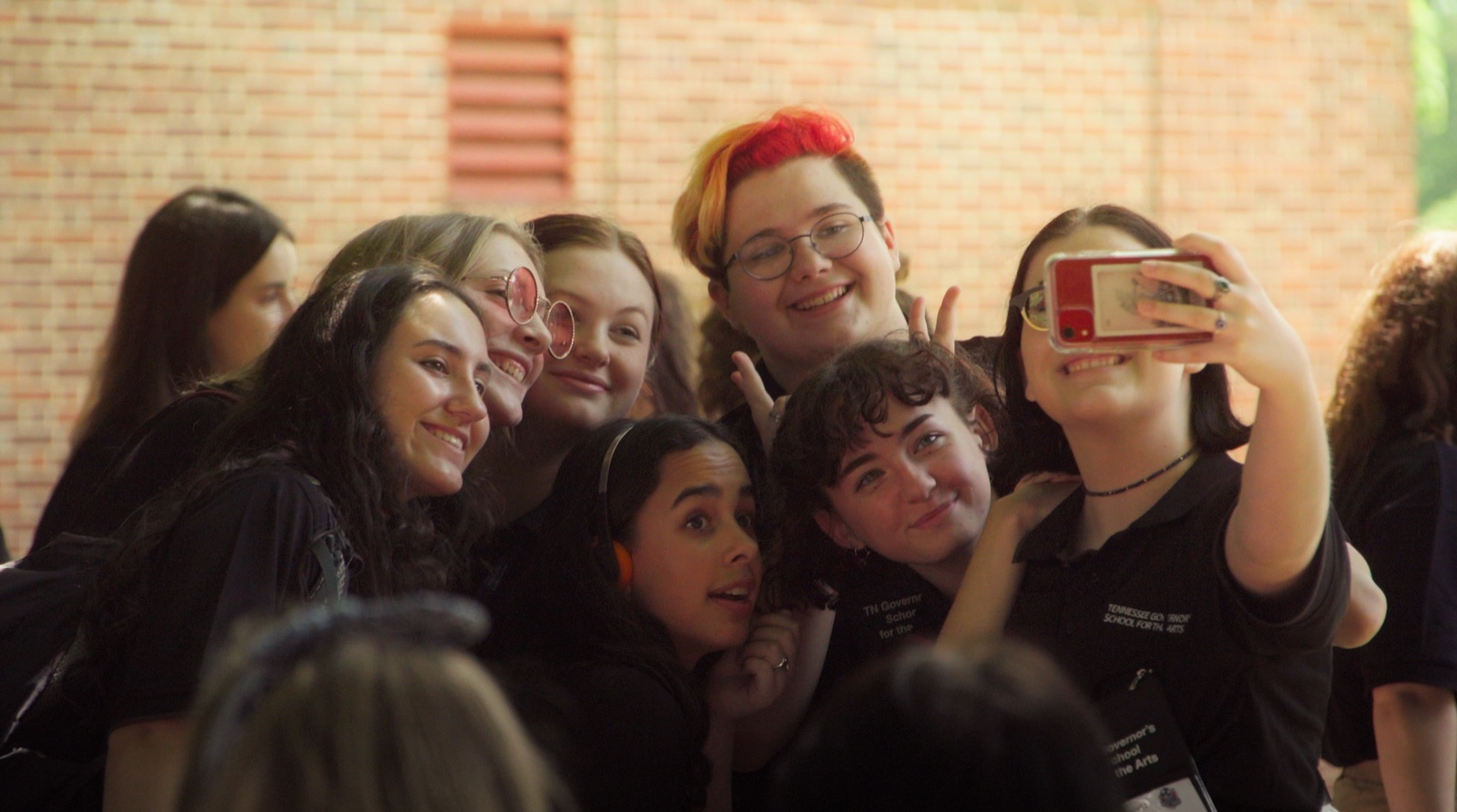
Art programs are often the first thing cut when budgets get tight. Christian was careful here. His takeaway isn't that every school needs a program exactly like this one. His point is that education isn't one size fits all. A student named Viv speaks honestly in the film about how traditional school works and doesn't work for them, and how hands-on, social learning reaches them in ways a textbook can't.
His second point is one that every parent and teacher reading this should hear, and that's that these kinds of programs are closer than you think. Many families have just never heard of them. Christian said he applied because a teacher told him, "Christian, you should apply." One of the film's central teachers, Amanda, has made a point of personally contacting every high school in the state to spread the word. Cost matters too. The program has traditionally charged tuition, and Christian was thrilled that it is now free to attend.
What he'd tell a kid who thinks they aren't good enough
"Your biggest adversary is probably yourself," Christian said. He doesn't pretend self-doubt goes away. His advice is to keep it at arm's length and let it light a fire, without letting it consume you. "It's not that you're not good enough. It's not that you're not capable. Don't kneecap yourself from discovering how much potential you have."
His hope for young viewers is something I see in my own work all the time. Most of us are far kinder to others than to ourselves. Christian hopes a teenager who may be internally tearing themselves down will watch a student they've come to care about do the same thing on screen and feel protective and think, "No, wait. I want you to win." From there, it's a short step to asking why they're doing it to themselves.
Christian now teaches at the program that changed his life, and every summer he tells a new group of students to cherish the connections they're making. Even the lead actor of the next feature he's working on went to Governor's School with him in 2015. What began as three weeks away from home has become a community that continues to foster life-changing friendships, connections, and collaborations. It all ties back to Governor's School for the Arts.
Watch and follow Little Hollywood, Tennessee
For schools: Christian said the film would screen for Metro Nashville Public Schools students at the Frist Art Museum, with some former participants joining him for the conversations. NashFilm's education screening program is free to participating schools, teachers, and students. He told me he was more nervous about an audience of sixth graders than any adult audience, and more excited about those screenings than anything else that week.
For home viewers: The festival's Eventive listing advertises U.S. streaming from September 28, 2026, at 8 a.m. Central for $15. Check the listing for current availability and rental terms.
Screening details: Little Hollywood, Tennessee at the Nashville Film Festival
Follow the film at @littlehollywoodtn and Christian Whittemore at @christianwhittemore for screening news, behind the scenes, and updates.
More from TV Intelligentsia: @tvintelligentsia and @TVIKidz. Follow Cordelia Witty at @cordeliatv__.
- First impressionWhere the Hell Is Anna? Knows How to Welcome You In
- First impressionSafe for the Whole Family Asks Who It Was Really Safe For
- First impressionLittle Hollywood, Tennessee: The People Who Help You Begin
- First impressionMexican Delight: The Fear of Wanting
- InterviewTaylor Dupuis on Why Anna Wants to Stay
- First impressionYour Mother Your Mother Your Mother Finds Its Way Home
- First impressionFrampton: What Comes After the Peak
- Field dispatchThe Art of Saying Yes: John Papsidera at the Nashville Film Festival
- First impressionJackrabbit Knows the Value of a Good Liar
- First impressionThe Company You Keep: Seven Shorts from the Nashville Film Festival
- Field dispatchSongs from the Circle at the Nashville Film Festival
- The full festival guide