Safe for the Whole Family Asks Who It Was Really Safe For
Jason Ikeler's documentary examines what contemporary Christian music asked its stars to represent, and what happened when their lives stopped fitting that image.
First impression, not a score. Any TVI score for this work follows its general release under the published methodology. Scores are not for sale.

The most revealing figure in Safe for the Whole Family is a woman who does not exist. Christian radio promoters and booksellers, the film explains, developed a composite of their ideal customer: a suburban white evangelical mother named Becky. Her presumed preferences helped determine which songs reached the air and which records reached the shelves. Jason Ikeler follows the artists expected to reassure customers like her that their children were in good hands. His revealing, often painful documentary asks what happened when those artists needed care themselves.
The film builds around Jennifer Knapp, Nikki Leonti, and Michael Passons. Knapp's breakthrough brought the Dove Award for New Artist of the Year. Leonti was a teenage star presented to girls as a model of purity. Passons was a founding member of Avalon when the group won an American Music Award. Each describes a different break with the industry. Leonti recalls being rejected after becoming pregnant at seventeen. Passons describes being removed from Avalon amid rumors about his sexuality. Knapp says she chose to leave before she had fully understood her own sexuality. Their stories involve more than lost careers. They had invested their beliefs, their relationships, and their sense of purpose in the same world that made their private lives subject to public approval.
Ikeler makes the business understandable without letting its language obscure what it asked of people. A company called Interlinc produced comparison charts matching secular acts with Christian alternatives. Young listeners could have the sounds they already liked, with messages their parents approved. But the reassurance depended on more than lyrics. The singers were expected to live in a way that made them safe examples to follow. Knapp recalls being approached to endorse abstinence in an arrangement she compares to an athlete selling shoes. She refused: the pitch required her to promote a message about sexuality that she did not believe.
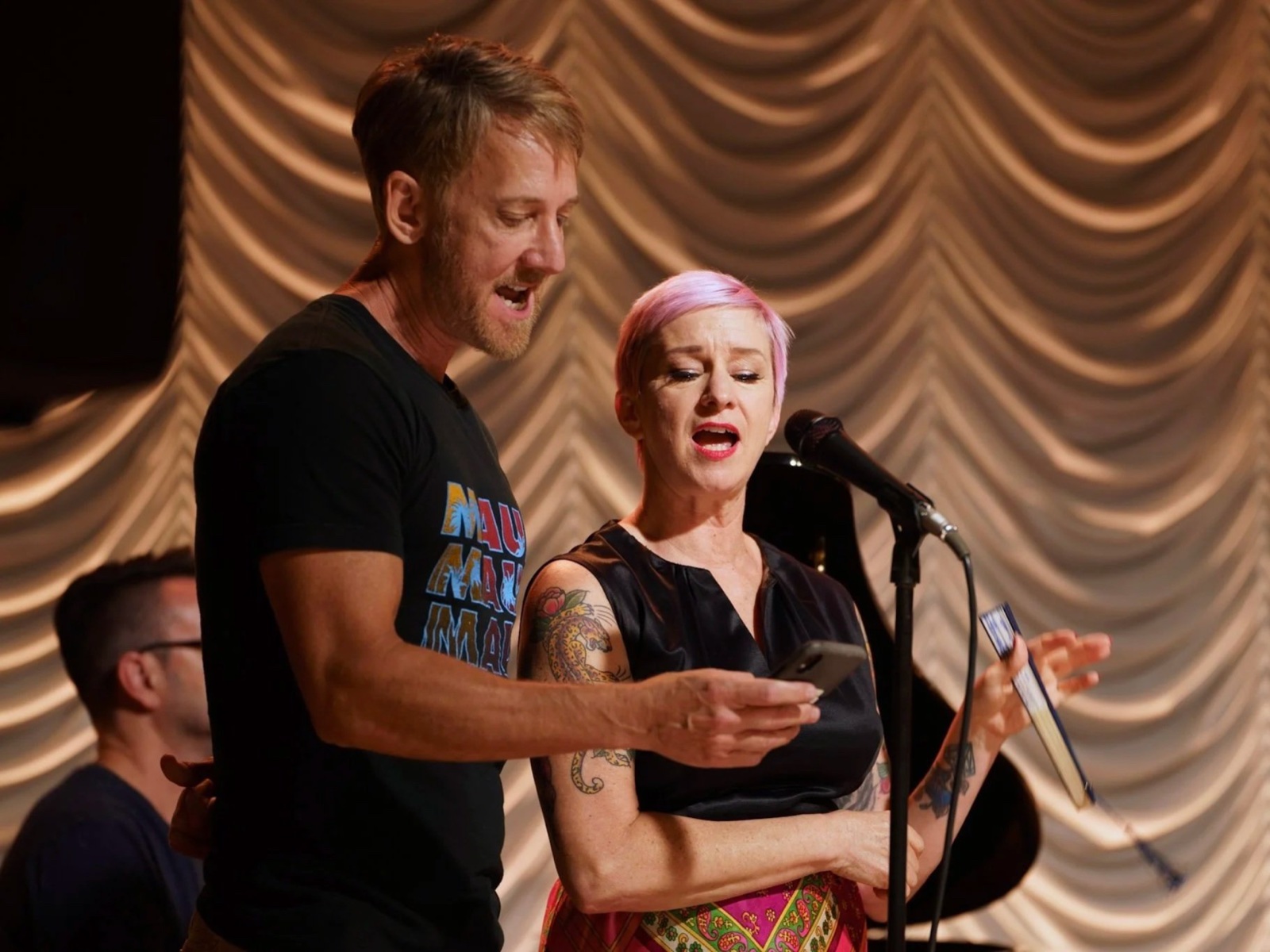
The archival material makes the gap between the public image and the person painfully visible. Leonti recalls being interviewed for a purity profile in Brio, Focus on the Family's magazine for girls, a year before it appeared. She believed what she said and received letters from girls who wanted to be like her. The article came out in the same month she disclosed her pregnancy. The exemplary teenager was still being held up for other girls to admire while Leonti was confronting a situation for which those ideals had left her badly prepared.
She recalls being ill at home when she learned that Lifeway had removed her merchandise. A Christian leader she had toured with called to express his disappointment, describing her pregnancy as an embarrassment to his platform. Her account of sexual pressure from an older boyfriend makes that response more troubling still. The concern being voiced was for the damage she had done to a ministry's reputation. What concern was there for the seventeen-year-old receiving the call?
Passons's story exposes a similar distance between the official explanation and the experience of the person it describes. A published account presents his departure from Avalon as his own decision. He disputes it, and a bandmate's corroboration strengthens his account of being forced out. Passons recalls his bandmates arriving at his home to tell him he was no longer in the group. After they left, he lay on the floor, trying to breathe in the cool air from a vent. He describes later losing his home. The film gives these consequences enough space that his removal cannot be understood simply as a change in a band's lineup.
Ikeler does more than collect accusations. He puts the artists' recollections beside the promotional record and includes responses from people implicated in their accounts, including Leonti's former husband. That does not settle every disputed detail, but it gives the audience more to examine than competing memories alone. The wider history, from the Jesus People through Amy Grant's crossover to the decline of Christian bookstores, explains how this world acquired its influence. Its account of the internet loosening that influence is broader and less developed than the personal stories. Those stories are where the film does its strongest work.

The hypocrisy is difficult to evade. These artists were asked to sing about love and grace, yet their own need for understanding could be treated as a threat to the enterprise. How did preserving the image of a Christian life become more important than caring for the person living it? The film does not need to assume that everyone involved was cynical. Sincere belief and commercial interest could support the same decision to exclude someone. Understanding that combination makes the harm more disturbing, not less.
Leonti's attempted return makes the conditions especially clear. Promoting a second Christian album meant revisiting her pregnancy in interviews as a mistake. She loved her daughter and was proud of the choice to have her. Yet the interviews kept returning her to shame, asking her to tell the story in a way that would reassure the audience she had learned her lesson. Before, she had been expected to embody purity. Now the way back required a performance of repentance that left too little room for what motherhood actually meant to her.
Knapp's account reveals another kind of loss. She chose to leave, but recalls being unable for years to pick up her guitars. The music through which she had expressed herself had become inseparable from a world she needed to escape. Leaving did not immediately give her back the means to work through what had happened. This is part of what makes the film emotionally resonant: it follows the rejection beyond the lost contract or public announcement, into the things a person can no longer do, trust, or enjoy.
It also leaves room for responses from within the faith other than condemnation. Leonti recalls a pastor, formerly a booking agent, apologizing for how the industry treated her. The apology matters because someone recognizes the injury without asking her to explain it away. It does not undo what happened, but she describes the relief of finally being seen. The film allows that moment to matter without making it an excuse for the people who failed her.
My reservation is with the suggestion of closure in the final gathering of the three artists. Their companionship is welcome, but Leonti has already cautioned against wrapping her life up with a bow, particularly the kind supplied by Christian interviews. The meeting is moving without needing to demonstrate that everyone has made peace. That is a limitation in an otherwise revealing and affecting film. Ikeler gives these artists room to describe the faith, ambition, shame, and love that their public images could not contain. They do not have to make their lives reassuring for us to care about them.
Update, September 28, 2026: Safe for the Whole Family: How to Make a Christian Superstar won an Audience Award at the 57th Nashville Film Festival.
Viewed complete on a press screener supplied through the Nashville Film Festival press office ahead of the film's world premiere.
- First impressionWhere the Hell Is Anna? Knows How to Welcome You In
- First impressionLittle Hollywood, Tennessee: The People Who Help You Begin
- InterviewLittle Hollywood, Tennessee: A Runway to Fail
- First impressionMexican Delight: The Fear of Wanting
- InterviewTaylor Dupuis on Why Anna Wants to Stay
- First impressionYour Mother Your Mother Your Mother Finds Its Way Home
- First impressionFrampton: What Comes After the Peak
- Field dispatchThe Art of Saying Yes: John Papsidera at the Nashville Film Festival
- First impressionJackrabbit Knows the Value of a Good Liar
- First impressionThe Company You Keep: Seven Shorts from the Nashville Film Festival
- Field dispatchSongs from the Circle at the Nashville Film Festival
- The full festival guide