Where the Hell Is Anna? Knows How to Welcome You In
Taylor Dupuis's supernatural thriller makes the promise of sisterhood convincing, though its ending explains more than it needs to.
First impression, not a score. Any TVI score for this work follows its general release under the published methodology. Scores are not for sale.

The most convincing thing about the retreat in Where the Hell Is Anna? is that someone might want to stay. There are gardens, meditation walks, shared meals, and women ready to listen. The language of healing is persuasive because it speaks to recognizable needs: belonging, purpose, a world that makes sense. For someone who has ever felt unloved, unseen, or forgotten, the promise of being welcomed can make an unfamiliar place feel like the first sensible choice she has made in a long time.
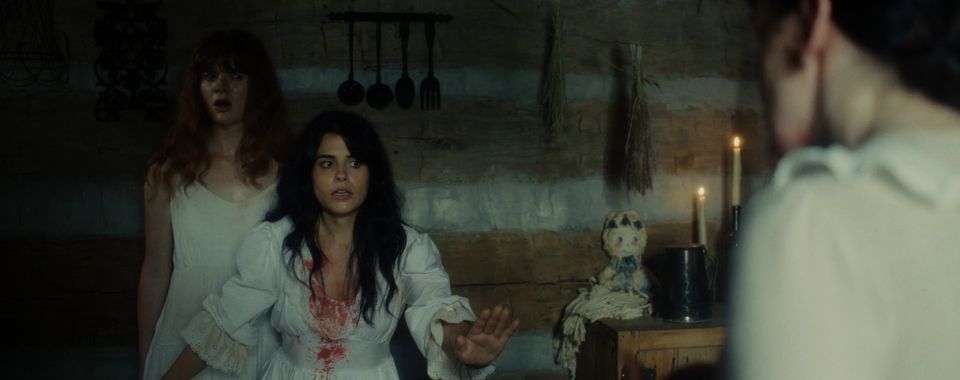
Taylor Dupuis's Nashville-made debut understands that appeal. Its early scenes have a visual assurance, and the performances carry an unforced conviction. The women at Arcana, a pagan wellness commune in the woods, appear to believe what they are saying. That makes the place far more unsettling than a collection of obvious fanatics would be.
Dupuis plays Derick, a heartbroken woman who arrives to retrieve her estranged best friend, Anna. Anna has become Harmony. Derick is given a new name too, although she has considerably less interest in becoming a new person. Armed with a guide to rescuing a friend from a cult, she tries to blend in long enough to get Anna out.
The guide establishes the film's irreverent register immediately. Derick thinks she knows exactly what kind of place she has entered. The more interesting question is why Anna might prefer it to the life Derick wants for her. Their shared past gives Derick a reason to care, but it also encourages her to assume she already understands what her friend needs.
That tension gives the film its strongest material. The women's old jokes and resentments suggest a friendship with a life beyond this particular crisis. Each knows how to make the other laugh and exactly how to hurt her. Derick's difficulty accepting Anna's attachment to the group gradually becomes more revealing than her ability to spot its warning signs. Being right about the danger does not mean she has been right about Anna.
The retreat also works because its offers of comfort can feel sincere. A grounding exercise, with its language of nature and reconnection, is delivered with enough conviction to make belief intelligible. A later conversation beside the stream allows Derick's defensive humor to give way to an admission of distress. For a moment, we can understand why someone would accept the reassurance offered there. The film is most troubling when that reassurance appears to answer a real need.
Arcana's sisterhood offers more than a place to belong. It offers the chance to become someone new, and Anna's new name could be either a fresh start or another identity to live up to. Derick arrives just as certain as the commune about which one she needs.
Tyler Oaks's cinematography is the film's surest strength. The images are immersive and quietly unsettling, with a faint Midsommar quality: the setting draws us in without quite letting us relax. The unease comes from the tension between the warmth of the welcome and whatever lies behind it.
As the film moves toward its climax, however, the screenplay increasingly interrupts that uncertainty to explain itself. Successive revelations introduce motives, histories, and rules, then give characters extended opportunities to spell them out. The dialogue leaves the actors less to suggest. Information accumulates while the immediate danger repeatedly waits for people to finish talking.
The mixture of horror, comedy, mystery, and friendship drama is intriguing. The trouble lies in how unevenly those modes support one another. Some jokes grow naturally from the friends' shared history. Others break the tension without quite earning the laugh. For me, the pink lettering overlaid on some scenes creates a similar distance, pulling me out of the world the cinematography has built. The film's knowing silliness and its more painful disclosures do not always feel part of the same emotional experience.
The film's strongest idea is that care becomes dangerous when it is mistaken for ownership. The friendship gives that idea human stakes. I found that connection easier to assemble after the credits than to feel during the climax. The final stretch explains its machinery at the expense of the people caught inside it. Where the Hell Is Anna? makes a persuasive case for why its women might stay. Its escape would be more satisfying if it trusted the emotional conflict that brought them there.
Update, September 27, 2026: Where the Hell Is Anna? won Best Tennessee Feature at the 57th Nashville Film Festival.
Viewed complete on a press screener supplied by Bright Iris Film Co. ahead of the 2026 Nashville Film Festival.
- First impressionSafe for the Whole Family Asks Who It Was Really Safe For
- First impressionLittle Hollywood, Tennessee: The People Who Help You Begin
- InterviewLittle Hollywood, Tennessee: A Runway to Fail
- First impressionMexican Delight: The Fear of Wanting
- InterviewTaylor Dupuis on Why Anna Wants to Stay
- First impressionYour Mother Your Mother Your Mother Finds Its Way Home
- First impressionFrampton: What Comes After the Peak
- Field dispatchThe Art of Saying Yes: John Papsidera at the Nashville Film Festival
- First impressionJackrabbit Knows the Value of a Good Liar
- First impressionThe Company You Keep: Seven Shorts from the Nashville Film Festival
- Field dispatchSongs from the Circle at the Nashville Film Festival
- The full festival guide